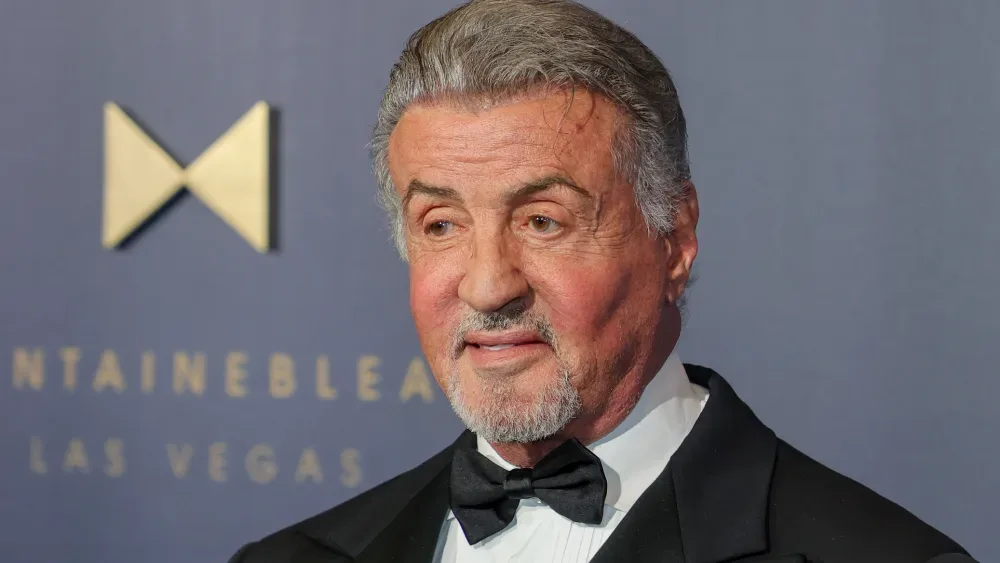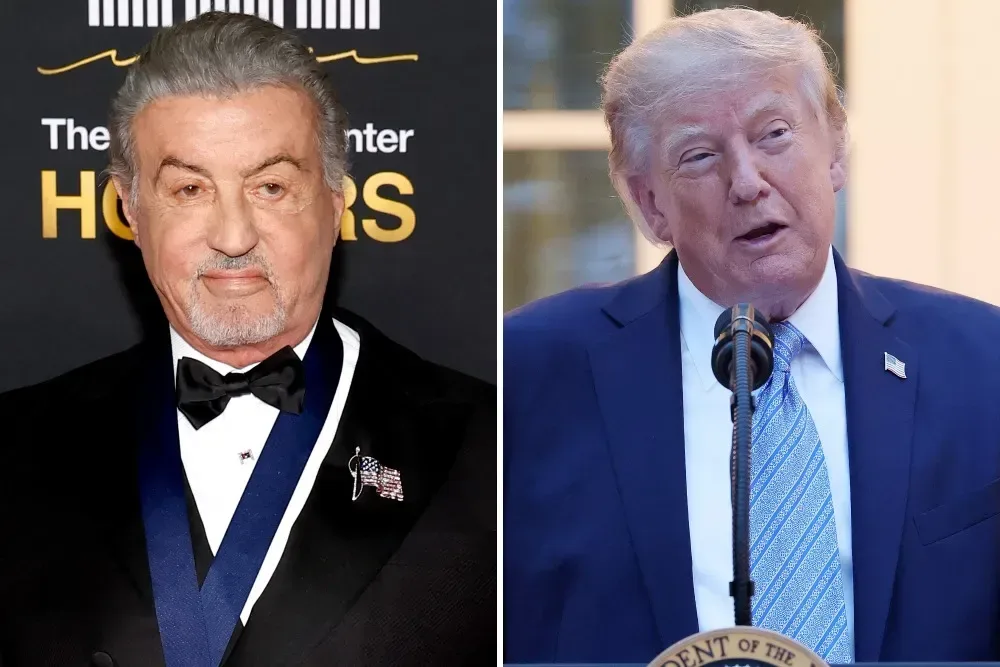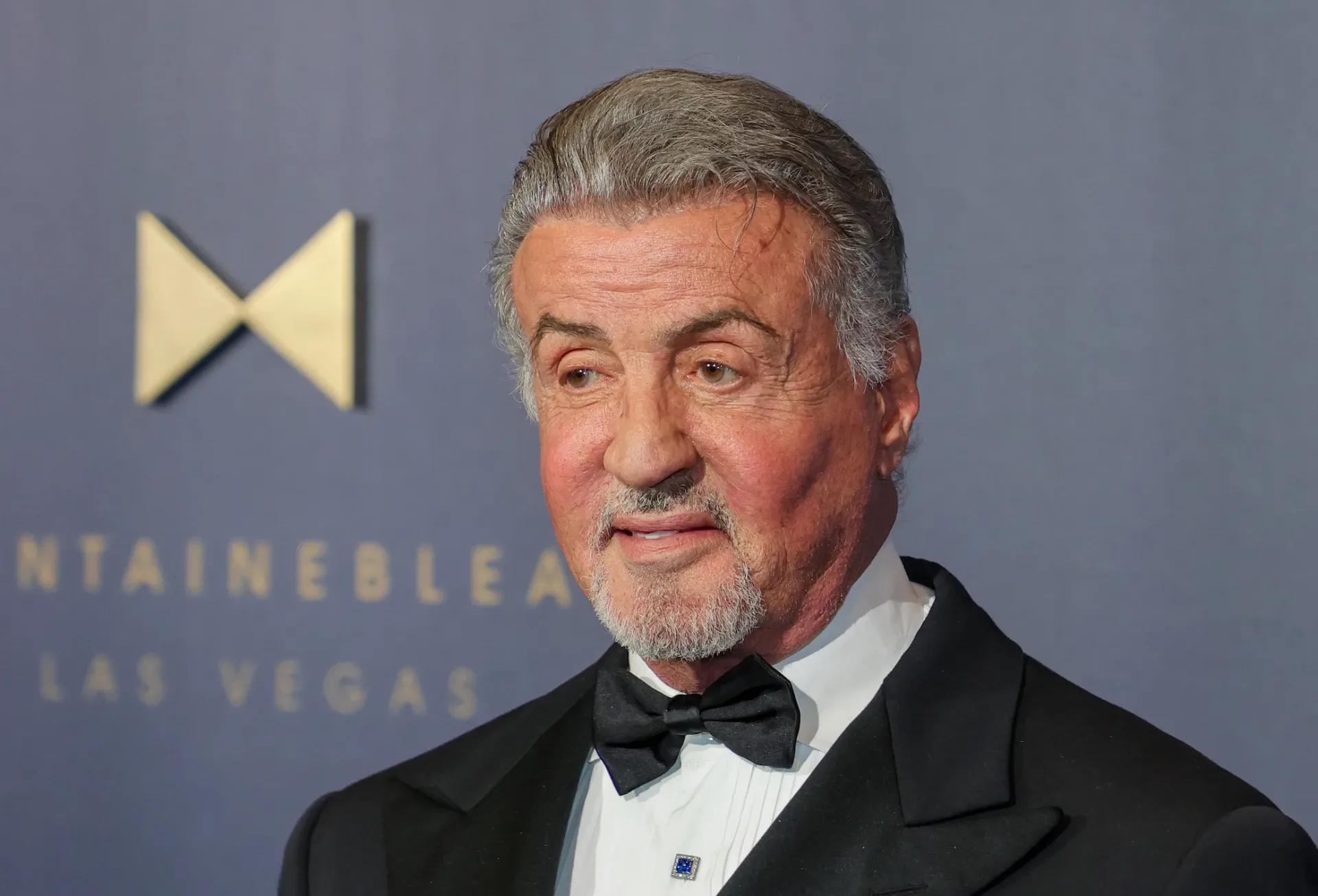
Sylvester Stallone is looking back at the physical toll of an action-star career with unusually little nostalgia. The actor, associated with screen tough guys in Rocky, Rambo and The Expendables, says years of personally taking on dangerous stunt work left him with a long list of injuries and a conclusion he now puts bluntly: performers should let trained stunt professionals handle those moments.
Stallone described having “millions, millions of regrets” over the risks he took. He said the damage was not defined by one isolated mishap, but by injuries that accumulated over time. In his account, that compounding effect has included extensive surgery: nine back operations, three neck fusions, serious shoulder injuries and procedures involving his eye. He said he has not been quite the same since.
That is a markedly different framing from the usual action-movie mythology, where an actor performing their own stunt is often treated as proof of commitment or authenticity. Stallone’s assessment is not that the pain was a necessary badge of honor. It is that the decision repeatedly exposed him to consequences that remained long after a scene was completed.
A stunt on The Expendables remains central to the story
Stallone singled out work on The Expendables, the 2010 action thriller he starred in and directed. The ensemble also included Jason Statham and Mickey Rourke. During a scene in which WWE star Steve Austin tackled Stallone, the stunt went wrong. Stallone suffered dislocated shoulders and a fractured neck.
The injury required a metal plate to be placed in his neck and spinal fusions. Accounts of the aftermath describe more than seven back surgeries, while Stallone has separately said he underwent nine back operations. The key point is clear even if those figures are presented differently: the consequences were extensive and surgical treatment did not amount to a quick reset.
A spinal fusion is a procedure in which vertebrae are joined to stabilize part of the spine. In the context of Stallone’s remarks, it is a reminder that the phrase “movie stunt” can flatten the seriousness of what happens when a controlled physical sequence fails. The audience sees a brief burst of impact. The performer may face years of treatment, recovery and altered physical ability.
The Expendables incident is also an important correction to the idea that experience removes danger. Stallone had already spent decades in physically demanding roles by the time of the film. He was not describing the mistake as the result of a newcomer misunderstanding the job. His regret comes from knowing the risks, continuing to take them and later living with the accumulated outcome.
“Let the pro do it”
Stallone’s current advice is direct: “Let other people do their job.” He urged people considering stunt work not to do it themselves, arguing that falling and impact eventually catch up with a body. His message is aimed at the temptation to “showboat” or prove toughness by taking on a task that has specialists assigned to it.
Related coverage includes Sylvester Stallone Calls His Stunt Work a Regret After Years of Injuries.
“You cannot beat gravity; when you hit the ground, you lose, and it’s going to come back.”
That observation carries more weight because it rejects the easy promotional version of an action performance. A star doing a stunt can be a useful anecdote during a film’s release, but Stallone now separates that anecdote from the value of the work itself. The scene exists to serve a movie; it does not require the lead actor to endure an avoidable injury to accomplish that purpose.
Stallone was equally dismissive of the idea that he should be proud of having endured so much. Asked whether he takes pride in the risks, he instead called himself an “idiot” for breaking himself “in pieces.” It is harsh language, but it makes his position unambiguous. He does not want the damage reinterpreted as an achievement.
Why the distinction between actor and stunt professional matters
An action sequence can involve several different jobs. The actor gives the character a face, voice and emotional continuity. A stunt performer takes on specialized physical work when the shot calls for it. A stunt coordinator’s role, by its name and function, is to organize that stunt work. The division is not an insult to an actor’s ability or commitment. It is a recognition that spectacular motion and screen drama are separate crafts that must work together.
Stallone’s regret does not diminish what audiences may have found exciting in his films. Rather, it changes the lens through which that excitement can be viewed. The real achievement is not simply that a famous actor was willing to collide with the ground or absorb a tackle. It is that a production can create a convincing sequence while respecting the expertise of the people whose work is built around executing such scenes.
There is a practical lesson here for viewers, aspiring performers and anyone attracted to the bravado attached to stunt work. “Doing your own stunts” is not a general marker of professionalism. It can mean taking a risk that a specialist is better positioned to perform. Stallone’s experience is a particularly forceful warning because the injuries he lists did not disappear when the cameras stopped.
It also adds a more sobering dimension to the action-star persona Stallone helped define. Characters such as Rocky Balboa and John Rambo are built to absorb punishment and keep moving. The performer behind them is not invulnerable, and Stallone’s comments emphasize the gap between cinematic resilience and a real body’s limits.
A warning that has become part of Stallone’s memoir-era reflection
Stallone had already offered similar advice around the release of his memoir, The Steps. He characterized the way he treated his body as “masochistic” and said it came at a terrible price. If he could revisit those choices, he said he would let someone else “carry the banner” rather than do his own stunts.
The repetition matters. This is not a passing complaint about one difficult day on a set. Across his recent remarks, Stallone presents a consistent reassessment of the choices that helped sell a particular image of an action hero. He is not claiming that the physical commitment was painless but worth it. He is saying the cost was too high.
For pop-culture audiences, that makes the story more than an injury tally. It is an actor revisiting the values attached to a famous career: toughness, risk and self-reliance. Stallone’s present-day answer is that toughness includes recognizing when someone else has the expertise for the task.
That perspective fits a broader truth visible in any long-running action career: the work on screen lasts, while physical harm may remain private and ongoing. Stallone has chosen to make that imbalance visible. His account asks audiences not to confuse a successful shot with a harmless one, or a star’s willingness to take a risk with a reason they should have taken it.
For more entertainment coverage examining the aftermath of consequential events, see our look at To Be Ordinary and the long shadow of one accident.