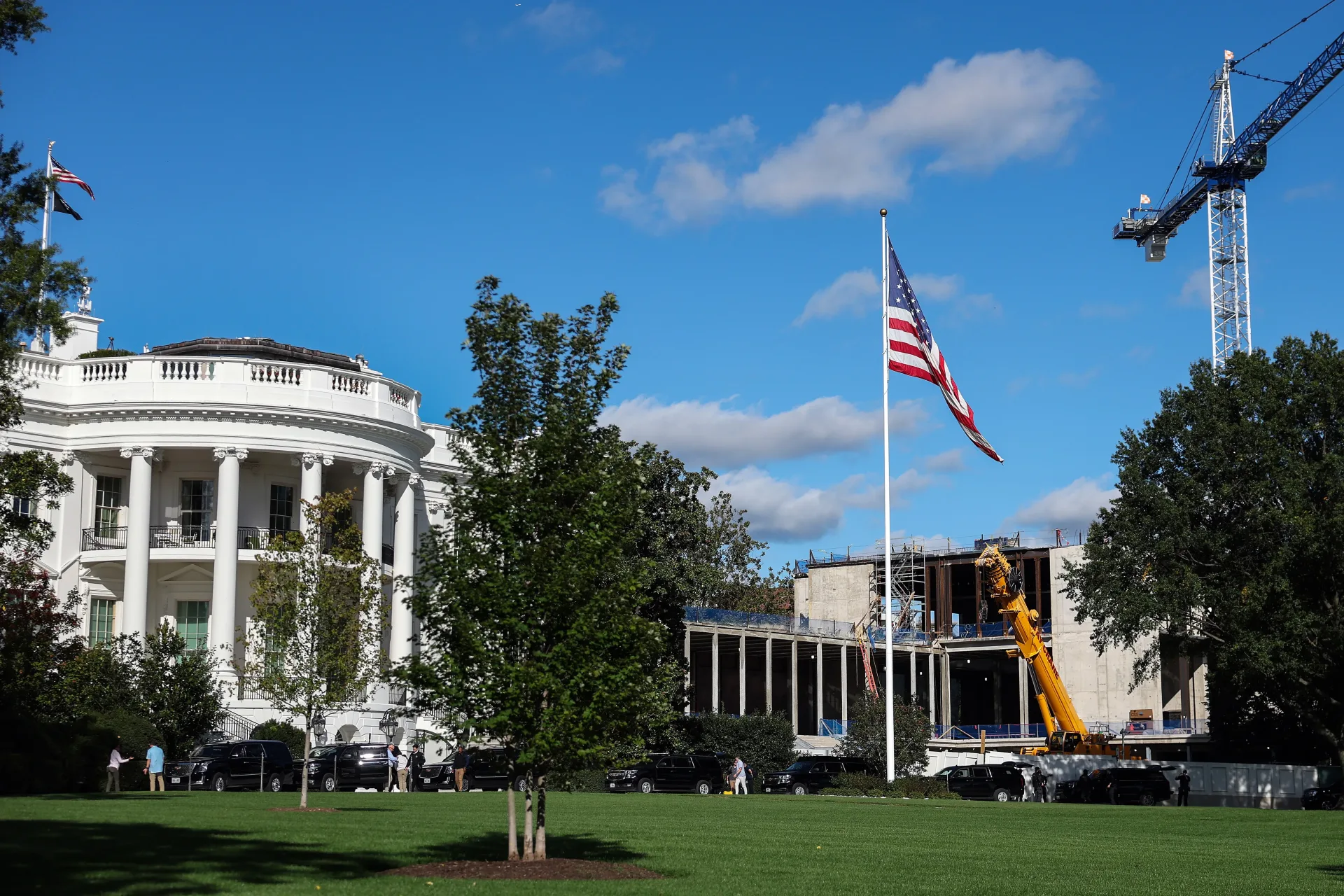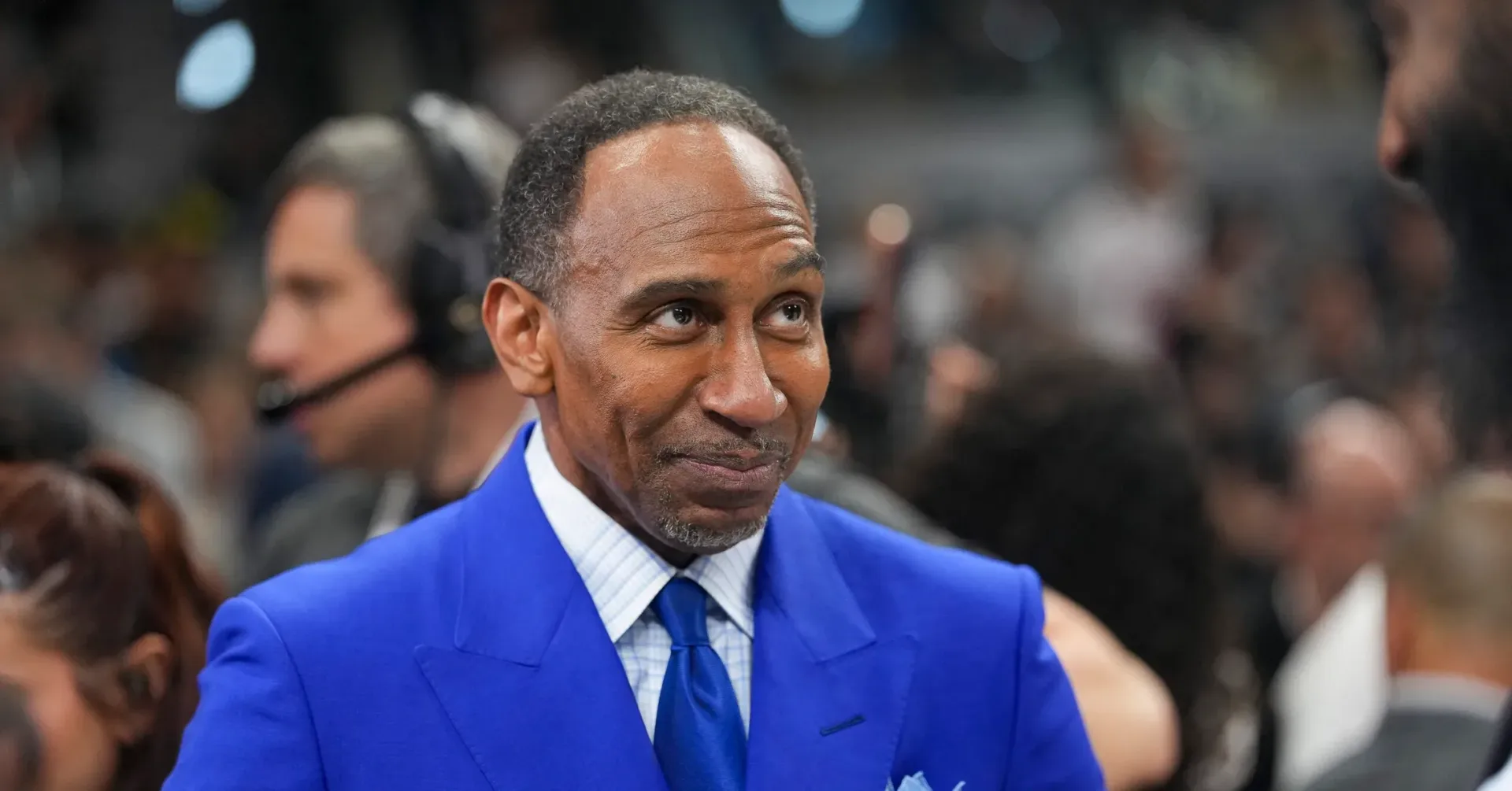
Stephen A. Smith has responded to criticism surrounding a White House dinner attended by President Donald Trump, Bill Maher and Kid Rock. The sports-media host’s central argument was direct: he does not intend to avoid a conversation simply because he disagrees with someone politically.
“By not trying to talk to one another, by not trying to have a conversation, it’s foolish, it’s childish, and I’m not gonna do that,” Smith said on his show over the weekend.
That statement is both a defense of attending the dinner and a broader description of Smith’s increasingly visible role in political-media conversations. His public profile was built in sports commentary, including as the host of First Take, but he has recently appeared on political programs and made politics a recurring part of his own platform. The White House dinner drew particular attention because of the guests involved and because it placed a major sports personality in a highly charged political setting.
What Smith said about the dinner
Smith’s response was not framed as an endorsement of every person at the table or of every political position under discussion. Instead, he presented engagement itself as the principle. In his telling, declining to speak with people across ideological lines is less constructive than sitting down and debating the disagreements openly.
He also said Trump had invited him back to the White House. Smith described Maher and Trump as having spent hours discussing issues on which they differed. That detail matters to Smith’s stated case: a dinner can be a venue for disagreement rather than proof that everyone present shares the same politics.
There is an important distinction here between dialogue and alignment. Dialogue means choosing to communicate, question and argue with another person. Alignment means sharing that person’s beliefs, agenda or political goals. Smith’s defense rests on the first idea. Critics, however, may see a high-profile social gathering with a president as carrying symbolic weight beyond the private substance of any disagreement at the table.
Both readings can exist at once. A participant may sincerely seek conversation without adopting another guest’s views. At the same time, the public nature of the event—and the status attached to a White House invitation—means audiences will naturally assess what the appearance communicates.
Why the response has generated friction
Smith is not entering this discussion as a conventional political operative. He is principally known as a sports commentator, a role that comes with an audience assembled around games, athletes, leagues and sports debate. For some viewers, that is precisely why his political visibility feels notable: they may have followed him for a particular kind of commentary and now encounter a broader public-facing persona.
His appearances on Hannity, his political discussions on his own channels and his prior visits to Real Time With Bill Maher have made that shift more visible. Those appearances do not, by themselves, settle Smith’s ideology or establish agreement with every host or guest. They do demonstrate that politics is no longer peripheral to his media presence.
That evolving presence is likely at the heart of the reaction. Audiences often develop expectations around what a familiar media figure represents. When the figure expands into another arena—especially one as divisive as national politics—some fans welcome the added perspective and others regard it as a departure from the relationship they thought they had with the personality.
Sports media has long overlapped with wider culture, celebrity and civic debate. But the overlap can feel especially sharp when a commentator moves from discussing an athlete’s performance or a team’s prospects to sharing a table with the president. For readers looking for Smith in a sports-adjacent cultural context, music’s connection to the Valkyries’ WNBA Finals push is another example of how sports and public culture often meet.
Conversation is not a neutral act in public life
Smith’s “talk to everyone” position is easy to state but harder to interpret in practice. In everyday life, conversation can be low-stakes and private. At the level of public figures, a dinner invitation can be read as access, association and validation, whether or not the guest intends it that way.
That does not make Smith’s premise invalid. People with conflicting beliefs cannot resolve or even accurately understand disputes without contact. His account of Maher and Trump arguing for hours describes the version of cross-ideological engagement that advocates of conversation tend to favor: real disagreement aired directly instead of avoided.
Yet critics may ask different questions. What is the purpose of the meeting? Who benefits from the image it creates? Is a public figure simply hearing opposing views, or cultivating proximity to power? Those questions are not answered solely by saying that conversation is worthwhile. They concern the context surrounding the conversation.
Analysis: Smith’s remarks appear designed to shift the focus from the guest list to a general rule: no one should be beyond conversation. It is a rhetorically durable defense because it challenges opponents to explain why engagement itself should be rejected. But it does not erase the specific concerns viewers have about a White House dinner. The argument is about the value of dialogue; the backlash is also about visibility, symbolism and Smith’s direction as a public figure.
Smith’s expanding ambitions are part of the discussion
The dinner has also been discussed alongside Smith’s evident ambition. He has been a prominent and forceful voice in sports television for years, and he has floated the idea of running for president. That does not establish that the dinner was undertaken as part of a campaign or that it reflects a formal political plan. No such conclusion follows from the available details.
It does, however, explain why observers may treat his political appearances as more than a passing detour. When a media figure speaks frequently about politics, appears on political television and publicly entertains the possibility of seeking office, encounters with national political figures acquire a different degree of interest.
The key word is inference. An inference is a conclusion drawn from known facts, not a fact proven by those details alone. It is fair to note that Smith’s public political engagement and stated presidential interest make people curious about his future ambitions. It is not fair to state as fact that he attended the dinner to advance an electoral goal without direct evidence.
This distinction is especially useful in a media environment where visibility is often mistaken for certainty. A public figure can be ambitious without having a declared candidacy. They can accept an invitation without endorsing the host. They can argue across a table without changing anyone’s mind. The meaning of the event remains contested precisely because the available facts support more than one interpretation.
What audiences can reasonably take from Smith’s statement
- Smith attended a White House dinner that included Trump, Maher and Kid Rock.
- He responded to criticism by defending conversations with people who hold opposing views.
- He said Maher and Trump debated areas of disagreement during the dinner.
- Smith has made political commentary a more regular part of his public work through television appearances and his own platform.
- His past mention of a potential presidential run adds context to public interest, but it does not prove a political motive for the dinner.
The most concrete takeaway is that Smith is not retreating from politics in response to criticism. His answer indicates the opposite: he intends to continue engaging people across political lines and views that engagement as preferable to isolation.
Whether audiences see that as principled openness, strategic relationship-building, or a mixture of both will depend in part on what Smith does next. For now, the debate is less about a single meal than about the direction of a commentator whose reach increasingly extends beyond sports.