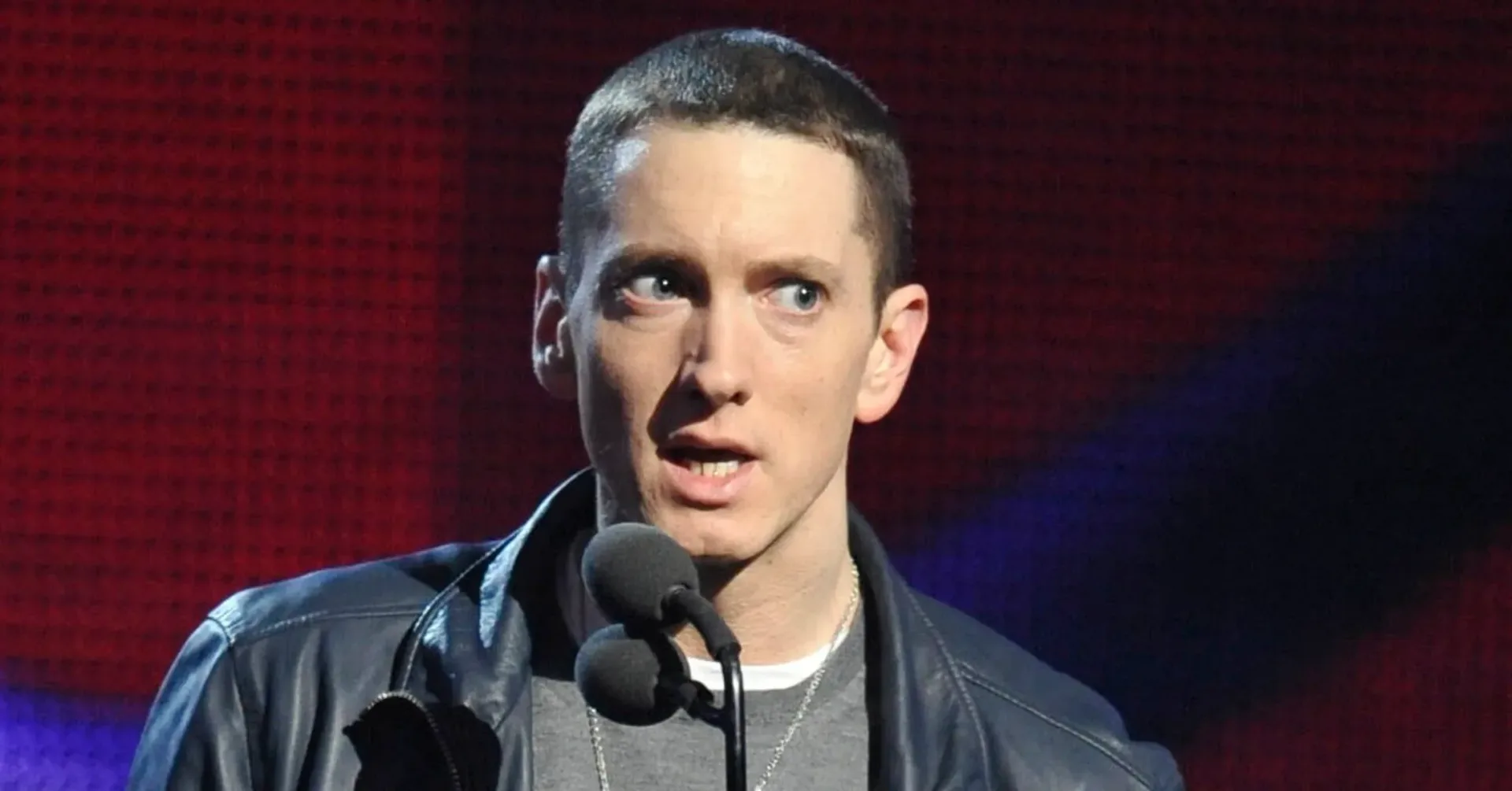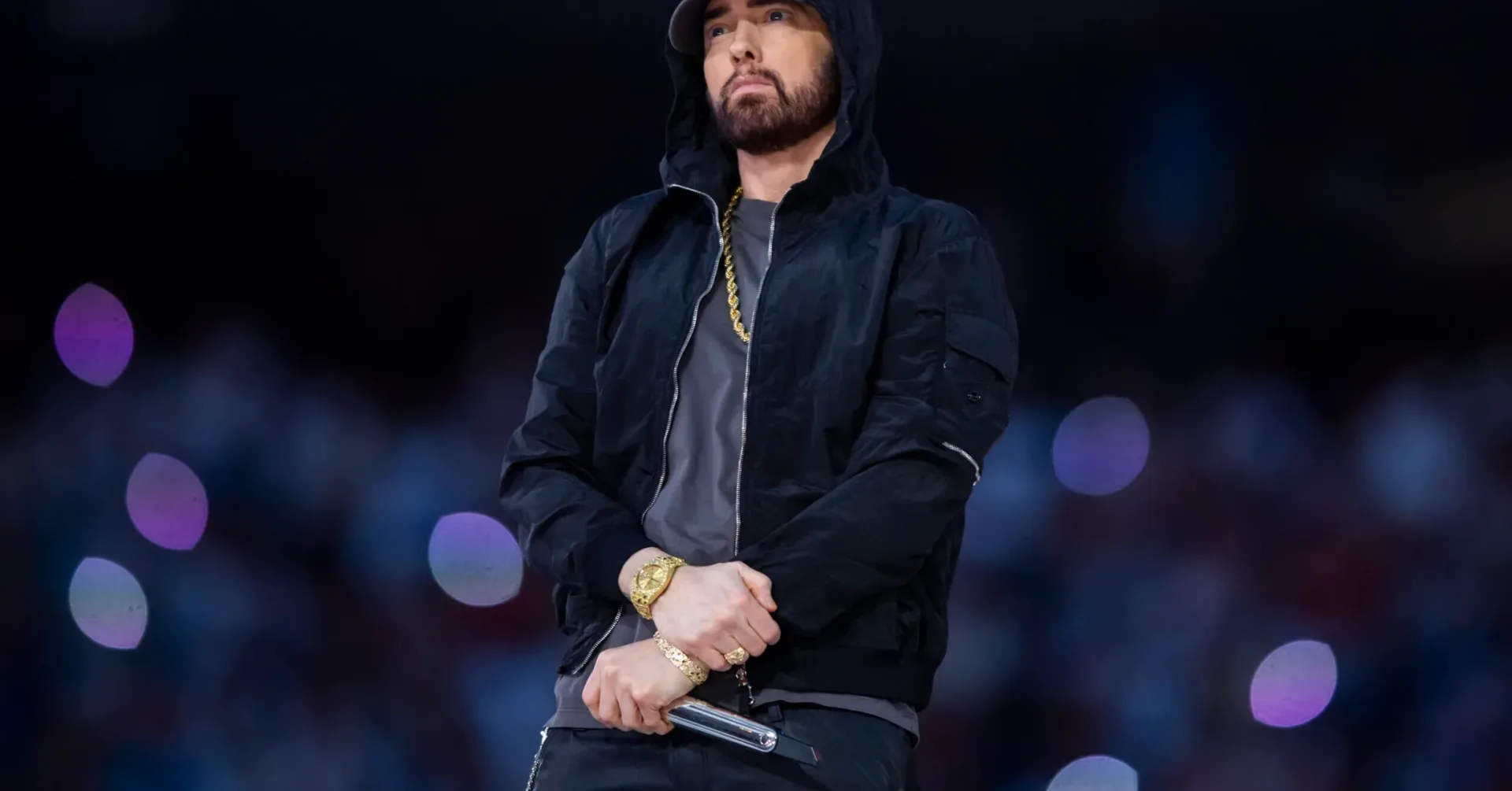
Eminem’s collaboration with Kid Rock, “Heal My Faith,” is drawing criticism not simply because two prominent Detroit artists worked together, but because the partnership revives a long-running question around the rapper’s public political identity. The song appears on Kid Rock’s Halfway 2 Jesus, and Eminem frames their connection in personal terms, referring to Kid Rock as a brother rather than a political adversary.
That distinction has not satisfied many listeners. Eminem’s public promotion of the track said the decision was not about taking sides, but about making music with a longtime friend. The post ended with a prayerful sentiment and the #HealMyFaith tag. For detractors, that message does not remove the political implications of the collaboration; it puts them at the center of the debate.
The conflict is sharpened by Eminem’s previous rhetoric. In an October 2017 BET Awards freestyle aimed at then-President Donald Trump, he told supporters of Trump among his own fans that they had to choose a side. He later endorsed Kamala Harris in 2024. Against that record, “Heal My Faith” has prompted some fans to see a gap between Eminem’s past political lines and his present insistence that friendship can sit apart from political difference.
Why this particular collaboration carries weight
Celebrity collaborations rarely arrive without baggage, but this one carries unusually visible context. Kid Rock is described as an ardent MAGA supporter, while Eminem has made high-profile statements opposing Trump. Their shared Detroit history explains why the artists might still regard each other as old friends. It does not automatically settle how listeners should interpret a new recording released under both of their names.
That is the key distinction in the backlash: a private relationship and a public creative partnership are not necessarily perceived in the same way. Fans can accept that two artists have known each other for years while still asking what a joint track signals when each artist’s politics have been part of their public profile.
Eminem’s response asks audiences to prioritize the friendship. By saying the release is about music with an old friend, he positions the collaboration as a human connection rather than an endorsement of Kid Rock’s politics. But the phrase “not about choosing sides” has become the point of friction, because it echoes a political choice that Eminem once treated as urgent and binary.
What “Heal My Faith” appears to argue
The available description of the song presents it as an argument for maintaining a relationship across disagreement. Eminem’s verse reportedly addresses the artists’ shared history and rejects the label of “political enemy” for Kid Rock. Kid Rock has likewise said they differ politically and in other ways but have remained friends, presenting that continuity as a possible example for people who have stopped speaking to friends or family over differing beliefs.
That is a recognizable appeal for depolarization: the idea that disagreement need not require permanent estrangement. In this case, though, audiences are also judging the argument through the two people making it. The song’s message is not arriving as an abstract plea for civility. It is arriving through two entertainers whose political contrasts are already central to how many people understand them.
Depolarization is often used to describe efforts to lower social and political hostility between opposing groups. It does not require people to abandon convictions. At its strongest, it asks whether a relationship can survive deeply held differences. Yet calls for depolarization also invite a difficult follow-up: which differences are being treated as debatable, and who bears the consequences when they are?
Nothing in Eminem’s promotional statement lays out a wider political change of heart. It speaks narrowly about making music with a friend. Still, public collaborations are communications as well as songs. Listeners routinely read them as expressions of affinity, tolerance, career strategy, shared identity, or all of those things at once. That interpretive space is why a short caption has generated as much reaction as the track itself.
The 2017 comparison is driving the response
The 2017 freestyle remains essential context because it was so direct. Eminem’s line to Trump-supporting fans did not merely state disagreement. It drew a boundary and asked listeners to align themselves on one side or the other. His 2024 endorsement of Harris reinforced the impression that he was willing to use his celebrity platform to take explicit political positions.
His current language is therefore being evaluated less as a standalone statement than as a contrast. Critics are not necessarily claiming that people cannot remain friends across ideological lines. Rather, they are questioning whether Eminem has sufficiently explained why that principle now takes prominence in a partnership with Kid Rock, given the forcefulness of his prior statements.
There is a meaningful difference between saying, “I disagree politically with someone I know,” and publicly joining them on a song. The former describes a relationship. The latter creates a shared cultural product that both artists can promote and that audiences can support, reject, or debate. Eminem’s framing emphasizes the former; critics focus on the latter.
Kid Rock’s response centers on the noise around the song
Kid Rock has dismissed the complaint cycle surrounding the collaboration, arguing that he and Eminem understand public noise because both have created plenty of it over their careers. His comments characterize the objectors as people making a great deal of noise and suggest that outrage over old friends recording together confirms the larger problem the artists see.
That answer shifts the discussion away from the substance of the political disagreement and toward the behavior of critics. It is a familiar rhetorical move in celebrity controversies: instead of litigating every objection, cast the response as proof that audiences are too eager to police association. For supporters, that may reinforce the song’s friendship-over-conflict premise. For critics, it may feel like a refusal to engage with why this pairing carries political significance in the first place.
Kid Rock’s earlier remarks give the collaboration a clearer intended moral: people with different views can remain connected. That claim is simple, and many people will find it relatable, especially in families and friendships strained by political arguments. Yet its reception depends on whether listeners see it as an invitation to preserve relationships or as a request to overlook differences they consider consequential.
Friendship is not the same as political neutrality
The dispute also illustrates why “not choosing sides” can be a loaded phrase. In everyday life, it can mean declining to turn every relationship into a political test. In public culture, particularly when the speaker has previously taken strong positions, it can be heard as neutrality or as a retreat from earlier commitments.
Those readings are not automatically identical. Eminem can maintain a friendship with Kid Rock without adopting Kid Rock’s politics. He can also make a song with him without issuing a comprehensive statement about every belief either artist holds. At the same time, fans are free to conclude that the collaboration changes how they understand Eminem’s boundaries, especially after the 2017 freestyle.
That is why the conversation is unlikely to be resolved by proving whether the two artists are genuinely friends. Their history is not seriously presented as the disputed fact. The disagreement is over what friendship means once it becomes a public creative alliance, and whether Eminem’s explanation adequately addresses the contrast with his prior political messaging.
It is also a reminder that audiences do not separate art, biography, and politics as neatly as artists sometimes would prefer. A guest verse can be musically motivated, personally meaningful, commercially visible, politically interpreted, or several things at once. “Heal My Faith” has become contentious because it sits precisely at that intersection.
What listeners can reasonably take from the controversy
There are two statements in the material that can coexist even if they produce an uncomfortable tension. First, Eminem and Kid Rock have sustained a friendship despite political differences. Second, Eminem has a public record that makes a collaboration with Kid Rock meaningful to listeners beyond their personal relationship.
Neither statement erases the other. The former explains the artists’ rationale; the latter explains the backlash. Whether the collaboration is viewed as a worthwhile example of friendship across disagreement or as a contradiction of Eminem’s past posture will remain a personal judgment for listeners.
For readers following how public figures navigate cultural disputes, the episode is part of a wider pattern in which a brief endorsement, lyric, social post, or collaboration can carry implications far beyond its immediate artistic purpose. Music stories continue to overlap with questions of image, loyalty, activism, and fandom, as seen across pop-culture coverage such as this look at Cardi B’s Global Woman of the Year recognition.
For Eminem, the immediate issue is not whether audiences believe he and Kid Rock can be friends. It is whether “not choosing sides” feels consistent with the public line he once drew—or whether, to disappointed fans, it signals that the line has changed.