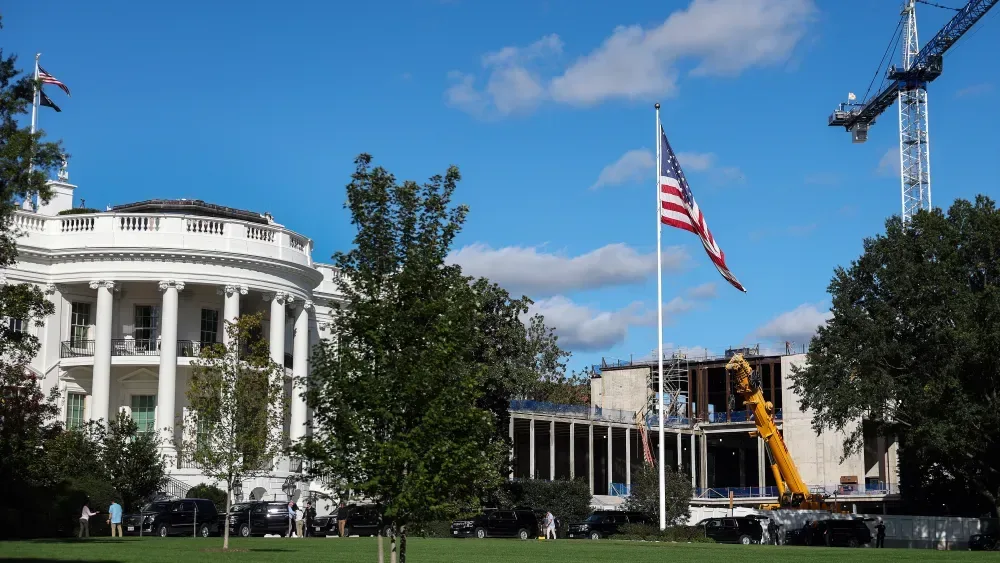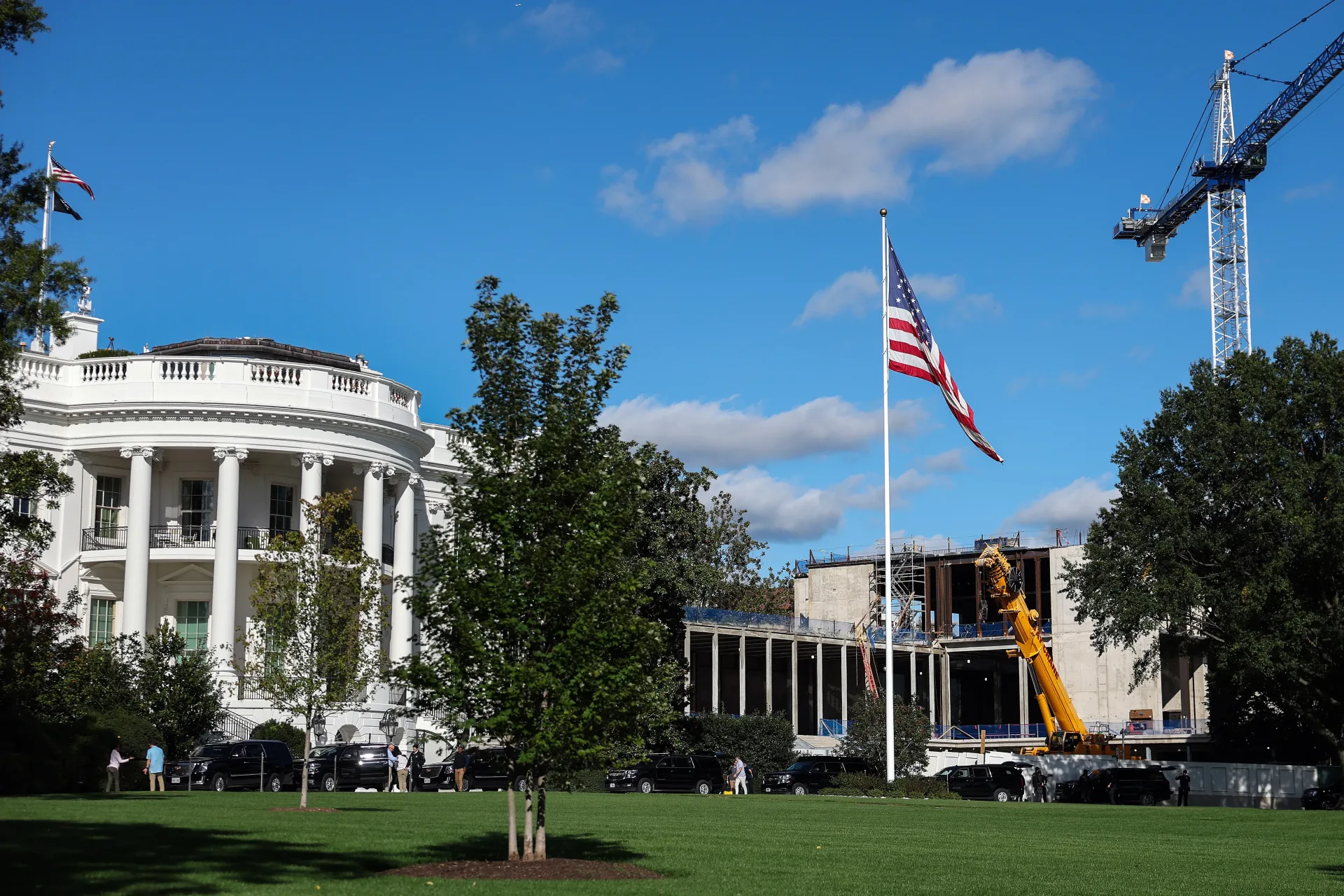
Comcast has confirmed that it donated $7.5 million toward President Donald Trump’s new White House ballroom and event-space project, placing the cable and media company among 57 corporate donors connected to the development.
The disclosed contribution is one piece of a reported $330 million in total donations for the project. The ballroom is being built where the White House East Wing stood, and construction was continuing this week after the U.S. Supreme Court, in a 5-4 ruling on Aug. 31, allowed work at the site to proceed following legal challenges.
For a company whose operations include NBCUniversal, Comcast’s involvement creates an obvious pop-culture and media-business angle: major entertainment and technology businesses are not merely observing a high-profile White House construction project, but are among its financial backers. Comcast has also set mid-2027 as its target for an NBCUniversal spinoff, a separate corporate plan that underscores how consequential this period is for the company.
A 90,000-square-foot event-space plan
The White House has described the planned addition as approximately 90,000 square feet of ornately designed space, with seating for 650 people. That would be a substantial change in event capacity: the White House puts the East Room’s seated capacity at 200 people.
Capacity is the clearest practical distinction in the information available. A 650-seat ballroom would accommodate more than three times as many seated guests as the East Room, shifting the scale of the venue for formal dinners, receptions and other White House events. The proposal has been described as a gold-plated ballroom and event space, although the available details do not break down its materials, layout, construction timetable or the types of programming that will use it.
Its physical location is equally central to the story. This is not an off-site venue or a renovation to an existing hall; it is an addition being constructed on the site of the demolished East Wing. That makes the project both an expansion of White House event infrastructure and a redevelopment of a prominent part of the presidential complex.
Who has disclosed donations, and how much
The newly specified Comcast figure provides a clearer look at the mix of technology, media, telecommunications and business figures supporting the ballroom. The reported donations include:
- $25 million each: Nvidia, Apple and Charlie Ergen, co-founder and chairman of Dish Network.
- $20.27 million: The Laura and Isaac Perlmutter Foundation. Ike Perlmutter formerly served as CEO of Marvel Entertainment and was ousted by Disney in 2023.
- $10 million: Microsoft.
- $7.5 million: Comcast.
- $5 million each: Amazon, T-Mobile and Meta.
There is also an important distinction between a conventional donation and money directed to the project through a legal settlement. Alphabet, the parent company of Google and YouTube, agreed to pay Trump $22 million as part of settling his lawsuit alleging censorship tied to YouTube’s suspension of his account after the Jan. 6, 2021 attack on the U.S. Capitol. Court documents state that Trump directed that $22 million toward construction of the ballroom.
Related coverage includes Comcast Gave $7.5M to White House Ballroom Project.
That distinction matters because the funding picture is not composed solely of companies voluntarily making straightforward charitable contributions in the same format. The available information identifies corporate donations, a foundation gift, an individual contribution, anonymous giving and settlement money directed to the project. They contribute to the reported overall amount, but they arise through different mechanisms.
The large unknown inside the funding total
At least $77 million has come from anonymous donors. That is a significant portion of the reported $330 million total, even though the identities and individual amounts behind that part of the funding have not been publicly identified in the supplied information.
Anonymous support limits what the public can determine about the donor base. It is possible to identify several major disclosed contributors and compare their stated amounts, but it is not possible from the disclosed figures alone to establish the complete roster of financial backers or the size of every contribution. The total number of corporate donors is reported as 57, while the named donations offer only a partial view.
That gap also makes the Comcast disclosure meaningful beyond its dollar amount. The company had already been identified as a contributor, but the $7.5 million figure had not previously been disclosed. Specific figures allow readers to place a donor alongside other known participants rather than treating all involvement as equal.
Comcast’s explanation and the nonprofit channel
Comcast said its donation last year went to the Trust for the National Mall, a nonpartisan 501(c)(3) tax-exempt organization focused on restoring, preserving and enriching the National Mall and White House grounds.
A 501(c)(3) is a U.S. tax designation for organizations that meet rules for charitable, religious, educational, scientific or certain other public-serving purposes. In this case, Comcast’s statement identifies the Trust for the National Mall as the entity receiving its gift, rather than describing a direct payment to the White House itself.
The company also said it has supported elected officials, presidential inaugurations and presidential libraries on a bipartisan basis. Comcast specifically cited the Obama Foundation as well as the Reagan and JFK libraries. That statement supplies the company’s framing of the ballroom donation: it presents the gift as part of a broader record of support for civic and presidential institutions across political lines.
That is an explanation of Comcast’s stated rationale, not a resolution to the debate over the project. The ballroom has faced legal challenges, and the Supreme Court decision permitting construction to continue demonstrates that the dispute extended to whether work could move ahead. The available facts do not detail the arguments in those challenges, so it would be wrong to assign motives or legal claims beyond the ruling and its outcome.
Why this matters for the media and entertainment business
Comcast’s donation is notable in a sector context because it is a cable, broadband and media company with NBCUniversal in its corporate structure. Its planned NBCUniversal spinoff has a target of mid-2027, giving the company a major near-term business milestone separate from the ballroom project.
Other contributors likewise reflect the overlap between the technology platforms, communications infrastructure and entertainment ecosystems that shape daily public life. Alphabet owns Google and YouTube; Meta is associated with Mark Zuckerberg; Amazon has made a $5 million contribution; and Apple and Nvidia are each listed at $25 million. The donor roll therefore includes companies whose products, platforms or infrastructure touch media consumption, online speech, devices, advertising and entertainment distribution.
That does not establish that every contributor shares a single purpose, nor do the disclosed facts attribute any particular business benefit to a donation. What it does show is that the financing of a major White House addition has drawn money from companies with unusually large roles in the modern media and technology landscape.
For readers following NBC’s entertainment operations, Comcast’s $7.5 million contribution is also a reminder that a parent company’s civic and political-facing activity can sit alongside its television, film and streaming businesses. NBC itself remains part of a much wider corporate structure, and its comedy teams are still part of the broader cultural conversation, as seen in the recent New York Comedy Festival panel plans involving NBC comedy teams.
What is established, and what remains unclear
The core facts currently available are specific: Comcast donated $7.5 million; reported ballroom funding has reached $330 million; at least $77 million is anonymous; the project is planned at about 90,000 square feet; and the White House says it will seat 650 people. Work is continuing after the Aug. 31 Supreme Court ruling.
At the same time, several boundaries should be kept clear. The public information provided does not offer an itemized project budget, a complete donor list, a completion date, an operational calendar or a detailed accounting of what each donation will fund. It also does not describe the legal challenges beyond the fact that they occurred and that the court allowed construction to continue.
Those unanswered questions matter because a headline total and a list of major gifts are not the same as a full financial blueprint. For now, Comcast’s $7.5 million is one of the more concrete newly disclosed entries in a funding effort that combines high-value corporate gifts, foundation support, settlement-directed funds and a sizable anonymous component.