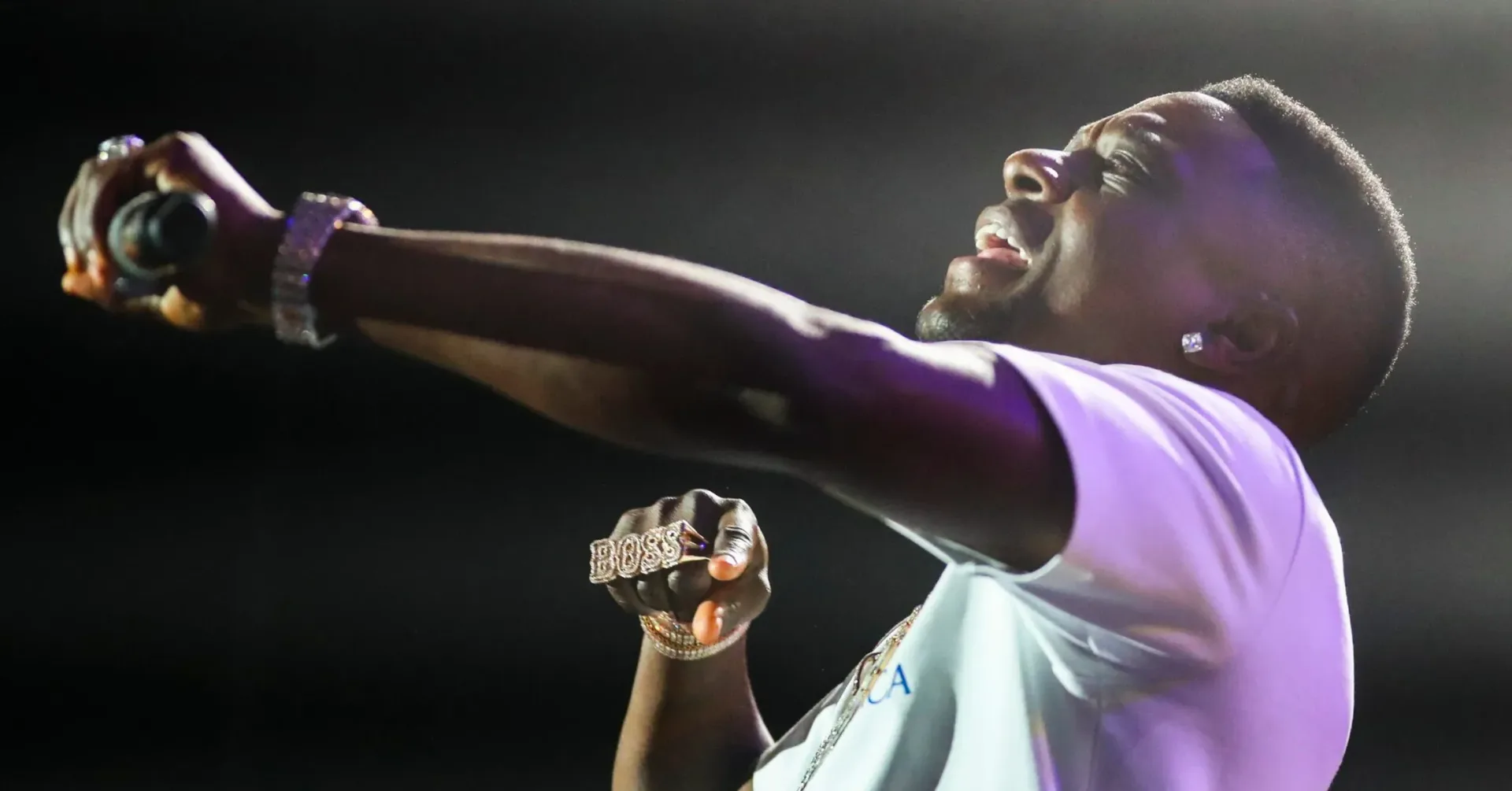
Boosie Badazz has added an unexpected public performance to a dispute that remains unresolved: the artist was seen setting up a stage near the White House in Washington, D.C., and performing for a small crowd. The appearance was described as impromptu, with onlookers appearing surprised to find him there but stopping to watch.
The performance arrives amid Boosie’s reported lawsuit involving two lobbyists and an alleged effort to secure a presidential pardon. The available account does not establish that the Washington appearance was formally connected to that legal matter, nor does it identify a stated purpose for the performance. Still, the location naturally puts the event next to the political context surrounding the dispute.
A performance in a politically loaded setting
A small outdoor performance near the White House can carry a meaning beyond the music, even when no explicit statement accompanies it. The area is one of the most recognizable backdrops in American public life, and an artist appearing there while pursuing a dispute centered on an alleged pardon arrangement will inevitably invite interpretation.
That interpretation should remain limited by what is known. There is no confirmed statement in the supplied information saying Boosie staged the set as a protest, a campaign for clemency, or a direct message to the administration. It is equally unclear whether the event had any formal authorization, organizational affiliation, or legal connection to the lawsuit. What can be said is simpler: Boosie performed near the White House while a high-stakes disagreement over lobbying services and money remains active.
That distinction matters. A striking visual can be newsworthy on its own, but it does not automatically prove motive. The performance may be read as symbolic because of its setting, yet the factual record presently supports only the occurrence of the appearance and the continued dispute.
The reported $600,000 lobbying dispute
The central issue is an alleged $600,000 payment to two lobbyists who reportedly said they could help Boosie obtain a pardon. A pardon is an act of executive clemency that forgives a federal offense; it is different from a court ruling that overturns a conviction or declares someone innocent. In ordinary public conversation, “getting a pardon” may sound like a single transaction. In reality, it is an extraordinary governmental power, which makes any private claim of influence or access especially consequential.
The account says the underlying contract allegedly included a provision under which Boosie could receive 50 percent of the money back if the promised result did not happen. Based on that description, the disputed refund would amount to $300,000. Boosie is reportedly suing after the refund was not paid.
The two men involved have denied wrongdoing and maintain that they do not owe him money. Those are competing positions, not findings of fact. No outcome, court ruling, settlement, timeline for the case, or further procedural update is provided here. Until more is established, it is most accurate to describe the matter as a pending dispute in which the parties sharply disagree over performance and payment obligations.
Related coverage includes Boosie Badazz Performs Near White House as Pardon Dispute Remains Unresolved.
Why the contract claim is important
At its core, the disagreement appears to turn on an alleged contract term rather than merely disappointment about a political outcome. That is a meaningful difference. A legal case based only on an unfulfilled hope can be difficult to frame. A case based on a written or otherwise enforceable refund provision asks a more concrete question: what did the parties agree would happen if a desired result was not achieved?
That question still cannot be answered from the supplied details. The text of the agreement is not available here, and neither are accounts of how the lobbyists’ services were defined, what work was performed, what conditions triggered a refund, or how each side interprets those conditions. The reported 50 percent clause is therefore important context, but not enough to settle the claim in public discussion.
There is also a broader practical lesson for anyone observing the story from outside the case: vague promises and formal contractual commitments are not the same thing. When a service concerns government access, legal advocacy, or discretionary decisions by public officials, the difference between “we will try,” “we can seek a meeting,” and “we can deliver a result” can be enormous. The record supplied here does not say exactly what language was used, so it would be inappropriate to assign any particular promise to either side beyond the reported claim that the lobbyists said they could obtain a pardon.
From supporter to adversary
The political backdrop is complicated by Boosie’s prior posture toward President Donald Trump. He had at one point presented himself as a Trump supporter, but the alleged pardon arrangement and subsequent refund fight have left him feeling betrayed, as described in the available account.
That tension is part of why a stage appearance near the White House creates such a vivid image. It combines celebrity, public performance, political symbolism, and an unsettled financial claim in a single location. Yet the image should not substitute for developments in the case. The lawsuit—not the crowd size, the staging, or speculation around the performance—is where the competing claims will ultimately be tested.
For now, the set appears to have attracted a modest audience rather than a large planned rally. The crowd’s reaction reportedly reflected surprise, but it also gave the performer attention. In the social-media era, that sort of spontaneous street-side moment can travel far beyond the people physically present, especially when its backdrop is immediately recognizable.
What remains unconfirmed
- There is no confirmed explanation for why Boosie performed near the White House.
- There is no confirmed evidence in the available details that the performance was a formal protest or an official pardon request.
- No further update on the lawsuit’s procedural status is provided.
- The lobbyists deny wrongdoing and deny owing Boosie money.
- No court has been described as deciding whether the alleged refund clause applies.
Those unknowns are more important than any easy narrative around the event. Public figures often use visibility strategically, and Washington is a place where visibility can invite political reading almost automatically. But absent a direct explanation, treating the performance as a confirmed tactic in the pardon dispute would go beyond the evidence.
Why the story has broader pop-culture appeal
This episode sits at the intersection of several forces that regularly pull public attention: a musician’s unscheduled performance, the visual power of the White House, the unusual subject of presidential clemency, and a lawsuit involving a substantial sum of money. None of those elements needs much setup to be legible online. Together, they create a moment that is easy to circulate and hard to separate from the conflict around it.
It also illustrates the difference between a viral cultural moment and a legal resolution. Viral footage can alter perception, heighten pressure, or keep a dispute in the public eye. It cannot by itself establish what a contract required, whether services were delivered as agreed, or whether a refund is legally due. Those questions depend on evidence and whatever process governs the suit.
For readers following entertainment stories where spectacle and real-world stakes overlap, the key is to hold both ideas at once: the appearance was a notable public moment, and its most important context remains a dispute that has not been resolved. More updates would need to clarify the purpose of the Washington set, the specific terms of the alleged agreement, and the next steps in the legal case.
For another recent entertainment item where a short-form release is the focus rather than a legal dispute, see the news on the Bob’s Burgers holiday short “On the Fort Day of Christmas.”