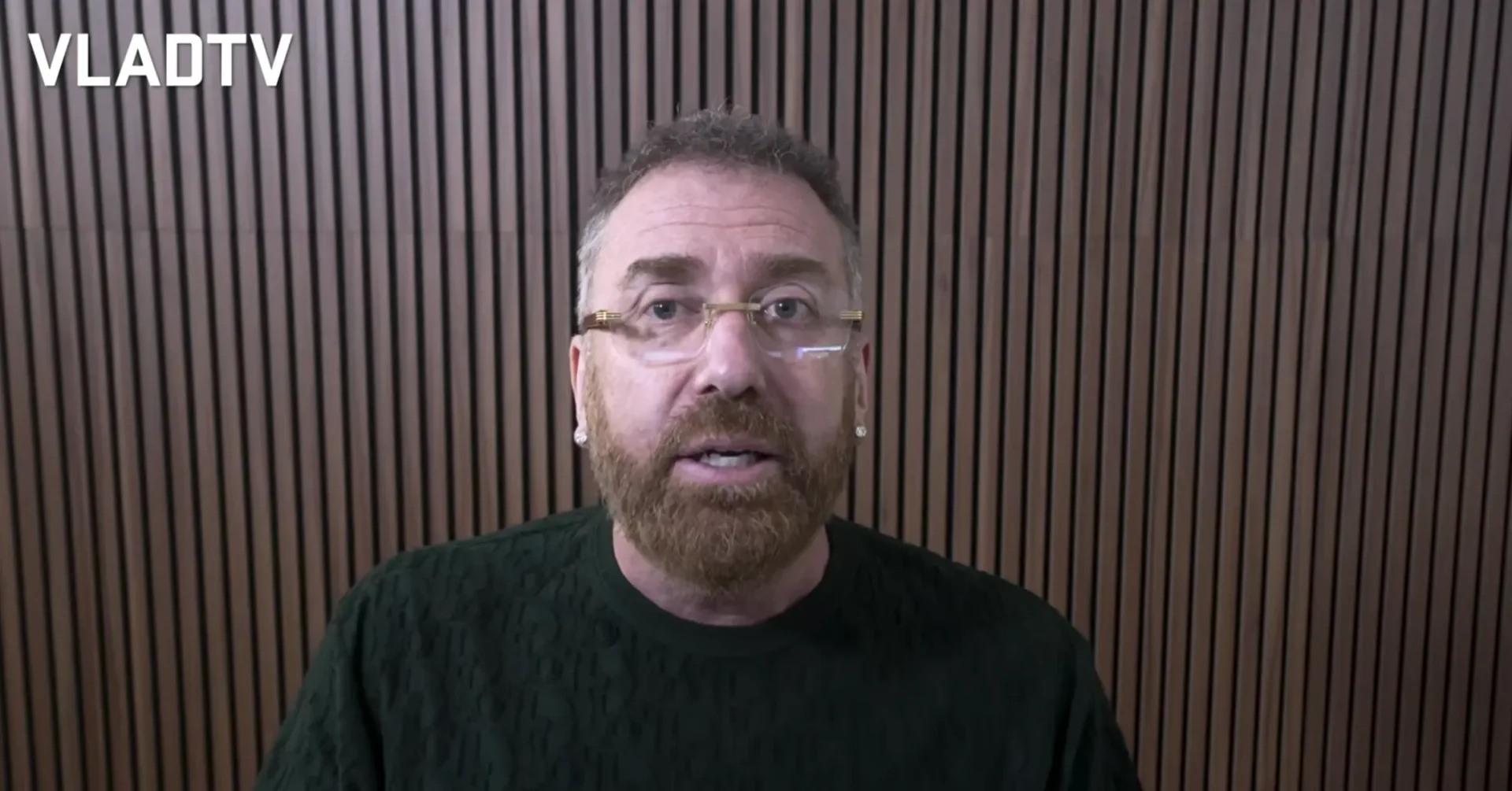
DJ Vlad and Boosie Badazz’s long-running professional relationship has moved further away from the interview chair and deeper into public dispute. Vlad is now arguing that material in Boosie’s federal gun case is inconsistent with the rapper’s own highly public anti-snitching stance.
The immediate disagreement centers on court documents that Vlad says place responsibility on Boosie’s security guard. Vlad’s point is not simply that the paperwork exists, but that he believes its contents amount to the kind of cooperation Boosie has condemned when discussing other artists. That is an accusation and interpretation from Vlad, rather than an established conclusion in the material described here.
For Boosie, the stakes are unusually personal because the argument borrows the very standard he has often applied to others. For Vlad, it adds another volatile chapter to a rift involving interview payments, business matters and a failed attempt to obtain presidential clemency. The result is a dispute where legal documents, public persona and old professional grievances are all being treated as ammunition at once.
What Vlad is alleging
Vlad revisited Boosie’s federal gun case in a recent segment and pointed viewers toward court paperwork he believes shows the rapper shifting blame toward a member of his security team. His criticism is framed around a cultural and rhetorical question: if someone identifies another person’s role in a legal matter, does that violate the anti-cooperation rules that person has championed?
That distinction matters. “Snitching” is a broad and emotionally loaded label in hip-hop discourse, not a precise legal term with one universally accepted threshold. In everyday public debate, it may be used to describe everything from giving testimony to law enforcement, to accepting a plea agreement, to making statements that place responsibility on someone else. Those situations can carry very different legal meanings and factual contexts.
The account of the dispute does not establish that Boosie cooperated with authorities, nor does it reproduce the relevant filings in full. What it establishes is Vlad’s position: he sees the references in the case material as conflicting with Boosie’s past rhetoric. That leaves a major gap between a public accusation and a definitive legal finding, one that is easy to lose in the speed and heat of an online feud.
Why the allegation has hit such a raw nerve
Boosie has regularly spoken forcefully about alleged cooperation in rap, criticizing artists whose legal decisions or public records became subjects of debate. Vlad is therefore presenting the current argument as a test of consistency rather than a brand-new standard.
He also placed Boosie’s circumstances beside earlier debates involving Gunna, Young Thug, T.I. and Gucci Mane. Those names illustrate how often the word “snitching” becomes a proxy for larger conversations about plea agreements, testimony, public documents, loyalty and credibility. But comparisons alone cannot make separate legal situations identical. Each matter depends on its own filings, statements and procedural history.
Related coverage includes DJ Vlad Challenges Boosie Badazz Over Federal Gun Case Filing.
That is especially important when a case becomes entertainment content. Court records can be meaningful primary documents, but their significance depends on what they say, who made the statement, the procedural setting and what actually happened afterward. A document cited in a video segment can spark a conversation; it does not automatically settle every claim circulating around it.
A former interview relationship unravels
The legal argument arrives against the backdrop of a much broader breakdown between the two figures. Boosie was previously among VladTV’s frequent interview guests. Their relationship has since deteriorated amid disagreements over payments for interviews and business dealings.
That history changes how the newest exchange will be received. A critique coming from a former collaborator can look different from one coming from a neutral observer, particularly when both sides have already aired frustrations in public. It does not make the documents irrelevant, but it does explain why the dispute is being read through the lens of a damaged business relationship as well as its claimed principle.
In short, this is not one clean argument about one filing. It is a stack of disputes: a federal case, an argument over language and standards, a conflict involving money, and the dissolution of a media relationship that once appeared productive for both parties.
The pardon effort is a separate but connected flashpoint
Another major source of friction is Boosie’s effort to secure a presidential pardon connected to his federal gun case. He paid lobbyists Jack Burkman and Jacob Wohl $600,000 to advocate for a pardon from President Donald Trump.
The pardon did not materialize. Boosie subsequently accused Burkman and Wohl of misleading him and sought to recover $300,000. Burkman and Wohl deny that they scammed him. Their position is that they were retained to advocate for a pardon, not to promise or guarantee one.
A pardon is an act of executive clemency. Advocacy for one can involve political outreach and lobbying, but advocacy is not the same thing as an assurance that clemency will be granted. That difference is at the center of the competing descriptions of the arrangement: Boosie has characterized the outcome as having been misled, while the lobbyists say the scope of their work was advocacy only.
Boosie also discussed the matter in a 60 Minutes appearance. He later objected to how that interview was presented and released alleged messages with the lobbyists while defending himself from claims that his conduct constituted snitching.
Public documents, public narratives and a very public fight
The present clash demonstrates how quickly separate controversies can merge online. The lobbying dispute and the argument over the federal case are not inherently the same issue. One concerns a clemency effort and the services provided by lobbyists. The other concerns how statements or materials tied to a criminal case should be interpreted. Yet Boosie’s public defense of himself has made them part of one wider narrative about credibility.
For audiences trying to separate fact from flare-up, a few distinctions are useful:
- An allegation is not a ruling: Vlad’s claim that Boosie violated anti-snitching principles is his stated interpretation of the available paperwork.
- Legal and cultural language differ: “Snitching” has broad cultural use, while legal consequences depend on specific actions and records.
- Advocacy is not a guarantee: The lobbying dispute turns in part on whether Boosie was misled about what the lobbyists could deliver; Burkman and Wohl deny making a guaranteed-pardon promise.
- Prior conflict shapes the conversation: The feud cannot be detached from the pair’s disagreements over interviews and business.
The most consequential element may be the question of consistency. Boosie’s past willingness to speak on other artists’ perceived cooperation means critics now have an obvious framework for judging his own situation. Vlad is leaning into that framework aggressively, presenting it as a reversal of Boosie’s standards rather than merely a disagreement over legal tactics.
Whether that framing holds up depends on the underlying documents and on how readers define cooperation. The supplied account does not resolve those issues. It does, however, make clear that the feud is no longer limited to a payment disagreement or a soured media partnership. It is now a contest over who gets to define the meaning of the record—and whether the same rulebook applies when the spotlight changes hands.
For more on another recent rap-world public dispute, see Remy Ma and QueenzFlip’s exchange following the “Jezebel” podcast discussion.