Sony Pictures is considering a theatrical strategy as unconventional as the scale of Sam Mendes’ planned Beatles project. The Beatles — A Four-Film Cinematic Event is currently slated for April 2028, and the studio is reportedly weighing a release in which all four films arrive on the same day or during the same week rather than being spaced across a conventional franchise calendar.
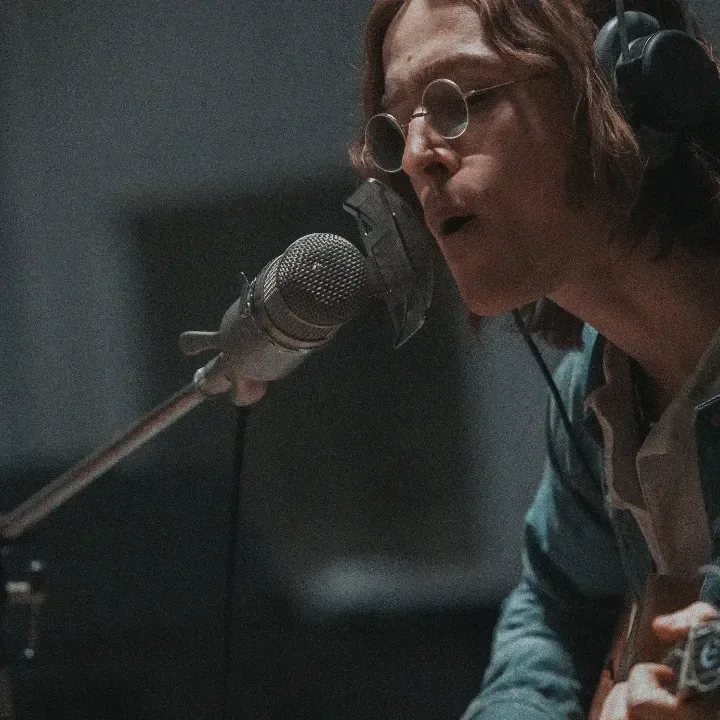
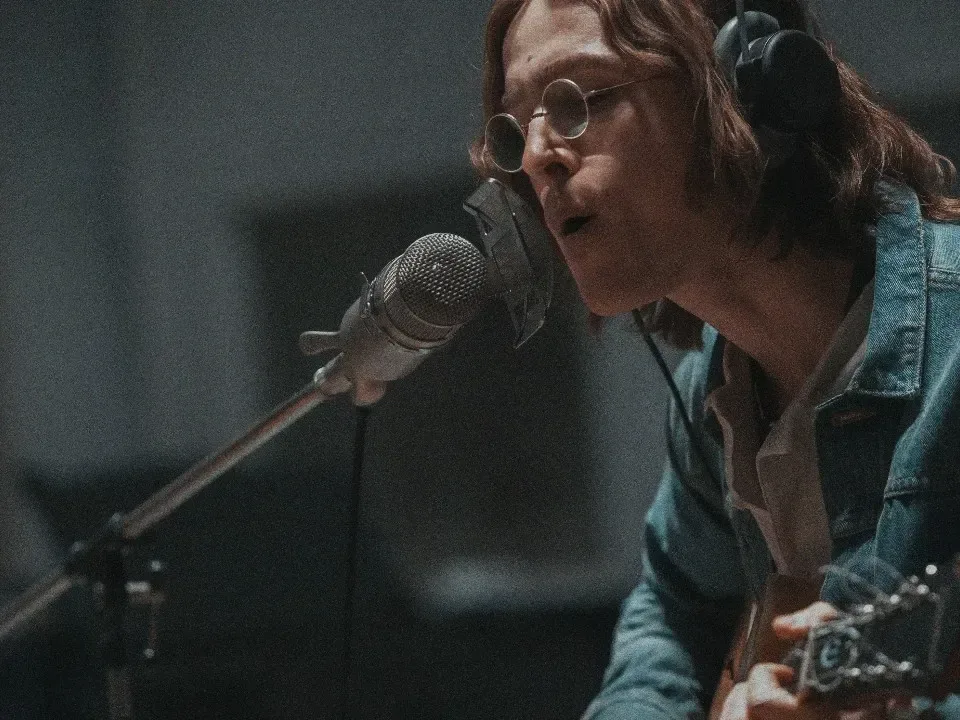
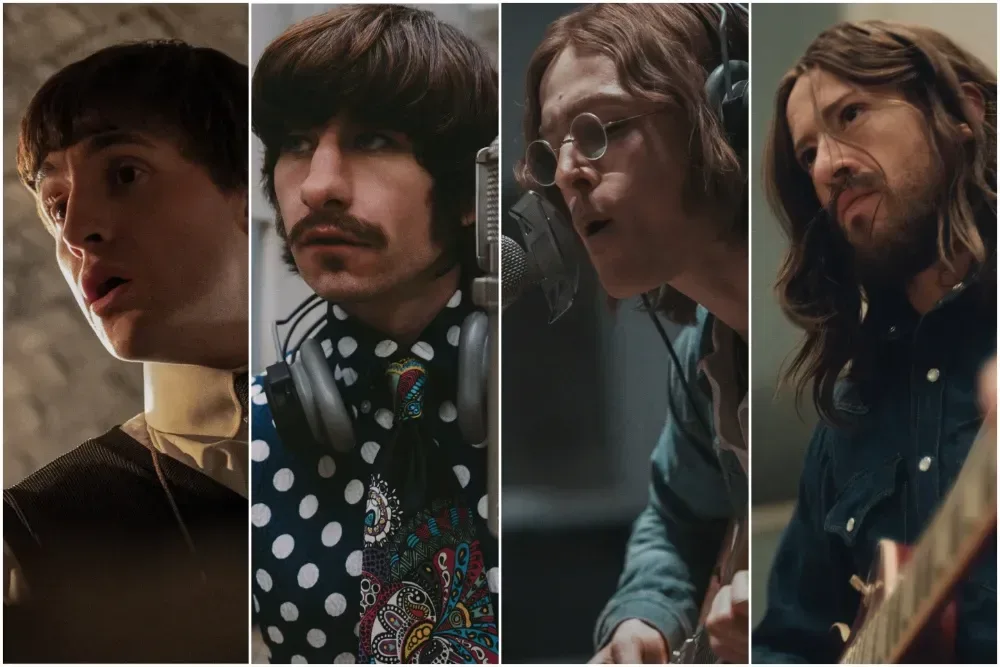
The project’s central idea is unusually direct: four separate films, each centered on one member of the Beatles. Harris Dickinson is set to play John Lennon, Paul Mescal will portray Paul McCartney, Joseph Quinn is cast as George Harrison, and Barry Keoghan will play Ringo Starr. The possible release plan would ask audiences to approach those films not as four competing biopics, but as parts of one larger cinema event.
One proposal under consideration would also alter how the movies’ theatrical performance is discussed. Rather than publicly emphasizing an individual box office total for each picture, Sony and Mendes have reportedly considered combining the grosses from all four. A four-film ticket bundle is another possibility, although that would require participating theater chains to establish a workable way to sell and redeem it.
These are reported options, not confirmed final policy. Still, they point toward an attempt to make the release model reinforce the filmmaking premise: the Beatles are being presented as a group story told through four perspectives, not as a contest to identify the most commercially valuable Beatle.
A shared release window could change the audience’s choice
When related films open months or years apart, each title has room to build its own identity, audience and commercial narrative. A simultaneous or same-week launch would produce a different decision for moviegoers. Instead of choosing whether to see one Beatles film now and perhaps another later, audiences could choose where to begin within a connected quartet—or whether to make a program of seeing all four in a short period.
Producer Pippa Harris has indicated that the intended experience is communal in timing, not necessarily exhausting in practice. The ambition is for viewers to encounter the films theatrically during the same stretch, but not for every viewer to watch four features in one day. One per week, or one on consecutive weekends, better describes the flexible rhythm being contemplated.
That distinction matters. A shared window can create a sense of occasion without dictating a single viewing schedule. It could allow fans to start with the member they know best, follow a preferred cast member, or arrange the films around their own calendar. It also leaves open the possibility that viewers may compare perspectives immediately while the entire project remains in theaters.
The reported marketing approach goes further: there may be no designated “right” order. If that plan holds, the films would be positioned less like chapters that require a fixed sequence and more like linked viewpoints. In narrative terms, a viewpoint is the lens through which the audience experiences people and events. The practical implication is that a Lennon-led film would not inherently be marketed as an entry point ahead of McCartney, Harrison or Starr.
Why combined box office reporting is notable
Box office reporting usually treats each theatrical release as its own commercial result. A combined total would instead frame the four films as a single package for public-facing discussion. That would be especially meaningful for a project built around four individual stars whose cultural visibility is often discussed in unequal terms.
The reasoning appears straightforward: separate totals could invite reductive scorekeeping. If one film opened much higher than another, coverage might turn a creative four-part event into a league table of audience preference. The risk is not merely that one title would be called a hit and another a disappointment; it is that the results could be interpreted as a verdict on the importance of Lennon, McCartney, Harrison or Starr themselves.
Pooling the figures would not erase the fact that audiences must select individual tickets, showtimes and films. Nor would it guarantee that every member receives equal attention from every moviegoer. What it could do is shift the headline figure away from comparisons among the four leads and toward the turnout for the entire Beatles undertaking.
That makes the proposed reporting structure an extension of the release strategy rather than an isolated accounting choice. The same-day concept, a possible four-pack, and one combined gross all encourage audiences to see the quartet as one event with four distinct components.
What a four-film ticket bundle would mean
A ticket bundle would be the most concrete invitation to commit to the entire project. In simple terms, it would package admission to all four films rather than requiring four unrelated purchases. But the idea remains tentative, and there is an important logistical caveat: theater chains would need to determine how such a product works.
That could involve questions that have not been answered publicly: whether customers choose all showtimes when they buy the bundle, how redemption would be handled across dates, and whether every participating cinema would offer the same arrangement. Until exhibitors and Sony establish those details, the bundle should be viewed as a possibility rather than a promised option.
For audiences, the appeal is clear even without confirmed mechanics. A bundle signals that seeing all four films is a complete experience, while the absence of a mandated order would preserve choice. It is an approach closer to planning a personal screening series than simply purchasing sequels as they arrive.
The supporting cast expands each Beatle’s world
The announced ensemble suggests the films will place the four musicians within the network of family, collaborators and partners around them. Saoirse Ronan will play Linda McCartney, while Anna Sawai is cast as Yoko Ono. Aimee Lou Wood will portray Pattie Boyd, and Mia McKenna-Bruce will play Maureen Starkey.
The broader group around the band also includes David Morrissey as Jim McCartney, Paul McCartney’s father, and Leanne Best as Lennon’s Aunt Mimi. James Norton is set to play Beatles manager Brian Epstein, while Harry Lloyd will portray producer George Martin.
Other announced roles include Bobby Schofield as road manager and confidant Neil Aspinall, Daniel Hoffman-Gill as roadie Mal Evans, Arthur Darvill as press officer Derek Taylor, and Adam Pally as music manager Allen Klein. Their inclusion indicates that the project’s scope reaches beyond four isolated portraits. The Beatles’ story necessarily involves the people who helped shape their professional lives, public image and personal circles.
That is one reason the no-fixed-order idea is potentially interesting. The same people may matter differently depending on which musician’s life anchors a particular film. A figure introduced as part of one member’s personal world could be seen through another member’s professional or group context elsewhere in the series. Whether the movies tell overlapping events from distinct angles, or cover different periods and priorities, has not been detailed. The reported release concept nevertheless makes room for an audience to discover those relationships in its own sequence.
A large theatrical proposition, not four ordinary biopics
The project is being described as The Beatles — A Four-Film Cinematic Event, and the wording is revealing. “Cinematic event” is not a technical format on its own; it is a positioning term that emphasizes a limited period in which audiences are invited to participate together. The proposed plan appears designed to make the theatrical run itself part of the experience.
That shared window could also focus conversation. With all four films available at once, discussion could move between performances, characters and points of view in real time. Viewers would not have to wait for a later installment to compare it with an earlier one. At the same time, the absence of a declared order would make those discussions less likely to follow one prescribed path.
There is a broader industry-facing dimension as well. Theatrical grosses are often used as easy shorthand for cultural interest and commercial success. A combined reporting plan would challenge that shorthand by arguing that the relevant unit is the four-film event, not any one installment. The trade-off is obvious: it could make individual performance harder to parse publicly. But that seems close to the point. The reported goal is to discourage a narrative in which some Beatles are perceived as theatrical winners while others are treated as supporting acts in their own films.
It is an unusually coordinated answer to a problem created by the concept’s biggest strength. Four separate lead characters provide room for four separate stories, but they also invite comparison. Sony’s possible release and reporting strategies would seek to preserve the individuality of those stories while keeping the Beatles’ collective identity at the center.
For now, the firm details are the April 2028 target, Mendes’ direction, the four-film structure and the announced cast. The same-day rollout, the aggregate box office approach, the four-ticket package and the order-free marketing remain under consideration. If adopted, they would make this release less about picking a favorite film first and more about choosing how to experience one interconnected quartet in theaters. For more on how industry conversation around theatrical underperformance can shape studio risk-taking, see this look at the debate over celebrating a film as a bomb.