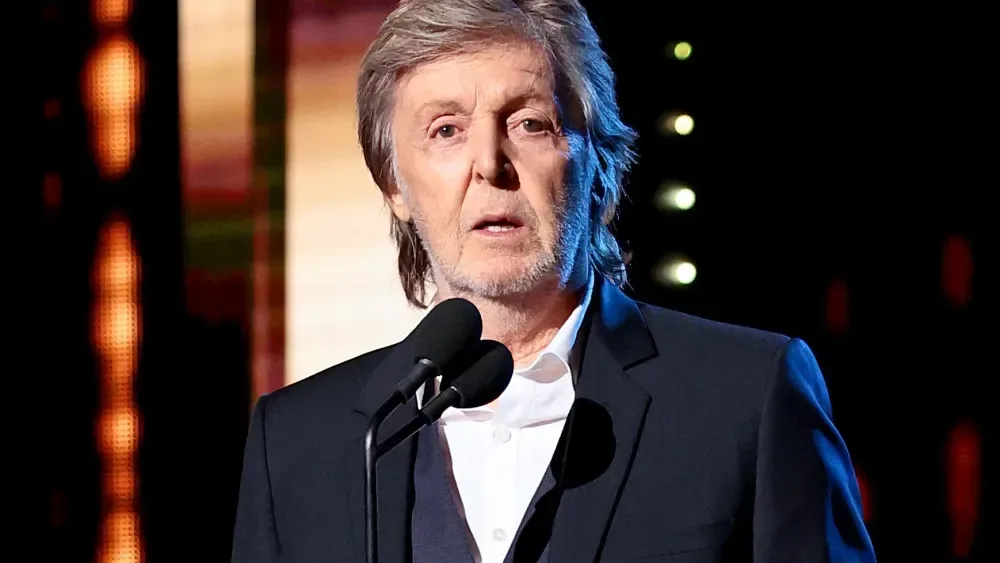
Paul McCartney has identified a very particular continuity problem in the upcoming Beatles movie project: he does not want to be depicted as noticeably shorter than John Lennon.
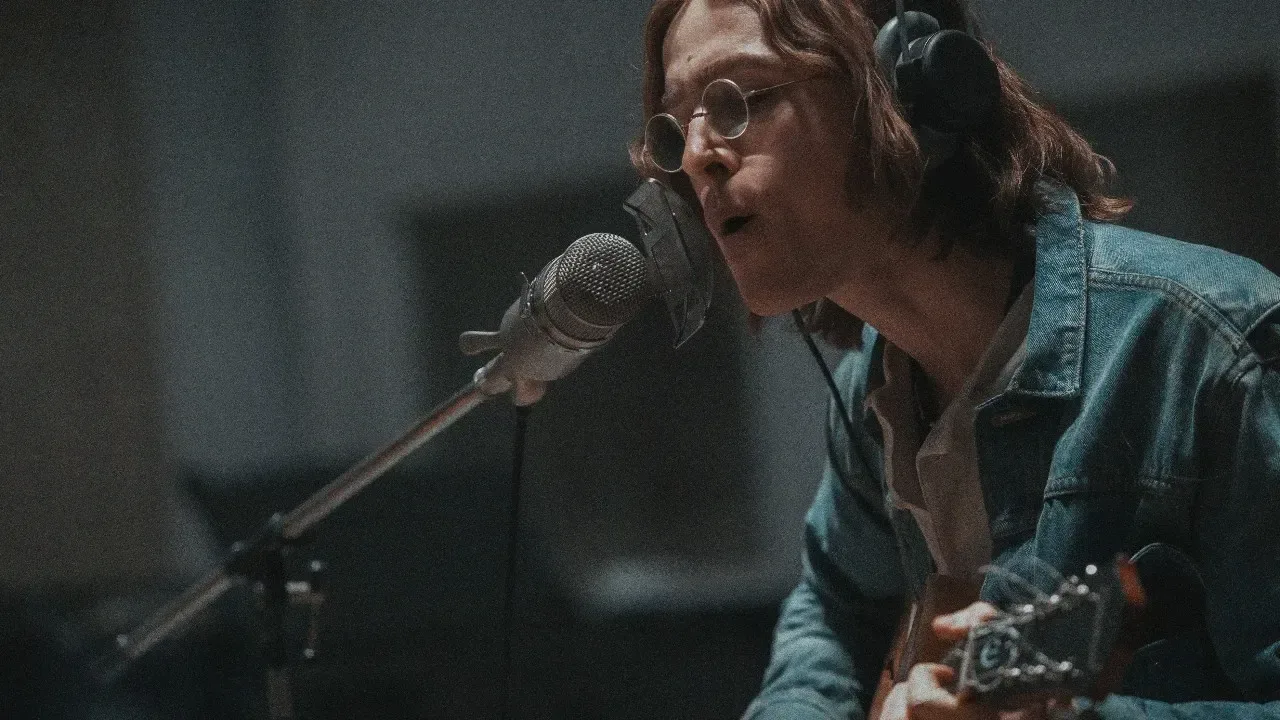
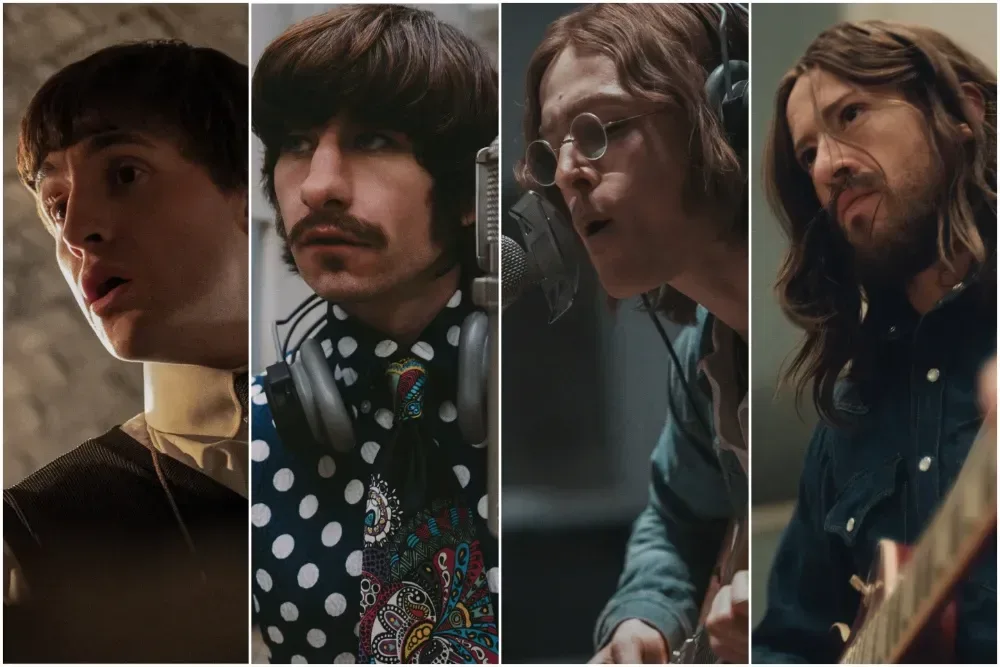
The musician discussed the issue while talking about Sam Mendes’ planned four-film Beatles event, which casts Paul Mescal as McCartney, Harris Dickinson as Lennon, Joseph Quinn as George Harrison and Barry Keoghan as Ringo Starr. McCartney’s concern is not about the concept of four separate movies or the choice to dramatize the band. It is about the visual relationship between the actors playing him and Lennon.
McCartney said the Beatles were effectively the same height, with Starr “a bit smaller,” and argued that photographs support that recollection. His objection arose after Mendes sent him an image from production showing the actors recreating the Abbey Road crossing. In that still, McCartney said, Mescal looked markedly smaller than Dickinson.
“We were all the same height!” McCartney said, describing a recurring screen image he disputes.
It is an unusually granular note from one of the people whose life will be interpreted in the project, but it also gets at a broader issue in biographical filmmaking. A few inches of perceived difference can become storytelling shorthand. When one performer is staged as bigger, smaller, more imposing or physically diminished next to another, viewers may absorb a hierarchy before dialogue has done any of the work.
For McCartney, this apparently is not a new irritation. He recalled making the same point to Sam Taylor-Johnson about Nowhere Boy, the 2009 biographical drama in which Aaron Taylor-Johnson played teenage Lennon and Thomas Brodie-Sangster played McCartney. McCartney felt that film presented its version of him as smaller and more timid next to Lennon, including a moment where Lennon knocks the McCartney character down.
Taylor-Johnson’s response, as McCartney remembered it, was that the film was a movie rather than a documentary. McCartney did not find that distinction especially persuasive. His reaction makes the dispute less about literal measurement alone than about what physical scale communicates: he does not accept a visual choice that, in his view, makes the on-screen McCartney seem weaker than Lennon.
Why a height difference can change a biopic’s meaning
Biopics routinely balance factual fidelity with dramatic construction. Costume, casting, framing and performance all help an audience instantly identify a real person, even when a performer cannot perfectly resemble them. The supplied details do not say how Mendes intends to address McCartney’s concern, and it would be premature to presume that the finished scene will retain the imbalance McCartney saw in a production image.
Related coverage includes Paul McCartney Raises Height Concern Over Paul Mescal in Beatles Films.
Still, McCartney’s response illustrates why the detail matters to him. The Abbey Road crossing is not an incidental setting. It is among the Beatles’ most recognizable images, and any recreation invites immediate visual comparison. If the four performers’ proportions stand out to McCartney in a still of that image, the concern is understandable on its own terms: a recreation of a highly familiar photograph is likely to make small differences in posture, spacing and height more conspicuous.
That does not mean a film must use actors of identical stature to depict a group of musicians. Rather, it means that staging can carry interpretive weight. Blocking is the placement and movement of performers within a shot. A performer positioned closer to the camera, placed on a higher curb, or framed from a different angle can appear larger or more dominant. Perspective is the visual effect created by the camera’s relationship to subjects at different distances. Neither term indicates that a technique has been used in the Beatles production; they simply explain why an actor’s real-world height is only one element that shapes what viewers see.
McCartney’s comments suggest he is watching for the finished films to avoid turning that visual difference into a statement about the band’s personal dynamic. His use of the word “wimpy” in revisiting Nowhere Boy is revealing. He was not merely objecting to an inaccurate silhouette. He was rejecting the character implication attached to being the smaller figure opposite Lennon.
The four-film structure raises the stakes for characterization
The Beatles – A Four-Film Cinematic Event is designed as four movies, each centered on one member of the band. Mendes is directing the project, and Sony Pictures is backing it. Production is currently described as a year-long process, with all four films planned for theatrical release in April 2028.
That format is the key context for McCartney’s complaint. A conventional single biopic has one overall viewpoint, even if it attempts to give multiple people substantial attention. Here, each Beatle is set to receive a film centered on him. The format potentially gives McCartney, Lennon, Harrison and Starr separate opportunities to function as the emotional focal point rather than as supporting figures in one collective narrative.
The project has also announced an unusually concentrated rollout. Producer Pippa Harris said the aim is for audiences to experience the movies in cinemas during the same period, without expecting everyone to watch all four in one day. Her example was a schedule such as one film per week, or several across successive weekends. In practical terms, that makes the April 2028 release a shared event rather than four isolated installments spread across years.
For audiences, the release plan may make comparisons unavoidable. Viewers will be able to examine the casting, tone and portrayals of all four members in close proximity. That is one reason details such as relative height can become unusually visible. A recurring visual choice in one film could be contrasted with the way another member is framed in his own movie soon afterward.
The casting also puts the actors under a distinctive kind of scrutiny. Mescal is playing McCartney, while Dickinson takes on Lennon; Quinn and Keoghan portray Harrison and Starr, respectively. McCartney’s public reaction establishes at least one aspect of resemblance that he considers meaningful. It does not establish a broader verdict on any of the performances, scripts or films, none of which have been described here beyond the project’s structure and production status.
McCartney’s complaint is about a pattern, not a single frame
The Abbey Road still prompted the immediate message to Mendes, but McCartney framed the matter as something he has seen before in Beatles-related screen portrayals. His recollection of Nowhere Boy makes the upcoming production part of a longer grievance: screen versions, he believes, tend to make him the smaller person beside Lennon.
That pattern is why the issue has a little more substance than a joke about actor measurements. The concern is tied to memory, representation and the durable public image of a band whose photographs have been circulated for decades. McCartney explicitly points to those photographs as evidence for his version of their proportions. Whether viewers agree with that reading is separate from the fact that he is making a factual and representational claim about himself.
There is also a useful distinction between historical accuracy and dramatic truth. Historical accuracy refers to verifiable details, such as the appearance or relative positioning of real people. Dramatic truth is the emotional or thematic meaning a filmmaker aims to convey. McCartney’s anecdote about Nowhere Boy sets those ideas in tension. The director’s answer, as he relayed it, defended the needs of a movie; McCartney’s reply defended the reality he says the movie altered.
Neither principle automatically settles every biographical-film decision. But when the subject is still able to speak for himself, his response becomes a meaningful part of how audiences evaluate the adaptation. McCartney is not presenting the concern as an abstract objection to artistic license. He is telling Mendes directly that he does not want Mescal’s apparent shorter stature next to Dickinson to reinforce an old screen image of “little Paul” against an outsized Lennon.
What is known—and what remains open
Several things are clear from McCartney’s remarks and the project details: Mescal, Dickinson, Quinn and Keoghan are attached to play the four Beatles; Mendes is directing; the production is underway; and the four theatrical releases are planned for April 2028. McCartney has seen at least one image from filming and has objected to how Mescal appeared beside Dickinson in it.
What is not established is equally important. There is no stated solution from Mendes, no indication of whether the questioned image reflects the final shot, and no public description of camera methods, costumes, footwear or other production choices. There is also no reason to treat one still as a complete account of how the finished movies will portray McCartney and Lennon.
For now, the episode offers a glimpse at the precision with which McCartney is assessing a new dramatization of the Beatles. The project is sizable by design: four films, four central perspectives, one release month and a cast playing figures whose faces and body language are known worldwide. In that environment, McCartney has made one priority unmistakably plain. He does not want cinematic composition to recast him as the smaller Beatle.
It is also a reminder that music-screen stories are often examined as closely as the music itself. For another recent item at the intersection of artists and pop culture, see Drake’s “Habibti (FOMO)” reaching the top of the R&B/hip-hop albums chart.