Saturday Night Live put President Trump’s reported failure to win the Nobel Peace Prize at the center of its latest Weekend Update, with Colin Jost and Michael Che building the desk segment around a simple comic premise: a politician’s apparent outrage over not receiving a peace honor is already funny enough to require very little embellishment.
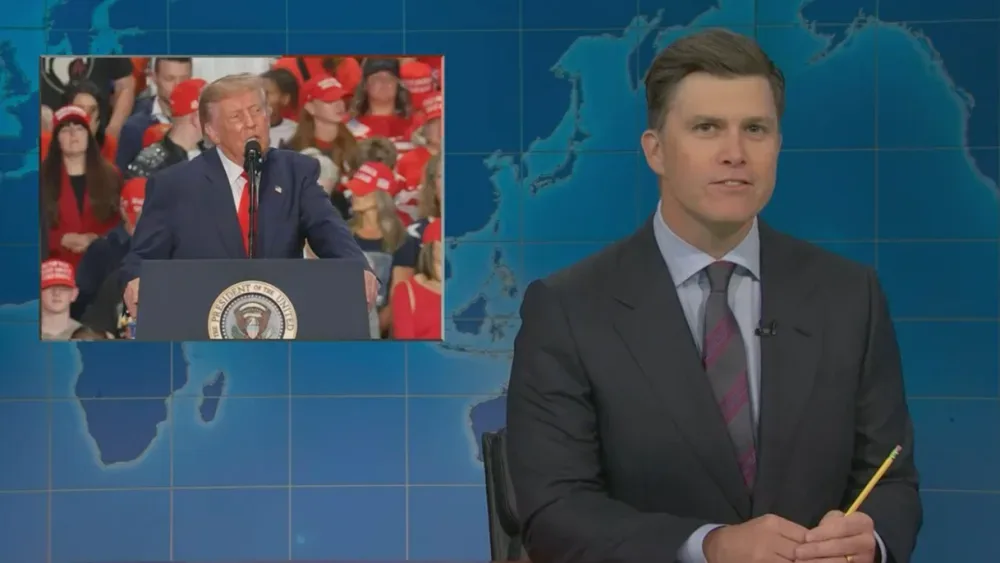
The bit arrived after an episode hosted by Shane Gillis. Weekend Update, led by Jost and Che, shifted quickly to the Nobel story. Jost opened with mock-grief, presenting the loss as a supposedly “tragic developing story” for Trump before undercutting the sentiment with the implication that Trump was not, in fact, handling it calmly.
That setup matters because it establishes the segment’s comic engine. The joke is not merely that Trump missed an accolade. It is the contrast between the serious public purpose implied by the Nobel Peace Prize and the personal, competitive response that Weekend Update attributed to him. Jost’s delivery treats the supposed disappointment as overblown, then lets the stakes of the real-world subject make that overreaction look still larger.
Jost builds the joke around an awards-season mismatch
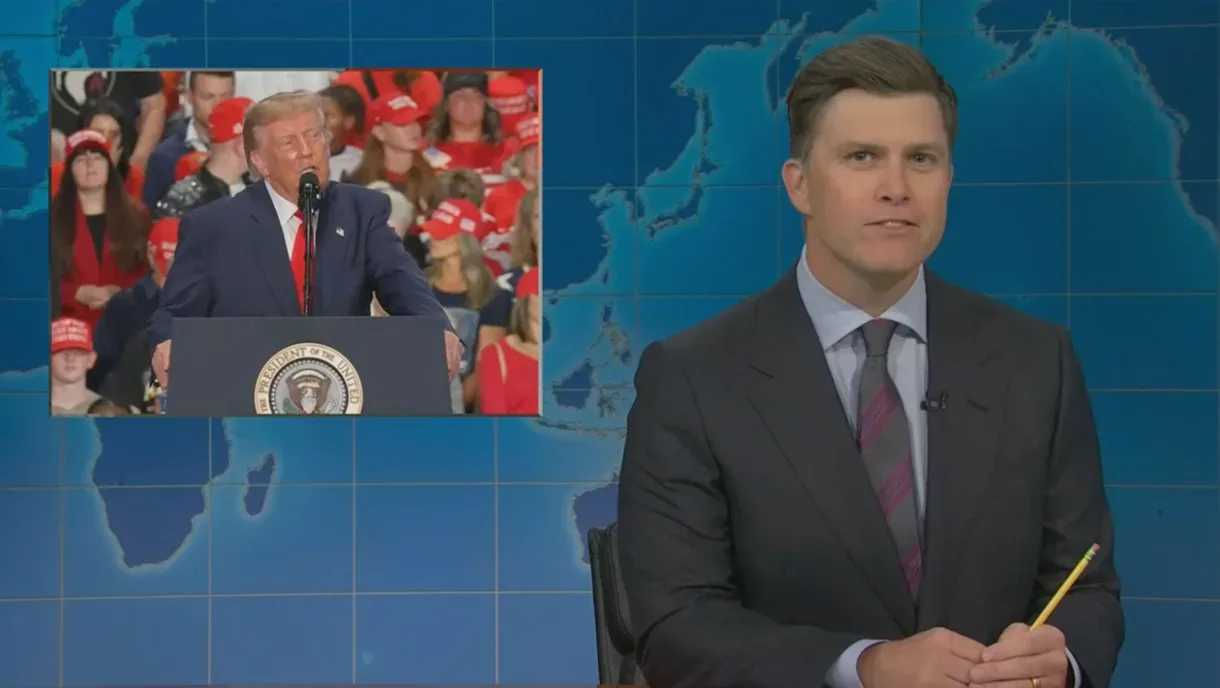
Jost then introduced a rally clip in which Trump complained that the Nobel Prize had gone to “a liberal person who works at the United Nations who nobody has ever heard of.” That line gave the Update hosts a direct hook: the frustration was no longer an inference made by the desk, but the target’s own reported response.
The award recipient identified in the segment was Navi Pillay, described as a South African human-rights advocate. The material surrounding the sketch credits her with involvement in the anti-apartheid movement, service as a judge on the International Criminal Tribunal for Rwanda, and leadership of a United Nations commission that concluded Israel committed genocide against Palestinians in Gaza. Israel’s Prime Minister Benjamin Netanyahu was reported to have criticized the decision.
Those are grave subjects, and Weekend Update did not attempt to turn Pillay’s work into the punchline. Instead, the comedy positioned Trump’s reported grievance beside the résumé and mission associated with the prize recipient. It is an old satirical construction, but a durable one: place a claim of entitlement next to evidence of service, then let the disparity do much of the work.
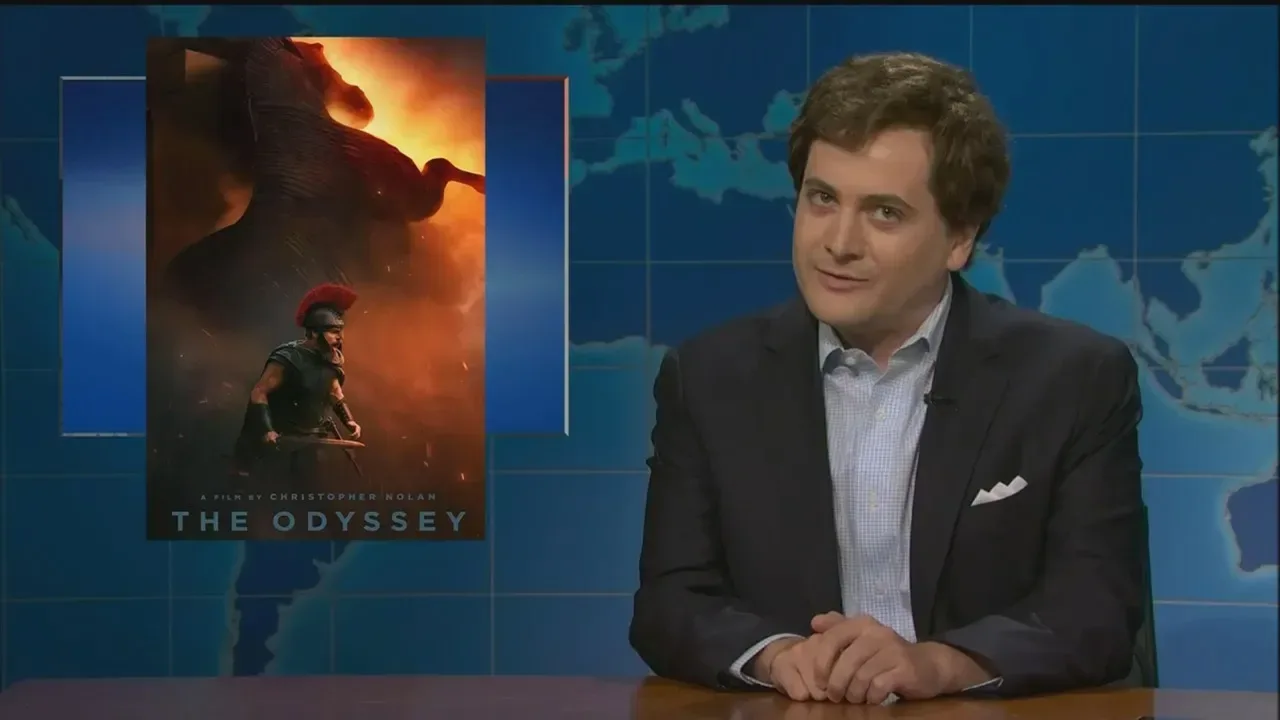
Jost’s biggest line pushed that contrast into an entertainment-industry metaphor. After referring to Trump’s conduct in terms including the reported abduction of Venezuela’s president and extensive military action, Jost said Trump still seemed to believe this could be his year for the peace award. He compared the expectation to his own hypothetical belief that he might win an Oscar for Tom & Jerry.
The comparison is deliberately absurd, but it is precise in structure. An Oscar is not just any prize; it is an award that is supposed to recognize a particular kind of accomplishment in a particular medium. Jost uses that mismatch to argue that, in the segment’s view, Trump’s expectations and the Nobel’s stated ideal are similarly incompatible. It is a joke about category error: arriving at the wrong ceremony with the wrong résumé and somehow expecting the trophy anyway.
Related coverage includes ‘SNL’ Weekend Update Targets Trump’s Nobel Peace Prize Frustration.
What Weekend Update is doing when it shifts from news to satire
Weekend Update borrows the visual language of television news—two anchors behind a desk, topical items, clips and a brisk progression of headlines—but it is a comedy segment rather than a conventional report. That distinction is important here. Its writers use current events as raw material, then amplify contradiction and hypocrisy for laughs. The hosts’ remarks about military actions and Trump’s motivations are part of the satirical argument of the segment, not a replacement for independent reporting or legal findings.
In this case, the factual scaffolding described on air is relatively compact: a peace prize was awarded, Trump reportedly objected, and Pillay made a lighthearted remark about potentially sharing the prize if a German conference audience applauded more. The rest is escalation. Jost turns the objection into an awards-campaign fantasy; Che turns Pillay’s joke into a warning about how Trump might react to it.
Che’s line was the darker of the pair. He described Pillay’s share-the-prize quip as harmless, then suggested it could cause Trump to target whichever country he wrongly believed she came from. The laugh, if it lands, comes from taking an innocuous conference joke and projecting a grotesquely disproportionate political response onto it.
That is also where the segment’s tone becomes especially pointed. Che is not arguing that Pillay’s remark was provocative. He is explicitly characterizing it as harmless. The target is the idea that an internationally significant award, and any public conversation around it, might be filtered through a leader’s personal resentment.
Why the Pillay context changes the shape of the gag
Without the context about Pillay, this could have been a standard celebrity-style awards-snubbing joke. With it, the writers have a sharper contrast available. The Nobel Peace Prize is treated in the segment as a recognition tied to human rights and conflict, while Trump’s reported response is framed as a complaint about personal status and the ideological identity of the person selected.
That contrast is why Jost’s Tom & Jerry comparison is more than a random title drop. It reframes the Nobel grievance through an awards-show lens that audiences immediately understand. Winning a prize is one thing; acting as though every prize should be one’s own is another. The point is not that pop-culture awards and peace prizes carry identical weight. The point is that the latter makes the alleged expectation look even more detached.
The segment also does not ask viewers to memorize institutional details to follow the punchlines. A brief description of Pillay’s background gives enough context to establish why she is a serious choice within the story’s framing. From there, Jost and Che focus on the reaction. That economy is a recognizable Weekend Update approach: introduce the real event, identify the most revealing bit of behavior around it, and use a few lines to turn it into a broader character critique.
For readers following other United Nations-related stories, the UN’s recent support for Coco Gauff after racist abuse offers a separate example of the organization appearing in a very different public-facing context.
A short item that carries a larger critique
The strongest parts of the exchange are its smallest turns. Jost begins by pretending that the news is devastating, only to mock the prospect that Trump is accepting it well. He moves from a reported rally complaint to an exaggerated awards analogy. Che then takes a mild remark from Pillay and turns it into a bleak hypothetical about retaliation. Each beat increases the gap between the dignity of the occasion and the conduct the hosts are lampooning.
It is an effective structure because it does not depend on a long imitation or a complicated sketch premise. There are no elaborate costumes, no fictional setting and no need to invent a new character. The desk format lets the hosts make their case almost entirely through juxtaposition: peace prize, public complaint, human-rights background, self-regard, then an escalating joke.
The broader takeaway is less about whether a late-night desk joke can settle a political argument than about what it chooses to spotlight. Weekend Update treats the reported Nobel disappointment as evidence of a familiar satirical weakness: the inability to see an honor as bigger than one’s own desire to possess it. In Jost and Che’s hands, that makes the supposed snub the setup—not the tragedy.