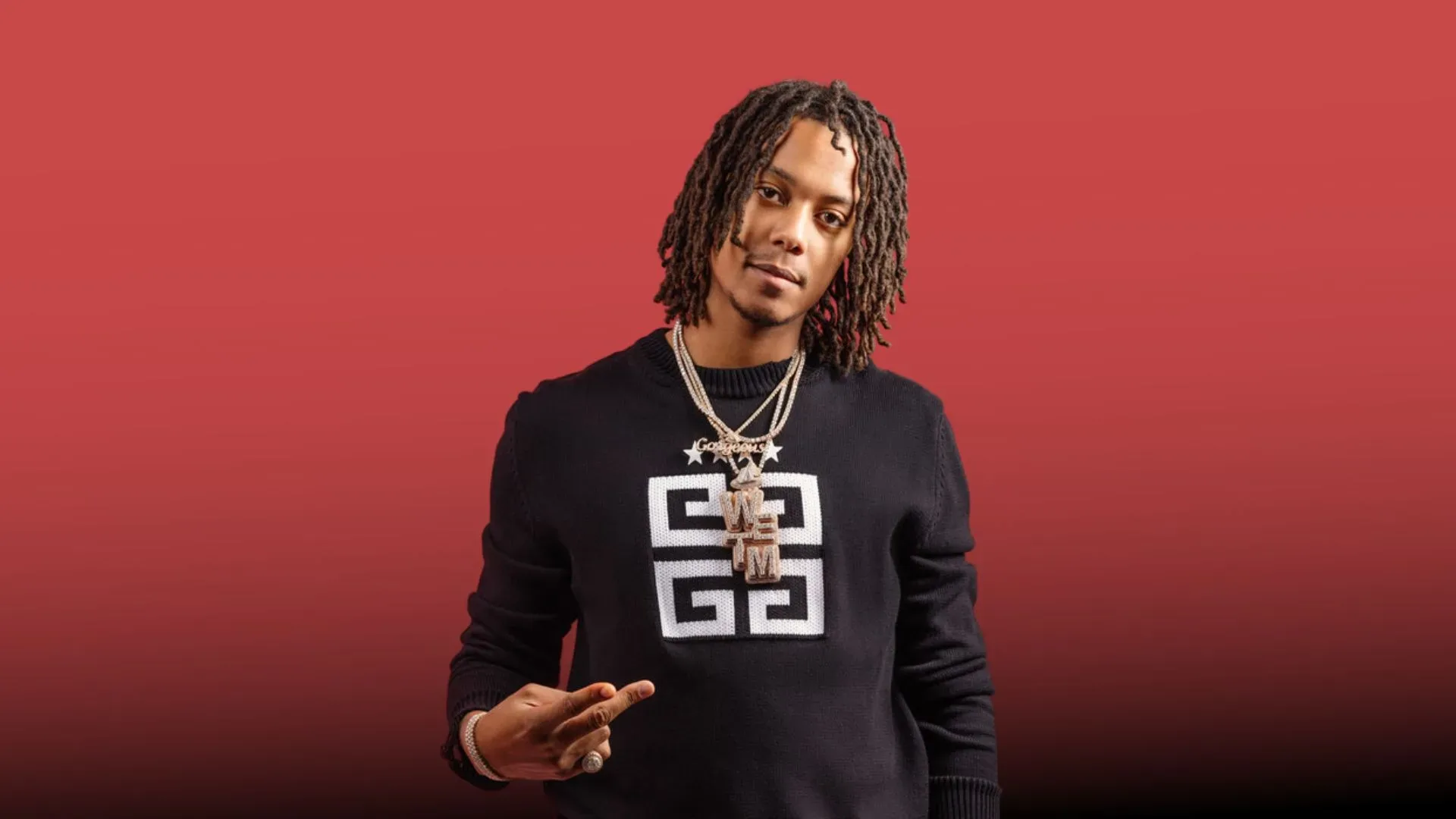
Skilla Baby is adding a major television credit to an acting path he has been building deliberately: the Detroit rapper, born Trevon Gardner, has a role in Power: Origins, the prequel set within the television universe developed with 50 Cent’s involvement.
The project centers on the earlier years of Ghost and Tommy, two foundational characters in the wider Power franchise. For Skilla Baby, the casting is the latest reported step in a transition that has included training, auditions and smaller screen work—not a sudden detour from music.
He said he spent two years taking acting classes before landing the role. That detail is especially meaningful in an entertainment landscape that often treats musicians appearing on screen as a simple cameo exercise. Classes do not guarantee a performance’s quality, but they indicate work on the mechanics of the craft: responding to direction, sustaining a character, learning blocking and understanding the pace and collaboration of a production set.
“I have a newfound respect for actors and how many hours they work, how serious they take it,” Skilla Baby said. “When I go to a set, I go as Trevon. I’m on time, I try to make everyone comfortable and do the best that I can do.”
Why the preparation matters
The distinction Skilla Baby makes between his performance name and Trevon is a useful window into how he is approaching the job. A musician’s public persona can be central to a song’s impact. Acting asks for something different: serving a role, working inside a scene’s larger purpose and sharing space with a cast and crew whose work must fit together precisely.
That is why the rapper’s emphasis on punctuality, consideration for colleagues and preparation matters as much as the headline casting itself. Screen productions are collective work. Actors may be the most visible people in a finished episode or film, but crews coordinate lighting, sound, camera placement, costumes and countless production details around the performance. Being ready and dependable is not a glamorous part of the story, yet it is fundamental to functioning on a set.
His prior screen credits include a guest appearance in Diarra from Detroit and the part of Meechie in Moses the Black, a film that also includes Omar Epps, Wiz Khalifa and Quavo. Taken together with the new Power: Origins role, those appearances suggest an actor seeking continued experience across projects rather than framing one casting announcement as an endpoint.
Skilla Baby had previously discussed taking classes and auditioning in 2024. He also credited 50 Cent with offering advice and helping create opportunities. The connection makes the Power: Origins appearance a logical development, but the reported two-year training period is important context: access can open a door, while preparation determines what an artist can do after walking through it.
A career shift shaped by recovery
The acting news arrives alongside a more personal change in Skilla Baby’s outlook. On May 22, 2025, he was shot in Redford Township, Michigan, while driving his SUV. Police said he was hit three times after someone fired more than 20 rounds from another SUV. He crashed, and a witness took him to a hospital.
He has subsequently spoken publicly about depression, recovery and the damage caused by trying to endure difficult experiences in isolation. Those comments should not be reduced to a promotional angle for either his acting or music. Instead, they provide context for the priorities he has described: happiness, faith, a move away from street life and a desire to speak more honestly to people who may assume public success prevents pain.
“The worst thing for our mental health is to go through things alone,” Skilla Baby said.
That is a straightforward observation with wide relevance. Public recognition can make it harder, not easier, to communicate vulnerability, particularly when audiences expect an artist to maintain a fixed image. Skilla Baby has acknowledged the concern of how others might respond, while arguing that discussing his experience can still be useful to listeners who face their own struggles.
His recent remarks are not ambiguous about the kind of future he wants. He has said the 2025 attack altered his relationship with the identity and expectations tied to street life. He has also said that he wants to be happy and does not want to participate in that life. The significance is not that a musician has changed subjects; it is that he is placing survival and stability ahead of an image that can demand the opposite.
The Price of Fame connects music to the same message
Those themes inform The Price of Fame, Skilla Baby’s 22-track August album. The record features Nas, Chris Brown, Bryson Tiller and gospel singer Erica Campbell. Its title points toward the tension at the center of his recent comments: visibility may bring professional opportunity, but it does not remove trauma, depression or the pressure of outside expectations.
On “No Tears,” Skilla Baby addresses the shooting. “Strength in Numbers,” featuring Campbell, calls for unity in the face of poverty and violence. The two tracks give the album’s framing a clearer shape. One engages directly with a personal event; the other looks outward toward community conditions. That combination fits his stated interest in showing both the low points and the progress that followed.
He has said the album aided his recovery and helped him reach a better headspace. It is important to describe that as his own account, rather than treat a creative project as a universal substitute for mental-health care. What the record can clearly represent is a vehicle for expression: a place to organize experience, share it with an audience and define a public direction on his own terms.
That direction extends beyond music and acting. Skilla Baby has spoken about wanting younger listeners to see financial literacy, education and intelligence treated as valuable aspirations alongside entertainment and athletics. The point is not a rejection of rap or performance. His own career remains built in both fields. Rather, he is arguing for a wider view of what achievement can look like and what people should feel empowered to pursue.
From Detroit music to a wider creative lane
Before the acting work, Skilla Baby established himself through Detroit music with songs including “Bae” and “Mama.” Collaborations with Tee Grizzley expanded his reach, while projects such as We Eat the Most, The Coldest and Crack Music 3 helped define a catalog that joined street-focused storytelling with songs aimed at women.
That background explains why his move toward television is less disconnected than it might initially appear. Music had already made storytelling, persona and audience connection central to his work. Acting raises a different set of demands, but it also gives him another medium through which to develop those skills. The reported classes, auditions and prior credits are evidence that he recognizes the difference.
It also fits his broader insistence on creative autonomy. Skilla Baby has said that, as he has gotten older, he creates what he wants rather than allowing other people’s reactions to dictate his choices. That perspective does not make public response irrelevant—artists necessarily work before audiences—but it shifts the starting point. The work begins with a personal goal instead of a perceived demand to repeat an old formula.
For fans of music-driven TV casting, the immediate question will be what character Skilla Baby plays and how large the role will be. Those specifics have not been detailed here, so it would be premature to project the scope of his involvement or the shape of his performance. The confirmed development is narrower and still notable: he has a part in Power: Origins, following sustained preparation and earlier screen roles.
Meanwhile, his music schedule continues. Skilla Baby is set to begin The Price of Fame Tour on October 21 at Irving Plaza in New York. The overlap between a tour, an album centered on recovery and a growing acting résumé presents a picture of an artist expanding his options while trying to protect the person behind the stage name.
That personal dimension is what gives the Power: Origins casting its weight. It is not simply another rapper entering television. It is part of a stated effort to build a life organized around health, happiness, faith, disciplined work and creative choice. For related music news, see Young Thug’s discussion of planned Drake collaborations and an R&B album.