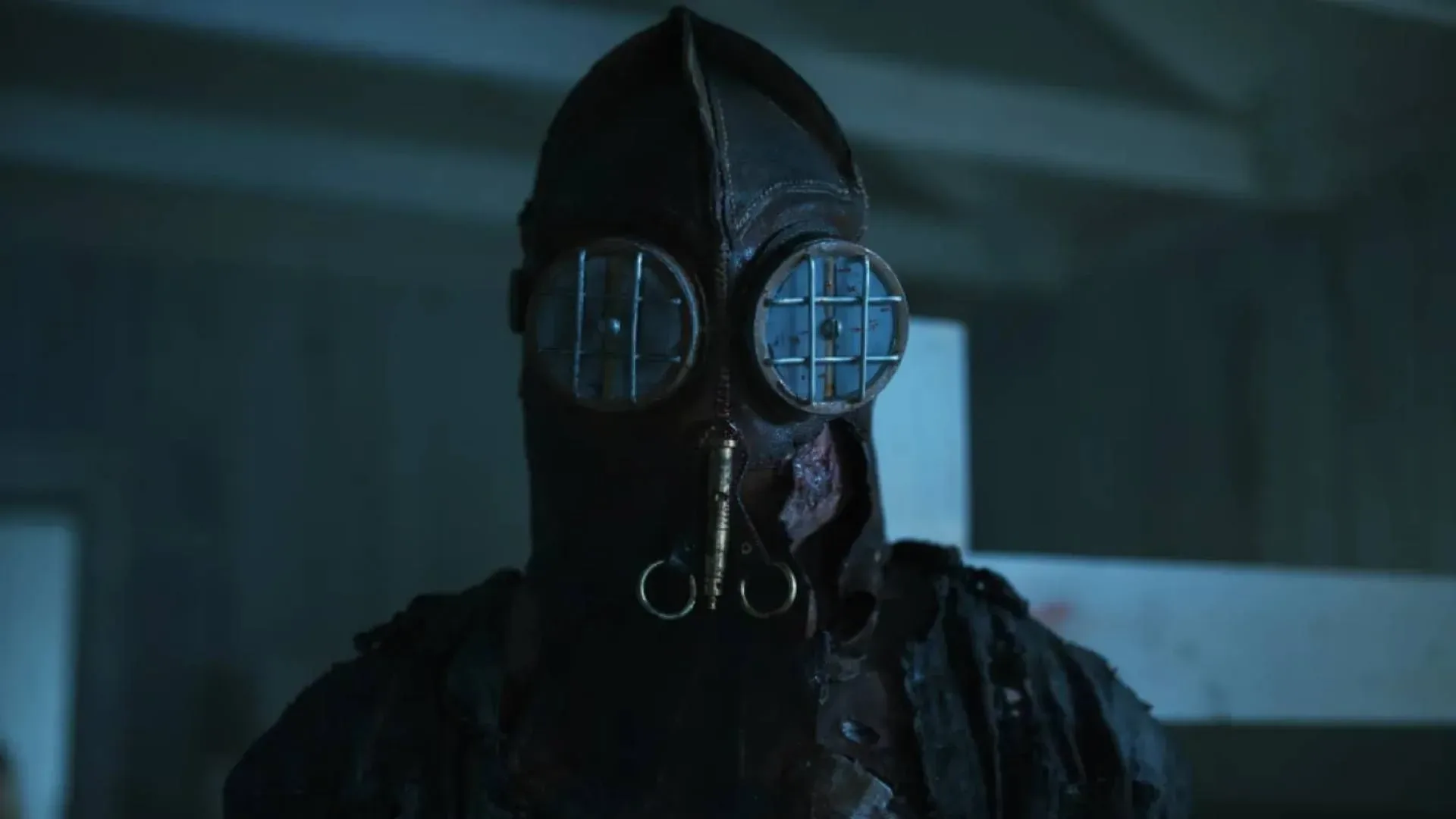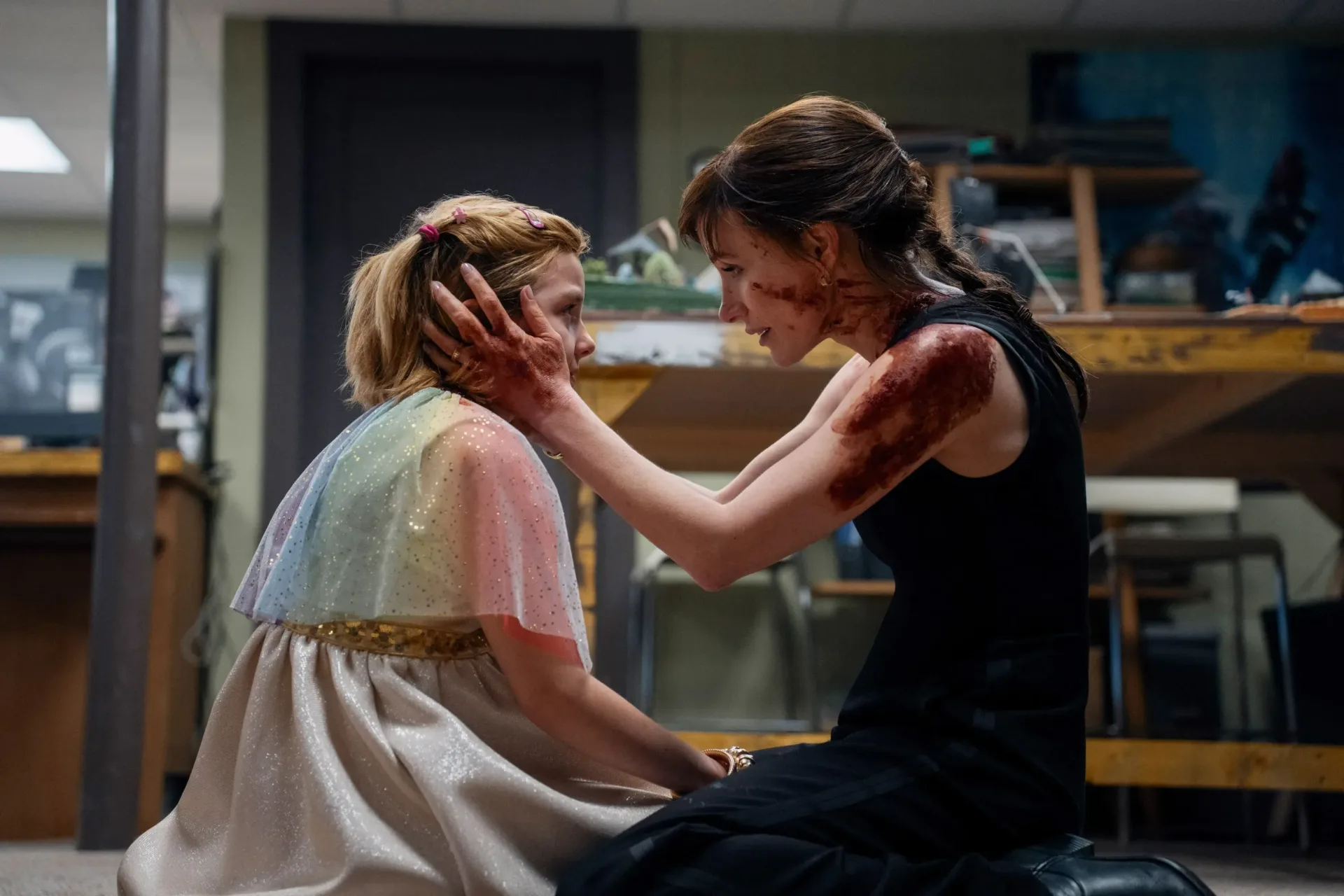
For RZA, sound has never been mere background texture. The producer says police sirens, trains, thunder and lightning—the everyday, unruly sounds of New York—have long found their way into his music. In Death Tone, his short film closing V/H/S/Mixtape, that instinct becomes the engine for horror: the search for exactly the right recorded sound is no longer an artistic challenge. It becomes lethal.
V/H/S/Mixtape began streaming on Shudder on October 9. RZA’s segment centers on a sound engineer, played by Neela Jolene, who is attempting to complete a track based on instructions left by her late father. Her pursuit leads her to believe that death itself can yield the recording she needs. The character kills people and incorporates the sounds into her music, placing a grotesque cost on the familiar creative fixation of chasing a perfect take.
A producer’s ear becomes a horror device
The central idea is effective because it takes a real part of music-making and bends it into something extreme. A sample is a piece of recorded audio reused within a new work. It might be a musical phrase, a spoken line, a drum break, or an environmental sound. RZA’s comments place the city’s noises—sirens, trains and weather—within that wider vocabulary of sound. They are not simply effects added after the fact; in his approach, they can help define atmosphere and identity.
Death Tone pushes that sensibility toward body horror and moral horror. The engineer is not looking for a conventional instrument or a cleaner studio performance. She believes the answer lies in sounds produced by death. That premise turns the technical language of recording into the language of obsession: every decision about what to capture, preserve and place in a mix acquires violent consequences.
The story’s setup also makes the title feel purposeful. A tone can mean a sound with a particular quality, but it can also describe a work’s emotional atmosphere. The title therefore points both to the recording the character wants and to the film’s grim emotional register. Its horror is rooted less in a random monster attack than in a person giving herself permission to cross every boundary for an aesthetic result.
From an early concept to a shoot-ready story
RZA spent roughly four months developing the concept. An earlier version involved instruments made from human skin, an image that would have placed the physical object at the heart of the horror. He eventually moved instead toward a sound engineer seeking an impossible recording. That shift matters: it focuses the short on process, authorship and a person’s escalating belief that her artistic goal justifies what she does.
He said the production team allowed him room to keep exploring possibilities until he reached an idea that worked within the schedule. That is a useful reminder that short-form horror is shaped by more than a premise. A segment needs a concise arc, a role that can quickly establish its protagonist’s motivation, and imagery that communicates the concept without spending a feature-length runtime explaining it. The surviving premise supplies a direct line from loss, through creative duty, to lethal compulsion.
The late father’s instructions add a specific emotional pressure. The engineer is not presented simply as somebody hunting for a novelty effect. She is finishing unfinished work tied to a family connection. That does not excuse the violence, but it gives the obsession a personal origin and makes the pursuit more troubling than a detached experiment in shock value.
Related coverage includes RZA’s ‘Death Tone’ Turns the Search for a Perfect Sample Into Horror.
Neela Jolene carries the escalation
Neela Jolene plays the engineer at the center of Death Tone. RZA credited casting director Jeff Gafner with connecting him to the V/H/S team and drawing his attention to Jolene. He also praised Jolene’s commitment, including her work in a scene that left her covered in stage blood.
That willingness is especially relevant in a short built around an increasingly ugly creative mission. The protagonist has to sell both sides of the concept: the disciplined focus of an engineer trying to solve a recording problem, and the frightening certainty of someone who has decided human life is material for the track. The supplied details do not reveal the scene-by-scene structure, but the description makes clear that Jolene’s role is not incidental. She is the figure through whom the film turns craft into carnage.
Stage blood, in this context, is a practical filmmaking material used to create the appearance of blood on camera. Its presence does not merely signal gore as decoration. In a story about capturing death for sound, visible blood reinforces the collision of recording, bodily harm and performance. The short’s premise asks its audience to confront a character treating terrible events as usable inputs for her composition.
Gravediggaz connections and the darker edge of RZA’s music
RZA has linked ideas in Death Tone to “1-800 Suicide,” a track associated with Gravediggaz, the group that connected him to a darker side of hip-hop expression. The reference gives the short a meaningful creative lineage without suggesting it is a direct screen adaptation of that song. Rather, it identifies a recurring interest in unsettling imagery and death-facing themes—interests now being explored through film.
He had also previously related that darker musical mode to his 2021 collaboration with Flatbush Zombies. Taken together, those connections suggest that Death Tone is not a sudden detour into horror aesthetics. It is a film expression of ideas RZA has revisited across different musical contexts: ominous sound, mortality and the ability of a track’s atmosphere to create dread before a listener has processed every lyric or production choice.
For viewers interested in music made for other dark fictional worlds, the broader conversation has room for composers as well as directors and producers. Mick Gordon’s plans to take a Doom live show beyond its first festival dates, for example, underline how sound can remain central to an experience even when it moves beyond its original medium.
Music is the connective tissue of the anthology
RZA’s short is not the only V/H/S/Mixtape segment using music as a narrative force. Ernest Dickerson took a different route for his contribution, enlisting Flying Lotus to help create an alien-sounding musical presence. Dickerson’s story follows a young filmmaker drawn to a mysterious musician and is built around a musical battle.
Dickerson developed that plot by combining two H.P. Lovecraft stories. The available details do not identify which stories were used, but they do establish a contrast with Death Tone. RZA’s film starts from the sound engineer’s attempt to obtain a recording, while Dickerson’s centers on a filmmaker, a musician and an unusual musical confrontation. Both nevertheless use sound as more than mood-setting accompaniment. Music is integral to what draws characters into danger.
Flying Lotus’s involvement also suits Dickerson’s stated aim of finding a sound that could feel alien. Here, “alien” does not need to mean a literal extraterrestrial explanation; it describes an auditory quality that feels unfamiliar, disorienting or outside ordinary human expectation. In horror, that quality can create unease before the story offers a full explanation, if it offers one at all.
Why the premise lands
The enduring appeal of a story such as Death Tone is that it weaponizes precision. Music production often rewards close listening: a creator may focus on a tiny noise, a single texture or the exact character of a recorded moment. Horror enters when that concentration becomes detached from empathy. The engineer’s aim—to get the final sound necessary to finish a father’s work—has a recognizably human starting point. Her methods make it monstrous.
RZA’s New York soundscape is important because it grounds that transformation in a genuine artistic practice. Sirens, trains, thunder and lightning are all evocative sounds with immediate associations. They can imply urgency, movement, distance, weather or menace. By identifying them as elements he has incorporated into his records, RZA frames environmental sound as creative raw material. Death Tone then asks what happens when a character’s hunger for raw material has no ethical limit.
That makes the short’s violence part of its central question rather than a separate attraction. The grisly element is the price the protagonist imposes in pursuit of sonic perfection. In that sense, the horror comes from the gap between a meticulous artistic goal and the irreversible human harm used to reach it.