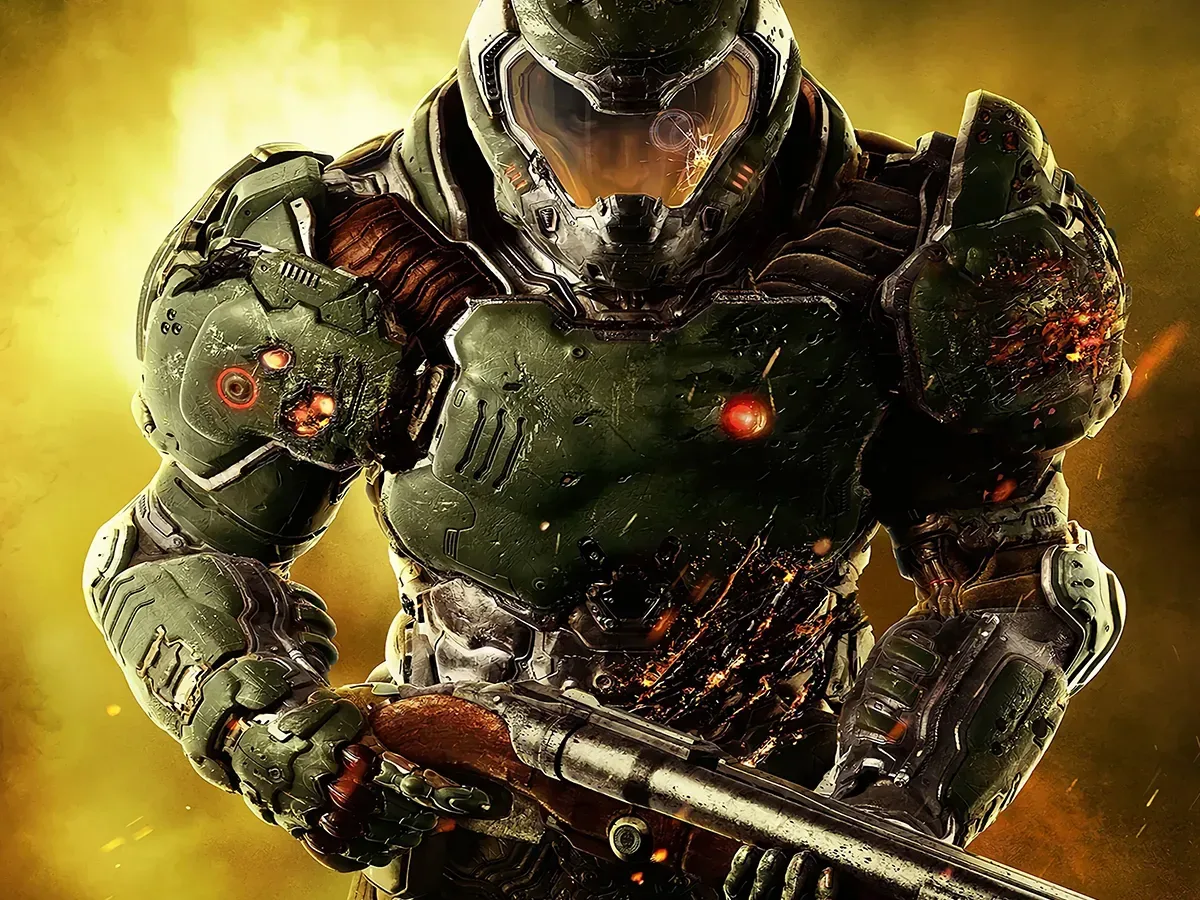
Mick Gordon’s upcoming live performances of music from Doom and Doom Eternal are being planned as more than a pair of isolated festival appearances. The composer has confirmed two 2027 dates—one in the UK and one in the Czech Republic—while saying he and his agency are discussing a wider run that could extend across the following two years.
The prospect is a notably different proposition from simply putting a game score on a concert program. Gordon’s stated goal is to combine the scale of a band-and-orchestra performance with the intensity and audience energy of a metal gig. In other words: music associated with demon-slaying may finally get the appropriate amount of extremely enthusiastic standing around in a circle.
Two announced dates, with ambitions beyond Europe
The first confirmed performance is a headline set at the UK’s RADAR festival on August 1, 2027. Gordon says the show will feature him alongside a band and a live orchestra, playing material from Doom, Doom Eternal, and additional music.
A few days afterward, he is scheduled to perform at Brutal Assault in the Czech Republic. That event takes place in a medieval castle and is described as a 25,000-person metal festival. Gordon mentioned Children of Bodom, Knocked Loose, and Humanity’s Last Breath among the acts associated with the lineup.
Those are the only performances currently identified. However, Gordon said interest arrived quickly from the European metal-festival circuit after the RADAR appearance was announced. His agency is now discussing how to take the show to events around the world over the next two years.
That is an intention rather than a completed itinerary. No additional cities, countries, venues, dates, ticket details, or festival bookings were provided. For fans outside the UK and Czech Republic, the important practical distinction is that a broader run is being explored, but it has not yet been formally mapped out.
What makes this different from a conventional game-music concert?
Gordon framed the concept as an attempt to unite two live traditions that often stay separate. One is the concert presentation of video-game music, where audiences may hear arrangements performed in a more formal, seated setting. The other is a rock or metal show, where participation, volume, movement, and communal release are central to the experience.
His version is intended to lean toward the latter without discarding the orchestral component. The planned RADAR presentation includes both a band and a live orchestra, but Gordon’s emphasis is on a performance environment built for a metal crowd rather than a purely ceremonial recital. He specifically pointed to the idea of a large circle pit forming around video-game music.
Related coverage includes Mick Gordon Eyes Global Doom Concert Run After 2027 Festival Dates.
A circle pit is a crowd movement common at heavy shows, in which attendees run or move around an open central area. It is related to, but not identical with, a mosh pit; the term generally describes the circular flow rather than one particular form of physical contact. Gordon’s reference makes the intended atmosphere clear: this is not being positioned as background accompaniment to polite applause and a swift retreat to the cloakroom.
That framing also suits the music selected from the Doom games. Gordon highlighted tracks including “Rip & Tear,” “BFG Division,” and “At Doom’s Gate” as music he is excited to play for a festival audience. The titles alone are not subtle about their preferred energy level, and their use in the games is closely aligned with speed, combat pressure, and escalation.
Band, orchestra, and festival crowd: the balance to watch
The combination of electric instrumentation and a live orchestra is potentially the defining element of the RADAR set. A band can preserve the force and attack associated with a heavy performance, while orchestral players can bring weight, breadth, and color to arrangements. The challenge, in broad musical terms, is balance: the arrangement has to leave both the amplified group and the orchestra with a meaningful role instead of reducing one side to visual decoration.
Gordon has not detailed the arrangements, personnel, set length, staging, or which tracks beyond the named examples will be performed. That means it would be premature to assume how closely the concert versions will resemble recorded game tracks, or whether individual pieces will be expanded, restructured, or linked into longer sections.
Still, the stated format signals that the show is being conceived as a distinct live production, not just a playback of familiar cues. The orchestra matters because it broadens the available sound palette; the festival context matters because it determines how that palette is meant to land—with a crowd reacting in real time rather than listening at a distance.
Why a festival route makes sense for the stated goal
Gordon’s comments suggest that metal festivals are a natural first home for this particular production. A festival audience already arrives expecting loud, guitar-forward sets and a participatory crowd culture. That removes one obstacle faced by many game-music performances: explaining why the music belongs on the bill in the first place.
Here, the connection is more direct. The music comes from games, but Gordon is presenting it through a metal-performance lens. The festival setting offers the kind of large audience, powerful sound system, and open crowd response that his concept appears designed to use. Brutal Assault’s castle location adds memorable scenery, but it should not obscure the central point: the booking places Doom music in a metal environment rather than treating it as an exception to one.
There is also a useful distinction between fan demand and confirmed plans. Gordon said he had received offers from the European festival circuit and that there are events worldwide the team hopes to play. That indicates momentum, not a guarantee that every prospective appearance will happen. Festival lineups, production needs, schedules, and travel all have to align before a date becomes an announcement.
For people hoping to attend, the sensible move is to treat RADAR and Brutal Assault as the concrete information and everything else as something to monitor. The larger plan may bring the production closer to more fans, but no location can be inferred from the current comments.
The practical takeaway for Doom fans
At present, fans have two confirmed ways to see this project live in 2027:
- RADAR festival, UK: August 1, 2027; Gordon headlines with a band and live orchestra, performing music from Doom, Doom Eternal, and other material.
- Brutal Assault, Czech Republic: scheduled a few days after RADAR; a metal-festival performance at a medieval-castle site.
Everything beyond those dates belongs in the “watch this space, preferably while wearing hearing protection” category. Gordon said more news is expected as discussions progress, but he did not identify the future events under consideration.
The project also offers a reminder that game music can move between formats without losing its identity. A score does not need to be performed exactly as it was heard during play to remain recognizable; a live setting can foreground different qualities, such as rhythm, volume, collective audience response, or the contrast between orchestral and amplified sounds. Gordon’s plans appear specifically focused on that transformation.
For players revisiting the games on PC while waiting for concert details, performance settings are a separate but useful concern from the music itself. Our guide to improving PC game performance without immediately upgrading a GPU covers practical ways to get more from existing hardware.
Gordon’s next game soundtrack is close at hand
Before the 2027 concert dates arrive, Gordon’s work can next be heard in Warhammer 40,000: Boltgun 2. The game is due October 14 for PlayStation 5, Xbox Series X|S, and PC. A Nintendo Switch 2 edition is planned for a later date.
That release is separate from the planned Doom concerts, but it gives listeners another imminent opportunity to hear Gordon’s work in a game built around aggressive action. No further details about the soundtrack or its live relationship to the festival project were provided.
For now, the key news is that the 2027 Doom appearances are the launch point for a larger ambition. If the planned expansion comes together, Gordon’s show could bring video-game soundtrack performance into a setting built not around hushed appreciation, but around the very noisy, very physical joy of a metal crowd.