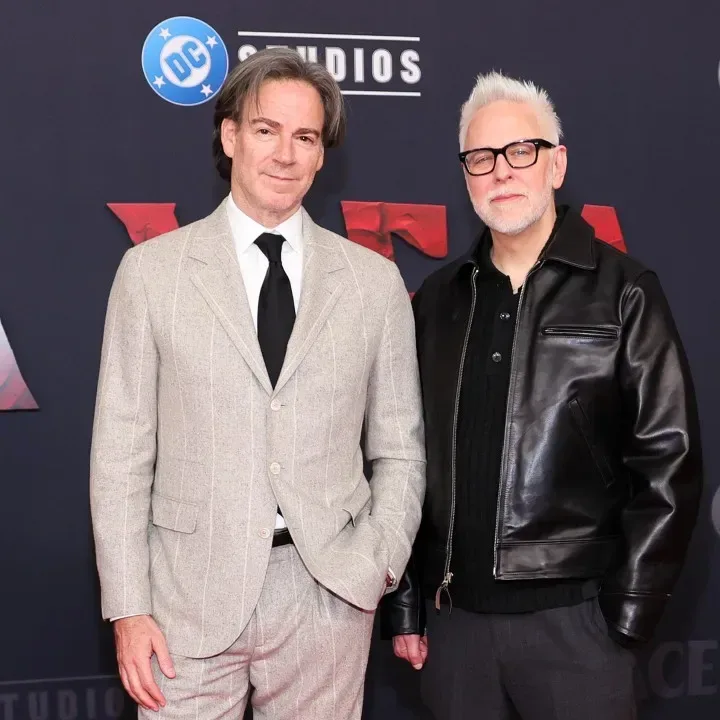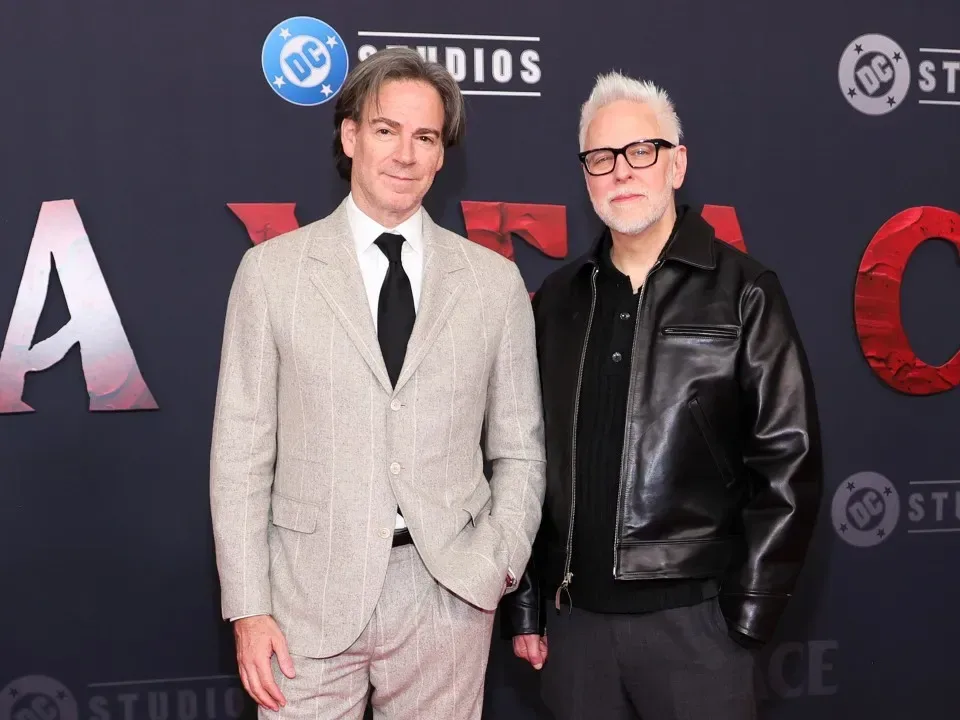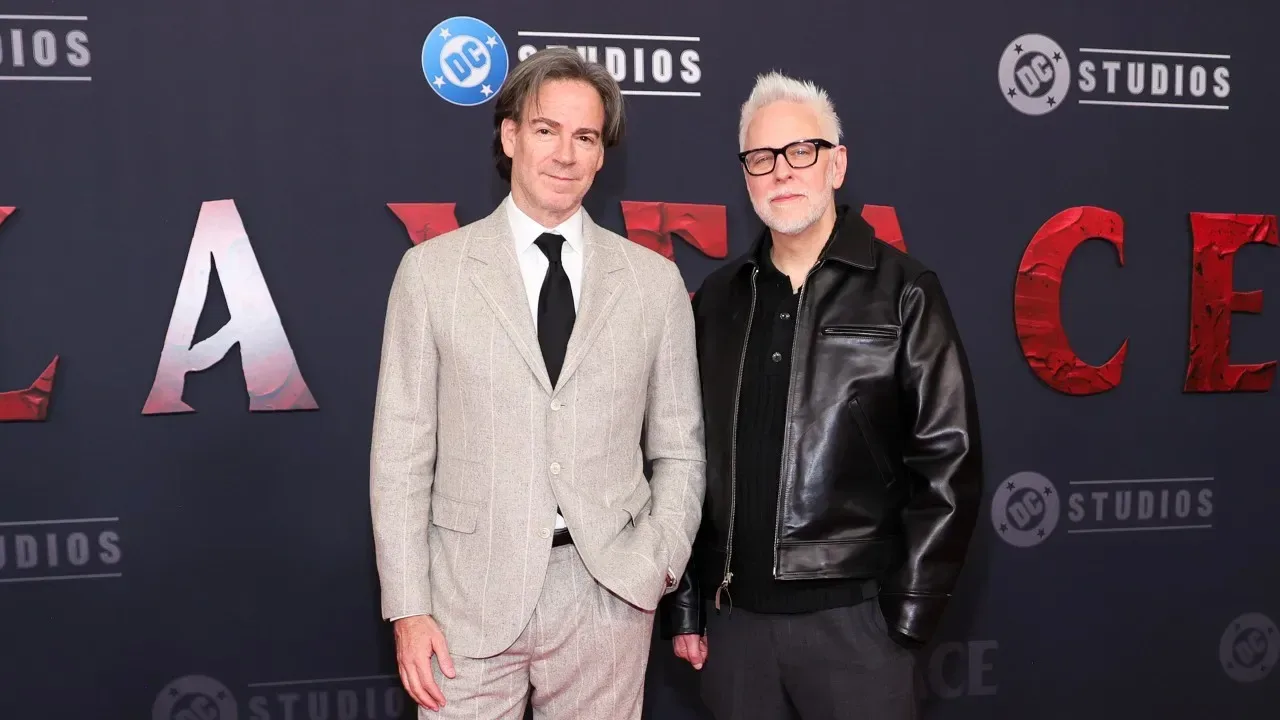
DC Studios’ immediate post-acquisition message is one of continuity rather than a sudden creative reset. Co-chief Peter Safran says the new Skydance leadership has responded positively to the studio’s long-range plan and intends to provide the resources for DC to continue pursuing it. That is a reassuringly unflashy answer in an entertainment business that tends to treat every corporate change like the opening scene of a multiverse crisis.
The more useful detail is how Safran describes that plan in practice. DC’s forthcoming work is not being positioned as one uniform run of giant superhero spectacles. It spans an R-rated body-horror feature in Clayface, the in-post-production Man of Tomorrow, a television series starring Gorilla Grodd, projects in earlier live-action development, and a sizable collection of animated series. Some titles are advanced; others remain scripts, development work or possibilities. Keeping those distinctions straight matters more than treating a slate as a neat release calendar.
Clayface is the clearest statement of DC’s creative range
Clayface is particularly important to Safran’s explanation of the studio’s approach because it is deliberately not being framed as a conventional cape-and-powers event film. Mike Flanagan wrote the screenplay, and James Watkins directed the picture. Safran characterizes it as an R-rated psychological body-horror story that uses the character’s physical transformations to examine identity, self-worth, obsession, fame and loss of control.
Body horror is a horror mode where changes to, vulnerability of, or fear around the human body become central to the drama. In this case, Safran’s description suggests that Clayface’s abilities are not merely a visual-effects gimmick or a convenient way to make a fight scene squelchier. They are meant to carry the emotional subject matter. That distinction is central to the pitch: a character-led drama should still be present if the horror elements are stripped away.
Safran also identifies Clayface as only the third narrative feature released during the current universe-building effort, a slower feature-film start than audiences may associate with a franchise reboot. His explanation is that screenplays, rather than an obligation to quickly fill a pre-set release grid, are supposed to drive the choices. Whether every future DC project follows that ideal is unknowable, but the stated standard gives Clayface a specific purpose beyond being a deep-cut character finally getting a movie.
It is also the first DC release under the new Skydance regime. That makes it a practical early test of whether the corporate handoff changes the studio’s output. Safran’s comments point in the opposite direction: ownership has changed, but the project already represents the sort of tonal and budgetary breadth he and James Gunn want in the DCU.
Gotham can be recognizable without becoming a fixed template
Clayface is set in Gotham City and belongs within the DCU, but Safran rejects the idea that this one film must lock every later creator into a single visual rulebook. The studio wants a consistent foundation, while allowing filmmakers to shape their own versions of the setting. His comparison is to comic-book creators working differently with shared characters and worlds.
The guiding principle is less about duplicating every skyline, street or room than preserving a place’s identity. Safran describes Gotham as grittier, dirtier and more dangerous than Coast City, while also capable of elegance and Beaux-Arts grandeur. Watkins’ version apparently uses both sides: a harsher urban atmosphere alongside glimpses of the wealth available within the city.
That is a meaningful clarification for a shared universe. Shared-universe continuity usually refers to stories occupying the same fictional setting, potentially sharing characters and events. It does not inherently require every director to use identical lighting, architecture or genre conventions. Safran’s formulation favors continuity of character and place over a rigid house style. Gotham should remain Gotham; it does not need to look as if each camera crew was issued the same municipal zoning pamphlet.
Television is being used as a narrative runway, not just extra content
On the live-action television side, Safran says The People v. Gorilla Grodd is currently in production. He also emphasizes that episodic storytelling is a major component of DC Studios’ overall plan because some stories need more room than a feature can provide. In practical terms, a series can spend time on characters, settings and story threads that a two-hour film may have to compress or leave behind.
The planned route for Aaron Pierre’s John Stewart illustrates that strategy. The character was introduced in the first season of Lanterns, and Safran says audiences will see Stewart in Man of Tomorrow next summer. The television series, then, is being treated as an entry point into the feature side, rather than a disconnected side quest.
There is one important caveat for anyone trying to map the next phase: Lanterns Season Two is not greenlit. Safran left the door open to more if the relevant teams believe they have a follow-up worthy of the first season, but an encouraging possibility is not a production order. This is the kind of terminology that can become fuzzy once it travels through fan conversation. In development means creative work is progressing; in production means the project is actively being made; greenlit means it has formal approval to proceed. They are not interchangeable stamps.
For a broader example of how a television plan can be discussed in terms of eventual seasons and a larger endpoint, see Joking Joystick’s coverage of Marvel Television’s stated Season 3 plan for Daredevil: Born Again. DC’s position on Lanterns, by contrast, is currently more conditional.
Live-action’s next move is undecided, while animation is further along
Safran says several projects are competing to be the next live-action film or series to enter production after Gorilla Grodd, but no firm choice has been made. That makes the near-term live-action slate deliberately open-ended. It would be premature to infer a sequence from titles that are merely being discussed or developed.
Animation is the comparatively concrete area. Safran identifies Creature Commandos Season Two, Mister Miracle, My Adventures with Green Lantern, Starfire and DC Superpowers as creatively far along. A Joker anime project is earlier in development, with scripts still being worked on. Absolute Batman is also in an earlier scripting phase, with Scott Snyder writing scripts.
Mister Miracle has the most detailed update. Tom King adapted his own book across eight episodes after co-creating and executive producing a season of Lanterns. Josh Hutcherson is set to play Scott Free and Mackenzie Davis will play Big Barda. Safran describes the adaptation as a story about living in a world where life’s biggest questions do not come with complete answers.
The distinction between the projects is worth preserving. Saying DC has announced animation would be too vague; saying all announced animation is equally close to release would be inaccurate. Safran’s comments instead paint a layered pipeline: several titles are substantially progressed, some are at script stage, and the studio expects animation to remain a robust portion of its output.
Man of Tomorrow is in post-production; marketing timing is still open
Man of Tomorrow is in post-production, meaning the main production work has moved into the stage where picture, sound, visual effects and other elements are assembled and finished. Safran did not provide a marketing launch date, saying that timing will be decided in the coming months. John Stewart’s move from Lanterns to this film gives it a clear connective role in the larger DCU, but there is no newly revealed campaign plan to dissect yet.
Safran also says James Gunn has not decided which feature he will direct after Man of Tomorrow. Gunn’s appetite for work is not in doubt—Safran points to a period in which Gunn was writing a full season of Creature Commandos, writing and directing Peacemaker Season Two, and preparing the first Superman movie—but enthusiasm is not the same thing as a selected next film. For now, there is no title to attach to Gunn’s next directing assignment.
Batman remains a major part of the plan, with one firm reassurance
Batman is a special scheduling challenge because DC has multiple versions and formats in play. Safran says The Batman: Part Two and the animated film Dynamic Duo are both set for 2028, while acknowledging the need to avoid “dueling Batmans” in the marketplace. That phrase points to a practical concern: even when projects are creatively distinct, closely clustered releases featuring the same marquee hero can compete for attention and confuse casual audiences.
Dynamic Duo received Safran’s emphatic praise as an especially original project. He compares its freshness to the impact Pixar had with Toy Story, which is an expression of confidence rather than a technical description of the film. No specific creative details supporting that comparison were disclosed, so the safest reading is simply that DC considers the animated movie a major differentiator.
For The Batman: Part Two, Safran acknowledges ongoing issues around the production but says what the team has seen from the shoot looks “fantastic.” More decisively, when asked whether there was any scenario in which the film would not begin filming again, he answered no. That is a firm statement that the project remains on track to resume filming, even though the nature of the existing issues and a revised production timetable were not detailed.
What the Skydance transition has—and has not—changed
The ownership transition is only a week old in Safran’s account, so there are limits to what can be known about its longer-term effect. He says no new marketing directives have been issued by David Ellison. He does, however, point to Josh Goldstine’s involvement as head of marketing and distribution, describing his return as valuable because of an existing working relationship. The teams are already engaging on Clayface, but the broader approach remains a conversation rather than a completed blueprint.
The immediate takeaway is therefore measured. The DC slate has not become a single set of guarantees, nor has it been wiped clean. Clayface, Man of Tomorrow, The People v. Gorilla Grodd, The Batman: Part Two and the advanced animation slate each have different degrees of certainty and different creative jobs to do. Safran’s most consistent theme is flexibility: different budgets, genres, formats and filmmakers, held together by a long-term plan rather than flattened into the same superhero-movie shape.