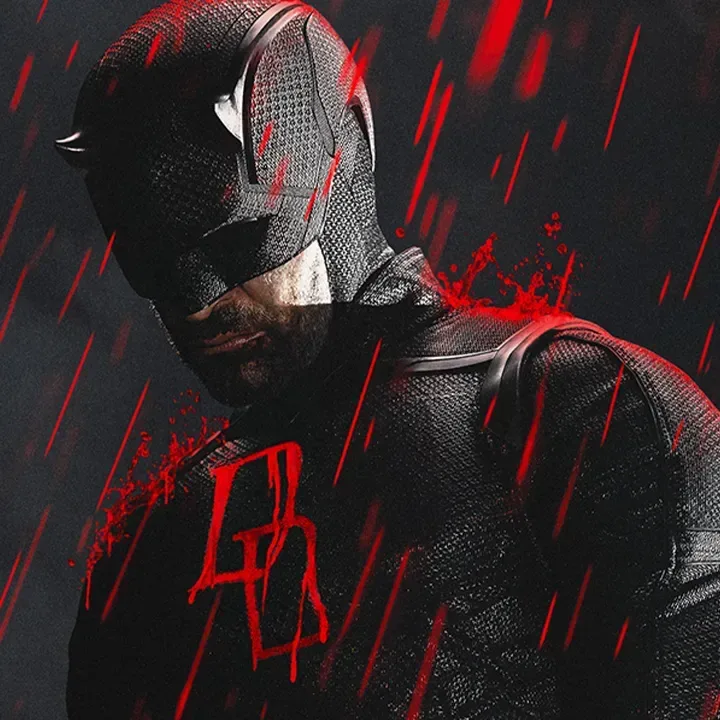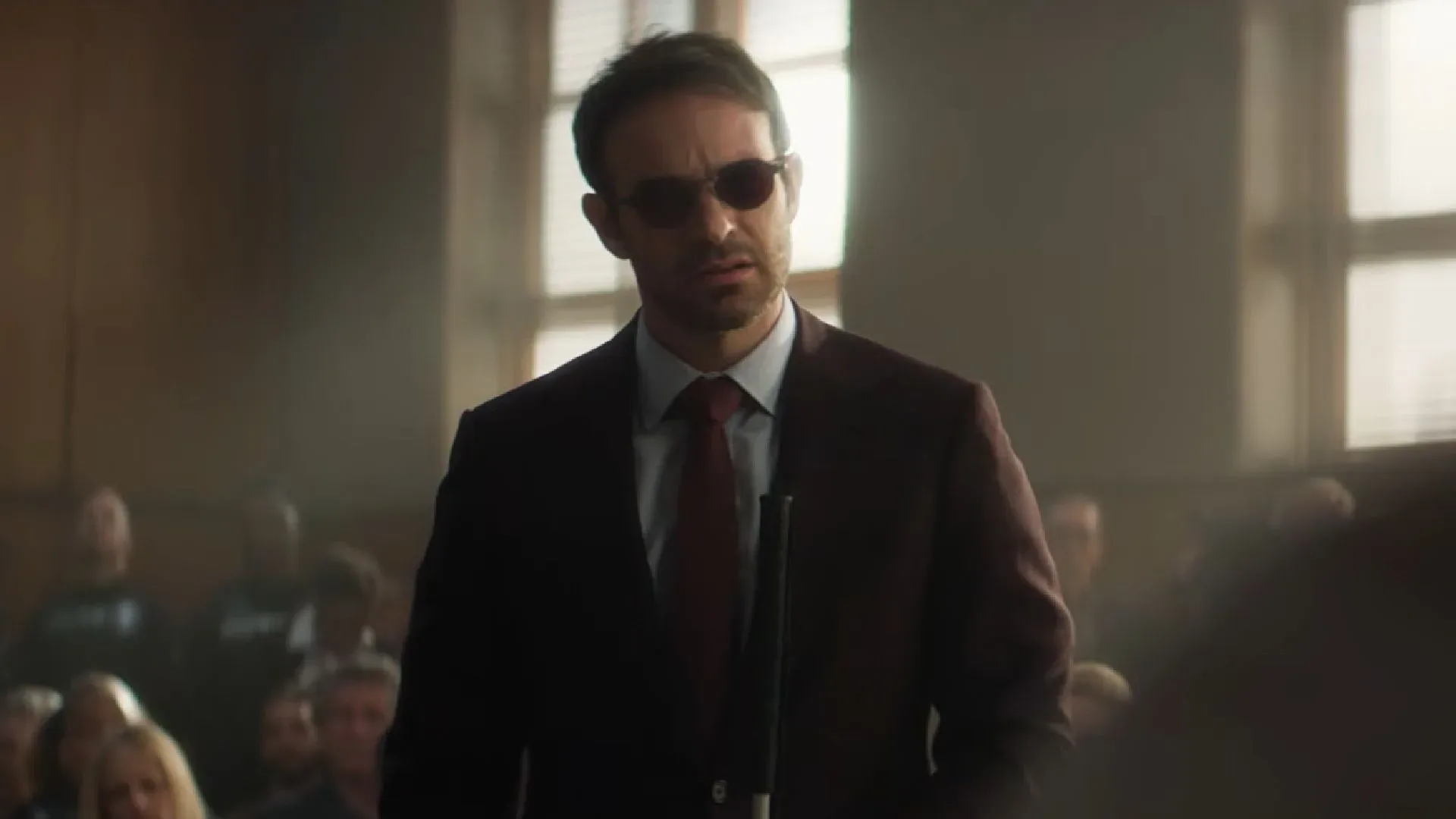
Daredevil: Born Again is expected to end with its third season, and Marvel Television head Brad Winderbaum has now characterized that endpoint as the intended shape of the series rather than a sudden reversal after production.
Speaking about the show’s future, Winderbaum said the plan was for Born Again to “culminate” with Season 3. His explanation frames the new show and the earlier live-action Daredevil run as matching three-season blocks: two distinct, three-volume stretches centered on Matt Murdock and his corner of New York. Once this current block is complete, he said, the team will pause and determine what should happen next with the character.
That wording matters for a fanbase with understandable reasons to scrutinize any Daredevil ending. The original series concluded after three seasons through an unexpected cancellation that reportedly caught its writers and cast off guard. By contrast, Charlie Cox has indicated that the people making Born Again had greater planning and emotional support around the prospect of a finale. The distinction is not merely semantic. A planned conclusion gives a creative team the chance to build toward an ending; an abrupt cancellation can leave ongoing character arcs and production plans without that same runway.
A three-season endpoint, not necessarily a permanent goodbye
There are two separate questions embedded in the news. The first is whether Daredevil: Born Again itself continues past Season 3. Winderbaum’s comments point to no: Season 3 is the destination for this series.
The second is whether Daredevil will appear again somewhere else. That remains unresolved. Winderbaum’s comments leave open the possibility of revisiting the character after a break, and they do not establish that Season 3 is Charlie Cox’s final appearance as Matt Murdock. A series finale and a character’s final screen appearance are not automatically the same thing, particularly in a shared superhero setting where characters can move among projects.
For now, the clearest reading is deliberately narrow. Born Again has a defined three-season arc. What follows is undecided rather than promised. Fans hoping for another Daredevil-led project, a guest role, or the long-discussed appeal of pairing the Man Without Fear with Spider-Man should treat those as possibilities, not confirmations.
Why the “trade paperback” comparison is useful
Winderbaum compared the two Daredevil eras to trade paperbacks or collected volumes that can sit alongside one another. In comics, a trade paperback commonly gathers a self-contained portion of a larger run. The comparison does not reveal story details, but it communicates a structural idea: viewers can look at the earlier three seasons as one complete set and Born Again’s three seasons as another.
That framing is especially useful because “continuation,” “reboot,” and “revival” can produce confusion when applied to long-running screen franchises. Winderbaum’s description emphasizes organization over labels. The original Daredevil run has its own three-season shape; Born Again is being treated as another three-season shape. The character can still have a future without every chapter being folded into a single uninterrupted television series.
Related coverage includes Marvel TV Chief Says Daredevil: Born Again Was Always Designed to Finish With Season 3.
It also suggests that the Season 3 ending may be intended to provide a stopping point rather than simply halt in the middle of a longer plan. That is an inference from the stated format, not a promise of full resolution for every supporting character or plot thread. But “culminate” is a notably more intentional word than “stop.” It signals an endpoint designed as part of the show’s overall architecture.
The earlier annual-release comments create a real tension
There is, however, a clear reason some viewers were surprised by the three-season news. Ahead of the first season, Winderbaum had previously discussed an ambition to make the show annual, with new seasons arriving in March. At that time, he described a hoped-for future that extended beyond a third season, even using the phrase “Season Infinity.”
That earlier statement and the current explanation do not line up neatly on their face. If the plan was always to end at Season 3, why discuss an open-ended annual model? The available information does not provide a detailed production timeline or identify precisely when every decision was settled. It therefore would be speculative to assert a single cause for the apparent change in emphasis.
There are a few careful ways to understand the difference without inventing missing details:
- The annual-release comments described an aspiration for the franchise or its New York setting, while the newer remarks speak specifically to the intended endpoint of Born Again.
- Long-term television plans can evolve during development and writing, even when the people involved ultimately build toward an ending.
- The language used in interviews can reflect different levels of certainty: a broad hope for more stories is not necessarily a locked commitment to unlimited seasons of one title.
None of those possibilities turns uncertainty into proof. What is confirmed by the latest comments is only that Marvel Television now presents Season 3 as the show’s planned culmination. The specifics behind the contrast with the earlier annualized vision have not been publicly laid out here.
What Charlie Cox’s comments add
Cox’s perspective gives the report an important human dimension. The earlier Daredevil series did not end under conditions the cast and writers expected, whereas he said Born Again had more planning and emotional support around the finale. That does not disclose plot outcomes, nor does it guarantee that every fan will agree with the conclusion. It does suggest that the production was not approaching the third season as a last-minute discovery after the work was done.
For performers, a known endpoint can affect how they approach an arc. It can inform the emotional trajectory of a character, the rhythm of relationships, and the choices made in scenes that play differently once an audience knows a conclusion is ahead. For viewers, it can change expectations too: the third season can be assessed as the intended closing movement of Born Again, rather than merely the latest installment awaiting a renewal decision.
The broader point extends beyond Daredevil. Television endings are often judged not only by what happens on screen, but by whether audiences feel a story was allowed to reach the ending it was building toward. As creative preparation can shape screen storytelling, advance knowledge of a conclusion can be meaningful even when viewers do not yet know the details of that conclusion.
What “finale” means in this case
Calling Season 3 a finale should not be overstated. It means the end of this specific show’s announced run. It does not answer several questions that remain open:
- Whether Daredevil will return in another project.
- Whether Charlie Cox will continue playing the character.
- Whether other characters from Born Again will reappear elsewhere.
- How long the proposed pause before deciding Daredevil’s next step might last.
- Whether any future project would continue plot threads from Born Again or begin a new chapter.
Cox himself has not claimed to know the answer to whether he is finished as Daredevil. Instead, he pointed fans toward the long-running Save Daredevil campaign, joking that its persistence is effectively his superpower. The comment captures the unusual history around the role: Daredevil has already benefited from exceptionally vocal audience support, but enthusiasm alone is not a formal announcement of another project.
That distinction is worth retaining as speculation begins. A fan campaign can demonstrate interest, and demand for a Daredevil–Spider-Man team-up remains visible among viewers. Yet there is no confirmed future appearance to report at this point. The next move for the character is something Marvel Television says it will consider after the three-season Born Again set is complete.
What fans can reasonably take from the update
The strongest practical takeaway is that Season 3 should be viewed as purposeful. The new information suggests the show has had an intended endpoint and that the cast was not blindsided by it in the manner associated with the earlier cancellation. That does not erase the tension created by prior talk of “Season Infinity,” but it provides a more concrete current position than an open-ended renewal hope.
It also puts the two Daredevil television eras into a cleaner format: three seasons from the original run, then three seasons for Born Again. Whether that format becomes the end of Cox’s time in the red suit, a pause before a new solo chapter, or a bridge to another appearance is still unknown.
For a character defined by persistence, that uncertainty may be fitting. Born Again can be allowed to end as a designed three-season story, while Daredevil himself remains available for whatever form the next chapter eventually takes.