A drive-thru is usually designed around speed: pull up, state the order, pay, collect the bag, merge back into the day. One Last Order, the 20-minute documentary now on Netflix, finds its emotional center in everything that can happen when a person makes that quick exchange feel personal.
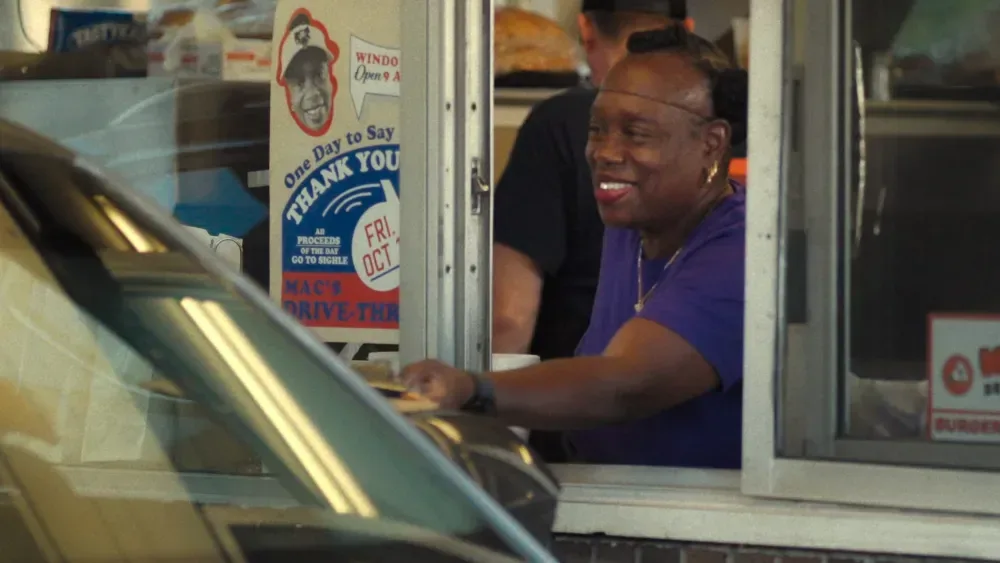
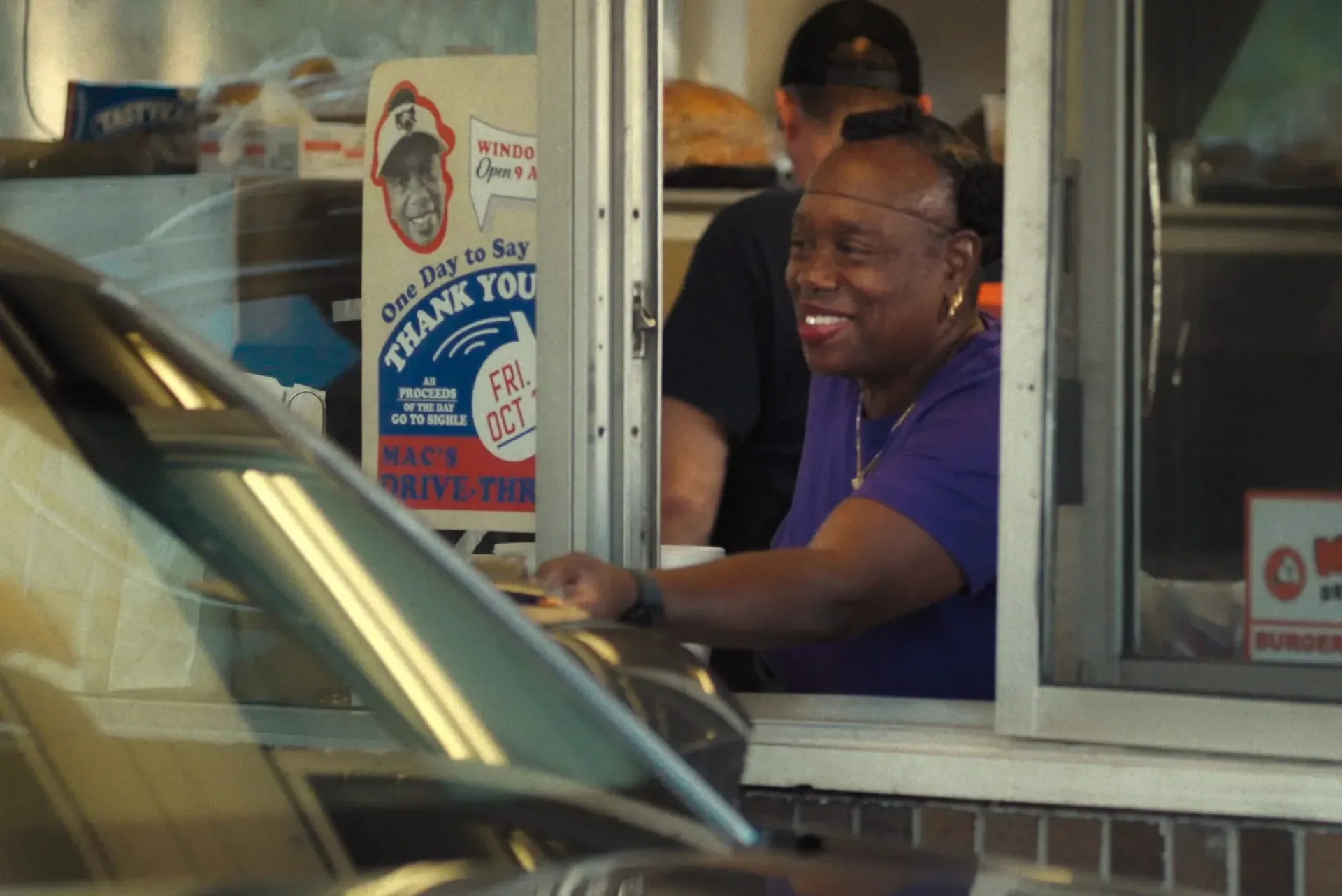
The film follows Sighle Williams during her final shift at Mac’s Drive Thru in Gainesville, Florida, ending a 37-year run behind the restaurant’s service window. Her farewell did not play out as a quiet final clock-out. A three-hour line of cars formed, the restaurant ran out of burgers, and Mac’s recorded three times its normal sales for the day. For Williams, it was a striking, and initially unexpected, public show of what years of patience and recognition had meant to customers.
“A lot of people told me they were going to come,” Williams said. “But I wasn’t expecting that many people.” She also noted that some people who showed up did not personally know her, making the turnout feel bigger than a conventional retirement gathering. It became a community event built around a worker who had become a familiar part of people’s routines.
A short documentary about a long relationship with a town
The premise of One Last Order is simple, but its scale is not. The documentary follows Williams as she greets emotional customers and reflects on spending roughly half her life at the drive-thru. It was co-directed by the daughter of Mac’s owner, a detail that places the film close to the business and its daily community.
Williams says filming itself did not unsettle her. The moment that hit hardest came when she sat in her car and understood that it truly was her last day at work, alongside the realization that so many people had arrived to see her off. The day was exhilarating, too: Williams said she was so caught up in it that she did not eat or take a restroom break.
The title carries an obvious food-service meaning, but it also works as a compact description of the film’s subject. This is one final order in a job built from countless prior orders, many of them familiar enough for Williams to remember without asking. A customer in the documentary compares seeing her at the window to seeing a rainbow every day. That kind of attachment explains why an ordinary local business could suddenly draw a line of cars lasting hours.
The skill behind remembering people
Williams became known for her sunny manner and her ability to remember regulars’ orders. It is a small detail with major practical and social value. Remembering an order means recognizing a customer as an individual rather than treating each transaction as interchangeable. In a drive-thru, where the contact is brief and frequently mediated by a car window, that recognition can transform a routine errand into a dependable point of connection.
Williams describes the work in terms of patience. A customer may be having a difficult day. A parent may be trying to sort out an order while managing a car full of children. Another person may simply not know what they want. Her approach was to pause, ask how someone was doing and give them room to figure it out. Her account does not present this as a grand philosophy; it is the repeated decision to meet people with some grace.
That is also why the documentary’s response has resonance beyond a single restaurant. A drive-thru worker is often expected to move the line along invisibly. One Last Order makes visible the human labor inside that interaction: listening, recalling, staying calm and showing warmth when a customer may only have a minute to spare.
A farewell that became meaningful financial support
Mac’s owners turned the extraordinary final-day crowd into a retirement gift. They gave Williams every dollar that passed through the fast-food window that day. Combined with tips, the money amounted to nearly a full year’s salary in one shift, as presented in the documentary.
Williams said the gift has helped her catch up on things and save for a rainy day. It is an important part of the story because it does not treat appreciation as merely symbolic. The sold-out burgers, lengthy queue and unusually high sales became tangible support for someone whose work had helped sustain the restaurant’s customer relationships over decades.
The outpouring was not an abstract reward for longevity alone. Williams had spent those 37 years raising five daughters by herself. When her sister struggled with drug addiction, Williams took on the parenting of her sister’s two daughters. Several years later, she also took in her niece’s three children. She describes the demands plainly: children had to get to school, work had to be done, lights had to remain on, and medical appointments had to be handled.
Asked how she maintained her cheerfulness through those circumstances, Williams described herself simply as a positive person. The film’s reported details give that modest answer weight. Its portrait is not about effortless optimism; it is about somebody carrying work and family responsibilities while still bringing care to a public-facing job.
What retirement changes—and what it does not
Williams has returned to Mac’s a handful of times since retiring, mainly to see friends. She says she misses working, but especially misses the community and the customers. That distinction matters. For a person who has spent decades at the same service window, retirement means leaving not only a job but a built-up network of familiar faces, conversations and rituals.
The documentary’s popularity has added an unexpected new chapter. Netflix’s trailer drew more than 11 million views on X in early November. Before the Netflix debut, Williams attended seven or eight festivals with the film and said she already felt like a celebrity. In the week of its release, she also appeared on CBS Mornings and The Jennifer Hudson Show, where she was readying herself for the show’s well-known Spirit Tunnel entrance.
There is a charming mismatch in that rise from local drive-thru fixture to festival guest and television visitor, but the attention has not changed the core story. The viral interest grew from an unusually specific form of care: a worker who remembered people, gave them a little patience and became part of the architecture of their day.
For more recent Netflix programming news, see the planned premiere of Jamie Foxx’s Olympic boxing drama Fight for ’84.
Why ‘One Last Order’ lands
At 20 minutes, One Last Order has a tightly defined subject: one worker, one restaurant and one final shift. Yet the evidence of Williams’ life and the community’s response gives it larger stakes. The cars in line are not simply there for burgers; they are there to acknowledge a person who helped make an impersonal system feel more humane.
The film’s strongest idea is also its least complicated. Small encounters accumulate. Saying hello, remembering a usual order and being patient with someone under pressure may seem minor at the time. Across 37 years, those gestures created a relationship strong enough to fill a drive-thru line, empty the burger supply and send a retiring worker into her next phase with both public gratitude and meaningful financial help.