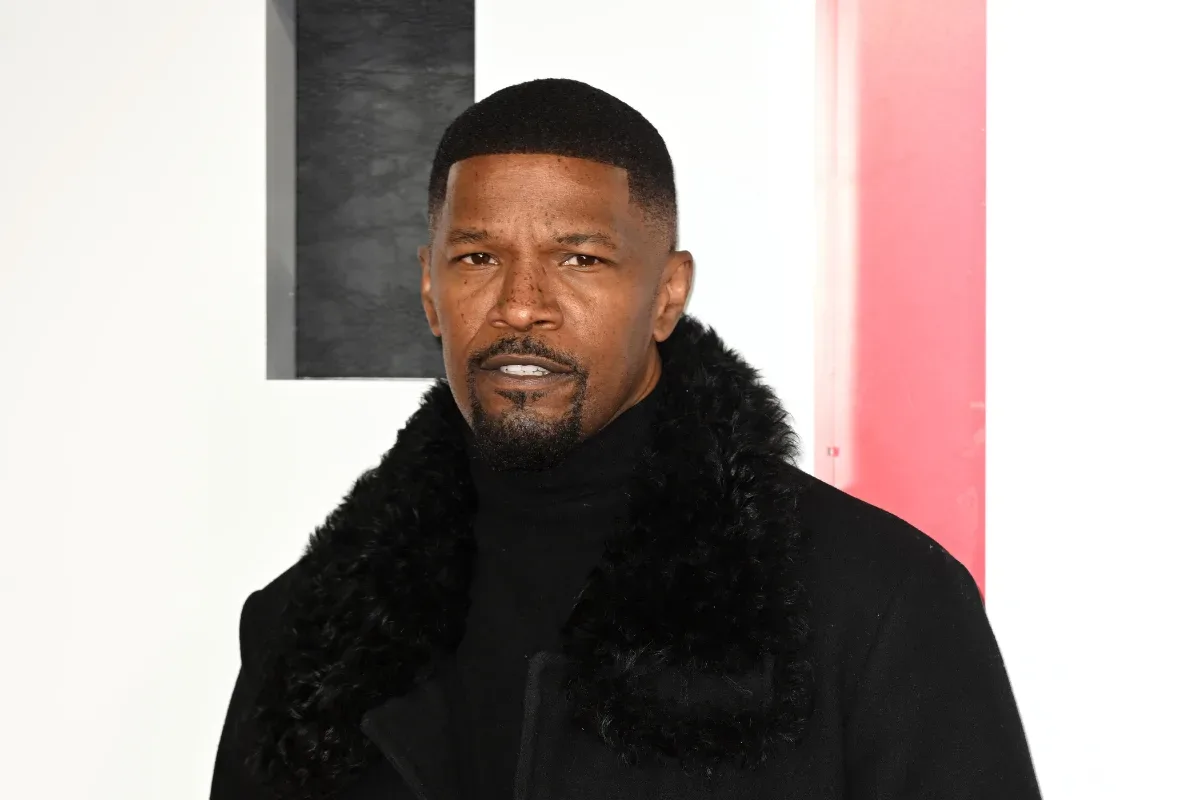
Jamie Foxx is heading back to boxing, this time as the coach at the center of Fight for ’84, a Netflix drama scheduled to premiere on February 19, 2027. Foxx stars in and produces the film, which follows the rebuilding of the United States boxing team after a 1980 plane crash killed members of the country’s boxing delegation.
The destination is the 1984 Summer Games in Los Angeles, where the newly assembled American squad faces the daunting task of competing on home soil. A first-look image shows Foxx in the coach role, framing the movie as a team-reconstruction story rather than simply a chronicle of Olympic results.
A sports drama built around recovery
Fight for ’84 begins in the aftermath of devastating loss. Its central coach must put together a replacement team, prepare the athletes for Olympic competition and guide a group facing pressure far larger than an ordinary tournament. That premise gives the movie a clear sporting stakes-and-clock structure: the Los Angeles Games are coming, and the team has to be ready.
Director Andrés Baiz has described the project in terms of second chances, rebuilding after loss and finding strength through connection. That language is useful in setting expectations. The medal table is part of the history, but Baiz’s stated interest is in the human process that precedes it: trust, collective purpose and the work of forming a functional team after catastrophe.
In boxing, the corner is the small support group working with a fighter before, during and between rounds. A coach’s role can include training direction, tactical preparation and helping an athlete stay composed when the competitive pressure peaks. The film’s setup expands that familiar corner dynamic from one fighter to an entire national program. Foxx’s character is not merely preparing a boxer for a bout; he is charged with establishing a new squad in time for the Olympics.
The 1984 team’s results set a high bar
The historical U.S. team delivered a remarkable outcome at the Los Angeles Olympics: 11 medals in all, including nine golds. Mark Breland, Pernell Whitaker and Henry Tillman each won their weight class, while Evander Holyfield earned bronze.
Those names give Fight for ’84 an unusual dramatic balance. Viewers who know the Olympic record already know the team’s success. The suspense, then, need not depend exclusively on whether the Americans win medals. It can come from the difficult route to getting a full team into the ring, the individual burdens carried by the athletes, and the challenge of turning a group of boxers into a united delegation.
The medal total is also a reminder of the scale of the achievement. Olympic boxing is divided by weight class, so success is measured across a collection of separate tournaments rather than a single contest. Winning nine gold medals means multiple American fighters reached the top of their respective brackets. That makes the rebuilding premise especially significant: the film is dealing with a broad competitive program, not one star athlete’s comeback.
Tillman’s involvement adds a direct tie to the team’s Olympic history. The gold medalist is an executive producer on the film, while the supplied material does not specify the extent of his creative role or whether particular events are recreated exactly as they happened. It is therefore best to view his credit as a meaningful historical connection without assuming details that have not been disclosed.
Foxx returns to the boxing world
This is not Foxx’s first boxing-related screen role. He played Drew “Bundini” Brown opposite Will Smith in Ali, portraying one of the sport’s most recognized corner figures. Fight for ’84 places him in a different position: instead of supporting a famous individual fighter, he is leading a program tasked with replacing an entire Olympic delegation.
Foxx’s producer credit matters, too. Acting and producing are distinct jobs. An actor performs a role in front of the camera; a producer can be involved in moving a project from development through production and release. The available information does not define Foxx’s specific producing responsibilities, but the dual credit signals that he is attached to the project on both its performance and production sides.
For Netflix, the film also marks another collaboration with Foxx following the 2025 comedy Back in Action, in which he appeared with Cameron Diaz. It is separate from the horror series Foxx and his daughter, Corinne Foxx, are developing through their deal with Fox.
The creative team behind the film
Baiz directs after prior Netflix work on Griselda and Narcos. Andrea Berloff, John Gatins and Andy Weiss wrote the screenplay. Berloff previously co-wrote Straight Outta Compton, while Weiss is credited as a co-writer on White Boy Rick.
The announced cast also includes Malachi Beasley, Shea Whigham and Algee Smith. Smith previously played Ralph Tresvant in The New Edition Story. Beyond those names, the presently available information does not identify character roles or say which performers portray specific real-life boxers. That is an important distinction for a film based around recognizable Olympic athletes: casting announcements are not necessarily full role announcements.
Archival Olympic footage of Breland’s 1984 gold-medal run is also associated with the project’s early presentation. Archival footage generally means material filmed at the time of the real event, as opposed to a newly staged reenactment. Its presence can establish the historical setting and underscore the real athletes behind the drama, though no details have been provided about how much archival material will appear in the finished movie.
What the first details do—and do not—confirm
The confirmed essentials are substantial: Fight for ’84 is a Netflix drama; Foxx stars and produces; Baiz directs; the film is set after the 1980 crash and follows the push toward the 1984 Los Angeles Olympics; and it arrives February 19, 2027.
At the same time, the early description leaves several creative details open. There is no stated runtime, no disclosed rating and no full character breakdown. There is also no indication in the provided information of how closely the screenplay will track every event in the team’s history, or whether the story will focus chiefly on the coach, the boxers or an ensemble balance between both.
That restraint is worth keeping in mind whenever a project adapts real sports history. A dramatization can be grounded in authentic outcomes while still shaping events around a particular emotional perspective. Here, Baiz’s comments point toward a story of recovery and connection, while the actual Olympic record supplies the fixed historical endpoint.
Why the Los Angeles setting carries weight
The 1984 Games being held in Los Angeles gives the premise an added layer of visibility. Competing in the same country that is rebuilding the team raises the public stakes: the squad is preparing for an Olympic spotlight at home, not a distant event removed from its own national story.
For an audience coming to the film chiefly for Foxx or sports drama, the appeal appears to be less about predicting results than seeing how a fractured program is restored. The premise combines a deadline-driven competition narrative with the more intimate work of coaching, training and mutual reliance. The nine gold medals and 11 total medals provide a powerful historical benchmark; the movie’s stated emotional focus is on the people and the rebuilding that came before them.
Anyone planning to watch the finished film at home may also be interested in the broader conversation around motion presentation on modern televisions. Roku TV’s Auto-Adjust Refresh Rate feature is designed to help movies play closer to their native frame rate, a technical setting that can affect how cinematic motion appears on compatible displays.
For now, Fight for ’84 has a defined release date, a notable creative group and a true Olympic achievement behind its drama. Its core challenge is neatly contained in its title: rebuilding a team after tragedy and getting it to Los Angeles in time to fight for 1984.