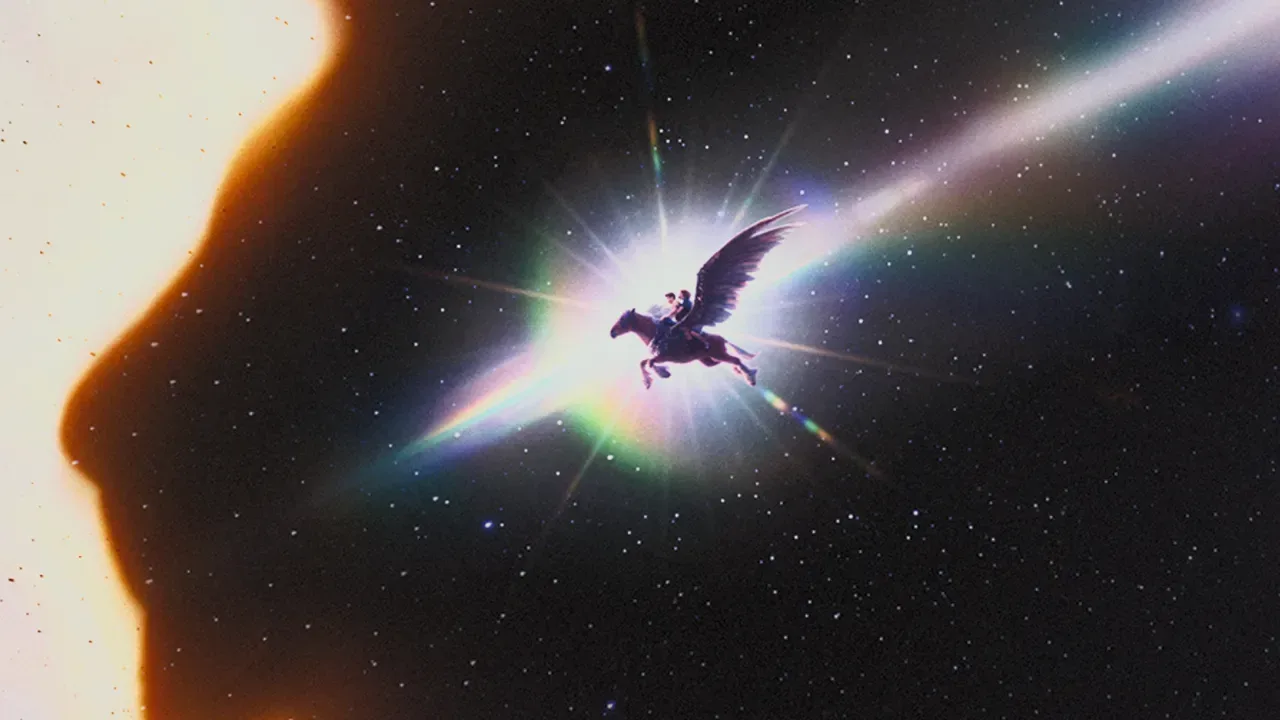
Netflix has revealed the first poster for Narnia: The Magician’s Nephew, offering the clearest official indication yet of the visual identity Greta Gerwig is bringing to C. S. Lewis’ fantasy world. It is only one piece of promotional art, not a story trailer or a finished scene, but it has already shifted the conversation among some fans who had approached the new adaptation with considerable caution.
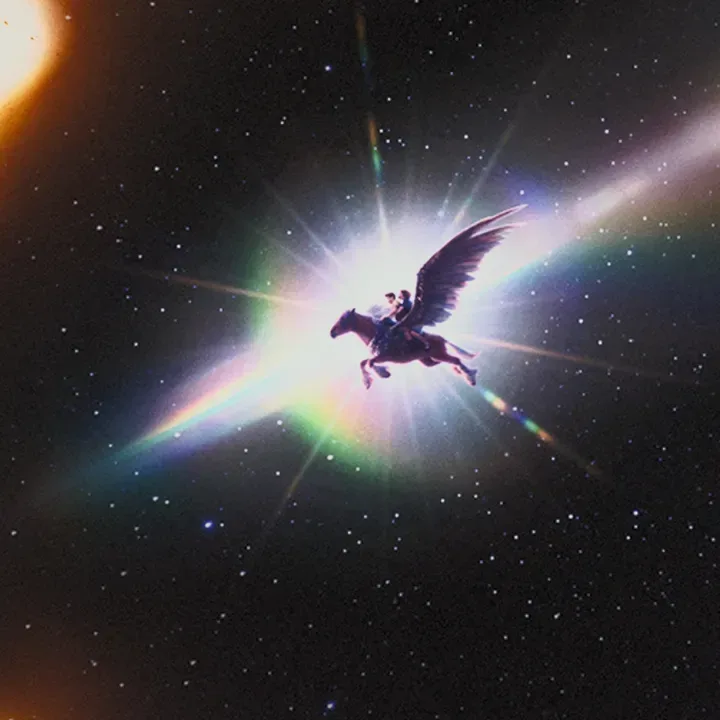
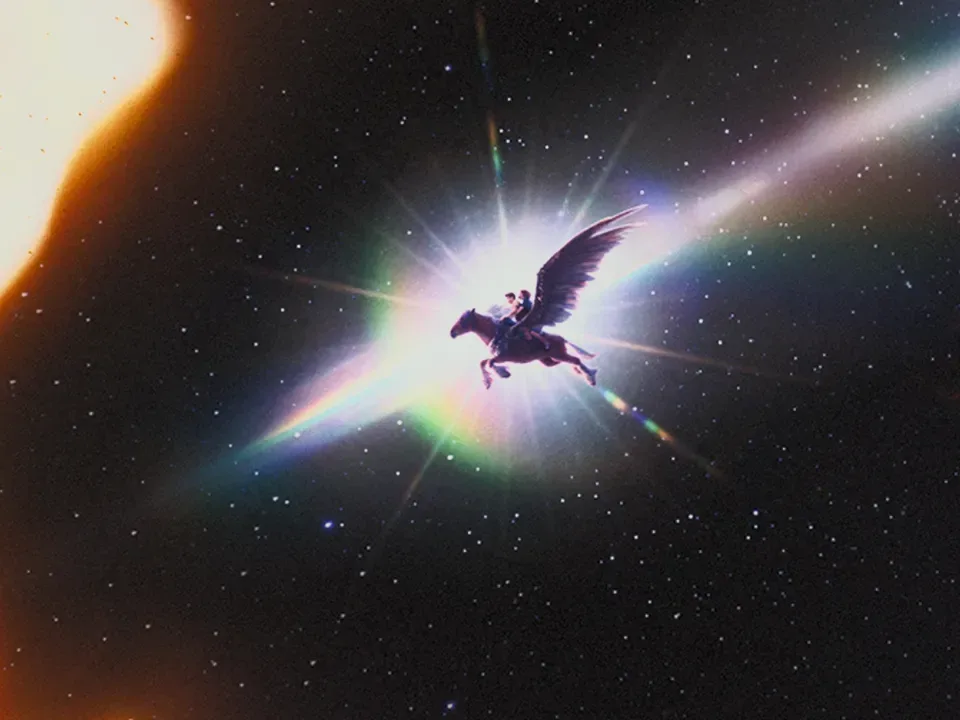
The image is built around an intentionally dreamlike composition: three figures are picked out in iridescent light, a flying horse occupies the scene with them, and a huge lion appears in the background in a distinctly cosmic style. Rather than attempting to explain its plot, the poster sells atmosphere. It presents Narnia as strange, radiant and mythic—a promising signal for viewers hoping the film retains the sense of wonder associated with Lewis’ work.
A first trailer is also expected to follow. That will be the much more meaningful test of how this interpretation handles character, tone, dialogue and the film’s relationship to its literary source. For now, the poster has given the production a persuasive visual opening without revealing too much.
What the poster appears to show
The illustrated design seems to echo artwork used on some editions of The Magician’s Nephew. Based on that apparent connection, the human figures are likely Polly, played by Beatrice Campbell, and Digory, played by David McKenna. The horse is understood to be Fledge, while the enormous lion in the distance points toward Aslan, voiced by Meryl Streep.
That reading is an interpretation of the imagery rather than a full official character guide. Still, it gives the art a clear foundation in the book’s iconography. The choice matters because an adaptation’s early marketing can communicate whether it recognizes the visual and emotional landmarks readers associate with a story. Here, the poster’s figures, horse and lion suggest a desire to foreground recognizable elements rather than disguise the property behind a generic fantasy image.
The use of a lion presented against a space-like field is particularly notable. Aslan is not framed as an ordinary animal or simply as a realistic creature in a landscape. The composition gives the character an otherworldly scale, treating him as an immense presence watching over the smaller figures. That is an aesthetic decision, not evidence of how the character will function in the film, but it communicates the kind of heightened fantasy the project is aiming to evoke.
Why the response has been warmer than expected
Fan response has not become universally enthusiastic, and no poster could settle every concern around a major new adaptation. But social discussion around the art has included approval from viewers who had not been predisposed to trust the project. The recurring point is not that the poster reveals a definitive adaptation, but that it looks considered, distinctive and closer to the mood some audiences want from Narnia.
Several reactions focused on its old-fashioned fantasy sensibility. Some viewers compared its approach to the kind of illustrated promotional art associated with late-20th-century fantasy films. That comparison is less about a specific production technique than a feeling: painted-looking grandeur, bold color, large symbolic imagery and an invitation to imagine a world beyond the frame.
Related coverage includes Narnia: The Magician's Nephew Poster Offers a Dreamlike First Look at Greta Gerwig's Film.
That response makes sense given what a poster is designed to do. A poster is not a technical demonstration of visual effects, acting or pacing. It is a piece of key art, meaning promotional imagery intended to establish a work’s central mood and visual hook at a glance. Strong key art can make an audience feel that a project has a point of view. In this case, the point of view appears to be expansive and storybook-like instead of deliberately grounded or minimal.
For a property with long-standing reader expectations, that is a useful first step. Familiarity can be a challenge: audiences may want something fresh enough to justify a new version while still recognizing a world they care about. The poster does not prove that the film has solved that challenge, but it does suggest that its creative team understands the value of fantasy imagery that feels unusual rather than interchangeable.
Visual confidence is not the same as an adaptation verdict
The optimistic reaction should also be kept in proportion. A visually appealing poster cannot answer the questions that matter most to readers: what elements of the book will be retained, what will be changed, how the characters will be written, and whether the film’s emotional and thematic priorities will land. Those remain open questions until the trailer and, ultimately, the film itself arrive.
Some of the cautious feedback reflects exactly that distinction. Viewers can like the design while remaining uncertain about creative choices they expect the adaptation to make. One concern raised in discussion involves a perceived time jump, while another centers on Jadis’ costume and whether it projects the degree of regality some fans expect. The poster itself does not provide enough narrative context to resolve either issue.
That uncertainty is healthy. Adaptation debates often become prematurely absolute, with a single photo, logo or costume treated as proof that a project will either honor or ruin a beloved original. Promotional material cannot carry that much information. A costume can look different in motion and in story context; a marketing composition can emphasize an image that is not representative of an entire film; and a change that sounds alarming in summary may be effective—or ineffective—only once it is seen as part of the finished work.
At the same time, fans are reasonable to scrutinize early choices. Costumes, casting, production design and marketing are not trivial details in a fantasy adaptation. They shape how audiences understand the world before the narrative begins. The most productive position is neither automatic approval nor automatic dismissal: appreciate what the poster accomplishes, while reserving judgment on the elements it cannot demonstrate.
The trailer will provide the next meaningful clues
The promised first look in trailer form should offer a better sense of Gerwig’s approach. A trailer can reveal whether the poster’s mystical, illustrated energy translates into live-action scenes; whether its tone is playful, solemn, intimate or epic; and how Polly, Digory, Fledge and Aslan are positioned within the story.
It may also show how closely the film leans into the visual language established by its key art. Marketing materials sometimes function as a condensed statement of intent, but they can also be more stylized than the final feature. The important question will be whether the trailer’s production design, cinematography and performances feel consistent with the sense of scale the poster promises.
For audiences that follow fantasy films closely, it is worth separating a few terms that often get used interchangeably. Production design is the overall design of the physical world on screen, including settings, props and textures. Costume design concerns the clothing and visual characterization of performers. Visual effects are the tools used to create or alter imagery, including fantastical creatures and environments. A poster may gesture toward all three, but it cannot show how effectively they work together in the completed film.
That is why the trailer matters. It will be the first chance to see the project’s visual choices operate across editing, sound, movement and performance rather than as a single static illustration. Until then, the poster is best viewed as an encouraging first impression rather than a final answer.
Release plan: IMAX previews, theaters, then streaming
Narnia: The Magician’s Nephew is scheduled to begin with IMAX sneak previews on February 10, 2027, before a global theatrical release on February 12. It is then set to reach Netflix subscribers on April 2.
The release structure gives audiences more than one way to encounter the film, and the IMAX component is notable because it places a premium-format theatrical presentation ahead of its streaming debut. IMAX screenings generally emphasize a large-format cinema experience, making them a natural fit for a film whose early artwork is built on huge, celestial imagery and a dramatic sense of scale. Whether that visual promise is realized is still unknown, but the planned rollout suggests confidence in the film as a theatrical event as well as a streaming release.
The cast also includes Carey Mulligan, Daniel Craig, Emma Mackey and Ciarán Hinds. Beyond the roles indicated by the poster, the presently available material does not establish how those performers fit into the film’s story, so it is premature to make assumptions about their characters or narrative importance.
A promising image, with the real test still ahead
The first poster has done what early marketing needs to do: it has made the project easier to imagine. Rather than smoothing Narnia into a familiar modern fantasy template, it leans into glowing color, symbolic scale and a slightly uncanny storybook quality. That has been enough to win over at least some viewers who expected to be unconvinced.
It also leaves substantial room for the upcoming trailer to do its job. The poster offers atmosphere, recognizable imagery and a confident design philosophy. It does not yet show the story, the performances or the full nature of Gerwig’s adaptation. Fans interested in how major screen interpretations balance bold new choices with cherished source material will have much more to examine once footage arrives. Until then, this is a strong visual overture—not a completed case for the film, but a much more inviting beginning than skeptics may have expected.
For another look at how fan communities weigh artistic choices, platform decisions and trust around emerging media policies, see our coverage of VRChat’s debate over thumbnails, discovery and community trust.