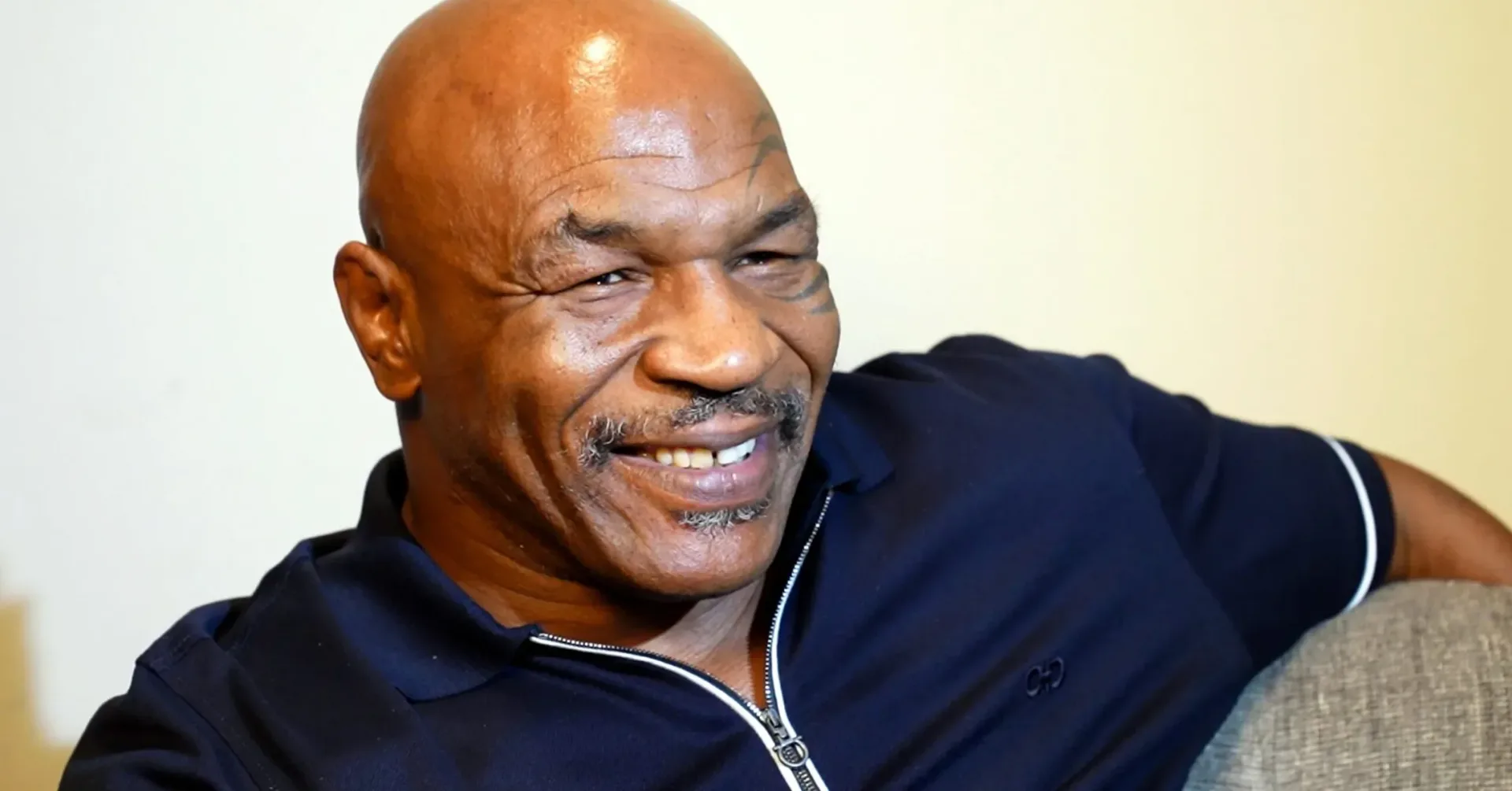
Mike Tyson says he personally delivered a letter from Sean “Diddy” Combs to President Donald Trump, adding a notable detail to Combs’ continuing effort to secure presidential clemency.
Speaking during a radio appearance, the former heavyweight champion said he has remained in contact with Combs since Combs began serving a federal prison sentence. Asked about the state of their relationship, Tyson described himself as friendly with Combs, then explained that his longtime acquaintance had asked him to bring a letter to the president.
Tyson said he carried out the request. His comments do not reveal the contents of the letter, when it was delivered, or whether it received a response. They do, however, place Tyson directly inside an already public effort by Combs’ representatives to seek relief from the White House.
The story is significant less because a letter itself decides anything—it does not—and more because it confirms that Combs’ clemency outreach has involved a high-profile personal connection. Tyson and Trump have known one another for decades, dating back to Tyson’s championship era and Trump’s involvement in promoting major boxing events in Atlantic City.
What Tyson said about the request
Tyson’s account was brief and direct. He said Combs wanted him to give the president a letter, and he affirmed that he did what Combs asked. There was no indication that Tyson was acting as an attorney, a formal representative, or a decision-maker in the clemency process.
That distinction matters. Delivering correspondence can help make sure a request reaches its intended recipient or people around that recipient, but it is not the same thing as a formal grant of a pardon or commutation. The president ultimately controls whether to extend federal clemency.
Tyson also voiced skepticism about the prosecution of Combs. He pointed to the age of the Mann Act, characterizing it as a 110-year-old law. His remarks reflect his view of the case, not a finding by a court or a change to Combs’ legal status.
The conviction, acquittals, and sentence
Combs was convicted in July 2025 on two counts of transportation to engage in prostitution under the Mann Act. The federal law at issue concerns transportation connected to prostitution. In the same case, jurors acquitted Combs of racketeering conspiracy and sex-trafficking charges.
Related coverage includes Mike Tyson Says He Delivered Diddy’s Letter to President Trump.
Those outcomes are important to keep separate. A jury’s acquittal on some counts does not erase convictions on other counts, while convictions on the Mann Act counts do not mean the jury found Combs guilty of the racketeering conspiracy or sex-trafficking charges it rejected. Public discussion of the case often compresses those distinctions, but the separate verdicts are central to understanding where the case stands.
Combs later received a 50-month federal prison sentence. He remains incarcerated at FCI Fort Dix in New Jersey and is appealing both his conviction and sentence.
An appeal and a clemency petition are different paths. An appeal is a court process in which the defense challenges aspects of a conviction, sentence, or underlying proceedings. Clemency is executive action. In practical terms, a successful appeal could affect the legal judgment through the judicial system, while clemency depends on a presidential decision. A person can pursue both at once, as Combs is doing.
What “clemency” can mean
Clemency is an umbrella term for forms of presidential relief in federal criminal matters. Two of the most commonly discussed forms are a pardon and a commutation.
- A pardon is an act of forgiveness for a federal offense. It does not operate like a court reversal of a conviction.
- A commutation reduces or otherwise modifies a sentence. It can be especially relevant to an incarcerated person because it may shorten the remaining prison term without undoing the conviction itself.
The supplied information refers generally to a pardon effort and clemency outreach. It does not establish the precise relief requested in Tyson’s letter. That is a meaningful unknown: the vocabulary around pardons is often used loosely in public conversation, but the exact form of relief sought can shape what a petition is asking a president to do.
Nor does Tyson’s involvement indicate that clemency is forthcoming. It shows that Combs used a personal channel to send a message. The decision remains with Trump, whose prior public comments have indicated reservations.
Trump’s stated reservations
Trump has acknowledged that he was asked about clemency for Combs. He has also said that the two had once been friendly but suggested their relationship changed after Trump entered politics. That history, Trump indicated, could weigh on his decision.
There is therefore no public basis here to treat Tyson’s delivery as evidence that Combs will receive relief. The available facts point in two directions at once: Combs’ team has actively pursued clemency, and the president has expressed hesitation about granting it.
That uncertainty is the key practical takeaway. Celebrity intermediaries can draw attention to a request, particularly when they have a long personal history with a president. But attention, access, and a favorable outcome are separate things. Tyson can confirm the delivery; only a future presidential action could confirm clemency.
Why the story has broader pop-culture weight
The development brings together two figures whose public identities extend well beyond their original fields. Tyson remains one of boxing’s most recognizable names, while Combs has long been known as a music executive and artist. Trump’s earlier connections to high-profile boxing events provide the historical bridge between Tyson and the president.
It also illustrates how celebrity news can overlap with legal procedure without changing that procedure. The personal drama of a famed boxer carrying a letter is naturally attention-grabbing. The legal reality is more restrained: Combs’ conviction and sentence remain in place while his appeal proceeds, and clemency remains discretionary.
For readers following entertainment stories that intersect with questions of law and consent, this look at how a television drama places consent law at the center of its case offers a separate example of legal concepts being foregrounded in pop culture. The distinction in Combs’ case is that the current issue is not a fictional plot device, but the real-world separation between jury verdicts, appellate review, incarceration, and a possible clemency request.
What remains unknown
Several major details have not been made public. Tyson did not disclose what Combs wrote in the letter. There is no stated timetable for a White House response, no confirmation of a formal action on the request, and no indication that Trump has decided whether to grant or deny any form of clemency.
For now, the clearest development is Tyson’s confirmation that he delivered the letter after Combs asked him to do so. Combs remains at FCI Fort Dix, his appeal is ongoing, and any decision on federal clemency rests with the president.