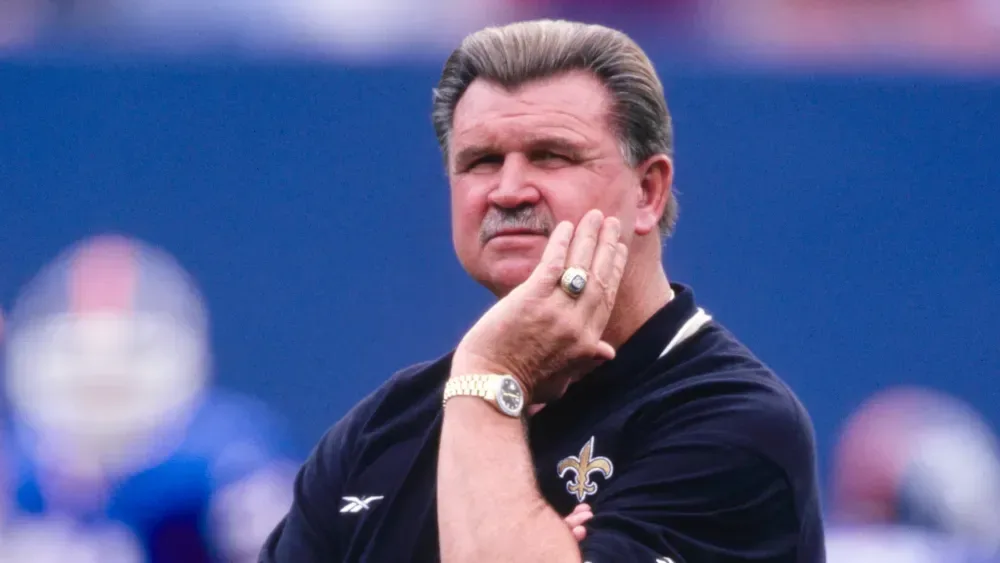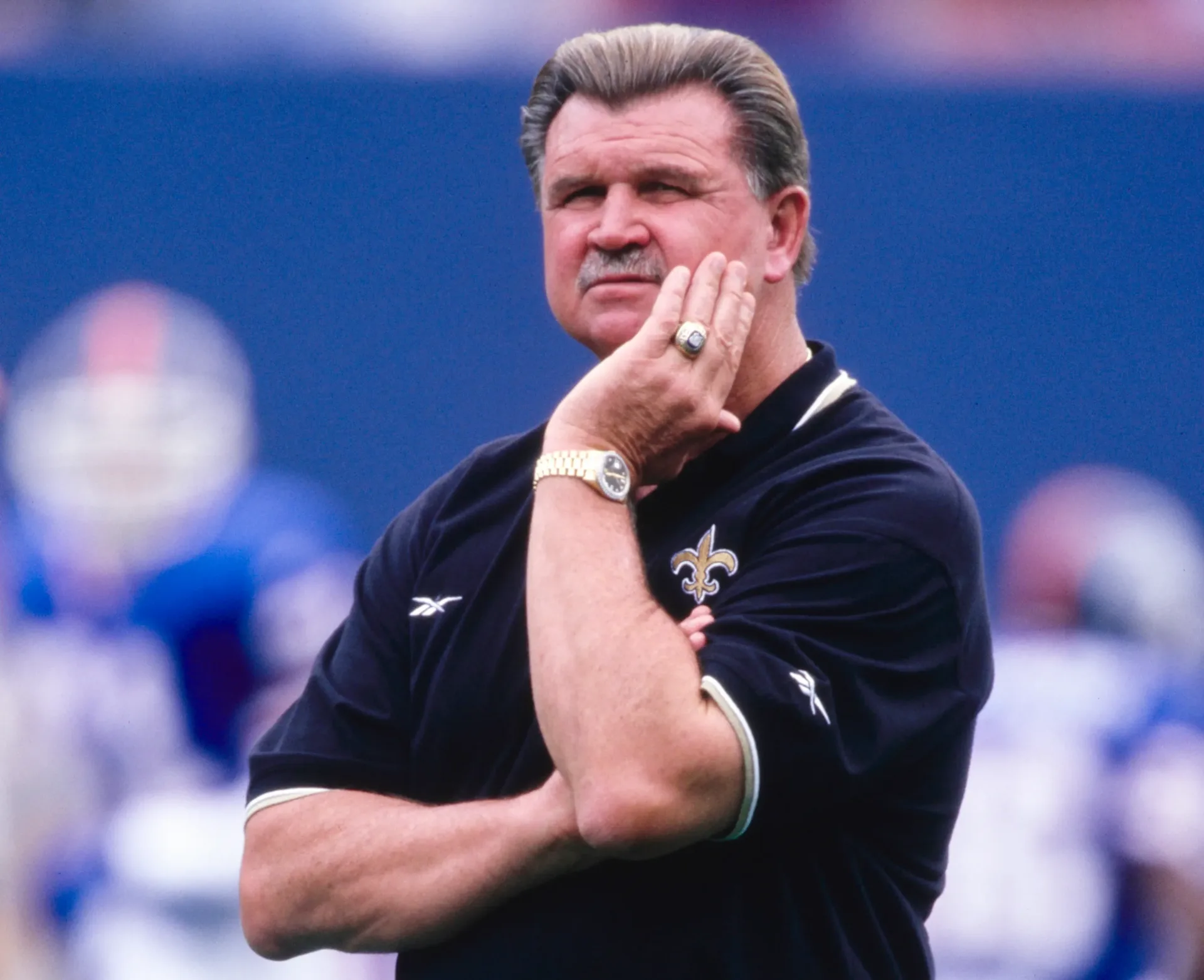
Mike Ditka, the former NFL tight end, Chicago Bears head coach and television analyst, has died at 86. His family announced his death in a statement shared by Jarrett Payton, son of Hall of Fame player Walter Payton. No cause of death was disclosed.
For football audiences, Ditka occupied several distinct roles across decades: a Rookie of the Year tight end with the Bears, a coach identified most closely with Chicago’s 1985 championship team, and a familiar on-air voice after his coaching career. That range matters because each role asked for something different. Playing establishes a résumé; coaching turns decisions into a public referendum every week; studio work turns a former competitor into a guide for viewers trying to make sense of the sport.
His family’s statement placed the public image beside the private loss, describing him as a husband, father, grandfather and friend as well as a Hall of Fame player, a legendary coach and leader of the Bears’ Super Bowl XX championship side.
“While the world knew Mike as a Hall of Fame football player, legendary coach and leader of the Chicago Bears’ Super Bowl XX championship team, we knew him as the heart of our family,” the family said.
A football life that began in western Pennsylvania
Ditka was born Michael Dyczkoon in Carnegie, Pennsylvania, and grew up in Aliquippa. He attended Pitt before beginning his professional career in the NFL.
The Bears drafted him in 1961, and he won Rookie of the Year. His playing career then moved through three franchises: six years in Chicago, two seasons with the Philadelphia Eagles, and four years with the Dallas Cowboys.
He played tight end, a position that can carry a broad tactical workload. A tight end is eligible to catch passes but is also commonly involved in blocking duties, placing the player near both the passing game and the line of scrimmage. The supplied record of Ditka’s career identifies the position and its longevity across Chicago, Philadelphia and Dallas; it also helps explain why his football identity did not begin or end with the sideline.
For fans who encounter Ditka primarily through old Bears imagery or his forceful television persona, that player-first perspective is useful. Before becoming a coach whose name was tied to one of the franchise’s biggest achievements, he had already put together a substantial multi-team NFL career.
Related coverage includes Mike Ditka Dies at 86.
The Bears years and a championship that defined an era
Ditka became a celebrity in the 1980s while coaching the Bears. The defining result was the 1985 team’s Super Bowl win, still the franchise’s only Super Bowl championship. In a league where single seasons can become permanent shorthand, that achievement has remained central to how Chicago football history remembers him.
A head coach is responsible for more than game-day visibility. The role sits at the intersection of preparation, personnel, tactics and public accountability. Even when an entire staff and roster shape a team, a head coach often becomes the most recognizable representation of its identity. Ditka’s larger-than-life reputation meant that association was especially strong.
That does not make a championship a one-person accomplishment. The family statement itself identifies Ditka as the leader of the Super Bowl XX team, while Walter Payton—whose son shared the family’s announcement—was a Hall of Fame player who played under him. The distinction is important: a title is a collective result, while a coach’s legacy is often built around how they led the group that reached it.
Ditka was fired by the Bears in 1992. After time away from coaching, he returned to lead the New Orleans Saints for three seasons. The move is a reminder that coaching careers rarely follow a clean, one-franchise arc, even for people permanently associated with a particular team. Chicago remained the center of Ditka’s public legacy, but New Orleans was also part of his record as an NFL head coach.
From the sideline to the studio
After coaching, Ditka worked as an analyst at NBC and later at ESPN. He was a fixture on Sunday Morning Countdown from 2006 through 2015.
Sports analysis is its own craft. Rather than calling plays or setting a weekly game plan, an analyst interprets the league for an audience: explaining matchups, reacting to personnel decisions and bringing the viewpoint of someone who has lived the pressure of the sport. Former players and coaches can offer different lenses. A former player may focus on what it feels like to execute a role; a former coach may naturally see organization, preparation and the consequences of decisions across an entire team.
Ditka had both experiences to draw on. His years as a tight end preceded a career that took him from Bears coach to Saints coach, and then into network television. The result was a public career with several entry points for different generations of fans. Some knew him from his playing days, some from the Bears’ 1985 season, and some from years of NFL programming on NBC and ESPN.
That kind of cross-era visibility can make a sports figure feel bigger than any one job. It also explains why tributes are likely to speak in several football languages at once: the player’s accomplishments, the coach’s championship and the broadcaster’s familiar presence.
Why Ditka’s name carries beyond a single season
Sports memory tends to compress long careers into a few symbols: a uniform, a sideline image, a defining victory, or a memorable television appearance. Ditka’s legacy contains all of those categories, but the basic chronology is worth keeping intact. He was a Pittsburgh-area native who reached the NFL after Pitt; a Bears draft pick in 1961 and Rookie of the Year; a player for the Bears, Eagles and Cowboys; a Bears coach whose 1985 team won the franchise’s only Super Bowl; a Saints coach; and a television analyst at NBC and ESPN.
Putting those stages in order does more than list milestones. It shows a career that kept changing shape while remaining in football. The player’s task is direct participation. The coach’s task is leadership and preparation. The analyst’s task is communication. Ditka’s public persona traveled through all three.
His death will also be felt by people whose connection to football is built through history, memorabilia and old broadcasts as much as through the current schedule. The culture around the NFL frequently preserves its most prominent eras through cards, photographs, highlight packages and recurring conversations about great teams. For a look at how the current game still intersects with that collecting conversation, see this recent NFL card watch.
But the immediate news is more personal than any career summary. Ditka’s family said he would be missed beyond measure and remembered forever. At 86, he leaves behind a football legacy defined by an uncommon progression from player to championship coach to enduring television personality.