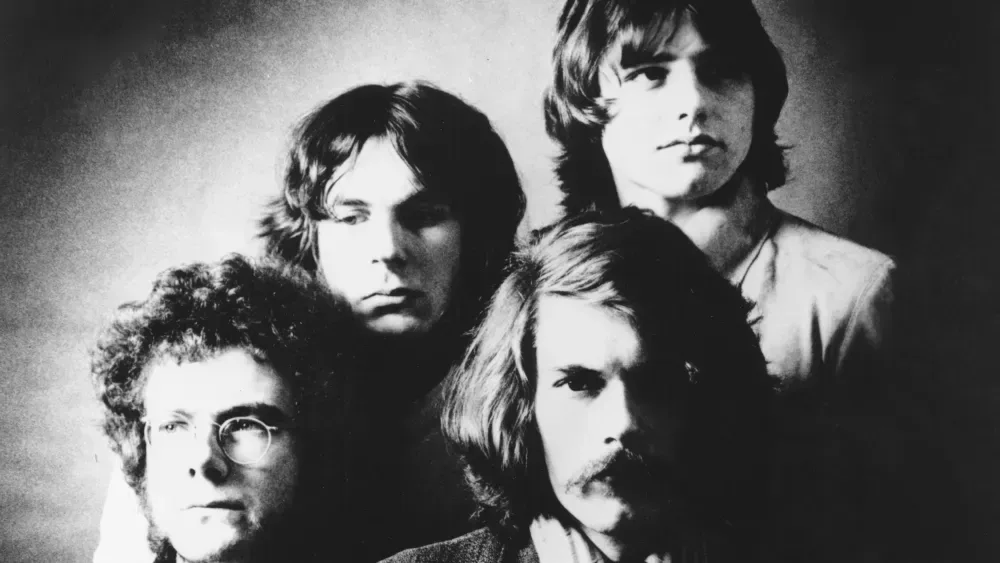
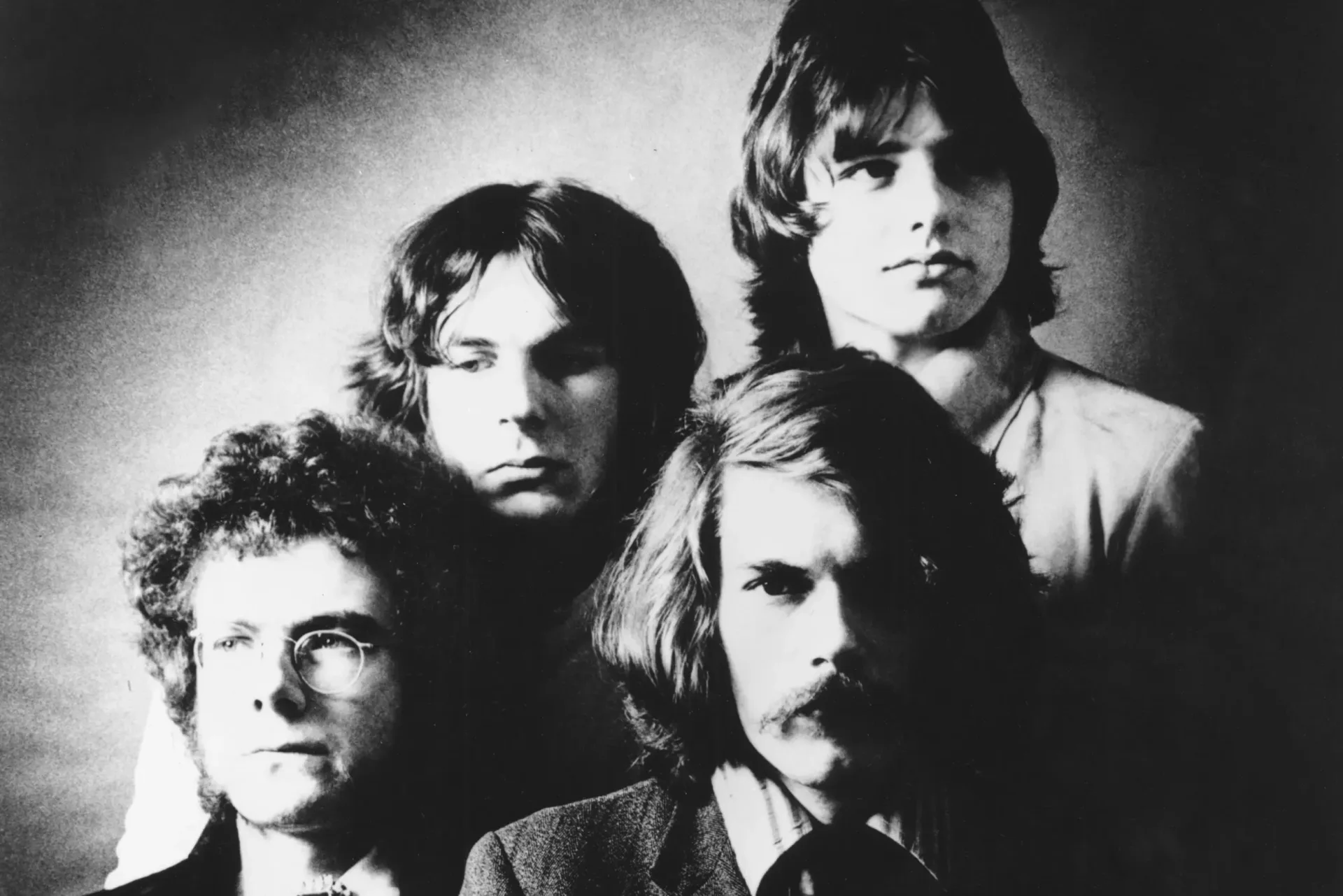
Michael Giles, the drummer whose imagination and velocity helped make King Crimson’s first lineup so arresting, has died at 84. A message posted by the band confirmed his death and praised his rhythmic imagination, sensitivity and commitment to creative freedom. No cause of death was announced.
Giles’ name is inseparable from In the Court of the Crimson King, King Crimson’s 1969 debut. The record is often regarded as an early landmark of progressive rock, not simply because it was ambitious, but because it put several musical languages into the same room: rock, jazz, classical-inflected writing and avant-garde experimentation. Giles was essential to making that collision feel volatile rather than merely ornate.
For listeners approaching the album through headphones, vinyl reissues or a streaming queue decades later, the drums may be one of the clearest routes into what made it such a departure. Giles could make a passage feel theatrical and explosive with a rolling flourish, then move with remarkable speed through a more intricate rhythmic turn. His work did not just mark time beneath the compositions. It intensified their abrupt shifts in scale, mood and momentum.
A drummer at the foundation of King Crimson
Born in 1942, Giles came from Bournemouth on England’s south coast. His connection with Robert Fripp predated King Crimson. In 1967, Giles, his brother Peter and Fripp formed Giles, Giles and Fripp. The trio released The Cheerful Insanity of Giles, Giles and Fripp the following year, although it achieved only modest commercial results.
Its importance is clearer in retrospect. The project created the working relationship that would help lead to King Crimson, which Giles formed in late 1968 with Fripp, singer and bassist Greg Lake, multi-instrumentalist Ian McDonald and lyricist Peter Sinfield. That lineup would not last long, but it produced one of rock’s most enduring debut albums.
King Crimson’s early concerts rapidly drew attention in Britain. In July 1969, the group opened for the Rolling Stones at the Hyde Park concert in London, an appearance that placed the young band before an enormous audience during a period when its sound was already challenging familiar rock expectations.
That context matters when discussing the scale of Giles’ contribution. The band was not simply adding complex drumming to conventional songs. Its material created room for different kinds of intensity: heavy passages, jazz-adjacent movement, dramatic builds and sections with a more composed, classical character. Giles’ playing gave those contrasts physical impact. The thunderous rolls and rapid figures associated with his work made the music feel less like a collection of influences and more like a distinct, sometimes overwhelming proposition.
What “progressive rock” meant in this setting
Progressive rock is often used as a catch-all for elaborate rock music, but the description is more useful here as a shorthand for a willingness to stretch the form. In King Crimson’s debut-era work, that meant drawing from styles not usually treated as equals within rock music and allowing arrangements to move beyond a straightforward verse-chorus framework.
Related coverage includes Michael Giles, Founding King Crimson Drummer, Dies at 84.
Giles’ role was especially important because drumming is where ambitious arrangements either become coherent or lose their force. A drum part can establish a pulse, signal an approaching transition, expand the apparent size of a crescendo or introduce instability beneath a melody. In this context, the phrase “rhythmic imagination” is not just ceremonial praise: it points to the way a drummer can help the listener navigate music that changes character quickly.
That is why his playing remains central to the identity of the original King Crimson lineup. The instrumental drama of the record was not created by any one member alone. But Giles supplied a powerful connective element between the band’s competing textures and influences. His approach could be forceful without reducing the music to blunt heaviness, and busy without making every moment sound like a solo.
The group’s impact extended well beyond its short initial run. The sound of In the Court of the Crimson King has been heard as an influence on fellow progressive-rock artists including Yes and Genesis, as well as David Bowie and Roxy Music. Later artists such as Tool and the Mars Volta have also been connected to that legacy. “21st Century Schizoid Man,” one of the album’s best-known songs, reached another generation when Kanye West sampled it for his 2010 single “Power.”
Influence is not the same as ownership: the musicians who followed King Crimson developed their own voices. Yet the range of artists associated with the album’s legacy underlines how unusual its original blend was, and how prominently Giles’ drumming figured in that blend.
A short first chapter, then a wide-ranging career
Like many King Crimson lineups, the original configuration changed quickly. By early 1970, Giles, Lake and McDonald had all left the band, although Giles and Lake contributed to King Crimson’s second album, In the Wake of Poseidon.
The departure did not end Giles’ musical connection to his former colleagues or the wider circle around the band. He subsequently recorded with McDonald as McDonald and Giles. Across the years, his credits encompassed a notably varied group of artists: Greg Lake and Peter Sinfield, Steve Winwood, Bryan Ferry, Leo Sayer, Anthony Phillips, Kevin Ayers, Neil Sedaka, Yvonne Elliman, Andy Summers and the Penguin Cafe Orchestra.
That list suggests a career that cannot be reduced to one foundational rock record. The artists named span different corners of popular and experimental music, fitting the curiosity associated with Giles’ early work. He also released Progress, Ghost Dance with later King Crimson member Jamie Muir and David Cunningham, and worked with the Michael Giles MAD Band, which included King Crimson alumnus Keith Tippett.
In 2002, Giles joined several other former King Crimson members in the 21st Century Schizoid Band, a group that toured material from the band’s early repertoire. The project was a reminder that this music had retained a live afterlife. Revisiting early King Crimson songs was not merely a nostalgia exercise; it returned musicians and audiences to arrangements whose demands and possibilities remained distinctive.
Why the early recordings still matter
There is a temptation to treat landmark albums as untouchable monuments and focus only on their long shadow. Giles’ career offers a more useful reminder that the players behind such records were working musicians, collaborators and experimenters, not fixed images from a famous sleeve. His work before King Crimson helped establish a creative partnership; his work afterward moved through many different musical settings; and his return to the early repertoire showed a willingness to engage with that history directly.
For anyone exploring the album now, listening for Giles means paying attention to more than sheer speed or volume. Notice how drum rolls can turn anticipation into release, how fast passages sharpen the tension around an arrangement, and how the percussion helps the group move between contrasting musical ideas. Those details help explain why the debut is still discussed as a pivotal progressive-rock statement rather than simply an unusual artifact of 1969.
Giles is survived by his children Tina, Amanda, William, Rosie and Oliver; several grandchildren; his sister Marion; and his brother Peter. His death closes the life of a musician whose drumming helped give one of progressive rock’s defining early records its sense of danger, scale and movement.
For another look at how musicians continue creating across changing circumstances, read our coverage of iLoveMakonnen’s ongoing recording work.