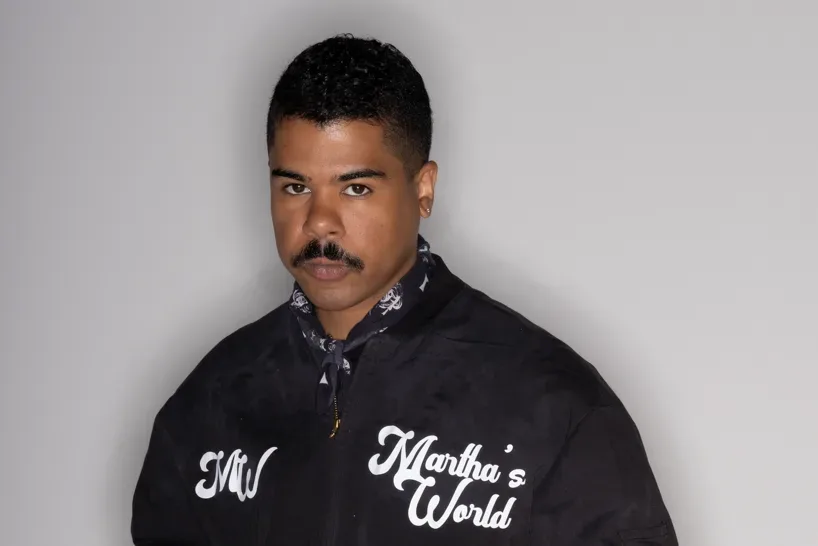

iLoveMakonnen is stocking shelves at a Portland supermarket, and he has described the work in terms that cut through the familiar, often unhelpful narrative people apply when a recording artist takes a conventional job. For him, the point is not a spectacle of decline or a detour from creativity. It is usefulness.
“I’m feeling useful as a human again,” iLoveMakonnen said while reflecting on the work. He also expressed a much harsher view of his place in music: “I’m not useful in music anymore.” Taken together, those comments describe a difficult separation between public recognition and personal purpose. A person can have a song with a major cultural footprint, a Grammy nomination and high-profile collaborators, yet still find the most immediate sense of contribution in a shift spent keeping a store organized and stocked.
That distinction matters because celebrity coverage has a habit of treating ordinary work as either a stunt or evidence of a fall. iLoveMakonnen’s recent activity in Portland offers a more grounded account. He has continued recording, has a new single with longtime collaborator Key!, and has a joint album on the way. The supermarket job exists alongside that music rather than replacing it.
A public moment that was widely misread
There was already a precedent for outsiders drawing assumptions from seeing iLoveMakonnen at work. In August 2025, he flipped burgers at Little Griddle in Portland to help Burn Money Studios, a local recording studio recovering after a fire. A TikTok filmed at the restaurant surpassed 1.3 million views.
The attention did bring customers through the door, but its usefulness had limits. iLoveMakonnen said the crowd interest eventually interfered with operating the restaurant. That is an important practical detail: viral visibility can produce attention without producing the kind of sustainable support a business or community effort actually needs. In this case, the video’s reach helped create a rush, but a workplace still has to serve customers, manage space and function day to day.
It also clarifies why descriptions of the burger shift as proof that he had “fallen on hard times” missed the stated reason for it. The work was tied to helping a studio following a fire. Its purpose was local and concrete, even if the internet’s reaction turned it into a much broader public event.
From “Tuesday” to a different definition of success
iLoveMakonnen’s comments carry extra weight because of the scale of the success attached to “Tuesday.” After Drake remixed the 2014 song, the pair received a Grammy nomination for best rap/sung collaboration. iLoveMakonnen also signed with Drake’s OVO Sound. Those are substantial markers in a music career, but they do not guarantee steady bookings, a stable audience in every city, or a continuing sense that the industry has a place for an artist.
The contrast is not evidence that his earlier achievements have disappeared. Instead, it shows the limits of treating a past breakthrough as a permanent job description. Music careers often get discussed through their most visible peaks: a hit, a remix, an award nomination or an important label association. But an artist’s present-day reality can be shaped by less glamorous factors, including where they live, which rooms they can get booked into and whether a local audience turns out.
For iLoveMakonnen, Portland became home after he considered leaving New York. An Oregon emblem on a toy his dogs were chewing prompted him to investigate the state, and he found its housing costs manageable enough to make the move possible. It is a small, personal origin story for a major life change, one that does not fit the usual career-calculation script.
His Portland life includes walks through Laurelhurst Park and Unthank Park. Yet building a performance audience in his adopted city has been difficult. He said that, despite being billed as a co-headliner for Pride in Demand: Portland Queer Takeover, the show drew one of the smallest crowds he has played for.
Booking barriers and the cost of being visible
iLoveMakonnen has said he believes coming out as gay has made it more difficult to get booked. That is his assessment of his own career experience, not a claim that can be reduced to one poorly attended event. Still, the smaller Portland crowd and the broader booking struggle sit in the same picture: public acclaim and personal visibility do not necessarily translate to equal access to stages.
Booking is the process through which artists are hired to perform at a venue, concert or event. It is more than simply putting a name on a poster. Booking determines who gets opportunities to meet new listeners, earn performance income and remain visible within a local or touring circuit. When an artist says getting booked has become harder, the implication reaches beyond a single night’s attendance. Fewer bookings can mean fewer chances to rebuild momentum.
That does not make the supermarket work a retreat from art. It may instead represent a way to separate daily worth from the unpredictability of the music business. Stocking shelves has a direct result: products are put where customers can find them. The value is immediate, legible and not dependent on a crowd, a promoter or an algorithm.
That perspective also reframes the tendency to regard jobs outside entertainment as embarrassing for famous people. There is no inherent contradiction between being an artist and holding work that serves a neighborhood in a different way. In iLoveMakonnen’s case, the distinction appears especially meaningful because he has openly tied the supermarket role to feeling useful as a person.
Music is still happening, and collaboration remains central
Despite his frustration with the industry, iLoveMakonnen has not stopped making music. Key!, a longtime collaborator, joined him on “Lie 2 Me,” released November 13. The two also have a joint album, Over It, on the way.
His description of their creative connection is notably different from his description of the business around music. “It feels like therapy. It doesn’t feel like a job,” he said of working with Key!.
Collaboration, in this context, means more than two artists appearing on the same release. The quote suggests a working relationship that makes room for expression and relief rather than treating every session as a commercial calculation. That does not erase the professional side of releasing a single or preparing an album. It does, however, distinguish the act of creating from the pressures of securing shows and sustaining industry relevance.
The split is revealing. iLoveMakonnen’s remarks do not reject music itself; they identify a difference between making it with a trusted partner and navigating the systems around it. The former can feel therapeutic. The latter, in his account, has become a place where he feels less useful and faces harder access.
For readers following music through headlines, the story is a useful reminder that a career is not only measured by the distance between release dates. It is also shaped by community, work, routine and whether an artist has space to create without every act being judged against an earlier hit. It belongs in the same broader pop-culture conversation as stories about the human relationships that persist beyond the spotlight, such as Lizzo’s support for Sophia Eris during a medical emergency.
Atlanta may be next
Portland may not remain iLoveMakonnen’s home. He has said he wants to move to Atlanta. No timetable or specific plan was given, so it is best understood as an intention rather than a confirmed relocation.
For now, the clearest facts are straightforward: he is working at a Portland supermarket, continuing to record with Key!, and evaluating a move while confronting a music career that no longer feels as secure or useful to him as it once did. His story resists easy labels. It is neither a tidy comeback narrative nor a simple account of leaving music behind.
Instead, it is about an artist assigning real value to work that others might overlook, while preserving a creative partnership that still feels good to him. In an attention economy that tends to reward the loudest possible interpretation, stocking shelves can be both ordinary labor and a meaningful choice.