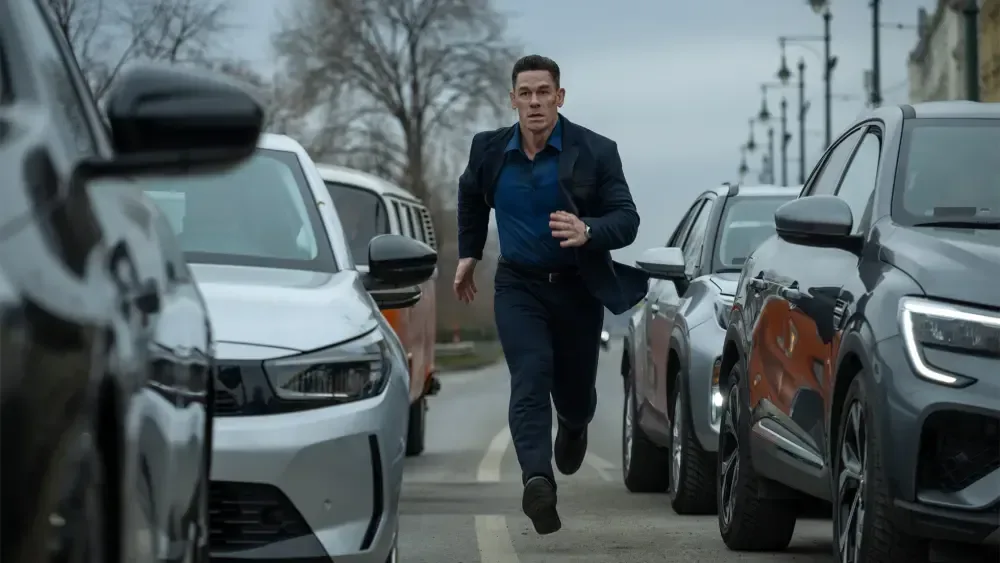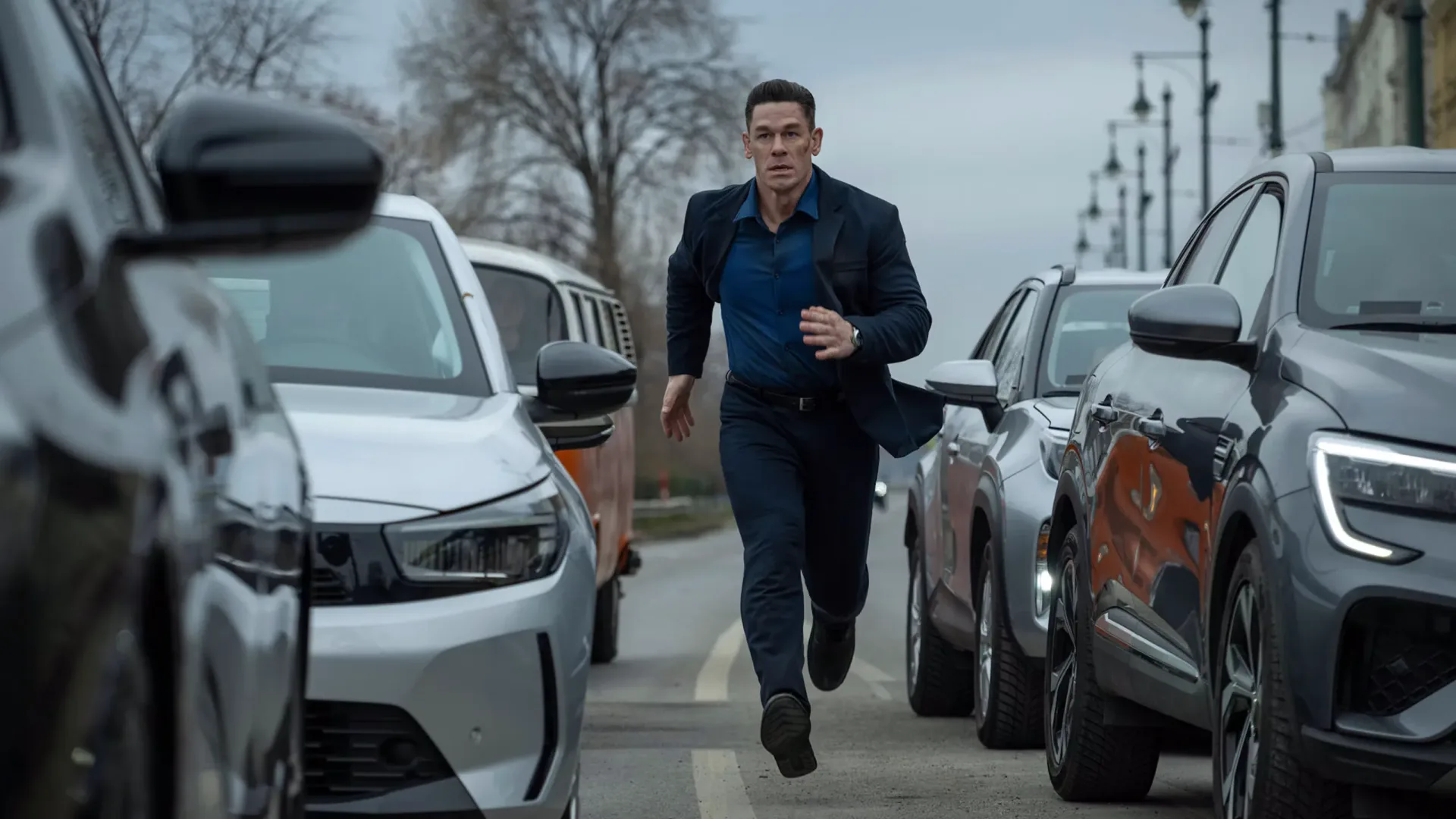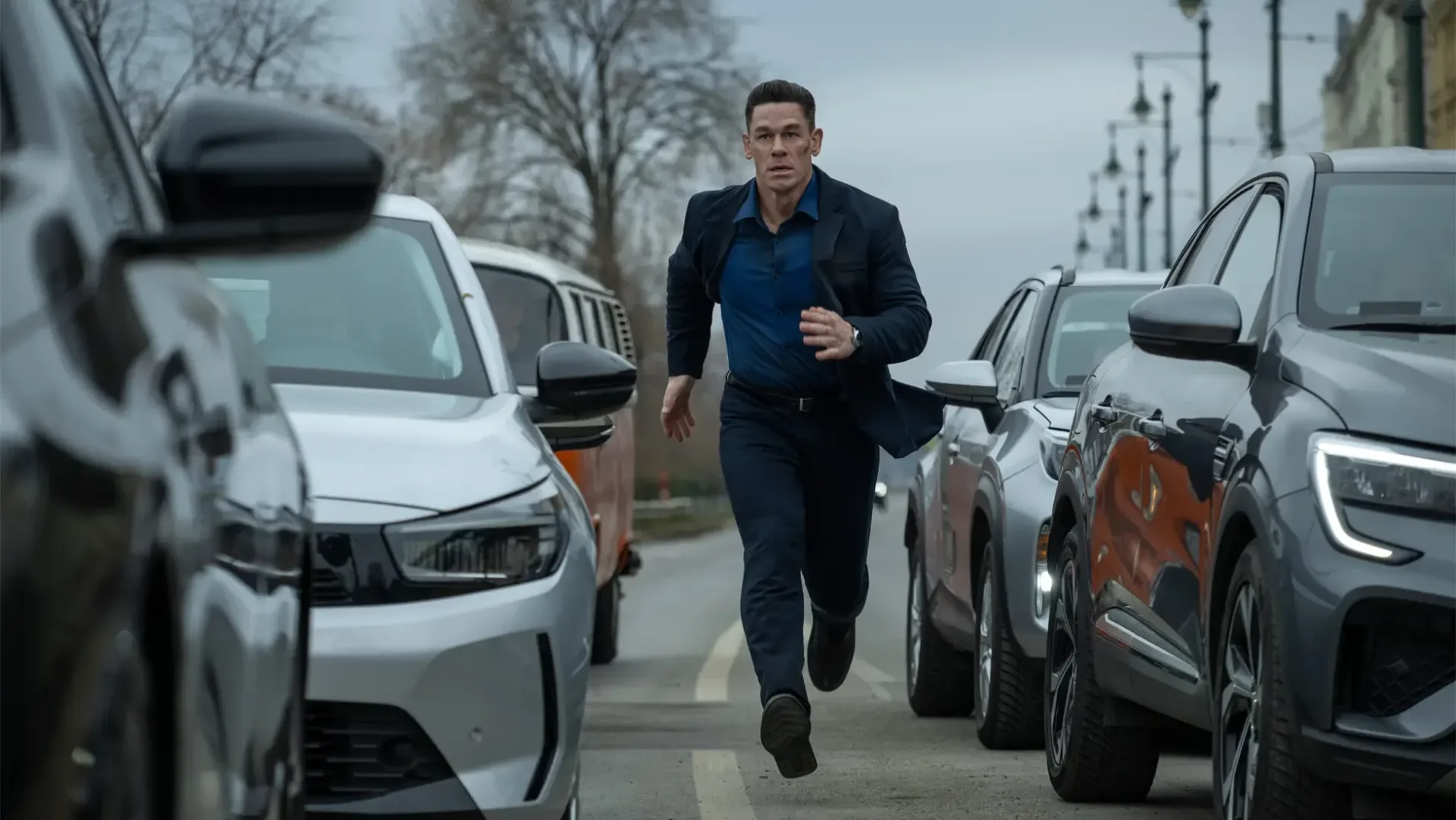
Matchbox: The Movie has a perfectly workable elevator pitch: John Cena is a covert operative whose childhood friends get dragged into the international mess that threatens to ruin him. There are car chases, hand-to-hand brawls, an allegedly missing nuclear warhead, an arms dealer, a CIA official with career ambitions, and one reunion made abruptly less nostalgic by abduction. It is a lot for a movie about a tiny die-cast vehicle brand to carry. The central problem is not that the film aims big; it is that its biggest components do not consistently pull in the same direction.
Directed by Sam Hargrave and written by David Coggeshall, the PG-13 film runs 126 minutes. It uses Matchbox less as a literal universe of toy cars than as the childhood connection binding together a group of adults. That is a more sensible approach than pretending the toys themselves demand dense mythology. Yet the picture still struggles to make the old collection feel like more than a prompt for another standardized action plot.
A childhood club meets an adult espionage crisis
Cena plays Sean Walker, the informal leader of the so-called Matchbox Gang. In the late 1990s, Sean and four friends spent time around an extensive toy-car collection kept by small-town mechanic Smalley, played by Bill Camp. Smalley assembled it for his niece, Aimee, played as an adult by Jessica Biel. The idea is clear: these cars are a shared language, a childhood refuge and a sign of the personal histories that remained unfinished as everyone grew up.
Nearly three decades later, Smalley’s death brings Sean home for the funeral and reunites him with Aimee, Ted, Charmaine and Crosby. Ted, played by Arturo Castro, is now a high-school science teacher. Charmaine, played by Teyonah Parris, is a helicopter pilot who wants to become a news reporter. Sam Richardson’s Crosby is a construction foreman and Charmaine’s husband. Their gathering ends when Agent Mosier, portrayed by Corey Stoll, has them drugged and taken away.
Mosier is pursuing the CIA’s top job and holds Sean responsible for a nuclear warhead that was supposed to reach an allied agency but has disappeared. Whether Sean lost it or stole it is part of the accusation. Sean manages to get his friends out of the planned rendition operation, but that does not restore their lives. Media smears tied to the CIA leave the civilians with their reputations on the line, and the group is soon involved in the effort to recover an active bomb before the situation escalates into nuclear catastrophe.
The stakes are huge, perhaps necessarily so for a story built to put familiar people in unfamiliar danger. But they sit at odds with the small, potentially appealing premise of lapsed friends returning to the place where they used to play. The movie wants the Matchbox collection to represent intergenerational affection and a bridge from adult to child. It also wants the same emblem to launch an accelerating thriller about clandestine operations and international weapons trafficking. Neither ambition is inherently misguided. The issue is the thin connective tissue between them.
What “practical action” adds — and what it cannot fix
Hargrave comes to the film with a stunt-coordination background and previous experience directing the Extraction films. That pedigree shows in the physical scale and blunt forward drive of the action. Several sequences appear to lean more heavily on practical work than audiences might expect, including a vehicle going over a precipice.
Practical action is a broad term for stunt work, vehicles, performers, props and physical effects executed during filming, rather than imagery created entirely through computer-generated visual effects. It does not mean a scene contains no digital work; modern filmmaking can combine both. Its value is often tangible weight: a car, a location or a body in motion can give a sequence a sense of force that is difficult to simulate. Here, the action has muscle and visible effort.
Yet physical credibility is not identical to dramatic clarity. A chase or a fight is most exciting when viewers understand not only where the people are going, but why that particular moment alters their chances. Momentum is the feeling of continuous forward movement from one beat to the next. Emotional stakes are the human consequences that make that movement matter: trust broken, a relationship endangered, an innocent person scared, a moral decision becoming unavoidable.
Matchbox often has the first quality without earning enough of the second. Its sequences keep moving, but the movie provides limited room to register what is happening to the people inside them. This can make scenes exhausting rather than exhilarating. The film has an ideal on-paper setup for escalating emotional stakes: Sean’s secret profession has imperiled people who did not consent to it, and those people must decide whether to help him anyway. But that tension is too often treated as a quick checkpoint before the plot heads toward the next impact.
The film also cannot settle on its primary genre flavor. It has a toy-car identity and a substantial amount of driving, but it is not always a car movie in the sense that vehicles define the drama or reveal character. It is also a combat-focused spy movie, where Cena’s operative expertise repeatedly takes center stage. Trying to split the difference leaves the Matchbox material feeling intermittent rather than essential.
Cena supplies the movie’s clearest through-line
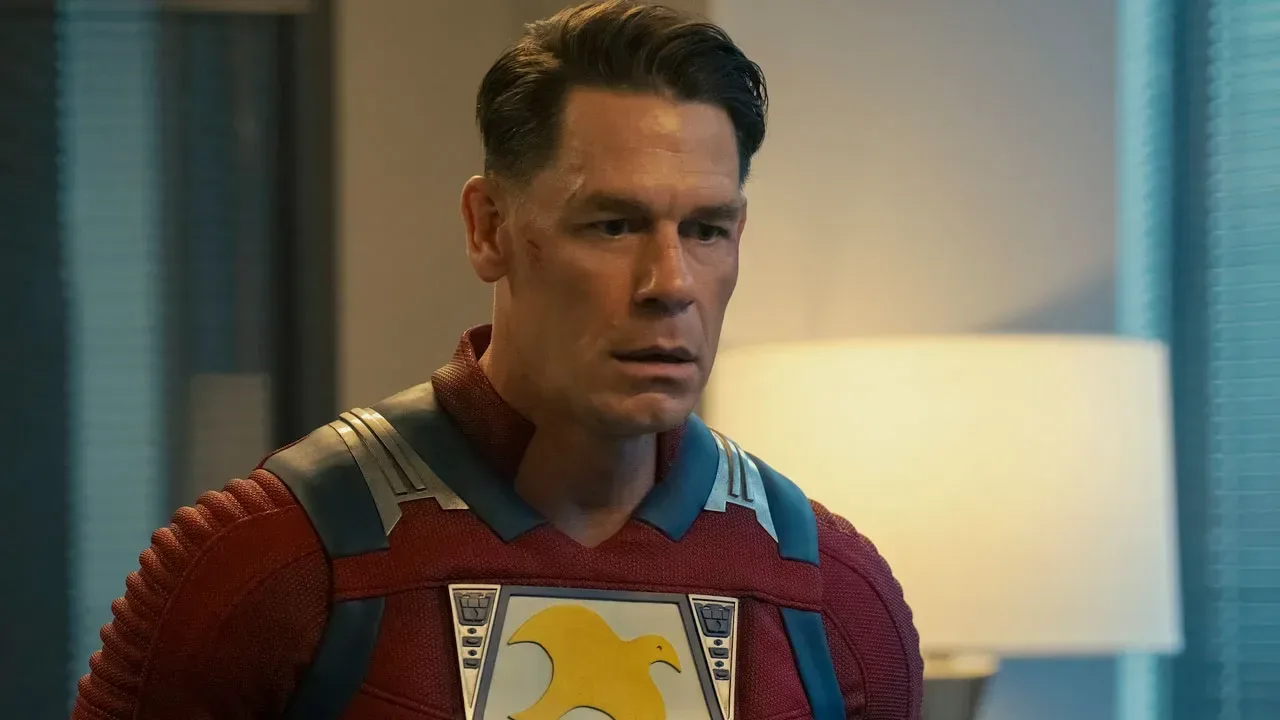
Cena is a naturally engaging lead, and the most successful piece of characterization is Sean’s continuation of the boy he once was. Graham Harvey plays young Sean as a lovestruck kid with a tendency toward fighting. Adult Sean retains that awkward, emotionally arrested fondness even as he proves capable of throwing people around and operating in extreme circumstances. There is a recognizable line between the childhood bully and the adult determined to do good, and Cena carries it with sufficient sincerity.
That emotional trace gives the romantic thread with Aimee at least some shape. Biel is more persuasive as a fearless driver than as someone defined by hot-rod enthusiasm, but the performances communicate why Sean’s attraction has endured. The movie does not need the audience to accept that every childhood crush becomes permanent; it needs viewers to understand that Sean never fully left this relationship behind. On that narrower task, it lands.
The supporting players are given the useful job of reacting like people who did not sign up for espionage. Castro, Parris and Richardson bring comic disbelief to Sean’s casually overwhelming skills. Richardson and Parris read more naturally as longtime friends than as a married couple, but their characters’ bewilderment provides the movie with some of its most accessible humor. Danai Gurira plays Helen, Sean’s liaison during the earlier warhead operation, while Golshifteh Farahani makes a sharp, welcome impression as the arms dealer Robbie.
Stoll’s Mosier provides the institutional threat: a man pursuing advancement who has a clear incentive to put blame somewhere else. The setup gives the film a conspiracy engine, media manipulation and a reason for Sean to distrust the systems that should help him. Those are potentially meaningful ingredients, especially because the friends’ names are being damaged along with Sean’s. The screenplay does not dig far enough into that violation, however, before converting the group into reluctant partners in the mission.
The brand story is explained, not fully felt
Matchbox has a 73-year history as a Mattel toy brand, and the film makes room to state its own heritage: the first die-cast cars were conceived as a parent-to-child gift. It is an understandable piece of brand context, especially given that Smalley’s collection passes a kind of imaginative inheritance to Aimee and her friends.
But exposition is not the same as resonance. Explaining that a toy can create a generational bond does not automatically make a particular collection meaningful on screen. The movie’s opening children are already portrayed as relatively old for the games they are playing, which weakens the credibility of the memory before the adult reunion even starts. A more specific sense of how the cars shaped each member of the group might have made the later crisis feel rooted in something beyond shared geography and a familiar garage.
That gap matters in a toy-derived film. The strongest adaptations do not merely mention a product’s history or place its recognizable object in frame. They locate a human conflict that the product’s particular qualities can illuminate. Matchbox could have offered ideas about collecting, repair, imagination, mobility or the strange vulnerability of revisiting a space that once made adulthood seem distant. There are hints of those possibilities, but the thriller machinery proves more insistent.
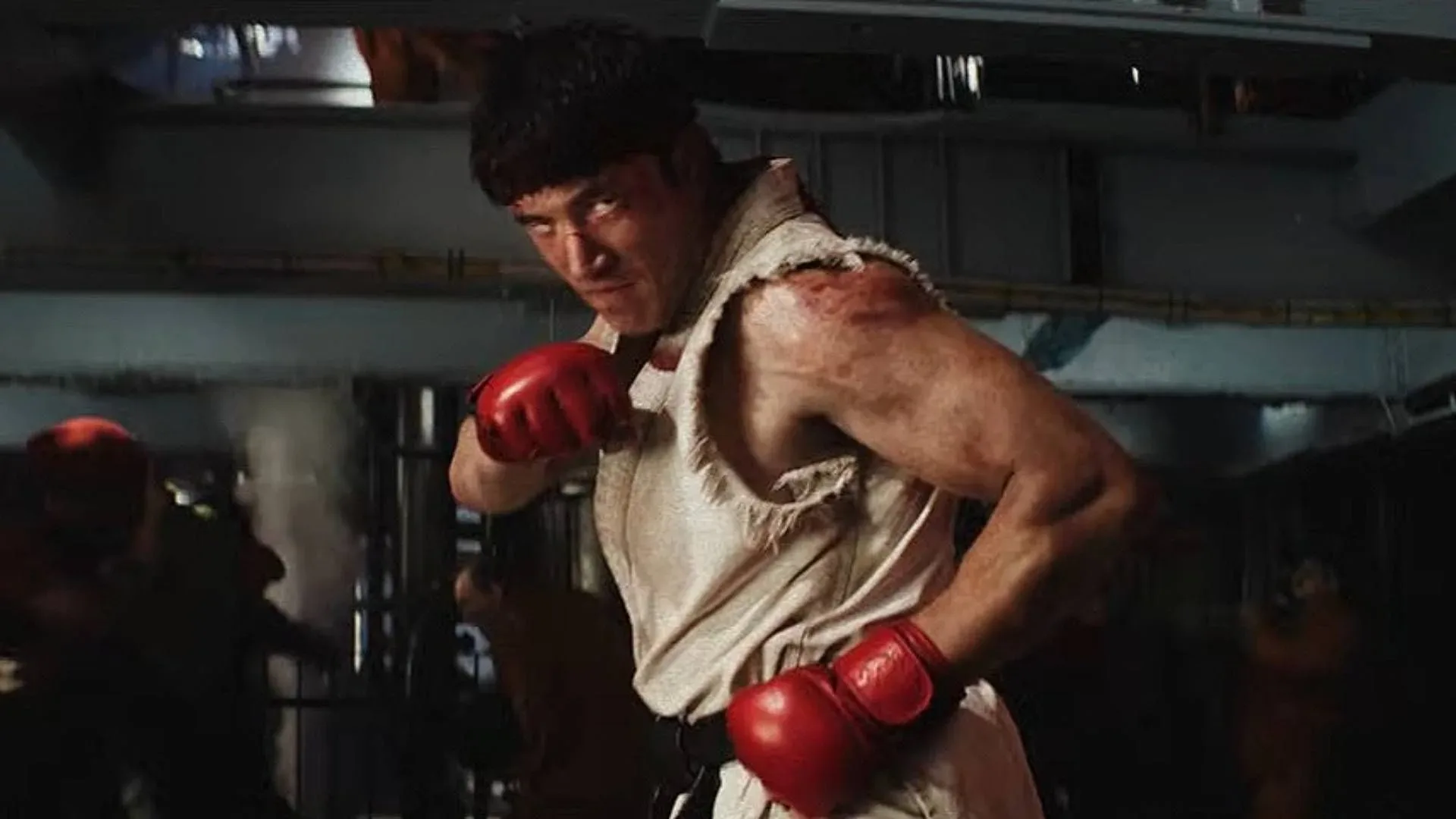
The movie is part of a larger period in which recognizable brands are regularly turned into features, and its challenge illustrates why brand awareness alone is not a dramatic foundation. A name can invite an audience in; character, point of view and an internally coherent tone determine whether the premise has somewhere to go. That same issue is relevant whenever a game world crosses into film, as seen in our coverage of a director discussing how a Street Fighter cast approached the games’ canon. Familiarity can be valuable, but it is not a substitute for a story’s own identity.
Big scale, limited payoff
There is occasional charm in Matchbox: The Movie, particularly in the performers’ willingness to play the premise straight while letting the unqualified friends express disbelief. Hargrave knows how to present a punishing physical task. Cena keeps Sean sympathetic even as the screenplay asks him to be both an elite operative and a man forever caught in a middle-school crush.
Still, the finished combination feels over-engineered. A familiar action-movie gag involving an apparent plunge over a cliff arrives with the sense of a borrowed genre reflex rather than a revelation that belongs specifically to these characters. Other beats similarly recall well-worn adventure and action formulas. The plot proceeds with a predictability that makes its massive stakes feel oddly impersonal.
For viewers looking primarily for large-scale spy action and a committed Cena performance, the film has obvious raw materials: physical spectacle, a capable ensemble and a premise that does not waste time getting its civilians into danger. For viewers hoping the Matchbox name signals a fresh car-centered identity or an unusually thoughtful story about the bond between childhood play and adult life, it leaves more distance to travel. It is flashy, loud and frequently in motion, but it never entirely finds the emotional road that would make its familiar toys feel newly alive.