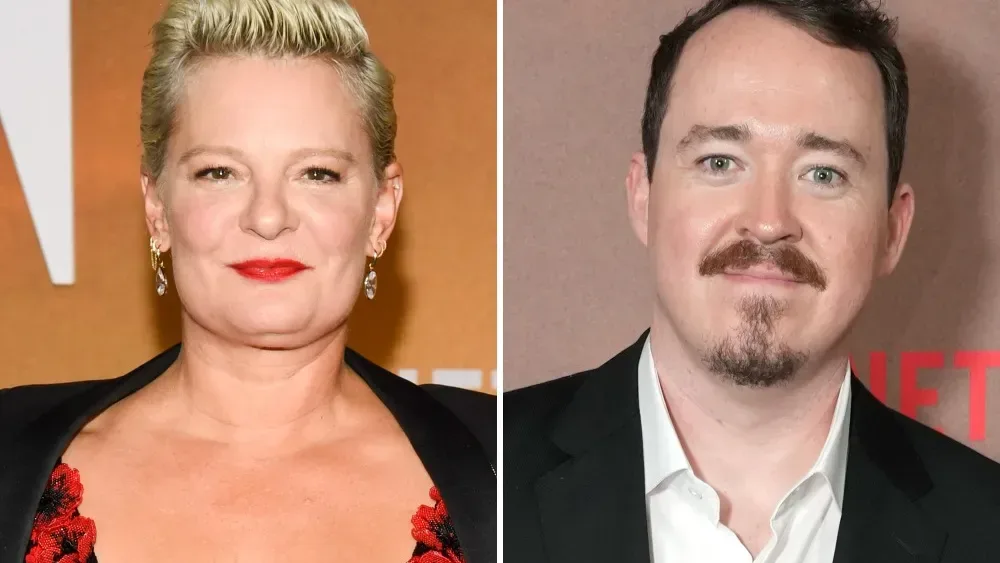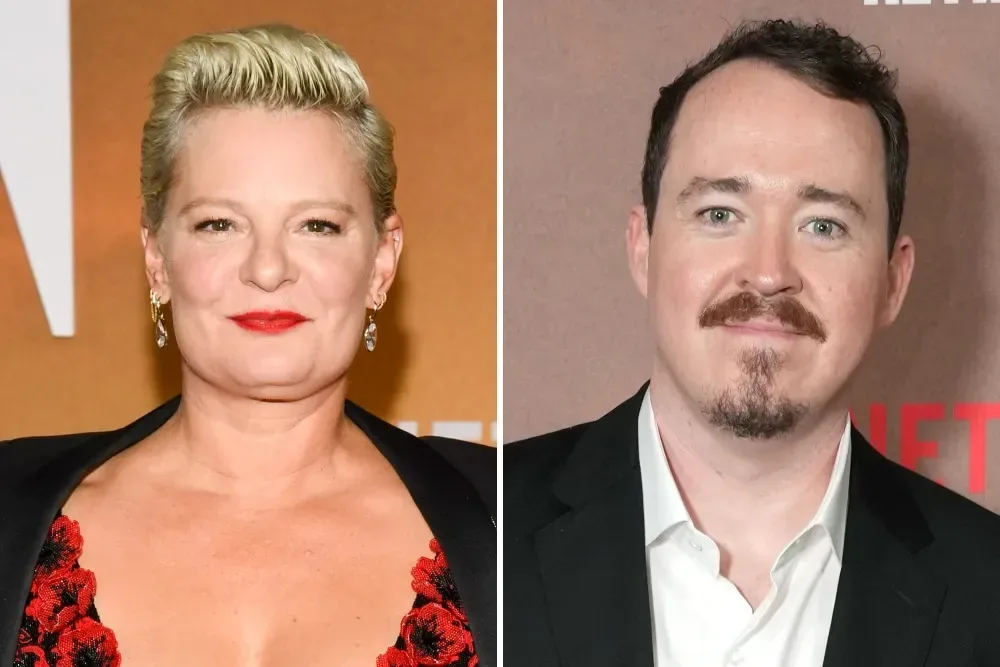
Martha Plimpton has added her voice to the criticism of Shane Gillis’ recent Saturday Night Live opening monologue, describing the material as “really stupid” in an Instagram video and saying the comedian “deserves a spanking from his mom.” Her post also expanded beyond Gillis’ set, raising a broader question about who gets to make consequential creative decisions at a major live comedy institution.
The dispute centers on jokes Gillis made about women’s workout clothes. In the monologue, he referred to women at the gym with a misogynistic slur while describing shorts and their design. The routine drew immediate backlash, including a response from Dan Levy, who argued that women wearing short shorts are not the problem; men choosing to describe them that way are.
Plimpton’s reaction is notable because it joined two related issues: the language in one live-TV comedy segment, and the editorial environment that determines whether such material stays in a broadcast. Her criticism did not present those as identical questions. Rather, it suggested that the makeup of the people making cuts and approvals can matter when a show decides what crosses the line from rehearsal to air.
What Plimpton said about Gillis’ set
In her Instagram video, Plimpton said she had not previously heard of Gillis before seeing the controversy. She called his comments “really fucking stupid shit” said live on air and followed her rebuke with the joking reprimand that he deserved a spanking from his mother. Her caption, “Shane Who?”, kept the focus on dismissal rather than a point-by-point debate over comedy style or intent.
That response came after Gillis’ gym-clothing material spread widely. The crucial objection is not simply that he mentioned revealing or form-fitting clothing. It is that the joke framed women’s choices of gym attire through a derogatory sexual label. In practical terms, critics see that framing as shifting responsibility for a viewer’s reaction onto women who are exercising, rather than challenging the assumptions behind the viewer’s gaze.
Levy made that distinction explicit in an Instagram Reel. He said that women wearing short shorts at the gym does not make them “whores”; calling them that makes the speaker misogynistic. He also contrasted the complaint with his own observation that he has seen more men’s nipples at the gym than women overtly displaying their bodies.
Why the “live” element matters
Live comedy comes with a particular tension: performers are expected to take risks, but a network show is still the result of many decisions made before the camera rolls. A monologue may feel spontaneous in the moment, yet it is also part of a planned broadcast with rehearsal, producers, performers and editorial choices. That does not mean every line is vetted in the same way or that a production team dictates every comic beat. It does mean “it was a joke” and “it was live” do not end the conversation about accountability.
In this case, the criticism is aimed at the underlying premise of the joke as much as its wording. Comedy can build tension by revealing a contradiction, turning a speaker’s prejudice back on them, or exposing a familiar social absurdity. Critics of Gillis’ material argue that this bit instead treated contempt toward women in workout clothing as the punchline, without creating enough distance from the viewpoint being voiced.
Related coverage includes Martha Plimpton Criticizes Shane Gillis’ SNL Monologue.
That is why reactions such as Plimpton’s and Levy’s have concentrated on misogyny rather than on a broad claim that comedy should never offend. Their objections identify a specific target and a specific language choice: women at the gym were described with a slur because of what they wore.
Plimpton’s wider question about decision-makers
Plimpton also discussed a documentary she had watched about the sketch-comedy show’s leadership and production process. She recalled a scene set in Lorne Michaels’ office, between the rehearsal taping and live show, in which people gathered to determine what would be cut and what would remain in the episode. Her impression of that room was that it consisted entirely of white men, and possibly entirely of straight white men.
From there, Plimpton made a direct argument for more women participating in those decisions. She also expressed affection for longtime SNL cast member Kenan Thompson, who commented on her video.
Her point is an editorial one, not merely a request for symbolic representation. The people in a room can bring different experiences, instincts and blind spots to the same draft. More women in a decision-making group would not guarantee unanimous judgments about a joke, nor would it establish a single universal standard of what comedy can say. But it could change the range of questions asked before a line reaches air: Who is the joke for? Who is being reduced to a stereotype? Is the comic perspective clear? Is there a sharper version that does not rely on a slur?
Those questions are especially relevant to sketch comedy because cutting material is part of the form. A show with a rehearsal-to-air pipeline must make choices under pressure about timing, clarity, standards and tone. Plimpton’s criticism places Gillis’ monologue inside that larger process.
Misogyny, criticism and the limits of the “just a joke” defense
“Misogyny” refers to prejudice, contempt or hostility directed at women. The term is frequently used loosely in online arguments, but here critics have tied it to a concrete claim: the routine used a demeaning sexualized label for women based on their workout clothing. Levy’s response did not suggest that every observation about fashion is misogynistic. Instead, he disputed the judgment embedded in Gillis’ wording.
That difference matters. People can disagree over whether a comedy bit succeeds, whether a joke is funny, or whether an audience should be offended. Those are aesthetic and personal judgments. A criticism of misogyny is different: it asks what assumptions a joke reinforces, which people bear the brunt of its ridicule, and whether the comedy is relying on gendered contempt.
Calling something “just a joke” may describe its format, but it does not settle its effect. Jokes carry premises. A listener can understand that a line was intended as comedy and still reject the premise as tired, cruel or prejudiced. Likewise, criticism of a routine is not a demand that nobody be allowed to make it; it is a public response to what was said on a public platform.
For viewers, the dispute is a reminder that live entertainment is not insulated from ordinary standards of criticism. A high-profile comedy show can be a place for sharp satire, awkward experiments and divisive material. It is also a workplace and a broadcast product in which choices are made about whose perspective is centered and what language is acceptable.
A familiar television debate with a specific trigger
The argument around Gillis’ monologue arrives in a television landscape where audiences closely examine not only finished episodes but the structures behind them. Casting, writers’ rooms, executive choices and editorial authority all shape what reaches viewers. That scrutiny is not limited to comedy; it also informs the way audiences approach serialized genre television, including questions of character perspective and chronology such as those explored in this guide to when VisionQuest takes place on the MCU timeline.
In the Gillis controversy, however, the immediate issue remains straightforward. Plimpton condemned remarks made during the SNL monologue. Levy challenged the use of a misogynistic label for women at the gym. Plimpton then connected that moment to her concern that women need more influence in the rooms where a live comedy program’s final content is decided.
Neither response requires viewers to agree on every boundary of comedy to understand the central criticism. The complaint is that a joke about gym clothing treated women as the object of insult, then positioned the speaker’s reaction as the source of humor. Plimpton’s intervention asks whether a more representative group of decision-makers might be more likely to question that premise before it reaches a live audience.