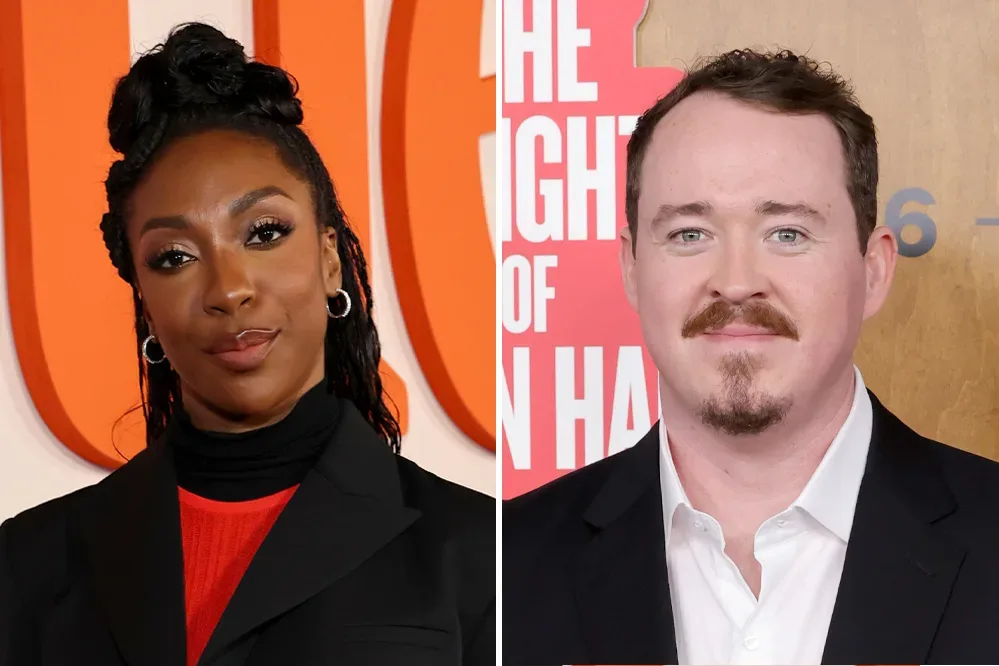
Flavor Flav has publicly backed Dan Levy’s response to Shane Gillis’ recent Saturday Night Live monologue, describing Levy’s stance in two concise words: “Important allyship.”
The Public Enemy rapper shared coverage of Levy’s criticism on X on Monday, October 12. The exchange followed a Saturday episode hosted by Gillis, whose monologue included complaints about women’s shorts at the gym, a derogatory label for women wearing them, and a joke about staring while appearing in the background of their workout videos.
Levy, the Schitt’s Creek co-creator and actor, addressed the routine in an Instagram video the next day. His response shifted the focus away from women’s clothing and toward the people using it to justify contemptuous language or unwanted scrutiny.
“Women wearing short shorts at the gym does not make them whores. It makes the men calling them whores misogynists.”
Flavor Flav’s brief endorsement matters because it explicitly centers the role Levy was asking men to take: not waiting for women to absorb or answer degrading rhetoric alone, but challenging it publicly. In this context, allyship means using one’s own position to support people affected by dismissive or harmful framing, while recognizing that the issue is not one’s own experience to define.
What Levy objected to
Gillis structured the material around getting back into shape, but the gym portion placed women’s bodies and workout clothing at the center of the joke. Levy argued that this framing did more than make an observation about contemporary gym attire. It treated women as objects for commentary and located responsibility for men’s conduct with the women being watched.
That distinction is central to Levy’s response. A person can have an opinion about clothing without claiming that clothing changes another person’s right to basic respect, privacy, or freedom from being sexualized. Levy’s point was that women exercising are there to exercise; they do not become legitimate targets for insults or voyeuristic jokes because of what they wear.
He further argued that objectification in high-profile entertainment can shape conduct beyond the program itself. Objectification is the practice of treating a person primarily as a body, sexual object, or visual prop rather than as a full individual with agency. Levy’s concern was not presented as a debate over whether comedy may be provocative. It was about what happens when a national entertainment platform packages disdain for women as a familiar punchline.
Related coverage includes Flavor Flav Calls Dan Levy’s Response to Shane Gillis’ Gym Joke ‘Important Allyship’.
That is also why his appeal was directed at men. Levy framed speaking up as a shared responsibility, rather than an obligation that should fall solely on the people targeted by the language. Flavor Flav’s post directly embraced that framing.
Responses came from across music and entertainment
Levy’s video attracted support from several entertainers. Maren Morris responded by posting a workout video featuring her song be a b####, repurposing the insult used in Gillis’ material. Jewel, Lisa Loeb, and Kristin Chenoweth also expressed support in Levy’s comments.
Maggie Baird shared Levy’s video as well. Baird, the mother of Billie Eilish and FINNEAS, said she gasped at the joke and rejected the suggestion that such material should simply be treated as harmless comedy. She also referenced her own sketch-comedy background, making clear that her objection was not based on a blanket dismissal of comedy as a form.
The range of responses is notable. Morris used a performance-oriented answer, posting a gym video rather than issuing a lengthy statement. Levy offered a direct explanation of why the language was misogynistic. Flavor Flav supplied a compact endorsement of the responsibility Levy was describing. Baird’s comments focused on the possible real-world consequences of normalizing this kind of talk.
Those approaches differ in tone, but they converge on the same issue: women’s clothing is not an excuse for slurs, objectification, or intrusive behavior. The discussion has also become another example of artists and entertainers responding publicly when a televised bit moves from observation into a broader argument about who deserves respect.
Flavor Flav’s support fits his recent work around women’s visibility
Flavor Flav’s response also connects with his recent efforts to amplify women athletes. In July, he hosted SHE Weekend in Las Vegas, bringing female Olympians and Paralympians together for public events and meetings with potential sponsors. The gathering created space for athletes and supporters to call for greater visibility and progress on pay equity.
That background does not make the two situations identical. One concerns sponsorship, recognition, and equity in sports; the other concerns language in an entertainment monologue. But both involve a public challenge to patterns that can reduce women’s work, achievements, or presence to something secondary. In the gym context especially, the overlap is easy to see: women’s athletic activity should not be treated as an invitation for spectatorship or derogatory commentary.
It also illustrates why “allyship” is more useful as a description of conduct than as a label. Flavor Flav did not redirect the conversation toward himself. He amplified Levy’s criticism and put weight behind its central message. That is a concrete, public act of support, even if it was expressed in only two words.
Why the Saturday Night Live context is drawing attention
The moment has renewed attention on Gillis’ history with Saturday Night Live. The show hired him in 2019, then removed him before his debut after podcast clips surfaced featuring racist and homophobic slurs. Gillis later returned as a host in 2024 and 2025; this latest appearance marked his third time leading the program.
That history does not settle every debate around a particular monologue, nor does it tell viewers exactly how to interpret each joke. It does, however, explain why criticism of the gym segment drew heightened scrutiny. When a comic with a previously contested relationship to the show returns to its stage, new material involving slurs or demeaning generalizations is likely to be assessed in light of that record.
The practical implication for broadcasters and performers is not that every joke must be universally approved. Comedy often relies on discomfort, exaggeration, character work, and sharp social observation. But criticism becomes especially forceful when the target is not a powerful institution or a performer’s own flawed persona, but women broadly—and when the premise appears to excuse viewers’ intrusive behavior by making women’s clothing the alleged problem.
Comedy, criticism, and accountability are not opposites
There is a persistent tendency to present backlash as proof that audiences do not understand comedy. That shortcut avoids the actual question. Viewers can understand the intended joke and still believe it relies on a sexist premise, sends a harmful message, or is simply not funny. Criticism is part of public reception, not evidence that comedy is exempt from interpretation.
Levy’s response is particularly direct on this point. He did not argue that women need permission to wear certain clothes, nor did he ask women to prove that they were dressed for practical rather than sexual reasons. He rejected the premise that their motives should be on trial at all.
For media audiences, that is the useful lens through which to read the dispute. The disagreement is not merely about the hem length of gym shorts. It is about who gets assigned responsibility when men stare, comment, or behave disrespectfully—and whether a prominent comedy stage reinforces that assignment or challenges it.
Flavor Flav’s “Important allyship” post places him clearly on Levy’s side of that question. Alongside support from Morris, Baird, Jewel, Loeb, and Chenoweth, it shows how quickly a television monologue can develop into a wider conversation about misogyny, public platforms, and the obligation to object when women are demeaned.
For more coverage of how entertainers’ public work and industry roles intersect, see Jesse Jo Stark’s new worldwide representation.