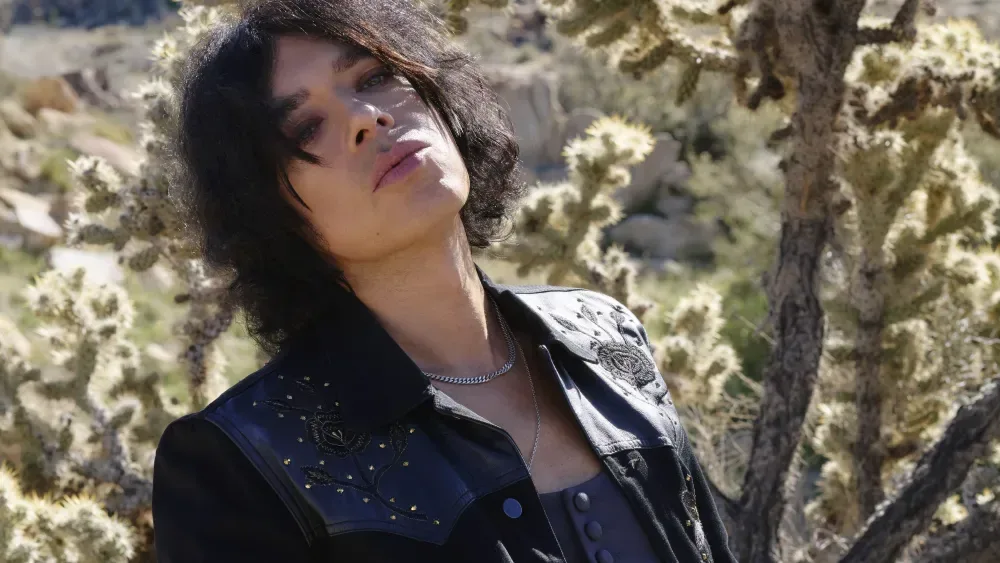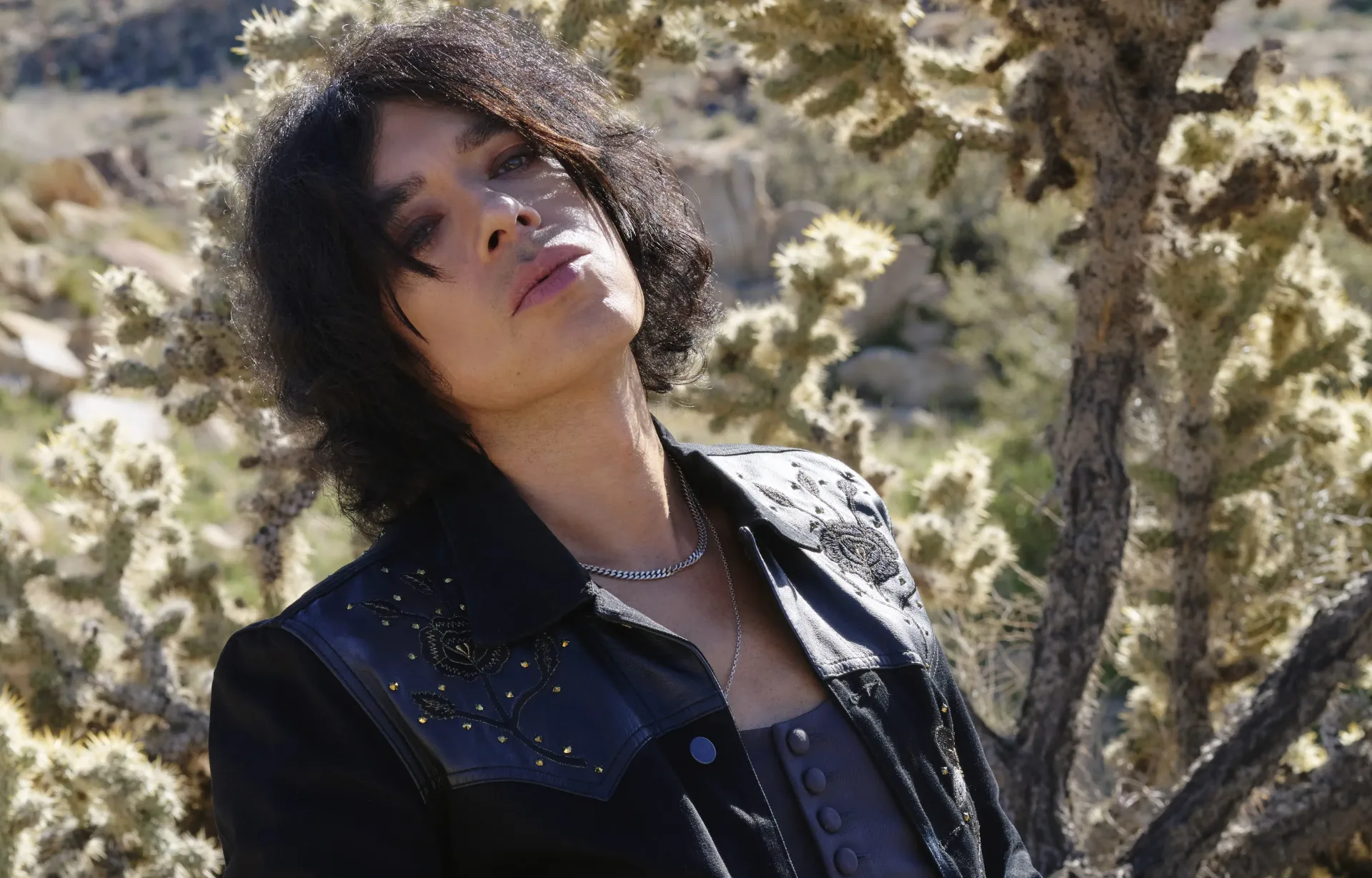
Lawrence Rothman is closing a three-album story with Here Lives Love/Sawdust to Stardust, an Americana-rooted record that turns the question of artistic purpose into its opening move. The first song, “The Meaning,” asks why Rothman is still making music at all. The answer, as Rothman describes it, is not fame, certainty or even comfort. It is the need to create—to turn hard experience into something another listener might recognize when they need it.
That makes the new album more than a standalone collection of acoustic-leaning songs. Rothman sees it as the last entry in an autobiographical trilogy that began with 2021’s Good Morning, America and continued with 2024’s The Plow That Broke the Plains. Across those records, the artist has moved away from production-first presentation and toward writing that places personal detail, narrative and lyrics at the center.
It is an unusually clear creative mission in a music environment that often wants artists to choose a lane, label it, market it and never exit the vehicle. Rothman’s answer is closer to an open-world game: the map has a recognizable setting, but there are several routes through it. Americana is the broad umbrella, while rock, folk, soul, singer-songwriter music and a possible future jazz direction all remain viable paths.
A trilogy built around directness
Rothman’s trilogy has a defined beginning and end. The opening point is “Thrash the West,” from Good Morning, America; the final destination is “Sawdust to Stardust,” the closing track on the new album. Rothman has described the full sequence as a filmic account of adulthood, a journey into music and the difficulties encountered along the way.
The project’s guiding idea was inspired by the three-part structure of Henry Miller’s Sexus, Plexus and Nexus. That does not mean Rothman is presenting the albums as a literal memoir in prose form. Rather, the trilogy is a framework for connected songs, recurring collaborators and subjects that can travel across separate records instead of being resolved in one release.
Rothman’s artistic background gives that decision added weight. Early in their career, they performed through multiple alter identities, using prosthetics and different names in a seven-year period that eventually overtook everyday life. The trilogy represents a deliberate correction: less emphasis on elaborate conceptual presentation, more room for the person behind the performance to speak plainly.
That is also why Rothman’s account of a conversation with David Bowie is so central to the record’s theme. Early in Rothman’s solo career, after the end of the band Living Things, Rothman played Bowie a song called “Montauk Fling.” Bowie’s challenge was straightforward: did Rothman truly mean the chorus and verses, and had the song actually reached their meaning? Rothman rewrote the chorus more directly. The lesson was not simply to remove ambiguity; it was to make emotional intent legible.
“The Meaning” extends that lesson. Rothman characterizes the song as a primal scream and a form of therapy, while also arriving at a broader purpose for songwriting: telling a sufficiently solid story that someone going through a difficult time can hear it and feel less alone. It is a modest definition of art’s usefulness, but a demanding one. It requires the writer to make something personal without letting it become inaccessible.
Related coverage includes Lawrence Rothman Completes an Autobiographical Americana Trilogy With ‘Here Lives Love/Sawdust to Stardust’.
Returning to Nashville and the Americana umbrella
Rothman’s recent albums are closely tied to Nashville and an Americana community that has become an artistic home after earlier years spent moving through rock bands and personas in Los Angeles. The shift is not presented as a rejection of genre variety. It is almost the opposite: Rothman values Americana because its borders can hold a wide range of music made by people in a room.
In this view, Americana is less a strict sonic specification than a gathering point for styles with strong songs and human performance at their core. Rothman places R&B, rock, folk, singer-songwriter work and even jazz within that potential field. The next album may tilt toward jazz, but Rothman is unconcerned with whether that eventually earns a jazz tag, an Americana tag or something else.
Americana, in this context, is not a single instrument or tempo. It is a flexible category that can prioritize lyrical storytelling, organic performance and a willingness to blend traditions. Rothman’s description pushes against the assumption that an acoustic record must be sonically conservative. A song can be sparse without being narrow, just as a genre community can be rooted in familiar forms while still allowing new combinations.
Rothman also connects that flexibility to a defense of the human touch in music. They do not frame the point as blanket opposition to AI, but argue that Americana’s identity lies in its human creation: musicians playing, writers making choices and performers bringing their own rough edges into the work. In an era when music technology discussions often jump immediately to replacement, that distinction is useful. The argument here is about process and presence rather than a simplistic technology ban.
For listeners, the practical takeaway is to approach the trilogy as a connected listen rather than an exercise in genre sorting. Rothman explicitly hopes people will travel from the first track of the 2021 album to the final track of the new one. That is a bigger ask than adding one track to a playlist, but it is also the point: the sequencing and accumulated context are part of the work.
Collaborators link the three records
The trilogy’s continuity is not only thematic. Rothman has carried several musical collaborators across its span. Amanda Shires appears on all three albums. Katie Pruitt appears on the first and final installments. Jason Isbell was involved with the previous album and the new one; he and Rothman wrote “Nothing Like Shakespeare” during the same three-hour period in which they wrote “Poster Child” for The Plow That Broke the Plains.
Those two songs serve as companion pieces in Rothman’s origin story. “Poster Child” addresses a younger artist’s experience of being signed by eight major labels, dropped and signed again, and feeling used as material for publicity. “Nothing Like Shakespeare” looks back to Rothman’s arrival in Los Angeles for an early deal, including the end of a relationship that accompanied that transition. The songs draw their power from specificity: industry disappointment is not treated as an abstract complaint, and a major life break is not reduced to a glamorous arrival story.
The new album also features Amanda Shires, Jillian Jacqueline and Katie Pruitt, while “A Fire Test” is a duet with Sarah Klang. Rothman says higher women’s voices complement and frame their naturally low vocal register. That is an arrangement choice with emotional consequences: contrasting vocal ranges can make a duet feel like a conversation, an argument, a memory or a support system, depending on the song.
Another of the record’s personal songs, “Worn Out Woman,” was written about Rothman’s wife, director and photographer Floria Sigismondi, and completed with songwriter Amy Wadge. Rothman connects the song to the accumulated strain Sigismondi experienced in a film industry marked by misogyny, as well as a period in which her mother was dying. Wadge identified with the lyric from her own perspective, helping turn a private observation into a broader portrait of exhaustion and resilience.
Rothman calls that process a testimony rather than a verdict. The song does not claim a person is permanently defined by being worn out; it gives fatigue a voice, then lets the act of expression push back against it. That distinction fits the larger album. Catharsis is not presented as an erase button. It is a way of acknowledging pain without surrendering authorship over the story.
A producer who works in the room
Alongside their own work, Rothman has developed a substantial production practice, with recent credits including Amanda Shires’ 2025 album Nobody’s Girl, Maggie Rose’s Half Moon and Tift Merritt’s Sugar. The records differ in mood and purpose: Rothman describes Shires’ work as poetic and heartbreaking, Rose’s as celebratory and tied to motherhood and family energy, and Merritt’s as a lyrically heavy examination of an artist’s life.
The contrast matters because Rothman’s production philosophy is not about making every artist sound like Rothman. Instead, it centers on immersion in the singer’s emotional and musical world. Rothman describes being “Method” when producing, a reference to an acting approach in which the performer deeply inhabits a character or emotional condition. In the studio, that means Rothman does not position themself as a distant authority behind the control-room glass.
They stand in the recording room with the vocalist, play or tap along when appropriate, and generally work to create momentum in the space. It is an intentionally physical approach to a job that can otherwise seem technical and remote. Production, in this sense, involves more than microphone choice or mixing notes. It means shaping an environment in which a performer can reach the feeling a song requires.
There is a cost to that closeness. Rothman recognizes that deeply entering artists’ stories can mean absorbing some of their sadness, drama and trauma. But the process also offers a reset: the artist has expressed something, the producer has helped make room for it, and both can leave the session after the emotional work has been done. The idea closely resembles Rothman’s explanation of their own songs as therapy—not clinical treatment, but a creative process for externalizing difficult feeling.
Listeners who want to carry the record’s sense of connection into everyday listening may also find the rise of in-car lyric features relevant. Time-synced lyrics on Apple CarPlay offer one example of how songs’ words can become a more visible part of shared listening, especially for music where direct language is a central feature rather than background decoration.
Words, harm and a charitable commitment
“A Word’s a Weapon” brings Rothman’s interest in direct language into contemporary social discourse. Rothman says the phrase has been part of their vocabulary for years, but the song gained additional force amid an intensely hostile political atmosphere. Its core claim is psychological: cruel speech can linger and alter someone in ways that are difficult to shake off.
This is not a subtle point, and Rothman does not appear to want it to be. The song’s emphasis is on the cumulative impact of verbal cruelty and on the need for people to learn how to speak to one another more responsibly. In an album that repeatedly tests the value of putting words into the world, it is a necessary counterweight. Words can provide recognition and relief; they can also wound. A songwriter cannot pretend only one of those things is true.
Rothman has also tied “The Meaning” to support for The Trevor Project. A portion of the new album’s proceeds is intended for the organization, while Rothman says the full fee from any future sync placement of “The Meaning” would be donated. A sync placement is the licensing of music for use with visual media, such as a film. Rothman and Madi Diaz initially wrote “The Meaning” for a film that was later shelved, so any such future placement remains a possibility rather than a confirmed outcome.
The cause connects to Rothman’s memories of being targeted while growing up in Missouri for eccentric appearance and gender-nonconforming presentation. Rothman recalls a mother who encouraged individuality, including clothes and makeup that others might have judged, but also a climate in which being labeled “androgynous” and not conforming to athletic norms drew hostility. Moving to Los Angeles felt more accepting.
That lived experience informs the album’s most persistent proposition: difference can hurt, but it can also become material for art, community and survival. Here Lives Love/Sawdust to Stardust does not resolve every tension in Rothman’s career or worldview. It does something more credible. It gathers the anxieties—about identity, artistic labor, harmful language, industry pressure and purpose—and gives them songs sturdy enough to carry forward.