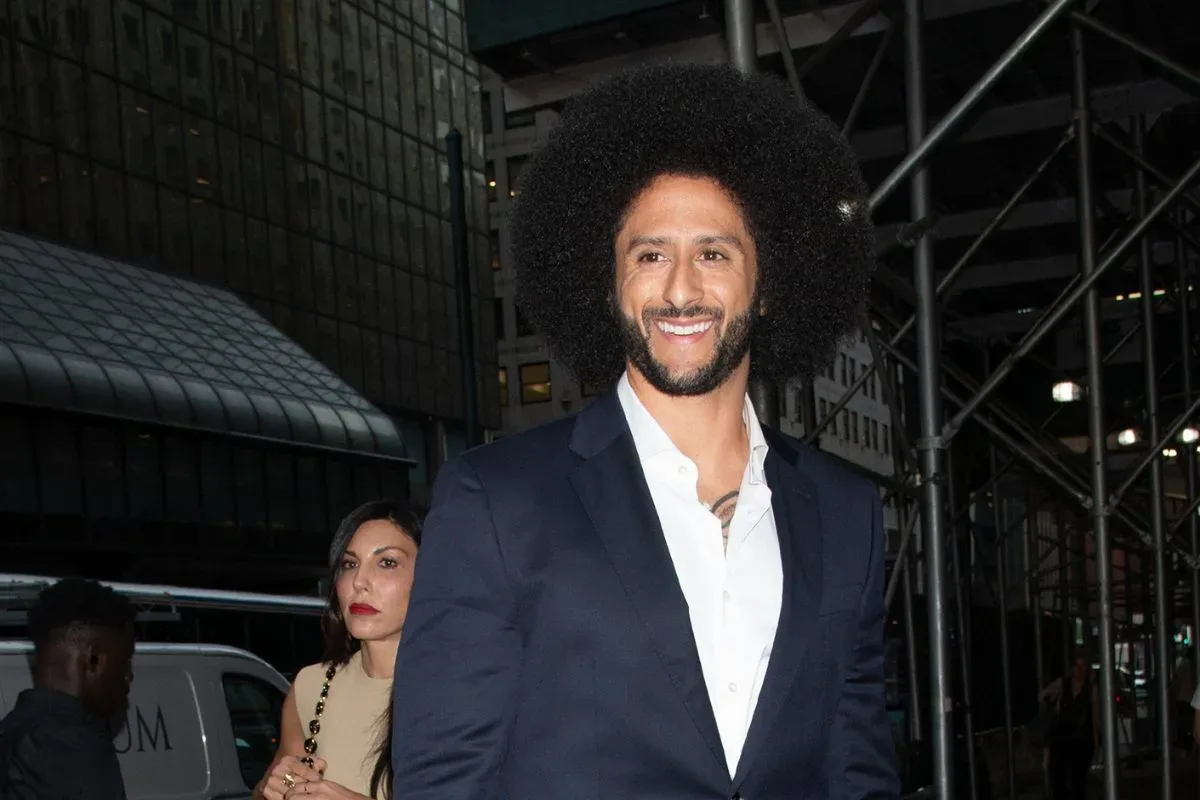
Colin Kaepernick is drawing a direct connection between his own experience with NFL ownership and Macklemore’s reported removal from Ed Sheeran’s tour: the power of institutions, he argues, is not merely that they can make individual decisions, but that they can act together when a political message threatens their interests.
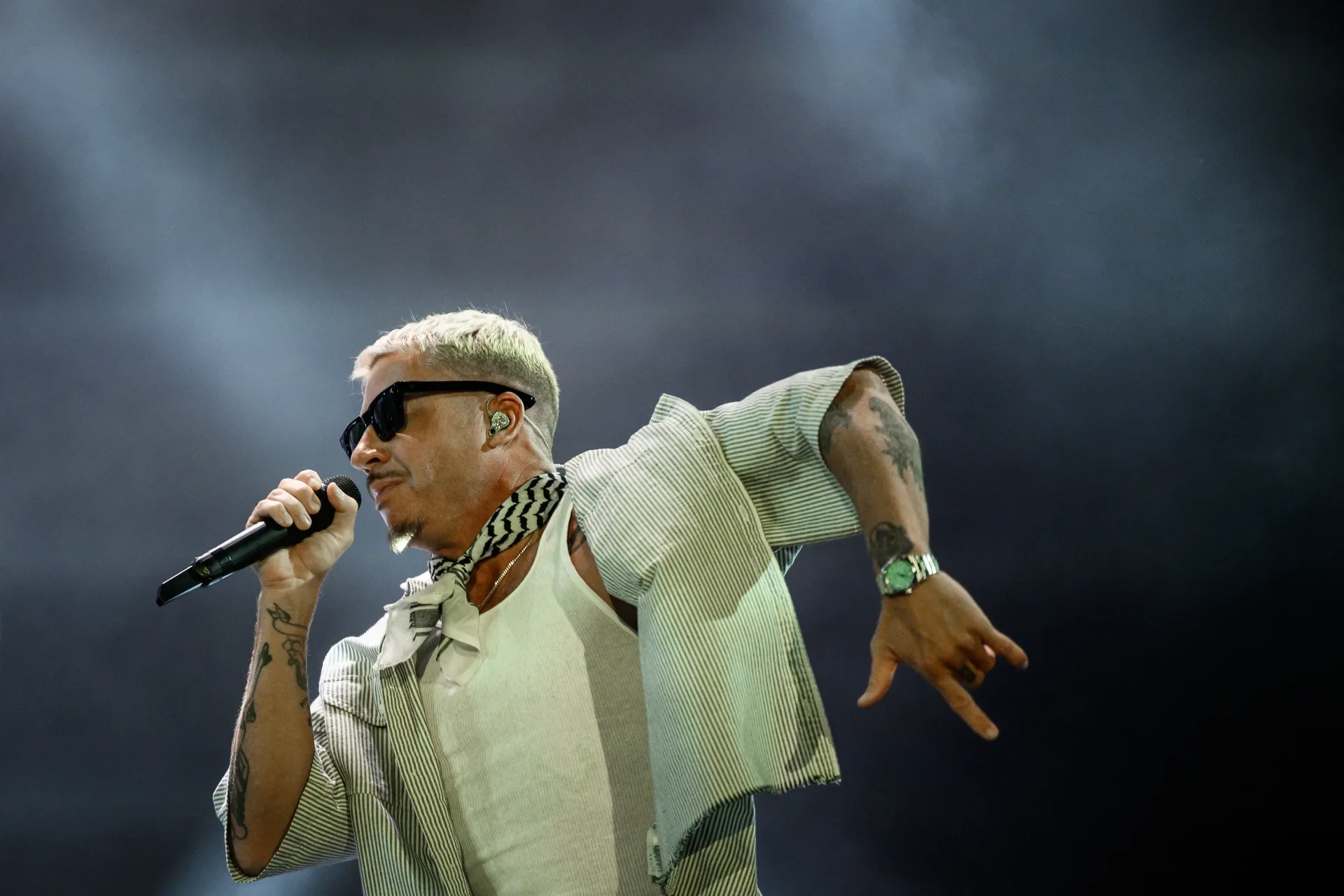
The comparison arrives amid claims surrounding Macklemore’s appearances at MetLife Stadium on September 4 and 5, where he said “Free Palestine.” Macklemore subsequently wrote on Instagram that he had been told he would not be allowed to perform at Gillette Stadium and that venue owners had allegedly issued an ultimatum to Ed Sheeran: keep Macklemore on the tour and lose access to a group of stadiums. The supplied material attributes that alleged coordination to New England Patriots owner Robert Kraft and names Lincoln Financial Field, Mercedes-Benz Stadium, Lucas Oil Stadium, Bank of America Stadium, AT&T Stadium and Raymond James Stadium among the venues involved.
Those are serious allegations, and the material provided does not include independently documented confirmation from the named stadiums, their operators, the tour, Sheeran or Kraft. That distinction matters. A public account from an artist is meaningful news, but it is not by itself proof that every reported conversation, condition or participating party occurred exactly as described.
What is unmistakable is the larger question Kaepernick wants people to consider: what happens when a performer, athlete or worker’s speech clashes with the economic and reputational concerns of the people who control the venues, teams and platforms?
Kaepernick’s argument is about coordinated power
Kaepernick characterized the alleged situation as another example of owners moving in concert to protect money and influence. In remarks cited in the supplied material, he said owners can be willing to “collude” when they believe their interests are at stake, adding that such actions also communicate a warning to others who may consider taking a similarly unwelcome stand.
In ordinary usage, collusion means secret or coordinated cooperation between parties for a shared objective, often one that disadvantages someone else. It is a weighty word in both public debate and law. Calling an outcome “collusion” is not the same as establishing a legal violation; whether conduct meets a legal definition depends on facts, agreements, governing rules and evidence. Kaepernick’s point here is fundamentally an argument about incentives and collective behavior: owners do not necessarily need to make identical public statements to reach a common commercial result.
His framing rests on a familiar imbalance. A touring musician can command a large audience, but access to a stadium schedule is controlled by venue operators and ownership structures. An NFL player can be central to the sport’s on-field product, but a franchise controls a roster spot, and ownership has enormous influence over the business surrounding that spot. The individual has visibility. The institution has infrastructure.
Kaepernick’s own grievance against NFL owners is the backdrop to his comments. The supplied material describes his 2017 blackballing in those terms and presents his latest remarks as an extension of his long-held view that the league’s ownership class has the capacity and motive to close ranks. His broader criticism is not confined to one disputed booking decision or one artist. It is about the practical reach of concentrated ownership across professional sports and adjacent live entertainment.
What Macklemore says happened
Macklemore’s reported account places the dispute inside a tour-routing problem. He wrote that Sheeran told him Kraft had said Macklemore could not perform at Gillette Stadium. He further alleged that Kraft had rallied other stadium owners and that Sheeran was told he would not be permitted to play their venues if Macklemore remained on the tour.
If accurately described, that would turn a dispute over one stadium appearance into a much broader matter. Touring at the stadium level depends on a chain of relationships: artists, promoters, booking arrangements, venue management, local logistics and calendar access. Removing access to multiple stops would create pressure far beyond the loss of a single date. That is why Kaepernick sees the episode not simply as a disagreement between a venue and a supporting act, but as a potential demonstration of ownership power across a network.
At the same time, readers should avoid turning claims into settled facts. The supplied material says Kraft’s position characterized the issue as opposition to antisemitic rhetoric. Macklemore responded by centering Palestinian people who have been killed, starved, displaced or forced to endure violence. These are sharply different descriptions of the dispute, and they show why the episode has become so charged: it involves both a political statement about Palestine and Israel and a contention over whether particular language or advocacy causes harm.
The article’s evidence does not provide the full statements from every party, the underlying booking agreements, or direct explanations from the named stadiums. It therefore cannot resolve the competing characterizations. What it can show is the fault line: one side presents restrictions as a response to harmful rhetoric, while Macklemore presents them as punishment for advocacy on behalf of Palestinians.
A stadium is not a neutral stage
Stadiums are often treated in public conversation as if they are simple backdrops: a field, a seating bowl, a big screen and an audience. In reality, they are powerful cultural gateways. They determine who can be heard at massive scale, which makes booking decisions consequential even when they are made through private commercial arrangements.
That does not mean every venue decision is censorship in a legal sense. Free speech, as a constitutional concept in the United States, generally concerns government action. A privately controlled stadium and its associated businesses do not automatically become government actors simply because they host major events. But the narrower legal definition should not erase the broader cultural issue. When a handful of decision-makers can restrict an artist’s access to large audiences, the effects on public debate can be substantial regardless of whether the action is legally classified as censorship.
This is where Kaepernick’s comparison has force as analysis, even though the circumstances differ. An NFL roster decision and a concert-tour decision are not the same contract, the same industry, or necessarily the same set of legal questions. But both can illustrate how private power operates through access: access to employment, access to a platform and access to the public.
The sporting connection is especially hard to ignore because the venues named in the allegations are associated with NFL environments. The modern stadium is an entertainment asset used by teams, leagues, touring productions and corporate partners. A decision made through that ecosystem may feel separate from football on paper, yet it is inseparable from the ownership networks that shape the sport’s public presence.
Why Kaepernick focuses on collective action
Kaepernick’s message is not only about how owners can organize. It is also about how players might organize in response. He said the NFL is approximately 70% Black and argued that a collective refusal by players to take the field until specific demands were addressed would compel ownership to react because the league’s revenue depends on players participating.
That is an argument about leverage: the ability to influence an outcome because another party needs something you control. In professional football, owners have capital, franchises, contracts and facilities. Players supply the labor without which games cannot happen. Kaepernick’s contention is that workers often underestimate the degree to which their collective participation is the product.
There is an important difference between individual protest and collective labor action. An individual is more exposed to retaliation, exclusion or isolation because the institution can often replace, sideline or outlast one person. Collective action changes the calculation by increasing the cost of inaction for the institution. Kaepernick’s description is deliberately economic rather than sentimental: if participation stops at scale, the commercial consequences become immediate.
That idea also explains why he reads Macklemore’s reported experience as instructive. A lone artist can face intense pressure if the venues central to a tour refuse access. But an artist is not the only person affected by a stadium show. A tour comprises performers, crews, promoters, venue workers and audiences, while the venue itself relies on a continuous flow of events. The more people who understand their connected roles, the more difficult it becomes to describe a consequential cultural decision as affecting only one celebrity.
Collective action is not automatically easy, risk-free or unified. People may share a workplace or an industry without sharing the same political view, financial security or willingness to take a public position. That is precisely why Kaepernick describes it as a matter of recognizing power, rather than assuming it will be exercised. Possessing leverage and deciding how to use it are different things.
The dispute tests the boundaries of entertainment politics
Macklemore’s reported removal also highlights an uncomfortable reality for major tours: artists are public figures, but their performance opportunities rely on institutions that may have their own political, commercial and community considerations. A supporting artist can become part of the headline act’s logistical equation. In Macklemore’s account, the alleged ultimatum placed the choice before Sheeran and transformed the dispute into a test of tour-wide access.
That scenario reveals why public political expression by entertainers so often becomes a business story. The question is not only whether a musician can make a statement. It is whether the ecosystem around that musician will continue to provide the stage, booking and distribution needed for that statement to reach people. The response can shape the behavior of others even when no formal rule prohibits speech.
Kaepernick’s warning is that this deterrent effect may be the point. If influential owners demonstrate that criticism can threaten a career or a tour route, other artists and athletes may decide the professional risk is too high. His view is that the message sent by punishment matters as much as punishment itself.
That concern belongs in the larger conversation about culture and power. Entertainment is not outside politics simply because it is marketed as leisure. Stadium tours, professional sports and celebrity platforms are among the places where political disputes become unusually visible, and that visibility makes control over access unusually valuable.
For readers following both sports and entertainment, this is also a reminder to separate three things that are often blurred together: an allegation about coordination, a legal finding of wrongdoing and a moral judgment about the political speech at issue. They can overlap, but they are not interchangeable. Clear reporting requires that the first be attributed, the second be evidenced and the third be identified as opinion.
A continuing argument over who gets the microphone
Kaepernick’s forthcoming book, The Perilous Fight, is presented as an examination of corporate power and collective action. The Macklemore dispute, as described in the supplied material, gives that argument a current cultural flashpoint. Whether every allegation about the tour and stadium owners is substantiated or contested in fuller public detail, the episode has already placed the same underlying question in view: who decides which political speech is compatible with access to a major platform?
That question stretches beyond one rapper, one tour and one league. It reaches the structure of entertainment itself, where privately owned systems can affect which voices get amplified, which are constrained and which risks are borne by individuals rather than institutions. For related coverage of political pressure and cultural expression, see this look at the response to the “NAZA” Venice premiere.
Kaepernick’s answer remains consistent: individual visibility is not enough if the people with the platform are isolated from one another. His case for collective action is a claim that the most meaningful counterweight to concentrated ownership is organized participation by the workers and performers whose labor makes the spectacle possible.