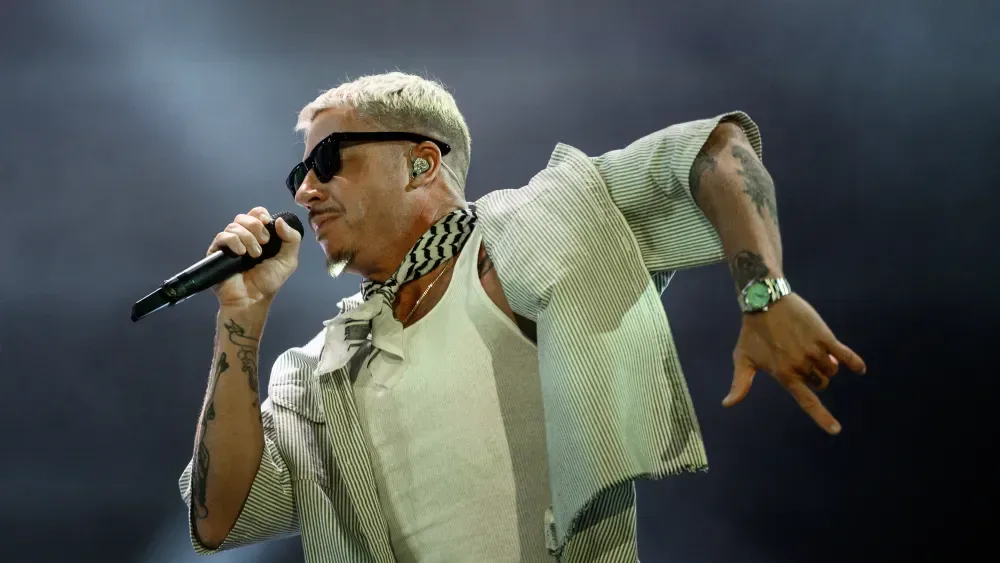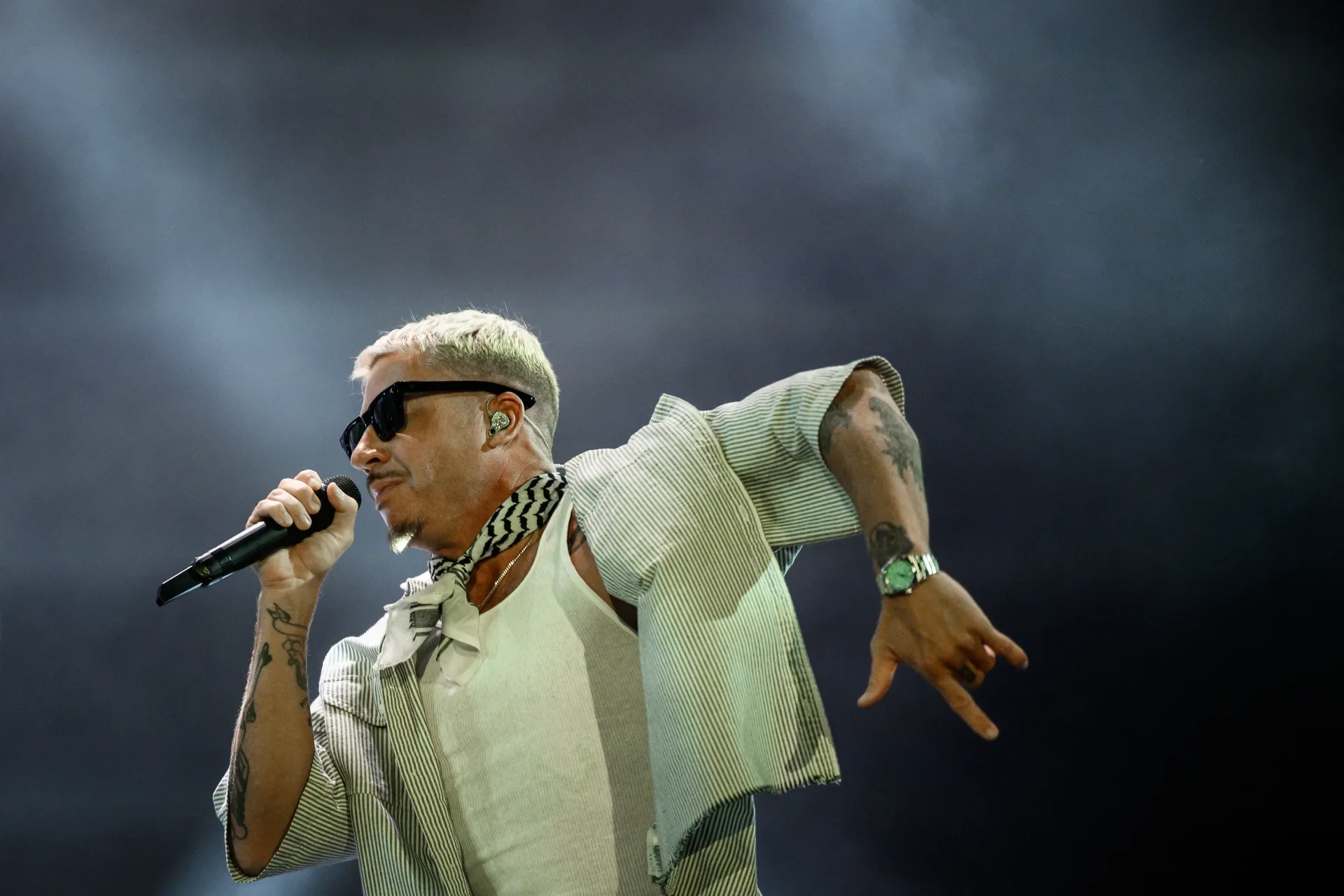
Macklemore brought a pointed political message to the opening slot on Ed Sheeran’s Loop tour at MetLife Stadium in New Jersey, using performances on consecutive nights to call for Palestinian freedom and to speak about Gaza, the occupied West Bank and U.S. Immigration and Customs Enforcement.
During his Friday set, the rapper sang “Free Palestine” before addressing the stadium audience. He said he wanted people in Gaza and the occupied West Bank to understand that they had not been forgotten, framing his remarks around his belief that all people deserve equal freedom. The same message was repeated during Saturday’s performance.
The moment has reignited a familiar argument surrounding arena-scale entertainment: whether a concert is a place for direct political advocacy, and what audiences should expect when an opening act uses the stage for a cause that is urgent, divisive and deeply personal to many attendees.
A message carried into a stadium tour
The scale is central to why the performances have become a talking point. MetLife Stadium is built for giant events, and an Ed Sheeran date is an enormous platform for an opener. A short statement delivered in that setting can reach not only the people in the seats, but also millions more through attendee videos, social-media posts and the wider cycle of online reaction.
Macklemore’s comments were consistent with his prior public work on the issue. In 2024, he released Hind’s Hall, a song critical of Israel’s actions in Gaza. He said proceeds from the track would be directed to humanitarian efforts associated with UNRWA, the United Nations Relief and Works Agency for Palestine Refugees in the Near East.
His MetLife remarks also included criticism of ICE. That expanded the scope beyond a single statement about Palestine, turning the segment into a broader appeal concerning human rights, government power and the treatment of vulnerable communities.
For supporters, that is exactly what an artist’s platform is for: using visibility to draw attention to people and crises that might otherwise feel remote to a stadium crowd. For critics, the same choice can feel like an unexpected political intervention inserted into a show for which they bought tickets to see music.
A petition seeks his removal from remaining tour dates
Following the performances, the Israeli American Council circulated a petition asking for Macklemore to be removed from the remaining dates of the Loop tour. The petition argues that an Ed Sheeran concert should not become a political event and objects to what it describes as a one-sided presentation of the conflict.
The publicly visible petition did not display a signature total, so its level of support cannot be established from that page alone. Its request, however, makes the disagreement concrete: it is not only a debate about the content of Macklemore’s remarks, but also an effort to affect his role on the tour.
There is an important distinction in the response. The petition’s argument is not simply that Macklemore should be barred from holding political opinions. Instead, it challenges his decision to deliver those views in an opening-set environment tied to another performer’s tour and audience.
That distinction has long defined disputes over musicians and activism. Fans rarely agree on where the boundary sits. Some see the stage as a public square with amplifiers and lights; others see it as a space where artists have a responsibility to keep the focus on the billed entertainment. Neither expectation disappears just because the venue is loud enough to make a guitar solo vibrate in somebody’s dental work.
Audience reaction splits online
Posts from people who attended the shows reflected a sharply divided response. Some said they left the concert because they did not expect what they characterized as a political rally. Others accused Macklemore of antisemitism.
Other concertgoers and commenters praised his decision to speak, arguing that music has historically provided a platform for human-rights advocacy and should not be treated solely as escapism. The competing responses underline how the same onstage act can register as solidarity to one listener and alienation to another.
Online reaction should be treated with care. Individual posts cannot reliably measure the overall view of a stadium audience, and viral clips often magnify the most forceful responses rather than the quiet majority. Still, the volume and intensity of the discussion show that Macklemore’s words were not received as a passing aside between songs.
That is partly a consequence of the conflict itself. Public discussion of Israel and Palestine is often emotionally charged, shaped by grief, fear, identity, lived experience and profoundly different understandings of history and responsibility. Artists entering that conversation should expect scrutiny, while audiences are likely to bring very different assumptions about what advocacy, criticism and harm look like.
Political speech and pop performance have always overlapped
It may be tempting to describe political speech at a concert as a break from the normal business of music, but the relationship is older than modern stadium tours. Musicians have written about war, racism, immigration, poverty, policing, gender, elections and international conflict for generations. Benefit concerts, protest songs and activist statements have all been part of popular music’s public identity.
That history does not automatically resolve the current disagreement. A tradition of artist activism does not compel every audience member to welcome every message, every time, from every performer. Equally, discomfort from some attendees does not erase an artist’s capacity to address a cause. The argument is about judgment, context and consequence—not whether music and politics have ever shared a room.
In this case, Macklemore’s remarks arrive with the particular dynamics of an opening set. Openers play to a crowd that may include dedicated fans, curious listeners and people waiting specifically for the headliner. That can make the spot valuable for exposure, but it can also heighten the sense of mismatch when the supporting act’s message is substantially different from what parts of the audience anticipated.
Ed Sheeran’s tour billing is also relevant to the conversation without making Sheeran responsible for every word spoken by a supporting artist. The available information establishes that Macklemore opened the New Jersey shows and that the petition seeks his removal from subsequent dates. It does not establish any response by Sheeran to the petition or to Macklemore’s comments.
Why the venue changes the conversation
In a smaller club, political banter from a performer may reach a self-selecting fanbase with a clearer sense of that artist’s outlook. At a stadium show, the audience is broader, the moment is larger and the secondary audience online can dwarf the number of people in the building. A message that lasts minutes can become the defining memory of a set.
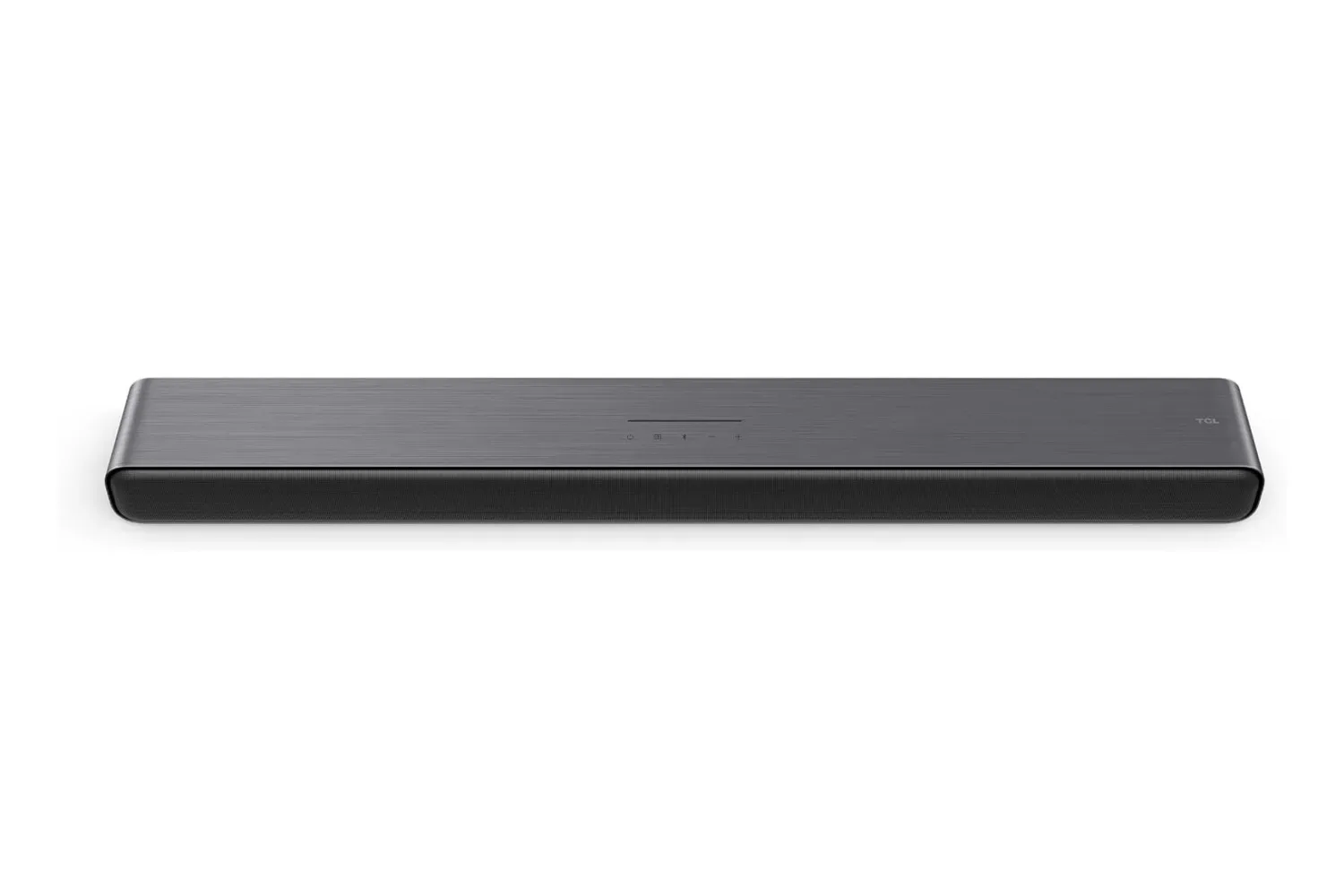
Live presentation matters, too. A stadium performance is not experienced like a private listening session. Production, crowd energy and the pressure of a shared event give performers an opportunity to make statements with immediate emotional force. Even the consumer gear used for music and film at home, such as the Dolby Atmos-capable TCL S45H soundbar, is marketed around immersion; a live stadium is immersion on an entirely different scale.
For Macklemore, repeating the message on Saturday made clear that Friday’s comments were not an off-the-cuff detour. He chose to reiterate the appeal despite the likelihood of further backlash. That decision will strengthen the view among supporters that he is acting with conviction. It will also reinforce critics’ objections that he is using a shared commercial concert platform for an agenda they reject.
What is known, and what remains uncertain
The confirmed details are limited but significant: Macklemore opened for Ed Sheeran at MetLife Stadium on Friday and Saturday, said “Free Palestine,” spoke about Gaza and the occupied West Bank, repeated his core statement the following night, and criticized ICE. An Israeli American Council petition has called for his removal from remaining Loop tour dates, though the petition did not show its signature count.
What cannot be inferred from those facts is a complete verdict on the audience. Social posts document both applause and objections, including reports of people walking out, but they do not provide a reliable headcount. Nor is there a stated outcome for the petition in the information available.
For now, the episode stands as another example of how quickly a concert’s cultural meaning can expand beyond the setlist. Macklemore’s message has drawn approval and anger precisely because it reaches beyond music. At MetLife Stadium, the opening act became a flashpoint—and the debate over whether that was appropriate is likely to follow the tour long after the crowd has gone home.