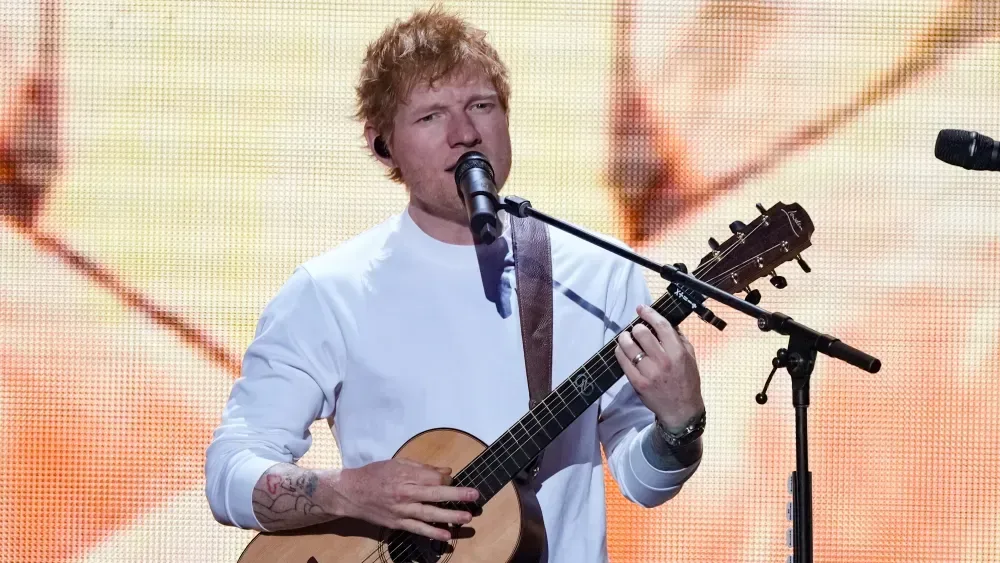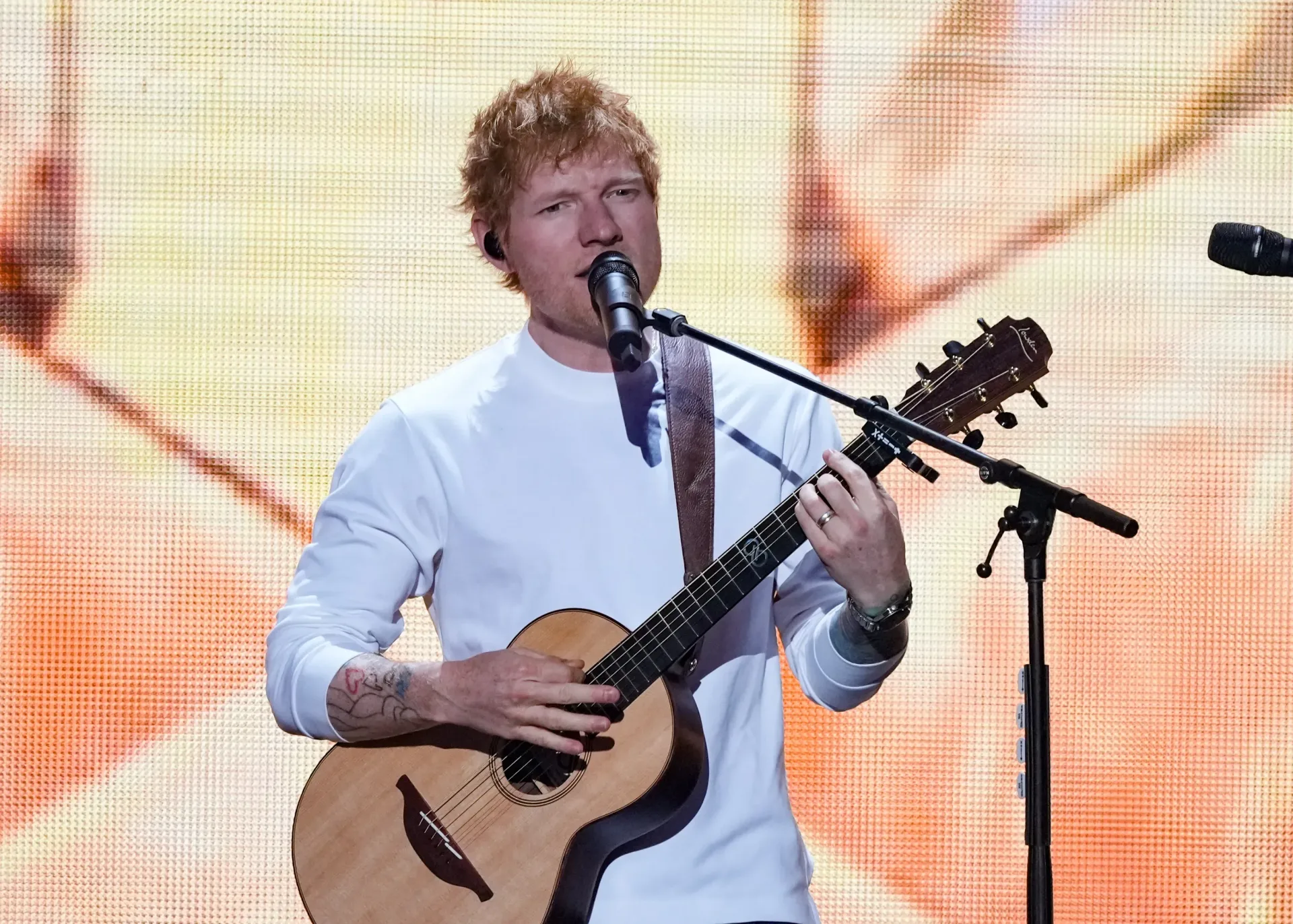
Ed Sheeran addressed the removal of Macklemore from the U.S. dates of his Loop Tour during a Philadelphia performance at Lincoln Financial Field, his first concert since the dispute reshaped the tour’s supporting lineup.
Speaking before his set, Sheeran acknowledged a difficult week and apologized for mistakes, while drawing a distinction between the routine criticism directed at his music and the far more consequential debate now surrounding the tour. He said the situation had placed him in a passionate argument over freedom of speech and the Israel-Palestine conflict—an issue he characterized as extraordinarily complex.
The Philadelphia show went ahead as planned, but it did so with Sheeran performing without Macklemore and against a backdrop of further departures. Aaron Rowe, Lukas Graham, Finneas and Beoga have each withdrawn from planned appearances after Macklemore’s exit. The result is a touring story with practical consequences for ticket-holders and an unresolved cultural question: where should the line sit between an artist’s speech onstage, a venue’s operating decision and a promoter’s obligation to keep a large tour running?
What happened on the Loop Tour
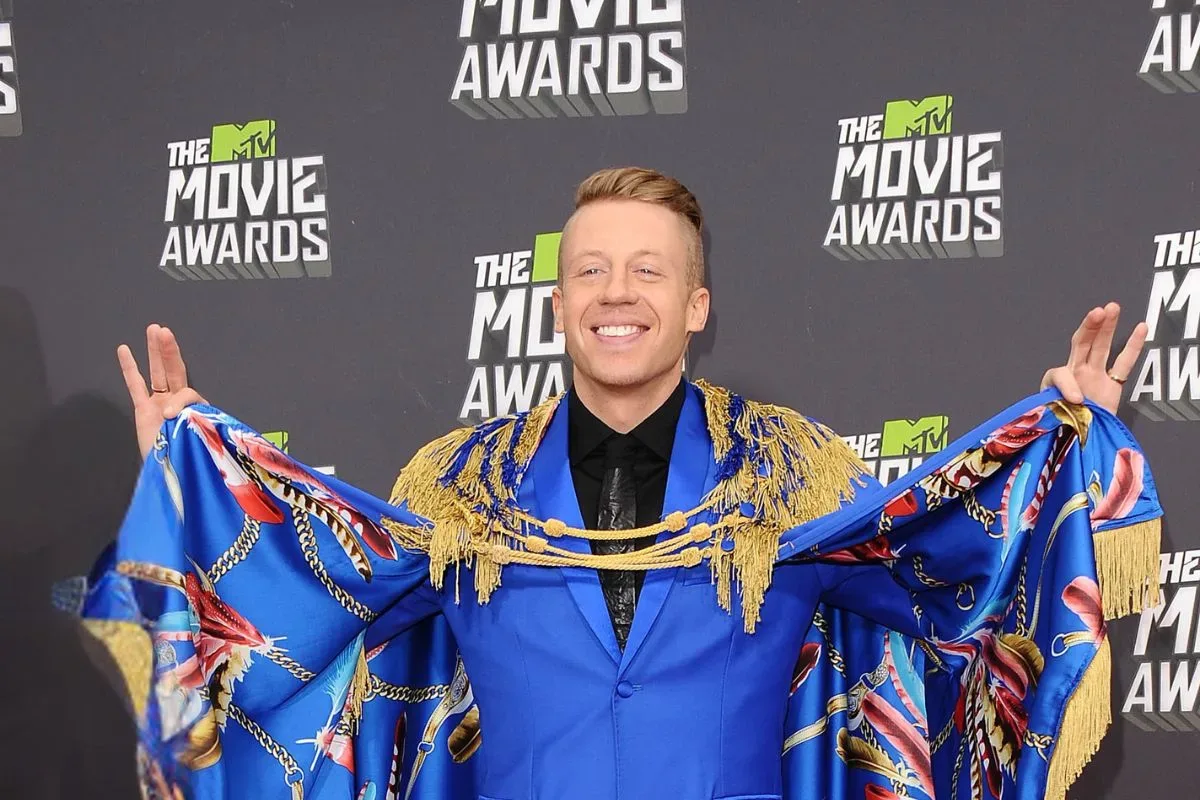
Macklemore had appeared during Sheeran’s September 4 and 5 shows at MetLife Stadium in New Jersey. In those performances, he spoke in support of Palestinians, discussed the war in Gaza and the West Bank, said “Free Palestine,” and performed “Hind’s Hall,” his 2024 protest song.
Those remarks prompted criticism from Jewish and pro-Israel organizations, including the Israeli-American Council, which called for Macklemore to be removed from the tour.
Messina Touring Group, which promotes the U.S. leg of the Loop Tour, later said Macklemore would not appear at its remaining stops. Its explanation was that venues had told the promoter they would not permit concerts featuring him to continue. The promoter said that situation could have led to cancellations affecting hundreds of thousands of people with tickets.
That detail matters because it separates several roles that can otherwise be blurred together in public discussion. A promoter is the company responsible for organizing and presenting a tour run, including logistics and commercial commitments. A venue is the location hosting the performance and may impose conditions related to what it will stage. The headlining artist is the act at the center of the event, but may not be the party making every operational call for a multi-date tour.
Sheeran had already said that Macklemore’s removal was a decision made by the promoter and venues, not by him. In Philadelphia, he nonetheless took responsibility for the broader moment, saying he had faced difficult choices and mistakes. He also made clear that he is troubled by the prospect of venues approving performance material beforehand.
Related coverage includes Ed Sheeran Addresses Macklemore’s Loop Tour Exit in Philadelphia.
“I’m deeply worried about the idea that venues pre-approve content for performance,” Sheeran said in an earlier statement, adding that such a practice should not occur in the “free world.”
Sheeran moves beyond a neutral posture
For much of his career, Sheeran said, he has tried not to act as a political commentator. His preference has been for concerts built around unity, joy, escapism and love rather than personal political positions. On the Philadelphia stage, he explained that he did not want to disappoint audiences and wanted his shows to remain a safe space for everyone.
But he also said the subject could not be avoided as merely an entertainment-industry controversy. He called it a humanitarian issue and offered a more direct account of his views than he had previously.
Sheeran described the October 7 attack in Israel and at the Nome Museum Festival as horrific, saying it compounded centuries of Jewish pain. He also called what is happening in Gaza catastrophic, unjustifiable and disproportionate. He referred to civilian and child deaths and said systemic injustice in the West Bank cannot be overlooked.
That framing is significant because it rejects an either-or approach to grief. Sheeran’s comments recognized Jewish pain associated with the October 7 attack while also stressing Palestinian suffering in Gaza and conditions in the West Bank. It does not settle the political arguments surrounding the war, nor does it erase the disagreement over Macklemore’s performance. It does show that Sheeran no longer considers simply keeping the show apolitical an adequate response to the moment.
He said he has begun speaking with people from across the spectrum about making a contribution to help victims, while emphasizing that he is listening and learning because he does not believe he knows enough.
The free-speech argument is not the whole argument
“Freedom of speech” can become a shorthand that conceals the competing interests at play. In this case, it refers in part to Macklemore’s ability to use his set for a political message. But it also intersects with private venues’ decisions about their stages, a promoter’s judgment about whether an event can proceed and fans’ expectation that the concert for which they bought tickets will actually happen.
The available facts do not establish a simple choice between unrestricted expression and a cancelled tour. Rather, the promoter said venues were prepared not to host performances involving Macklemore, creating a potential disruption to the rest of the run. That is why the dispute has generated criticism from different directions: some viewed the removal as an unacceptable response to political speech, while others objected to the content of Macklemore’s statements and song.
Sheeran’s comments identify a tension within that arrangement. He says he is worried about prior approval of performance content, yet he is continuing the tour after the promoter and venues removed one of its acts. His stated reason is a commitment to the fans attending the shows. It is an imperfect solution, and Sheeran acknowledged that imperfection rather than presenting the decision as painless or universally satisfying.
For audiences, the immediate practical implication is straightforward: the Loop Tour continues, but its planned bills have changed. A stadium tour depends on a chain of artists, venues, promoter decisions and ticketed dates. When one link breaks, the headliner may continue, reschedule or cancel; Sheeran chose to continue in Philadelphia.
Macklemore stands by his decision to speak
Macklemore responded to his removal by saying that he and Sheeran had had difficult conversations following the MetLife performances. He expressed respect for Sheeran personally but challenged the idea that remaining publicly neutral is the right response. He said he did not regret speaking in support of Palestinians from the tour stage.
He has also said he will donate $1 million to Palestinian relief organizations. That pledge extends the issue beyond the dispute over a setlist or guest slot, although no further details about the donation process were provided here.
“Hind’s Hall” is central to understanding why the set became the flashpoint it did. A protest song is music written to communicate a political or social position rather than simply serve as entertainment. Its presence in a stadium support set meant Macklemore’s message was not limited to a brief remark between songs; it was integrated into the performance itself. To supporters, that can be an artist using a major platform to address civilian suffering. To critics, it can be an unwelcome political intervention at a show associated with another artist. Both readings help explain why the reaction moved so quickly from online criticism to tour changes.
Other acts leave the tour
The effects did not stop with Macklemore. Singer-songwriter Aaron Rowe and Danish band Lukas Graham, both expected at upcoming North American dates, withdrew. Finneas, who had been due to join a set of South American shows later in the year, also pulled out. Beoga, the Irish folk group and longtime Sheeran collaborators who had been part of his live presentation, exited as well.
All four cited Macklemore’s removal when announcing their decisions. Their departures demonstrate that a support lineup is not merely interchangeable scheduling. Opening and collaborative acts can make their own decisions about association, public values and the circumstances under which they will perform.
For the tour, this likely means an evolving live package rather than a static roster across every date. It would be premature to assume replacements, altered running orders or any other operational changes not announced. What is confirmed is that Philadelphia began the next stretch of the U.S. stadium run with Sheeran onstage alone and several previously expected participants no longer attached.
The episode also lands in a wider pop-music environment where artists increasingly face pressure to say something—and, just as often, pressure to say it in precisely the preferred terms of competing audiences. Recent music discourse has repeatedly shown how fast a performer’s public comments can become as closely examined as the work itself, from individual songs to debates around major releases such as Drake’s expanded “Classic” project.
What Philadelphia established—and what remains unresolved
Philadelphia did not resolve the central disagreement. Macklemore remains off the remaining U.S. Loop Tour dates. Sheeran remains concerned about venue pre-approval of content while continuing the tour. Other performers have chosen to leave. And the underlying conflict that inspired Macklemore’s speech and Sheeran’s statement remains a humanitarian crisis with profound consequences far beyond live entertainment.
What the show did establish is that Sheeran is no longer responding solely through logistics or a brief attribution of responsibility to promoters and venues. He publicly apologized, explained why he continued the tour, voiced anxiety about restrictions on stage speech and articulated sorrow for victims in Israel, Gaza and the West Bank.
For a stadium concert built around escapism, that is a notably different opening note. Whether it satisfies fans or critics is another matter. The Loop Tour is proceeding, but the debate over who gets to speak, who bears the cost when they do, and what neutrality means amid an ongoing humanitarian disaster is continuing alongside it.