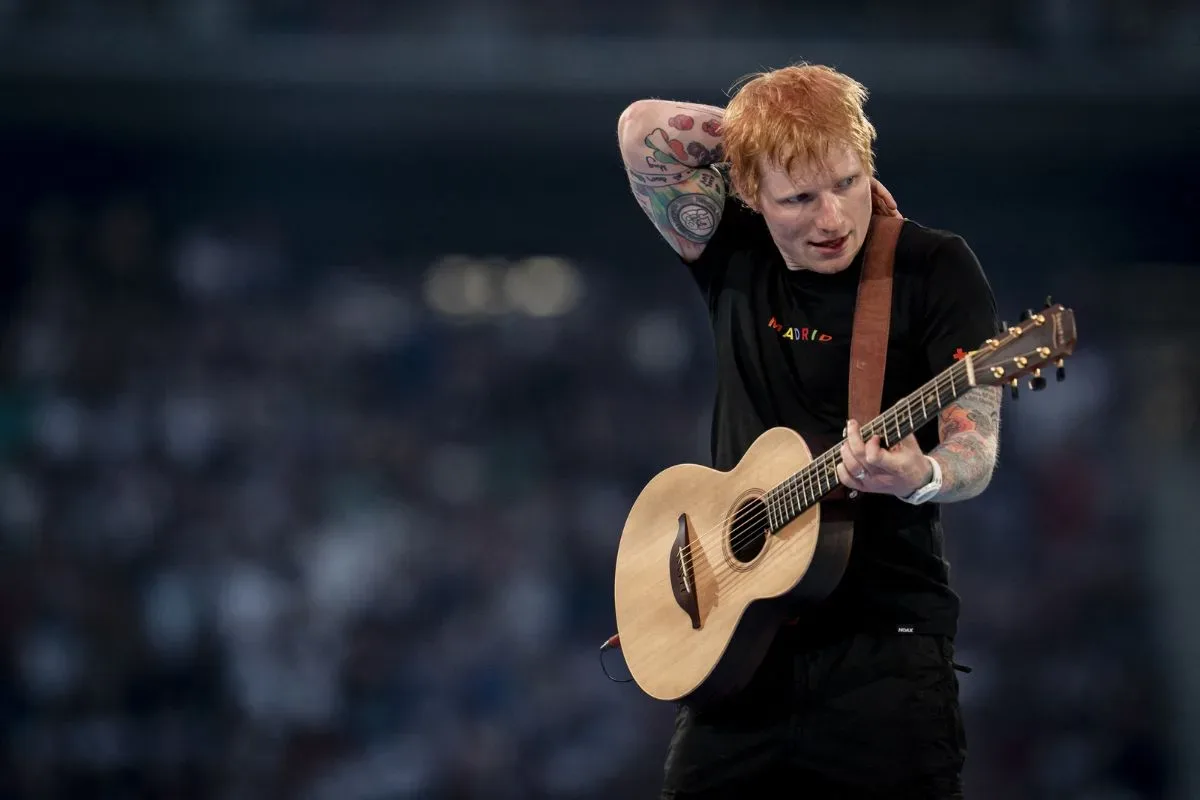
Brian Eno has criticized Ed Sheeran’s response to Macklemore being removed from the remaining U.S. support dates of the Loop Tour, calling Sheeran “weak” and arguing that the headliner should have made a more forceful response on behalf of the artists booked for the shows.
The dispute is not simply a clash between two musicians. It has become a public example of how much authority is distributed across a stadium tour: the headliner may be the most visible person on the poster, but promoters, venues, local operators and other commercial stakeholders can all affect whether a show proceeds and who appears onstage. It also leaves an unavoidable question for fans: when a support act is removed after political speech, who is responsible for answering to the audience that bought tickets and made plans around the event?
What happened on the Loop Tour
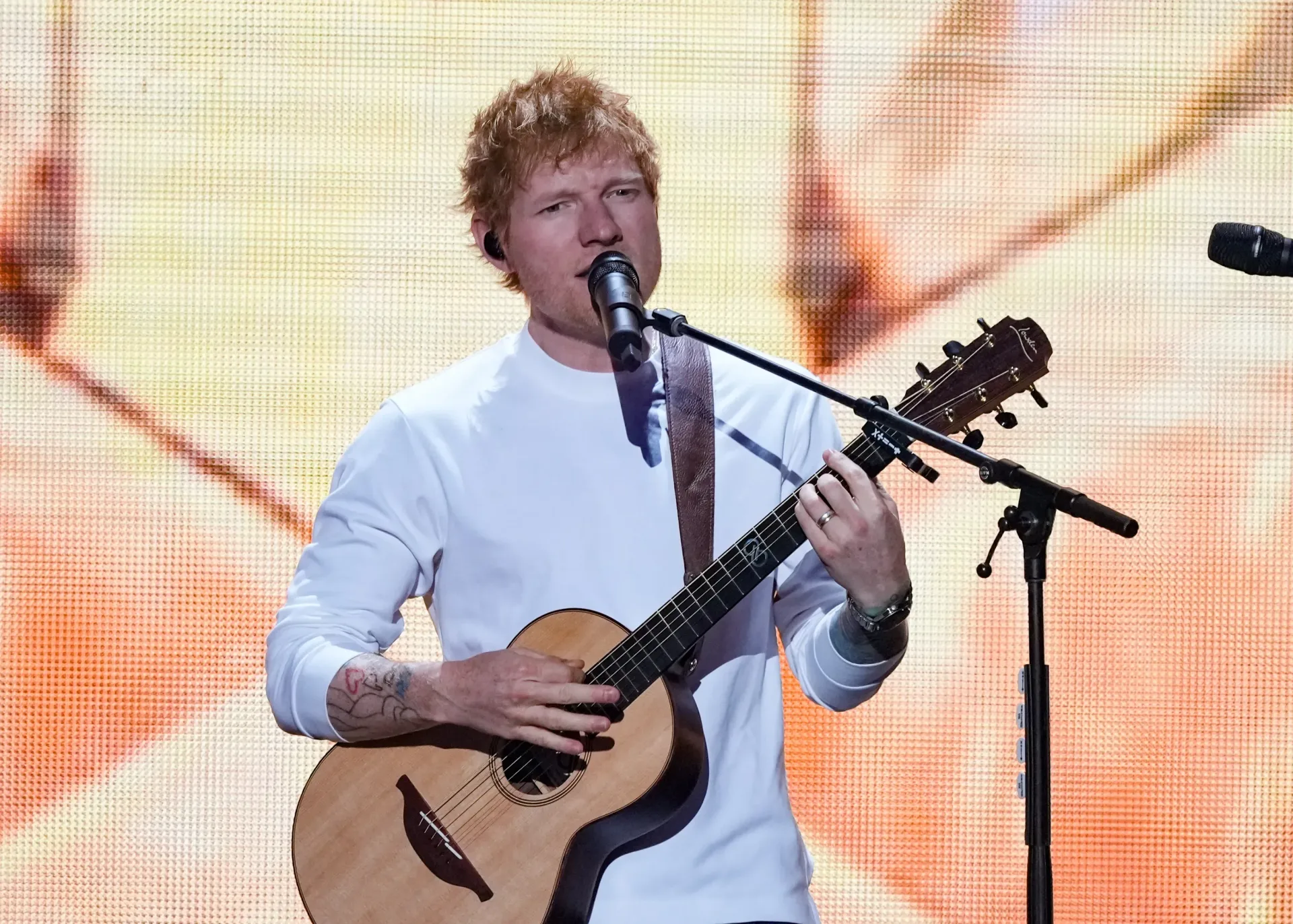
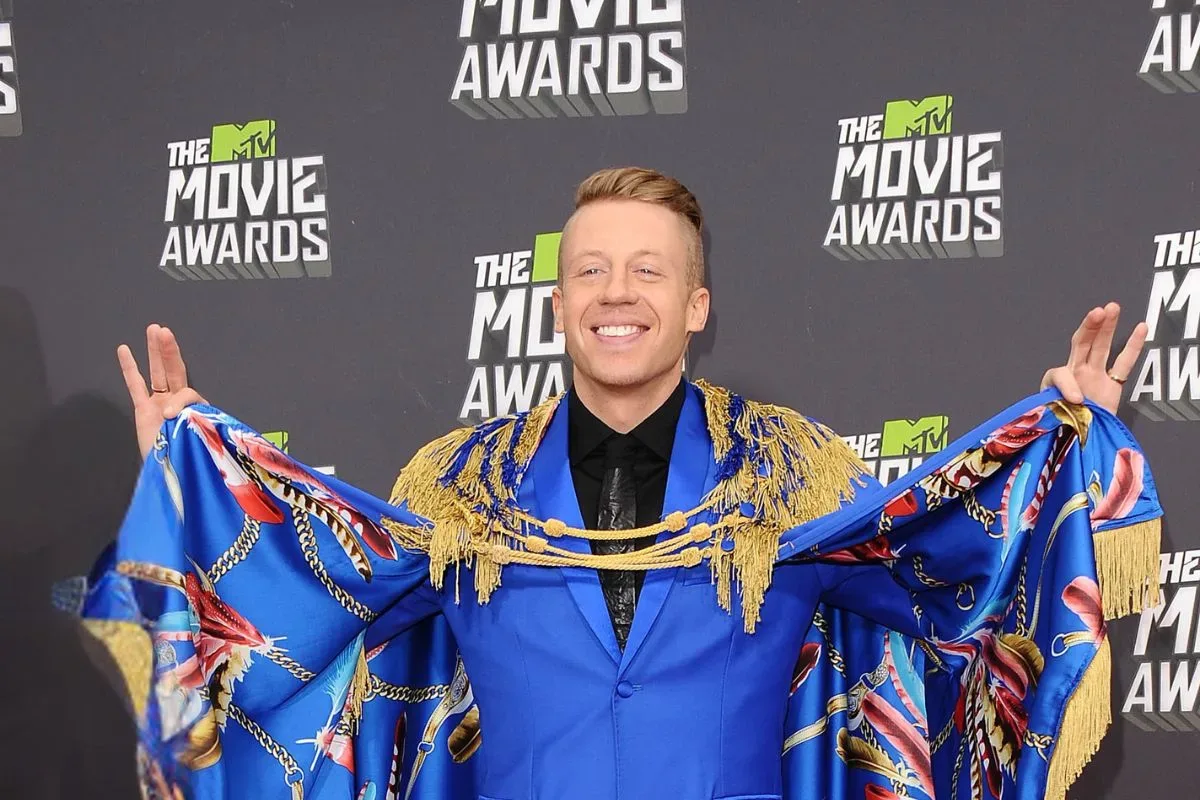
Macklemore opened Sheeran’s MetLife Stadium shows in New Jersey on September 4 and 5. During those sets, he performed “Hind’s Hall,” showed images from Gaza and encouraged the crowd to say “Free Palestine.” He also rejected the assertion that speaking against Israel means hating Jewish people.
Objections subsequently moved beyond online criticism. Messina Touring Group said that venues would not host the remaining concerts if Macklemore stayed on the bill, placing the rest of the American stadium run in jeopardy. Following discussions involving the relevant parties, the promoter removed Macklemore from the remaining support dates on September 14.
That distinction matters. A promoter is the business responsible for organizing and presenting a concert, with duties that can include contracting performers, working with venues and managing the practical and financial structure of an event. A venue, meanwhile, controls the building or stadium in which the event is held. A major touring artist can have substantial influence, but that does not automatically mean the artist controls every contract or every approval required to stage a show.
Sheeran said as much in a public statement on September 15. He said he had spent a week talking with venues, promoters and activists in an attempt to find an agreement, and explained that Macklemore’s contract was with the promoter rather than with him personally. Sheeran’s position was direct: Macklemore’s exit from the tour was the promoter’s decision, not his.
Sheeran also pointed to people whose livelihoods and plans were tied to the stadium dates, including fans and touring workers. That is the practical pressure at the center of his defense. Cancelling a stadium show would affect far more people than the marquee artist and the opening act, from crews and local event staff to people travelling to attend.
Eno’s criticism focuses on the headliner’s responsibility
Eno took a different view in an interview conducted on September 29 and published Tuesday. He put the greater share of blame on those who blocked the shows, while also stressing that ticket holders had made travel arrangements. But he argued that Sheeran still should have responded more emphatically.
Related coverage includes Brian Eno Criticizes Ed Sheeran After Macklemore’s Loop Tour Removal.
“He should have made some kind of reaction,” Eno said.
Calling Sheeran “weak” frames the issue as one of moral and public leadership rather than narrow contractual control. In that reading, a headliner does not need to hold the legal power to remove or retain an opener in order to take a visible stance when that opener is pushed off a tour. The argument is that Sheeran’s prominence gave him a platform and leverage that should have been used more clearly.
That is an argument about expectations, not proof that Sheeran had the unilateral ability to reverse the decision. The supplied accounts establish that Macklemore’s agreement was with the promoter and that venues had indicated they would not host the concerts with him on the bill. They do not establish the precise terms of every agreement, what alternatives were available, or whether any particular action by Sheeran would have changed the result.
This gap explains why the disagreement has remained so sharp. Sheeran’s account emphasizes what he says he did behind the scenes and the risks to an entire touring operation. Eno’s criticism emphasizes the public act that he believes was missing. Those are overlapping but distinct standards: one asks whether a performer had the formal authority and practical room to act; the other asks what an artist should do publicly when collaborators face exclusion.
The venue fight and Robert Kraft’s response
Macklemore accused New England Patriots owner Robert Kraft of encouraging other stadium owners to block him. Kraft confirmed that Macklemore was barred from Gillette Stadium. He cited what he described as a history of antisemitic rhetoric and imagery, while also saying the decision did not deny Palestinians’ pain or their right to be heard.
Those positions show why the episode cannot be reduced to a simple disagreement over scheduling. Macklemore’s performance brought the Israel-Gaza war into a high-profile entertainment setting. The venue-side objection, as described by Kraft, concerned rhetoric and imagery he considered antisemitic. Macklemore’s own onstage comments included a rejection of the claim that his criticism of Israel represented hatred of Jewish people.
These are competing claims about speech, impact and responsibility. They should not be blurred together. Support for Palestinian rights, criticism of Israel, concern about antisemitism and concern about censorship can each be sincerely held, but they do not erase the disagreement over specific language, images and the terms on which a privately operated venue hosts an act.
For the live-music business, the practical implication is uncomfortable: a stadium tour is a network of dependencies. The network may include the artist, promoter, building operator, event workers, ticket holders, support acts and external stakeholders with ties to the venue. When one component refuses to participate, the consequences can fall quickly on everyone else. That structure does not settle the ethical argument, but it does explain why a decision affecting one opener can ripple through an entire run of dates.
More artists stepped away after Macklemore’s removal
The fallout did not stop at Macklemore’s support slot. Finneas, Lukas Graham and Aaron Rowe withdrew from their dates. Beoga, the Irish group that had been performing during Sheeran’s own sets, also pulled out.
That list changes the scale of the controversy. It was no longer only a dispute about whether one performer could remain on the bill. It became a test of whether other artists were willing to separate from the shows in response to the circumstances of Macklemore’s removal. Each withdrawal also created an added programming problem for dates that were intended to be major stadium events with a planned lineup and flow.
There is a key difference between being removed and choosing to withdraw. Macklemore was removed by the promoter after venues said they would not host the concerts with him included. The other named artists elected not to proceed with their dates. Both outcomes affect the show, but they represent different forms of agency and should be described separately.
Music controversies frequently produce demands for immediate, absolute statements. Yet the live setting raises unusually concrete questions: Can an artist perform? Will a venue host them? Who is liable if a show does not go ahead? What happens to employees and audiences? And how much public disagreement can a headliner accommodate before the tour itself becomes untenable? The available facts do not resolve those questions, but this episode shows that they are no longer theoretical for a stadium-scale production.
Sheeran acknowledged mistakes while defending a broader principle
Sheeran addressed the backlash onstage in Philadelphia on September 19. He said he was concerned by the prospect of venues approving performers’ words ahead of time. That concern goes beyond this tour: it addresses whether venue access could become contingent on advance clearance of an artist’s political speech.
He also described the situation in Gaza as “catastrophic and unjustifiable and disproportionate,” while acknowledging mistakes in how he handled the controversy. The combination is important. Sheeran did not present the matter as politically neutral, but he also did not accept the idea that he personally made the promoter’s decision or that keeping the stadium run operational was irrelevant.
His warning about pre-approval is a concern about a potential prior restraint dynamic: restrictions placed on speech before it is delivered rather than consequences imposed afterward. The supplied information does not say that every artist on the tour was required to submit material for pre-clearance. It does show that Sheeran feared such a system could follow if venues began deciding in advance what performers were permitted to say.
Eno’s objection, however, is rooted in the outcome in front of him, not merely the future precedent. From his perspective, Macklemore’s removal was enough to require a stronger reaction from Sheeran. The two views can coexist as descriptions of the clash: Sheeran focused on avoiding a system where venues vet expression and on preserving the jobs and dates around the tour; Eno focused on solidarity with an artist who had already lost his place on it.
Why the story extends beyond one tour
Artists are often treated as sole authors of the choices associated with their tours. This controversy demonstrates the limits of that assumption. Billing is public, but the operational relationships behind it are often private. Fans may reasonably look first to the artist whose name is largest on the ticket, while the actual decision-making may involve organizations whose names are far less familiar.
At the same time, saying a decision is contractually someone else’s does not end a public debate. Headliners have cultural power even when they lack final legal authority. Eno’s criticism is essentially a claim that power carries a responsibility to speak or act when collaborators are excluded. Sheeran’s response is that he did seek a solution, faced constraints from venues and promoters, and had obligations to fans and workers dependent on the dates.
Neither account makes the human stakes disappear. Macklemore lost planned appearances; other performers chose to step away; workers and ticket holders faced uncertainty; and audiences saw a conflict over Gaza unfold through one of music’s most commercial institutions. For more coverage of artists navigating public issues around their work, see this report on Lil Jon asking Grammy voters to consider Nathan “Slade” Smith’s meditation-album work.
The central facts remain contested in interpretation but clear in sequence: Macklemore’s Gaza-focused performances prompted objections; venues would not host remaining dates with him on the bill; the promoter removed him; several other acts subsequently withdrew; Sheeran said the decision was not his and warned against advance vetting of speech; and Eno said that response was insufficient. The argument now is less about whether the tour was affected than about what meaningful responsibility looks like when the business infrastructure behind a concert and the political speech within it collide.