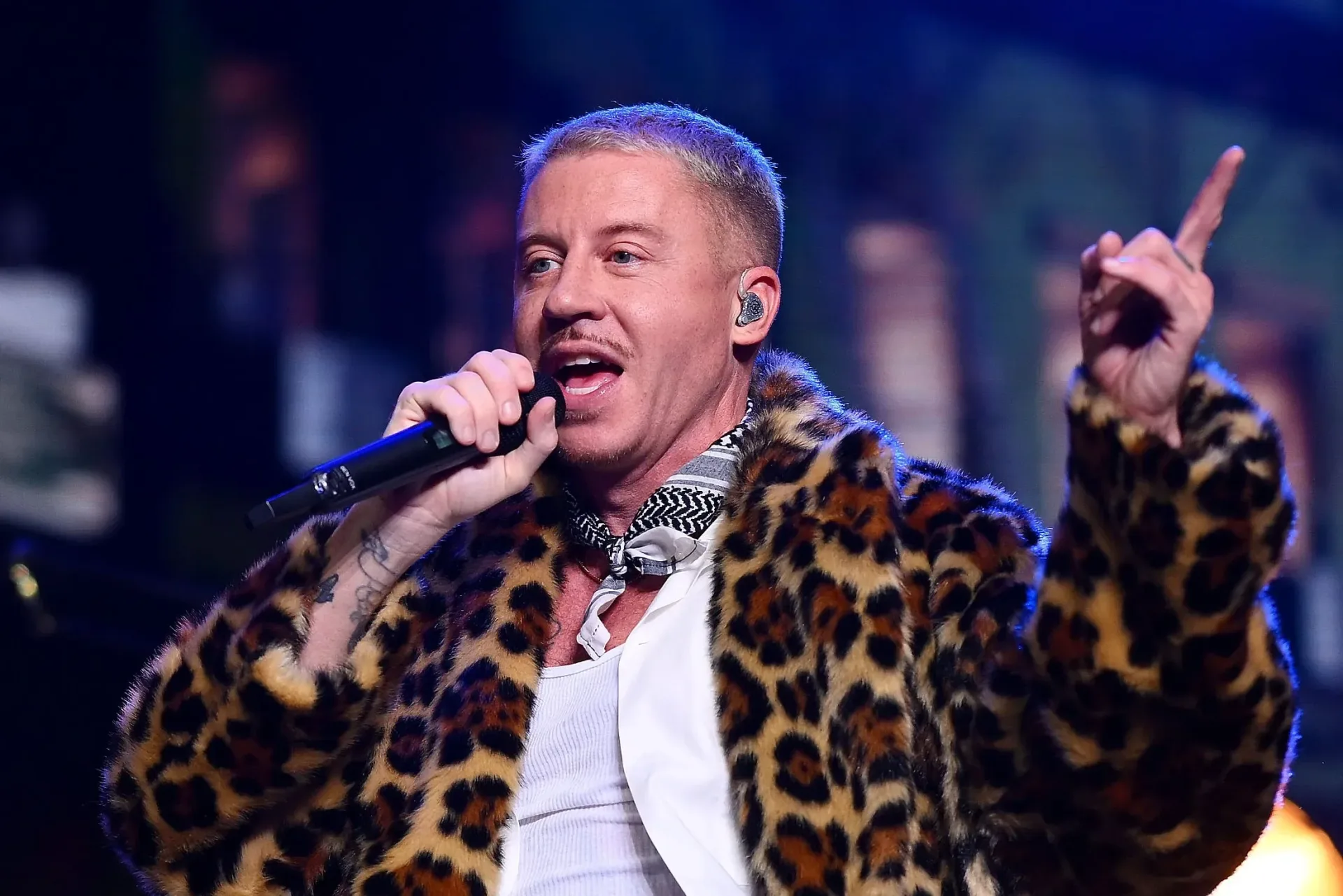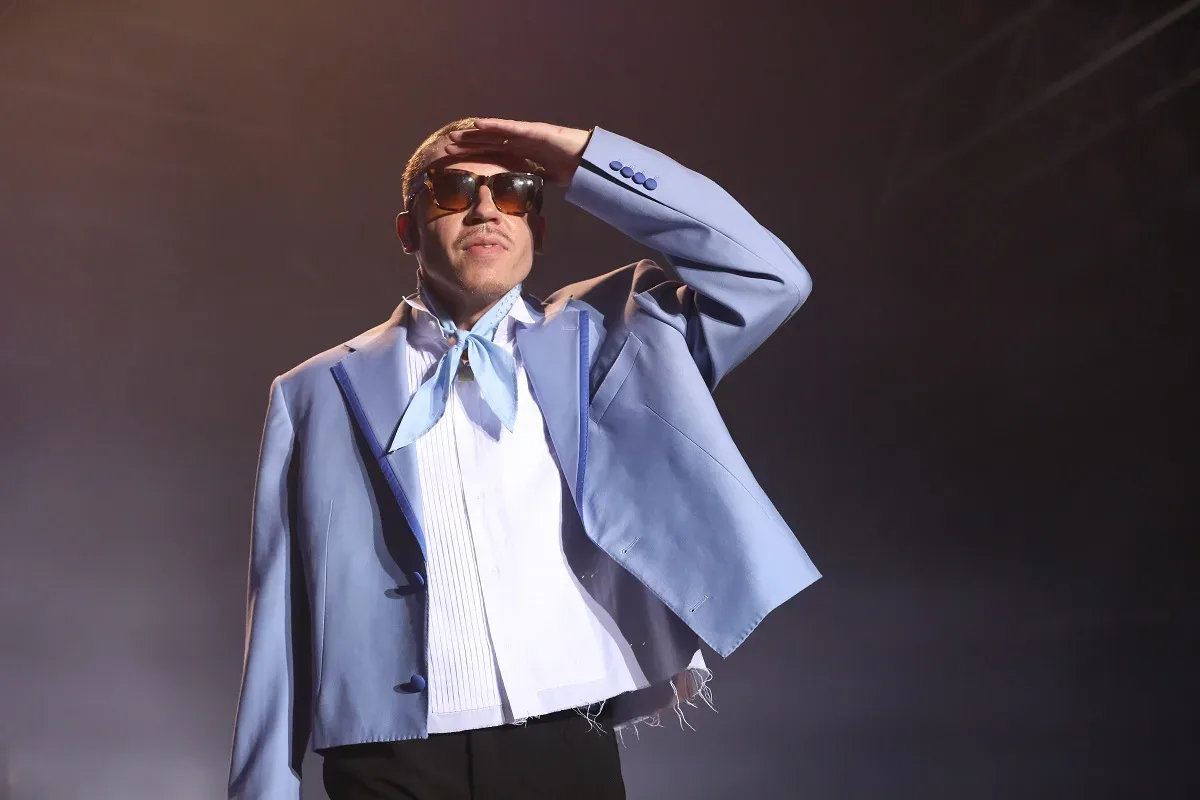
Macklemore returned to the stage at Colorado’s Red Rocks Amphitheatre on October 22 with a message centered on Palestinian freedom, broader humanitarian solidarity and criticism of U.S. Immigration and Customs Enforcement.
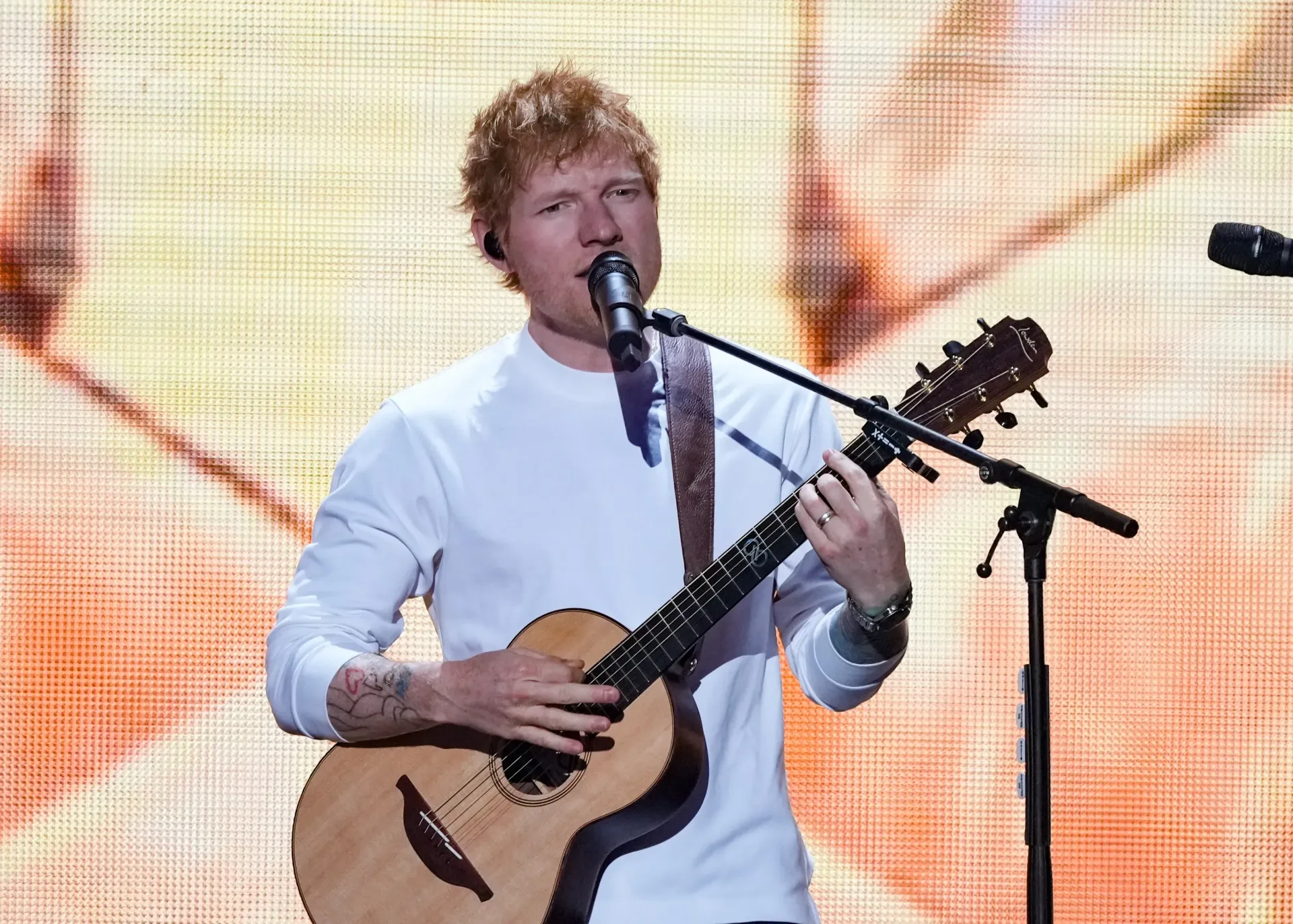
The Seattle rapper’s appearance came after he was removed from his remaining scheduled opening dates for Ed Sheeran. The dispute followed Macklemore’s remarks and performance of his 2024 protest track “Hind’s Hall” during September dates at MetLife Stadium in New Jersey.
At Red Rocks, Macklemore framed his remarks as an appeal to empathy rather than a party-political statement. “Being a human being in this moment is not complicated,” he told the audience. “It is not political. It is human to have a heart to watch others suffer and to say not any more.”
The crowd responded with cheers as he expanded his message beyond Palestine. “I say free Palestine,” he said, before naming Sudan, Congo, Lebanon and Haiti, and addressing people in the United States affected by ICE enforcement who are afraid to leave their homes.
“The message will always be love,” Macklemore said.
A return to the stage after the stadium fallout
The Red Rocks set was significant because it followed an unusually public disagreement over the limits of political speech on a major tour. Macklemore had been appearing as an opener for Sheeran when his New Jersey performances brought that disagreement into focus.
During those dates, he called for Palestinian freedom, performed “Hind’s Hall”, and also criticized ICE. The song was released in 2024 and has become a central part of Macklemore’s public advocacy on Palestine.
Robert Kraft, the owner of the New England Patriots, objected to Macklemore performing at Gillette Stadium. Kraft said his concern involved the New Jersey appearances as well as what he characterized as a history of rhetoric and imagery offensive to Jewish people.
Macklemore rejected the assertion that his position was directed at Jewish people. He distinguished criticism of Israel from criticism of Jewish people, and argued for equal treatment.
That distinction is at the heart of the conflict surrounding his performances. Criticism of a government, its policies or military conduct is not inherently the same thing as hostility toward a religious or ethnic group. At the same time, rhetoric surrounding Israel and Palestine can be experienced as deeply personal and painful, particularly when it invokes broad identities rather than specific institutions or actions. The dispute demonstrates how quickly those boundaries can become the subject of intense public disagreement.
What changed on the Sheeran dates
After Macklemore’s removal, the other announced supporting acts on the Sheeran dates withdrew in solidarity. Sheeran said the decision had been made by the tour’s organizers and that he had attempted to resolve the situation. He later apologized during a Philadelphia concert for how he handled the matter.
For concertgoers, an opening slot is normally a short but prominent role: an artist performs before the headliner and receives access to an audience that may not otherwise know their work. In this case, the opening appearances became something more consequential. They were a platform for a protest song, then a flashpoint involving venue concerns, tour organization and the question of whether an artist’s message could continue on later shows.
Macklemore’s Red Rocks appearance showed that losing those specific support dates did not end his ability to bring the subject to a live audience. Rather than retreating from the issues cited in the dispute, he repeated and broadened the message.
His phrasing also connected international conflicts and domestic immigration enforcement. That does not make the situations identical; they involve different places, institutions and circumstances. Instead, Macklemore presented them as linked by a shared call to recognize suffering and fear experienced by civilians and vulnerable communities.
From concert controversy to financial commitment
The disagreement also produced competing public commitments of money for humanitarian work. Macklemore said he would direct $1 million in net earnings from the Sheeran dates to six organizations supporting Palestinians, and challenged Kraft to match the contribution.
Kraft said he had already committed $2 million for humanitarian aid in the region.
The word net matters in Macklemore’s pledge. Net earnings generally refers to the money remaining after applicable costs or deductions, rather than a show’s gross revenue. The available information does not identify the six organizations Macklemore intended to support or provide a distribution of the pledged funds, so the precise allocation is not established here.
Still, the two stated commitments shifted at least part of the conversation from access to a venue toward humanitarian aid. That does not resolve the underlying disagreement over language, performance and representation. It does show that the fallout moved beyond a booking decision and into tangible promises connected to people affected by the regional crisis.
Benefit concerts are scheduled next
Macklemore has also announced a separate run of “Free Palestine” benefit concerts. The series is scheduled to begin at Dublin’s 3Arena on October 26, followed by Paris’ Accor Arena on October 29 and London’s OVO Arena Wembley on October 30.
Proceeds from those concerts are intended for organizations supporting Palestinians. A benefit concert is an event designed to raise money for a designated cause, typically by directing proceeds or a stated portion of proceeds to charitable or aid-focused organizations. The supplied details establish the stated purpose of these shows, but do not identify particular recipient groups or specify how proceeds will be divided.
Those dates make the Red Rocks speech more than a standalone response to the Sheeran-tour dispute. It also serves as the immediate lead-in to a scheduled series built around the same cause. Macklemore has said publicly that the issue is larger than his own career or access to a stage, a point reflected in both his Red Rocks remarks and the planned benefit events.
Why the Red Rocks speech matters
Red Rocks did not erase the prior conflict, nor did it settle the competing views expressed by Macklemore, Kraft and Sheeran. What it did provide was a clear indication of Macklemore’s next move: he remains committed to using live performances for advocacy.
His remarks were deliberately expansive. He named Palestine first, then Sudan, Congo, Lebanon and Haiti, before turning to people fearful of ICE enforcement in America. The throughline was a claim that compassion should not depend on national borders, public controversy or the political convenience of a particular cause.
That framing will draw support from listeners who see artists as having a responsibility to speak openly about suffering. It will also continue to face scrutiny from people who believe that language surrounding Israel and Palestine must be handled with particular care, especially in large public settings. Both realities can coexist: a musician can intend solidarity and still encounter serious objections to how their message is understood.
For now, the practical outcome is clear. Macklemore has resumed performing, retained his public stance, committed money from the disputed dates to Palestinian-support organizations, and has benefit concerts scheduled in Dublin, Paris and London. The Red Rocks appearance placed that position back in front of a large audience—this time on his own stage rather than as part of another artist’s tour.
The episode also sits within a wider entertainment culture where public figures increasingly face pressure to explain how their work, platforms and partnerships intersect with major social issues. That dynamic reaches far beyond music, as seen across pop-culture projects that carry a story or identity into new public spaces. Macklemore’s case is far more politically charged, but it underscores the same basic reality: cultural platforms are rarely treated as separate from the messages attached to them.