For Love & Lemons has brought Sarah J. Maas’ A Court of Thorns and Roses world into fashion with a limited collection shaped by corsetry, lace, florals, beadwork and formal silhouettes. The collaboration launched October 22, just before the October 27 release of A Court of Splintered Harmony, described as the sixth installment in the romantasy series.
The important distinction is that this is not presented as a straightforward logo-apparel drop. Instead of centering book-cover artwork or standard branded sweats, the line translates the atmosphere of Prythian into four themed mini collections: The First Bloom of Spring, Welcome to the Night Court, Under Starfall Skies, and A Dance of Silver Flames.
That approach makes the partnership a notable piece of ACOTAR’s expanding merchandise moment. It asks shoppers to engage with the series’ courts, characters and moods through materials and silhouettes rather than through a prominent franchise mark. For fans, the result is fashion intended to evoke a fictional setting; for collectors, it is a limited-run product line where the specific design, condition and availability of a piece may matter much more than a simple character graphic.
Four courts, four fashion moods
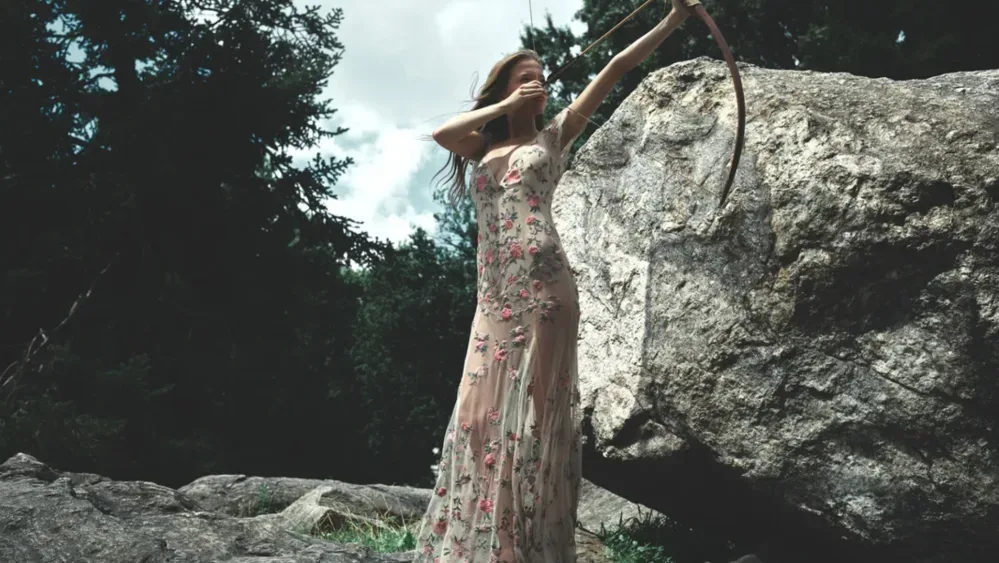
The Spring Court-influenced portion of the collection leans into pastel florals and delicate lace. Its listed centerpiece is the Rose of the Manor Gown, priced at $639. That naming and styling place it squarely in the collection’s romantic, garden-facing corner, using detail and fabric treatment to establish the reference rather than relying on overt visual branding.
For more context, explore Galaxy OS Rumor Looks More Like a One UI Naming Mix-Up Than Samsung’s Next Big Reset.
The Night Court assortment takes a darker route. Two named examples are the $629 Night Court Mini Dress and the Moonveil Gown, listed at $829. The contrast between the Spring Court and Night Court groups is central to the broader idea: a court is not merely a label applied to the same garment in a different color. The line uses different visual moods—soft florals and fine lace on one end, darker eveningwear on the other—to give each themed segment its own identity.
Under Starfall Skies adds a celestial direction, while A Dance of Silver Flames includes references to Nesta and the Valkyries. Across the line, pricing runs from a $398 beaded mini skirt to a $729 gown, alongside the separately listed pieces above. The range places the collection firmly in occasionwear and elaborately finished fashion rather than casual fan apparel.
Terms such as corsetry and embellishment matter here. Corsetry refers to a garment structure or styling language that shapes and supports the torso, and it has long been associated with formal and romantic fashion. Embellishment means added ornamental work on a garment, which can include beads, embroidery or other decorative details. In this collection, those techniques do much of the adaptation work: they are the visual vocabulary used to connect the clothes to ACOTAR’s fantasy-romance tone.
Craft details are part of the proposition
For Love & Lemons says the collection includes custom embroidery, hand-beaded elements and intricate embellishments. These are meaningful details in a line positioned at this price level because they differentiate the products from mass-market graphic merchandise. They also make variation in finish a practical consideration for anyone buying an item as a collectible as well as clothing.
Custom embroidery means decoration created for this project rather than a generic, off-the-shelf motif. Hand beading refers to bead details applied by hand. Neither term automatically establishes rarity or investment value, but both help explain why the clothes are being framed as highly detailed pieces instead of broad, everyday franchise basics.
For Love & Lemons co-founder Gillian Kern said the collaboration had been in development for more than a year and came from genuine enthusiasm for the material. “We love the way Sarah J. Maas uses fashion to evoke a mood,” Kern said. That statement neatly describes the collection’s apparent strategy: fashion is treated as part of the storytelling atmosphere, not merely as a surface for logos.
There is further coverage of the court-by-court concept in this look at the ACOTAR collection’s corsetry, lace and eveningwear direction.
Limited quantities change the buying equation
The collection is being produced in limited quantities, and the brand says designs will not be restocked after they sell out. Several styles, including the Storykeeper Dress and Dance with Fire Gown, have already sold out. Other products remain marked as coming soon.
That language deserves a careful reading. A limited quantity is a production and availability statement: there are only so many units planned. A no-restock policy says that an item that sells through is not expected to return through another production run. Those facts can make an item difficult to replace, but they do not guarantee that it will increase in resale value. Demand, size availability, condition, authenticity and the enduring appeal of a specific design all remain unknowns.
For anyone considering a purchase as a physical collectible, the sensible takeaway is practical rather than speculative. Keep order records and original packaging where applicable, document the garment’s condition, and follow care instructions closely—especially for pieces with delicate lace, beadwork or embroidery. If the goal is to wear the item, its personal use may be the most important value. If the goal is long-term collecting, preserving fragile embellishments and avoiding undocumented alterations will be relevant.
There is also a straightforward consumer implication to the “coming soon” and sold-out labels. A collection page can contain products at different availability stages, so seeing the overall collaboration live does not mean every named piece can be purchased at the same time. Shoppers interested in a particular garment should distinguish between currently available stock, unavailable sold-out styles and designs not yet released for purchase.
ACOTAR merchandise is expanding beyond one format
The fashion release arrives amid a larger push of products tied to the upcoming novel. Knix has released ACOTAR-inspired lingerie, sleepwear and underwear. Fine’ry has introduced four scents themed around the series. Funko Pop and Loungefly have also released character figures and accessories, respectively.
Target’s lineup spans jewelry, apparel and collectibles, with midnight release celebrations planned at roughly 250 stores on October 26. Barnes & Noble will hold similar events at more than 500 locations across the United States. Together, those releases show a franchise being expressed through multiple categories: clothing, fragrance, accessories, figures and retailer events.
For readers interested in the new novel, this creates several distinct ways to participate. A fragrance can focus on a mood or an imagined setting. A Funko Pop turns a character into a display object. A Loungefly accessory puts the reference into an everyday item. The For Love & Lemons collection instead adopts a more interpretive route, using formal fashion codes to suggest locations and themes from the books.
That breadth is especially fitting for a romantasy property. Romantasy is a common shorthand for fiction that combines romance and fantasy elements. The supplied details do not claim that every product is tied to the same character or plot event, but they do show why mood-based merchandise can be a natural fit: this kind of fandom can be expressed through color, material, scent, silhouette and atmosphere as readily as through a character portrait.
What makes this collaboration stand out
The strongest idea in the For Love & Lemons project is its decision to divide the adaptation into themed capsules rather than treating ACOTAR as one fixed visual identity. The Spring Court, Night Court, Starfall and Silver Flames-inspired groups offer different entry points for fans with different attachments to the books’ imagery.
It also means the collection has a more selective appeal than a standard apparel launch. The prices, formalwear focus and ornate finishes will not suit every reader’s wardrobe or budget. But that is precisely what separates it from a generalized merchandise assortment. The line is built around premium, highly styled garments that aim to convey the series’ romantic and fantastical aesthetic in their own right.
With some designs already sold through and no restocks planned, availability may become as much a part of the story as the clothes themselves. For ACOTAR fans, the relevant question is less whether the collection reproduces a cover image and more whether a particular court’s mood, silhouette and detailing feel worth owning—or wearing.