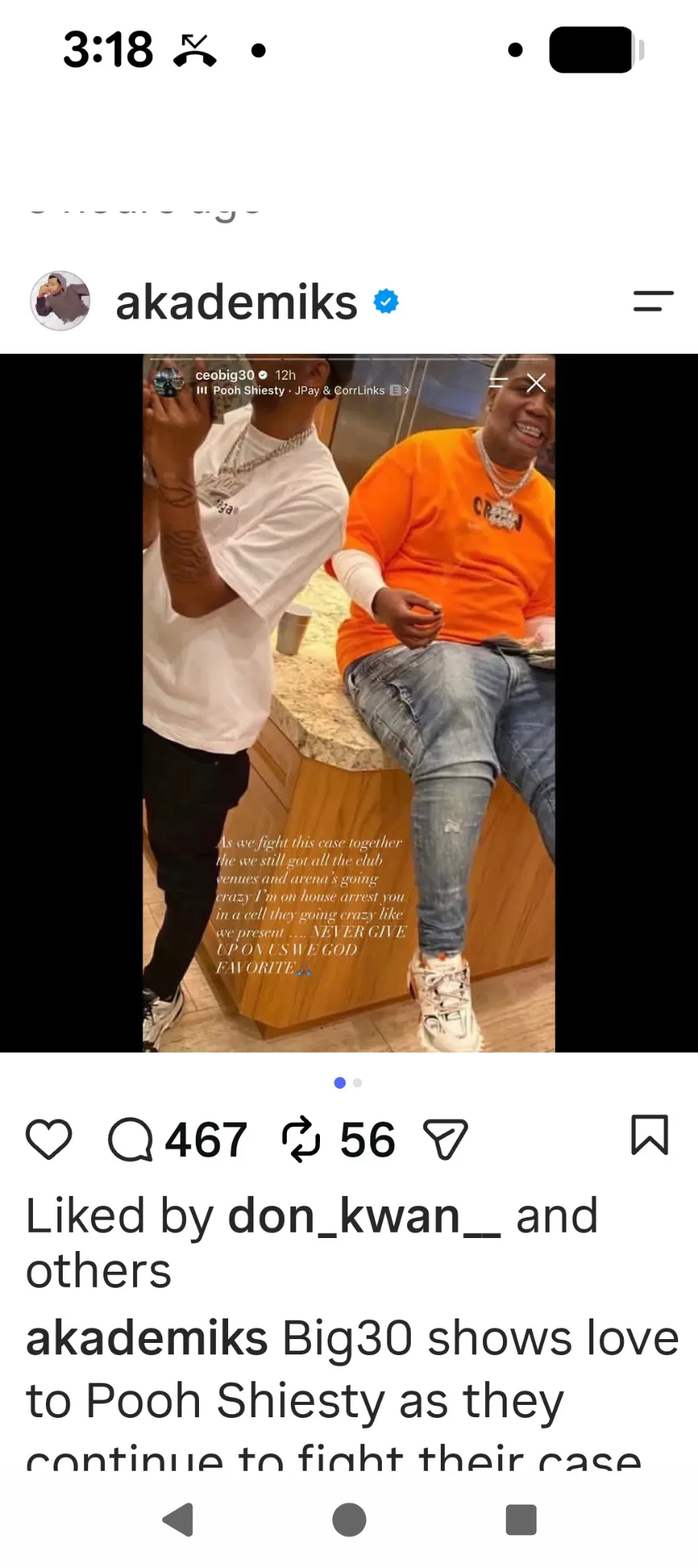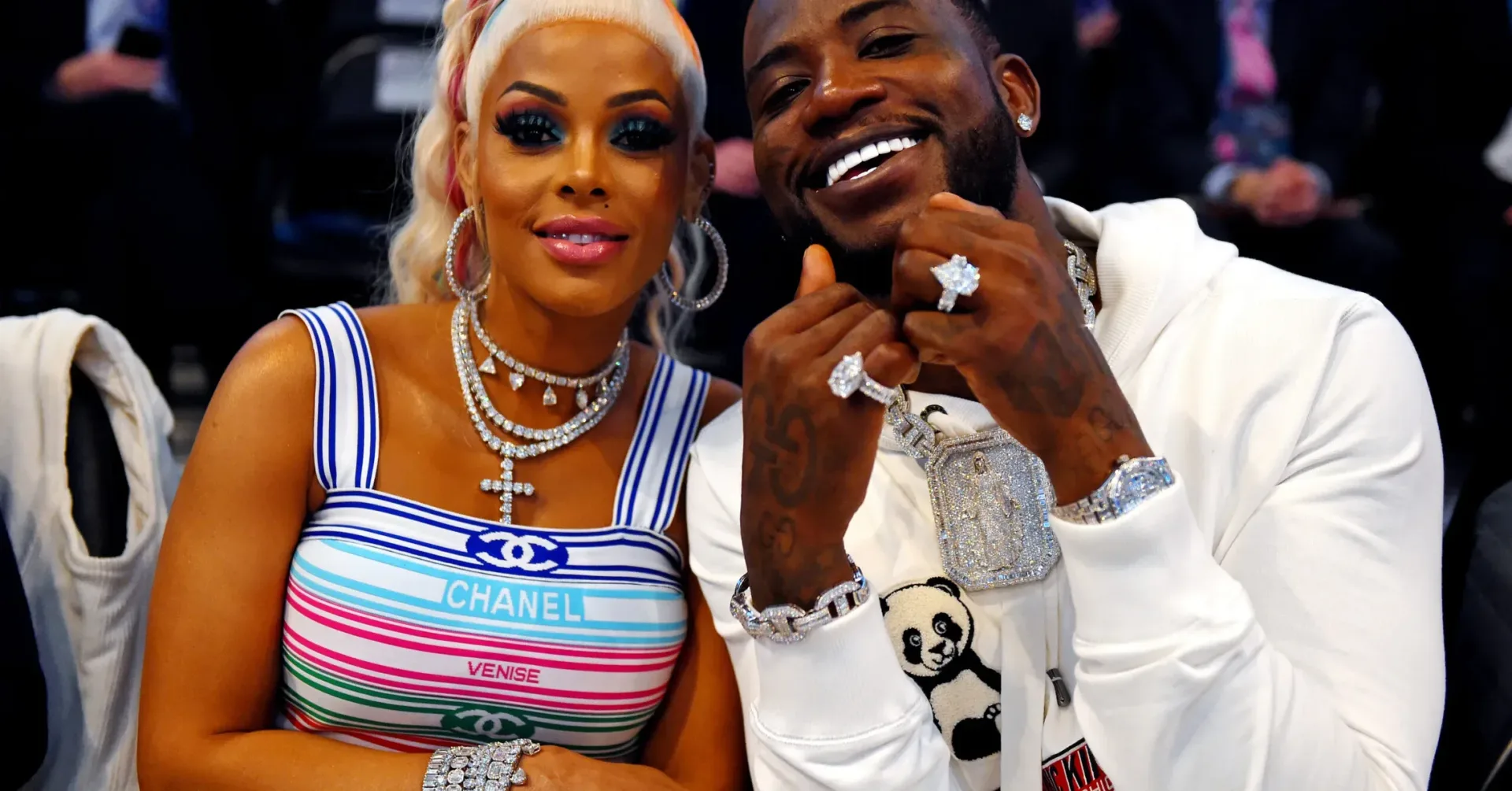
Keyshia Ka’oir has publicly pushed back against online claims that Gucci Mane “snitched” in a dispute connected to Pooh Shiesty, defending her husband and rejecting the premise behind the accusation.
The discussion resurfaced after Ebro and Nedeska spoke about Gucci Mane’s album Against All Odds on Apple Music. Ebro’s position, as described in the conversation, was that people are stretching the meaning of “snitching” beyond recognition when they suggest a business executive should not involve law enforcement after an alleged armed confrontation.
Ka’oir reposted the discussion and issued a forceful response. She said Gucci Mane was not the person who called police, while also arguing that the claim should not outweigh the seriousness of the alleged circumstances she described. Her statement framed the matter as an alleged attack on one person who had arrived for a meeting related to an artist’s album, rather than a pre-existing personal feud.
What Ka’oir is disputing
The central point of Ka’oir’s response is straightforward: she says the online narrative about Gucci Mane is false. In particular, she denied that he called police. Her post also objected to the idea that an alleged act of violence should be recast as a loyalty test for the person on the receiving end.
That distinction matters because the debate has developed around a loaded word rather than an agreed set of facts. In casual online use, “snitching” is often used to mean providing information to police or authorities. But the conversation here, based on the claims relayed by Ka’oir and the discussion between Ebro and Nedeska, is more specifically about whether seeking help after an alleged armed threat should be treated as betrayal at all.
Ka’oir’s view is that it should not. She portrayed the alleged incident as an unjustified betrayal tied to business and money, and said there had been no prior conflict. Those are her assertions, not independently established findings in the material available here. The same caution applies to claims about the people involved, motives, and the alleged promise of money connected to leaving 1017.
Why the word “snitching” is driving the argument
The dispute is not only about Gucci Mane, Pooh Shiesty, or one alleged encounter. It is also about the way a word with serious social weight can be applied online without much room for context.
In this setting, the term is being used as an accusation that someone violated an expectation of silence or cooperation within a personal or business circle. Ebro challenged that framing by posing a practical question: if someone with whom you do business attempts to exit the arrangement through gun violence, why would calling police automatically become the offense people focus on?
Related coverage includes Keyshia Ka’oir Pushes Back on Gucci Mane Snitching Claims.
That is an argument about responsibility, not a confirmation of every allegation surrounding the case. It separates two questions that often get blurred together in social-media arguments:
- What, if anything, happened in the alleged incident?
- How should a person respond if they believe they have been threatened or attacked?
Ka’oir’s post similarly argues that the first question should not be minimized by the second. Even if people want to debate a label, she contends that an alleged armed confrontation and the circumstances around it are the more consequential issues.
A business relationship sits at the center of the discussion
Ebro’s remarks also put an industry angle on the controversy. His hypothetical describes an executive and an artist who are in business together, with the artist seeking to leave the deal. From that perspective, the issue is not gossip between unrelated public figures; it concerns expectations around contracts, professional disputes, safety, and the boundaries of a working relationship.
Ka’oir likewise described the meeting as one intended to discuss an album. Her account casts the alleged conflict as connected to an artist relationship and a departure from 1017, rather than something rooted in a known personal feud. That makes the stakes of the online narrative larger for Gucci Mane’s camp: it affects not only his personal reputation but also public perceptions of how he handles the artists and business relationships around him.
None of that resolves the underlying allegations. It does explain why Ka’oir’s response is so emphatic. In her telling, the accusation reverses victim and offender, then rewards a version of events that ignores an alleged threat.
What is known, and what remains allegation
There are several points that can be stated without extending beyond the available material. Ka’oir defended Gucci Mane. She denied that he called police. Ebro argued that the “snitching” label does not make sense if an alleged business dispute involved guns. And the controversy is tied to continuing narratives around Pooh Shiesty’s case.
Other details remain contested or are presented only as claims in Ka’oir’s post. These include the precise circumstances of the alleged meeting, the number of people involved, whether there were prior issues, why the alleged confrontation occurred, and claims about money or a plan to leave 1017. Treating those claims as settled facts would flatten a dispute that is still being argued in public.
That restraint is especially important in music-world controversies, where clipped videos, reposted statements, fan allegiance, and provocative terminology can turn an incomplete account into a widely repeated certainty. The most shareable version of a story is not always the most precise one.
Why Ka’oir’s response matters
Ka’oir is not offering a detached observation. Her response is a direct defense of her husband, and its tone makes clear that she believes he has been unfairly maligned. She criticized the speed with which people embraced the claim and challenged the values behind celebrating an alleged violent act while condemning a person for seeking protection or accountability.
Her intervention also changes the shape of the public conversation. Rather than leaving Gucci Mane’s critics and commentators to define the matter, she has placed a categorical denial on record: Gucci Mane did not call police, she says. At the same time, she argues that the label being used against him would be misplaced even under the broader hypothetical raised in the discussion.
The exchange is another example of how celebrity disputes can become debates over language as much as conduct. One side focuses on a word associated with loyalty; the other focuses on safety, business responsibility, and the alleged reality of the confrontation. Until more verified information is available, those competing frames are likely to remain at the center of the conversation.
The story also fits into a wider pop-culture cycle in which public figures respond directly to claims circulating online, as seen in other developing celebrity disputes such as questions surrounding Chrisean Rock’s reported event role. In this case, Ka’oir’s message is unambiguous: she rejects the narrative surrounding Gucci Mane and wants attention returned to what she characterizes as the alleged wrongdoing behind it.