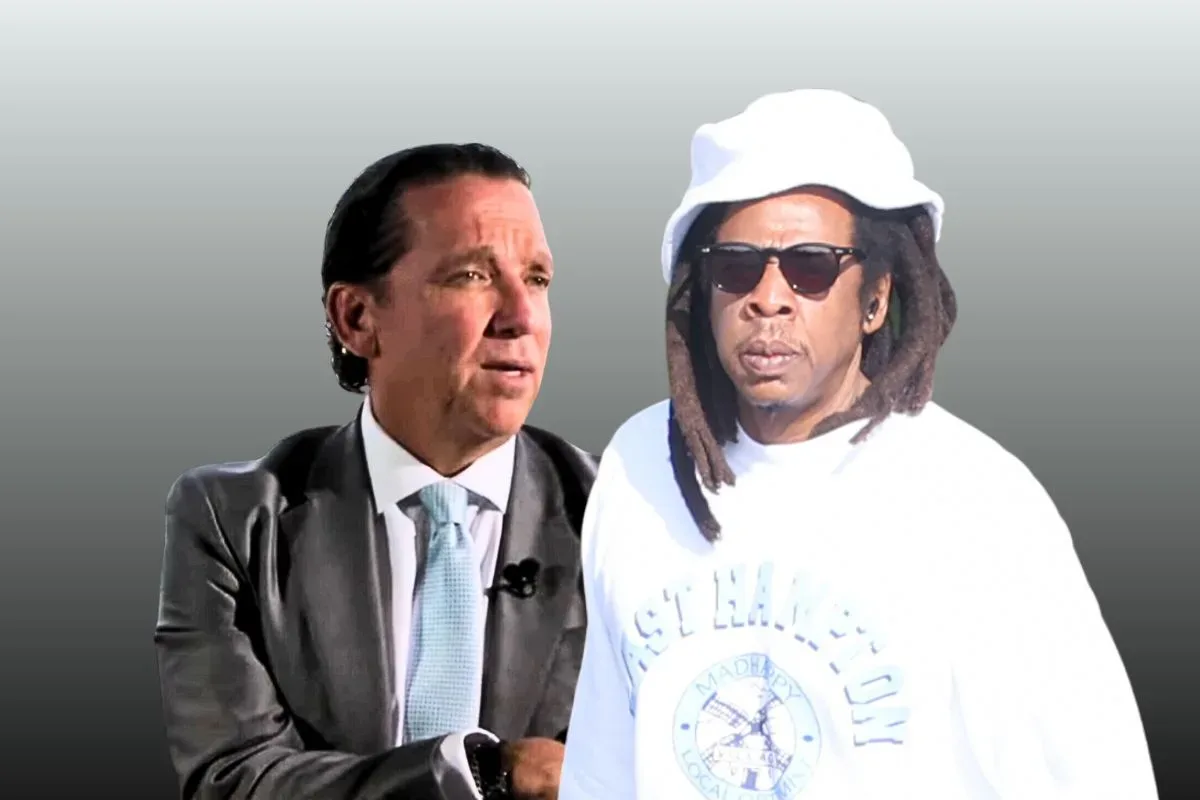
A federal judge in Galveston has denied attorney Tony Buzbee’s motion to dismiss a defamation lawsuit brought by Marcy Croft, the Mississippi lawyer who represents Jay-Z’s Roc Nation entertainment company. The ruling means Croft’s claim, which seeks at least $25 million in damages, can proceed rather than ending at an early procedural stage.
The dispute centers on Buzbee’s social-media posts accusing Croft of illegally soliciting his former clients to bring claims against him. Croft contends those statements falsely accused her of criminal conduct and were part of a coordinated campaign against her. Judge Vincent Brown concluded that the court could reasonably infer that Buzbee made defamatory statements about Croft, allowing the case to continue.
That is a meaningful court victory for Croft, but it is important to keep the procedural posture straight: a denial of a motion to dismiss is not a final finding that Buzbee defamed Croft, nor is it a damages award. It means the allegations, viewed under the legal standard that applies at this point, are sufficient to remain in court. The parties can now continue litigating the facts and legal questions rather than having the lawsuit thrown out at the outset.
What the ruling does — and does not — decide
A motion to dismiss is a request to end a lawsuit before it moves into the later phases of the case. It generally argues that, even if the complaint’s adequately pleaded factual allegations are assumed true for purposes of the motion, the plaintiff has not stated a legally viable claim.
That makes this stage distinct from a trial. The court is not deciding whose version of the underlying events is ultimately correct. It is instead deciding whether Croft has alleged enough for a defamation claim to go forward. Judge Brown’s ruling indicates that Croft cleared that threshold.
Defamation claims ordinarily turn on questions including whether a defendant made a false statement of fact about the plaintiff, communicated it to others, acted with the level of fault required by the law, and caused legally cognizable harm. The specific standards can vary with the applicable law and a plaintiff’s status, but Croft’s central contention is unusually serious on its face: she alleges that Buzbee’s posts portrayed her as having committed illegal conduct.
The difference between an opinion and a factual accusation can matter greatly in such cases. Harsh criticism, rhetoric, or an expressed opinion is not automatically actionable. A statement that conveys an assertion that someone committed a crime or engaged in unlawful professional conduct may present a different issue, particularly if it is alleged to be false and made publicly. Those are among the questions likely to frame the case as it advances.
A dispute connected to the wider Jay-Z litigation
Croft’s case sits alongside a broader set of legal disputes involving Buzbee and Jay-Z. The supplied account describes the conflict as beginning with a lawsuit Buzbee filed for an anonymous woman who accused Jay-Z and Sean “Diddy” Combs of drugging and raping her at an afterparty connected to the 2000 MTV Music Awards.
Related coverage includes Judge Allows Marcy Croft’s $25M Defamation Case Against Tony Buzbee to Proceed.
That account further says the woman later withdrew or recanted her story, including saying she had not met Jay-Z and that Buzbee had persuaded her to name him as a defendant. Those are consequential assertions in the larger conflict, but they should not be confused with findings made in Croft’s defamation case. The Galveston ruling concerns whether Croft’s claims over the posts about her may proceed.
Jay-Z has separately sued Buzbee in New York federal court for defamation and malicious prosecution. Jay-Z alleges that Buzbee pursued allegations known to be baseless in order to obtain a settlement. That remains a separate lawsuit with its own claims, defenses, evidence, and procedural route.
The different cases illustrate why a dispute with overlapping people and public allegations can still produce legally distinct tracks. Croft’s suit is focused on statements allegedly made about Croft. Jay-Z’s New York case concerns alleged harm to Jay-Z and includes a malicious-prosecution claim. A result in one matter may affect public perceptions, but it does not automatically determine the legal outcome of another.
For more context on litigation and how public claims can collide with rap-world disputes, see this report on a separate lawsuit involving rap lyrics and alleged fallout from public events.
Why the alleged solicitation accusation matters
The alleged statements at issue were not merely personal criticism. Croft says Buzbee accused her of improperly seeking out his former clients to sue him. For a practicing attorney, an accusation of illegal client solicitation can carry professional as well as personal implications because it goes directly to conduct in the course of legal work.
That context helps explain the size of the damages demand. Croft’s team at Gibson, Dunn & Crutcher is seeking no less than $25 million. A damages request is not the same thing as a valuation confirmed by a court; it is the plaintiff’s requested relief. Any eventual recovery, if there is one, would depend on subsequent proceedings, proof, defenses, and potentially a settlement or trial outcome.
It also explains why the alleged use of social media is central. Public posts can reach an audience beyond the immediate participants in a legal fight, potentially including clients, prospective clients, peers, and observers. In a defamation action, the content, wording, audience, timing, and surrounding context of the challenged posts can all become important.
What may come next
With dismissal denied, the matter can move into further litigation. The supplied information does not establish a trial date, discovery schedule, or any ultimate result, so those details should not be presumed. What is clear is that Buzbee must now defend against Croft’s claims rather than relying on his dismissal motion to terminate them at this early stage.
The next phases of a civil case can involve disputes over evidence, testimony, legal arguments, and whether the challenged statements can be proven false, defamatory, and harmful under the governing law. The parties may also contest the appropriate level of damages, if liability is ever established.
There is another important procedural wrinkle in the wider story. Buzbee reportedly prevailed earlier this year in an appeal involving Jay-Z’s extortion claims. That appellate outcome does not dispose of Croft’s defamation lawsuit, and it does not resolve Jay-Z’s other claims against Buzbee. In multi-case litigation, a win on one issue can coexist with active exposure in another courtroom.
The practical takeaway
The Galveston decision is a notable development because it keeps a high-dollar, reputationally focused claim alive. Croft has not yet won the case, and Buzbee has not been found liable on the information available here. Still, the court has rejected his effort to end the suit at the pleading stage.
For Jay-Z and Roc Nation’s legal orbit, the ruling adds another active proceeding to a dispute already spanning allegations, retractions, and federal litigation in more than one jurisdiction. For Buzbee, it creates the immediate need to answer and defend a claim that places his online statements about another attorney at the center of the case.
The narrowest and most accurate read is also the most important one: Croft’s defamation allegations have survived Buzbee’s motion to dismiss. The eventual truth of those allegations, the availability of defenses, and any possible damages remain to be determined through the rest of the legal process.