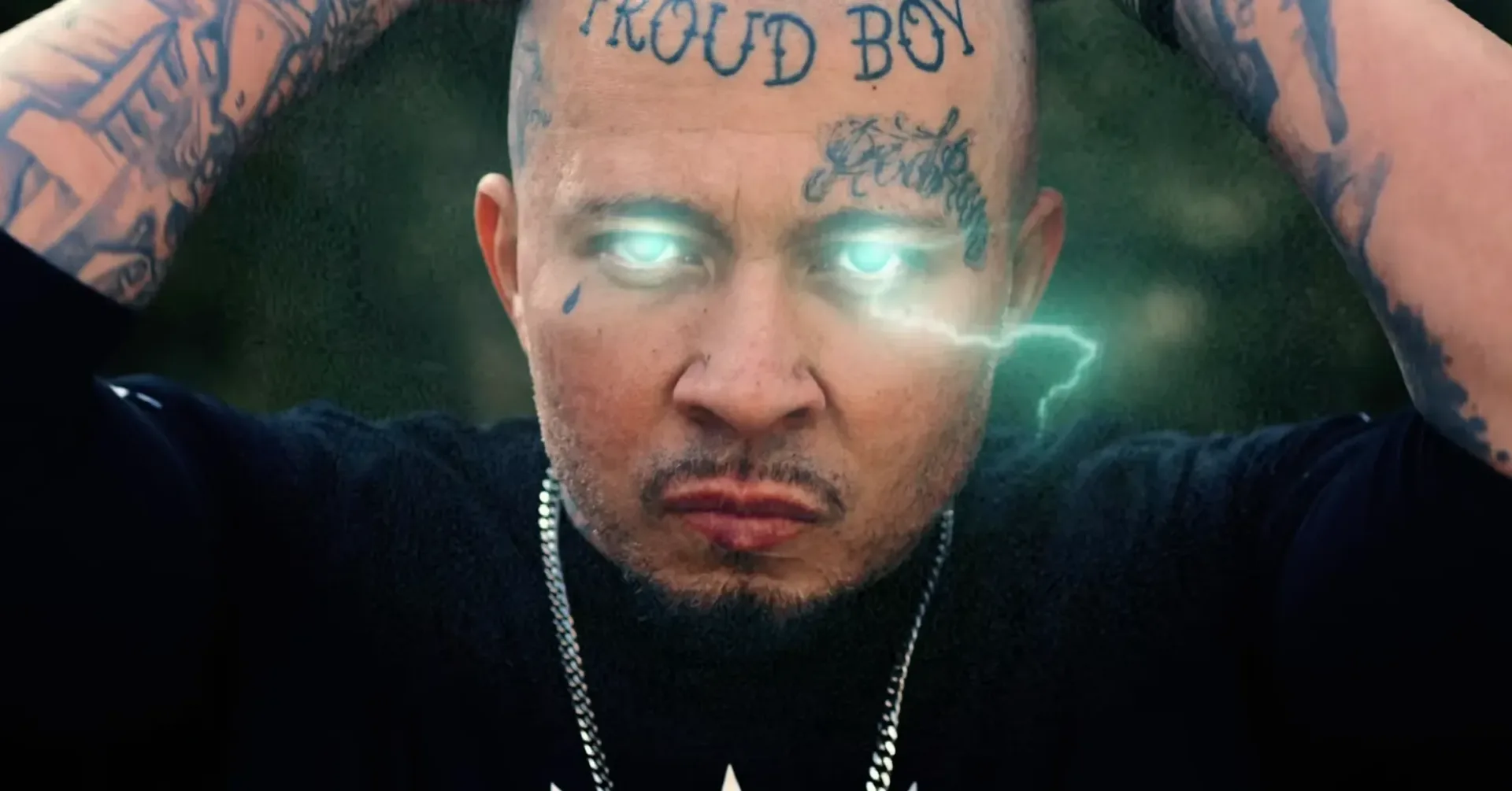
Billy Knutson, the South Dakota rapper who performs as Playboy The Beast, is one of 13 plaintiffs in a civil lawsuit against the United States seeking at least $1 million for each plaintiff over alleged consequences stemming from Jan. 6-related prosecutions.
For Knutson, the case centers in part on a familiar and contentious question in music: when can lyrics be used by prosecutors to argue for a tougher sentence, and when does that use threaten an artist’s ability to create and release work freely?
The complaint, filed September 29 in Washington, D.C., alleges that Knutson’s conviction affected far more than the sentence imposed in his criminal case. It claims he lost touring opportunities, had music removed repeatedly from social platforms, and saw artist and label relationships deteriorate. It also raises allegations concerning medical treatment while incarcerated. Those health-related claims, as well as the broader damages allegations, have been made in the civil suit and have not been established by a court.
A sentencing dispute focused on a song
Knutson’s complaint takes particular issue with prosecutors’ use of material from a song released shortly before his sentencing. His attorneys allege that the government submitted nearly two pages of lyrics while arguing for a harsher punishment. The filing says the defense objected on grounds tied to his ability to make and distribute music, but the court considered the lyrics relevant to his conduct.
That distinction matters. A sentencing hearing is not a new criminal trial on the meaning of a song. It is the phase in which a court determines punishment after a guilty plea or conviction. Prosecutors may argue that information about a defendant’s conduct, statements, history, or apparent attitudes helps establish an appropriate sentence. A defense team may counter that the material is artistic expression, political rhetoric, irrelevant, prejudicial, or being interpreted too literally.
The present lawsuit frames the issue as one with consequences beyond a single hearing. Knutson argues that the government’s treatment of his work harmed an independent musician whose livelihood depended substantially on his recordings, online reach, industry contacts, and ability to travel for performances.
For artists operating without the machinery of a major-label campaign, that argument has practical weight. Social media and video services can function as an archive, a promotional channel, and a route to an audience all at once. If music or accounts are removed, an artist may lose more than a post: links shared in older promotions can stop working, view totals disappear from public view, and new listeners may have difficulty finding a catalog that had previously been easy to access.
The complaint alleges that removals erased music that had accumulated millions of views. It further contends that the loss of that online presence contributed to professional relationships falling away. The filing describes the resulting damage in sweeping terms, alleging that Knutson’s livelihood was destroyed. Those are allegations to be tested in the litigation, rather than a judicial finding that the claimed losses were caused by the government.
The underlying criminal case
Knutson pleaded guilty in 2022 to entering or remaining in a restricted building or grounds following the Jan. 6 Capitol breach. He received a six-month prison sentence, one year of supervised release, and a $500 restitution order.
Federal surveillance footage in the criminal case showed Knutson entering the Capitol through a broken window near the Senate Wing. The new civil action does not erase the history of that guilty plea. Instead, it challenges alleged downstream harms associated with the prosecution and its aftermath, including the use of creative work during sentencing and the claimed damage to his ability to earn a living as a musician.
President Donald Trump later granted Knutson a pardon as part of the broad Jan. 20, 2025 clemency action involving people convicted of Jan. 6-related offenses. The proclamation issued full pardons to most people convicted in such cases and commuted the sentences of 14 others.
A pardon is an act of executive clemency; it does not itself resolve every possible dispute connected to a prosecution. Knutson and the other plaintiffs are now pursuing money damages through a lawsuit against the federal government. Their demand for at least $1 million per plaintiff is a request in a complaint, not a damages award. The court will ultimately determine whether the claims can proceed and, if they do, whether the plaintiffs can establish liability and recover damages.
Music, political identity, and courtroom context
The sentencing dispute did not emerge from an apolitical catalog. Knutson released politically charged material including “Let’s Go Brandon (fjb)” and “Kyle Rittenhouse,” and some of his music referenced ties to the Proud Boys. Prosecutors also cited his criminal history, controversial past, and public comments regarding Jan. 6 when seeking incarceration.
That broader context is important because it prevents an overly simple reading of the case. The civil complaint’s central criticism is not merely that a court encountered political rap lyrics. It is that the lyrics were presented and considered in a way Knutson believes unfairly increased the penalty and helped inflict lasting professional damage.
Conversely, the fact that lyrics are creative work does not automatically settle how a court assesses them in a sentencing argument. The key legal and factual questions would include how the material was characterized, how closely it was linked to conduct at issue, what other evidence was before the court, and whether any claimed damages can be traced to government conduct rather than to independent decisions by platforms, collaborators, promoters, or audiences.
Those questions are particularly complicated in politically charged music. A performer’s public-facing persona can be both the engine of an audience and a source of scrutiny. Songs may contain exaggeration, character work, slogans, or direct statements of belief; the supplied facts do not establish how a court should interpret every lyric from Knutson’s song. What is clear is that his complaint treats the government’s use of those lyrics as central to its claim.
The claimed career impact
Touring is one major part of the alleged loss. Knutson says restrictions prevented him from taking performance opportunities. The complaint also describes a digital disruption: repeated social-media removals that allegedly wiped out recordings and videos built up over years.
For an independent artist, touring and online distribution are often interdependent. New music can create demand for performances; live appearances can send people back toward videos and streaming links; relationships with other performers or labels may depend partly on visible momentum. Knutson’s filing argues that the removal of his work and the case’s public fallout broke that cycle.
But claiming a career loss and proving it are different stages. A plaintiff seeking damages generally must show the alleged harm, connect it to the challenged conduct, and support the amount sought. In a case involving a music career, that could place attention on prior audience figures, performance opportunities, social-platform history, and the particular business relationships said to have been lost. The complaint’s allegation that content had reached millions of views describes its theory of value; it is not, by itself, a court-approved valuation of the claimed damages.
The filing additionally alleges that delayed medical treatment during incarceration caused breathing problems that now affect Knutson’s capacity to perform. This is among the most serious personal claims in the lawsuit, but it remains unproven. No court finding described here has determined that treatment was delayed, that any delay caused the alleged condition, or that the condition impaired his work.
Why the case reaches beyond one rapper
The lawsuit arrives at an intersection of criminal justice, online cultural infrastructure, and artistic expression. Rap has long involved arguments over whether lyrics should be heard as literal autobiography, performance, provocation, storytelling, or some combination of all four. Knutson’s case adds a distinct question: what happens after lyrics are used in a legal setting and the artist says the effects spill into the practical systems that sustain a career?
There is no evidence in the complaint alone that every setback Knutson describes was caused by the prosecution. Nor does the available record establish that the court acted improperly by considering the lyrics. Those are precisely the contested issues the civil process is meant to examine.
Still, the suit puts a concrete economic frame around the debate. The dispute is not solely about artistic principle or sentencing rhetoric. It concerns allegedly lost bookings, erased promotional work, vanished business ties, and the difficulty of rebuilding a public catalog once a digital audience has been disrupted.
Music’s relationship with celebrity, image, and professional opportunity remains a recurring pop-culture subject, including in this look at a music-world drama. Knutson’s legal dispute is plainly different, but it likewise underscores how closely a performer’s work and livelihood can be connected.
For now, Playboy The Beast’s claims remain allegations in an ongoing action against the United States. The lawsuit will have to move beyond its opening account of the alleged harms and confront the more exacting questions of evidence, causation, government responsibility, and damages.