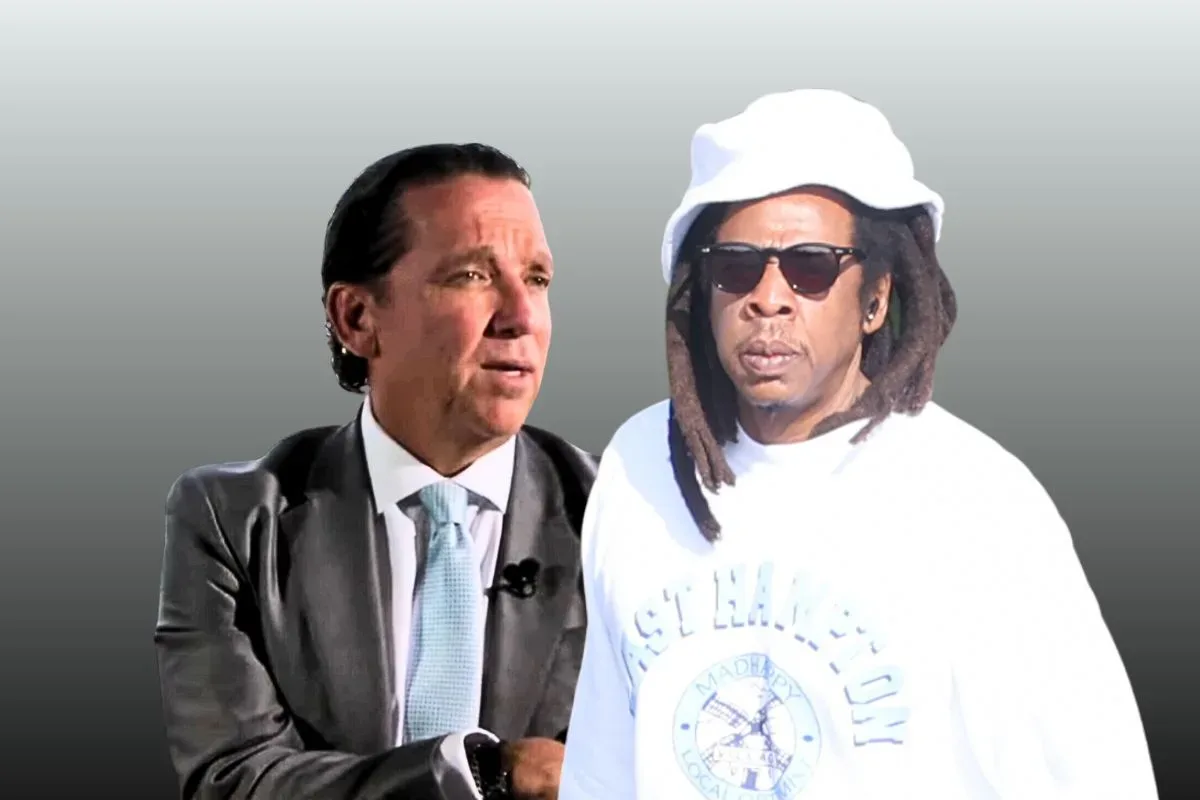
A California appeals court has given Jay-Z a procedural opening in his legal dispute with attorney Tony Buzbee, while stopping well short of reviving the lawsuit outright.
The court’s October 1 action leaves a previous ruling in place, but permits Jay-Z to ask the lower court to order discovery and reconsider its earlier decision in light of new evidence if that court believes reconsideration is warranted. The dispute concerns Jay-Z’s dismissed claims involving alleged defamation and extortion against Buzbee.
That distinction is central: the appeals court has not decided that Jay-Z’s lawsuit is restored, that the claims are proven, or that either side has won the underlying case. Instead, it has identified a route for the trial-level court to consider whether evidence that emerged later should change the result.
What led to this stage
Buzbee represented an anonymous woman, identified in court reporting as Jane Doe, who accused Jay-Z of sexual assault. The woman has since recanted those allegations. Jay-Z’s attorney, Jeremy Rosen, has argued that her subsequent declaration admitting false allegations should allow the dismissed action against Buzbee to be reopened.
For more context, explore Google Docs Has Dark Mode on Mobile, but Web Users Still Need a Workaround.
Before this appellate development, Jay-Z could not proceed again with the lawsuit after its dismissal last year. The new ruling does not itself undo that result. Rather, it recognizes that the Superior Court can consider a request for discovery and can revisit its prior ruling based on the newer declaration, should it choose to do so.
Rosen said the legal team was pleased the appellate court had invited an application to the Superior Court for discovery and reconsideration, and said it intended to proceed once jurisdiction returns to that court.
Attorneys for Buzbee characterized the result differently. They said the appeals court denied the request for rehearing and declined to consider Jane Doe’s declaration itself without requesting a response. In their view, the court merely acknowledged the trial court’s existing authority to weigh new evidence if it elects to do so. They said they remain confident in the ruling and are prepared for the next steps.
What the appeals court did — and did not — decide
Appellate courts generally review legal decisions made below; they are not usually the place where a factual record is built for the first time. That division of labor helps explain the seemingly narrow outcome here.
The appeals court maintained its original position rather than taking new evidence and deciding the dispute on that basis. But it also made clear that the lower court may be asked to consider the newer material through the proper process. In practical terms, Jay-Z’s side now has an opportunity to file that application in Superior Court.
There are several possible outcomes from that request:
- The lower court could decline to order discovery or decline to reconsider its earlier decision.
- It could permit discovery, allowing the parties to seek information relevant to the new-evidence question.
- It could reconsider the prior dismissal after reviewing an appropriate record.
- Even if the case proceeds further, Jay-Z would still need to establish the legal merits of his claims.
None of those outcomes is automatic. Permission to ask for discovery is not the same as an order granting it, and an order allowing a claim to continue is not a determination of liability.
Key legal terms in plain language
Discovery
Discovery is the phase of civil litigation in which parties obtain information and evidence from one another. Depending on what a court permits, it can involve documents, written questions, requests for admissions and sworn testimony. Here, discovery could matter because the appellate ruling allows Jay-Z’s side to seek a process for developing evidence related to the new declaration before asking the lower court to reassess its earlier conclusion.
Reconsideration
Reconsideration means asking a court to revisit a decision it has already made. It is not a fresh trial. The requesting party generally must identify a legally sufficient reason why the previous ruling should be examined again. The reported new declaration from Jane Doe is the evidence Jay-Z’s legal team says warrants that review.
Jurisdiction
Jurisdiction, in this context, refers to which court has authority to act on a case at a particular moment. Rosen indicated that Jay-Z’s team would move forward when jurisdiction returns to the Superior Court. That reflects the procedural handoff required after appellate proceedings: the lower court must have authority again before it can take up the proposed application.
Dismissal versus a merits ruling
A dismissal ends a claim at that stage of litigation, but the reason for dismissal matters. A procedural dismissal does not necessarily resolve every factual allegation in a dispute. Likewise, reopening consideration of a dismissal does not establish that the plaintiff’s accusations are true. The lower court’s next decisions would concern whether the case may move ahead under the applicable legal standards.
Why the new declaration matters
The reported recantation is important because it is the new evidence at the center of Jay-Z’s effort to return to court. His side’s position is that an admission of false allegations has direct bearing on the previously dismissed claims against Buzbee.
Buzbee’s lawyers have emphasized the limits of the appellate ruling: they note that the court did not grant rehearing or itself take up the declaration. Their response underscores the procedural issue that remains unresolved—whether the Superior Court will decide the declaration justifies discovery or reconsideration, and what evidentiary record should be considered before any such decision.
This is why coverage of the ruling requires precision. Describing it as a total appellate victory for either party would overstate what happened. Jay-Z obtained a path to request further action in the lower court. Buzbee retained the existing appellate ruling and can oppose whatever request comes next.
What comes next in Superior Court
Jay-Z’s lawyers intend to seek discovery and ask the Superior Court to reconsider the prior ruling. The court will first have to evaluate that application. It may consider the significance of the new declaration, the procedural posture of the dismissed action and whether additional evidence-gathering is appropriate.
If the court permits more litigation, the matter could develop beyond this preliminary procedural fight. If it does not, the earlier dismissal may remain in effect. Either result could potentially generate further legal arguments, but no later appeal or trial has been established by the current ruling.
For observers, the clearest takeaway is that the dispute is back at a decision point rather than at a final resolution. The appeals court has not reopened the case on its own; it has allowed the lower court to decide whether the newly raised evidence warrants another look.
A separate Roc Nation-related dispute
The legal developments involving Buzbee extend beyond Jay-Z’s individual action. Buzbee also failed to secure dismissal of a separate $25 million defamation lawsuit brought by Marcy Croft, a lawyer for Roc Nation. That is a distinct case and should not be treated as a ruling on Jay-Z’s claims or on the allegation-and-recantation issue now being presented to the Superior Court.
The two matters may involve overlapping people and organizations, but each case has its own claims, procedural history and legal questions. The current appellate action concerns whether Jay-Z can ask the lower court to conduct discovery and reconsider the prior dismissal in his suit against Buzbee.
For now, the next meaningful development will come from the Superior Court after Jay-Z’s side files its anticipated application. Until then, the appellate court’s decision is best understood as a limited procedural opportunity—not a judgment on the ultimate merits of the parties’ competing allegations.