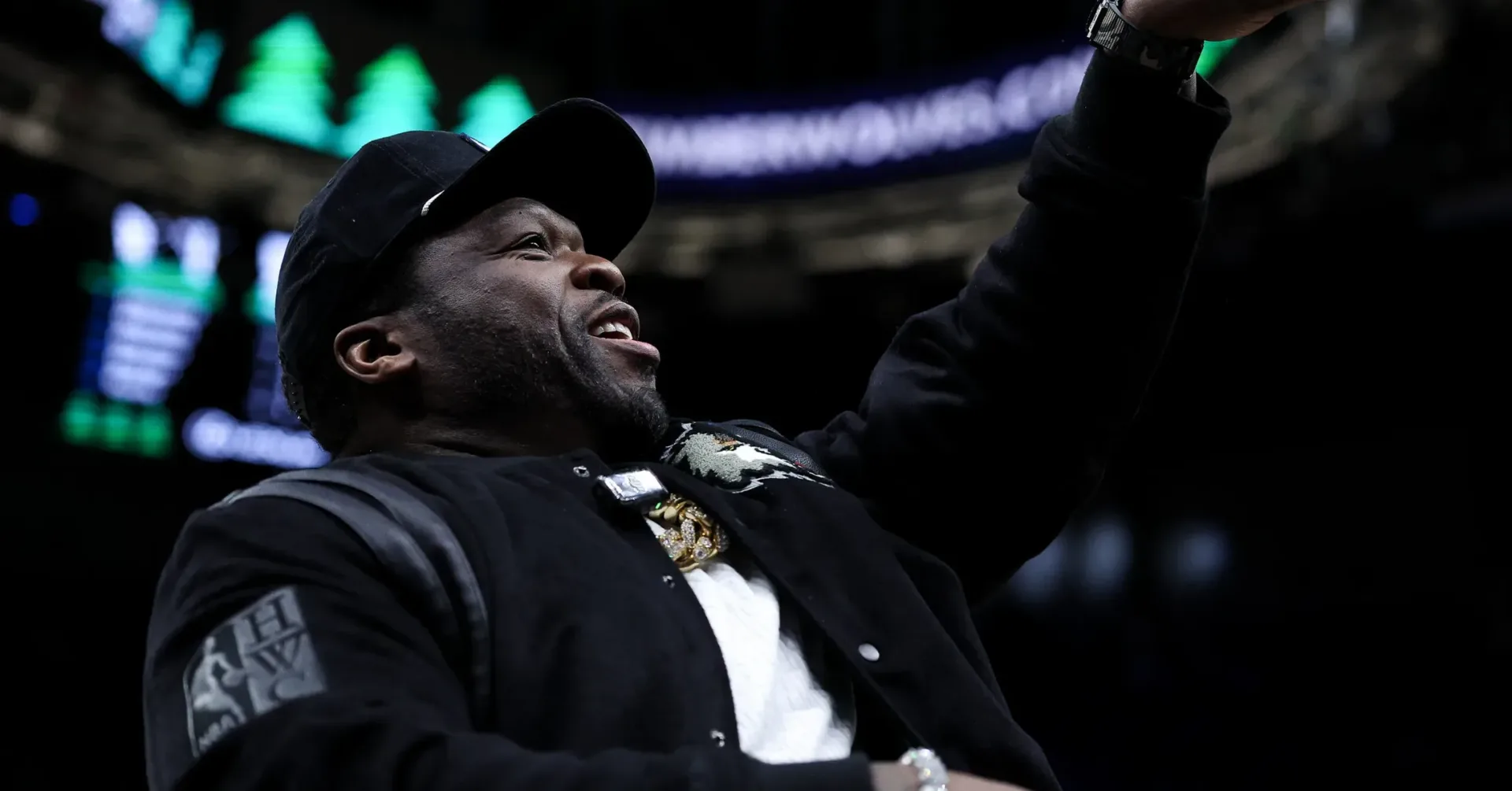
A photograph from a Houston children’s charity event has put 50 Cent back into the conversation around the continuing legal conflict involving attorney Tony Buzbee, Jay-Z and Roc Nation. Buzbee shared an image showing himself, his wife Frances and the rapper and entrepreneur, describing 50 Cent in warmly complimentary terms.
The post itself documents a social encounter at a charitable function, not a legal development or a statement of support for either side in the broader dispute. Still, because 50 Cent has publicly commented on matters involving Jay-Z in the past, the image quickly invited interpretation far beyond the event where it was taken.
“Good to see @50cent at the Houston Children’s Charity event,” Buzbee wrote, calling him an entrepreneur, musician and philanthropist, and adding that he was “a very good man.”
What the photograph does—and does not—establish
At face value, the post shows that Buzbee, Frances Buzbee and 50 Cent were together at a Houston charity event and that Buzbee characterized the interaction positively. It does not establish 50 Cent’s views on any active or potential legal claims, nor does it identify a new professional relationship between the attorney and the performer.
That distinction matters. Celebrity photographs routinely become shorthand for alliances online, especially when the people involved have been connected to public disagreements. But an amicable photo opportunity is not evidence of legal coordination, endorsement of allegations, or a change in position by any person pictured.
50 Cent’s public-facing approach has added to the uncertainty. His comments around the Jay-Z matter have ranged from online jokes to criticism directed at Buzbee and the accuser. That mixed record makes it difficult to treat one image as a definitive signal. Until 50 Cent makes a clear, direct statement, claims about what the photo means remain speculation.
The legal backdrop remains complicated
The attention surrounding the image stems from a wider series of disputes. Buzbee had backed a sexual-assault lawsuit that named Jay-Z and Diddy. The accuser subsequently filed in federal court that her allegations against Jay-Z were false, while now represented by new legal counsel.
Her attorney has said that she is a sexual-assault victim, but not at the hands of Jay-Z. That is an important and narrow distinction: it addresses the identity of the person she says was not responsible, while not resolving every question connected to her experience or the separate legal disputes that followed.
Related coverage includes Tony Buzbee Shares Photo With 50 Cent at Houston Charity Event.
Jay-Z’s legal action against Buzbee was dismissed in California. The dispute may not be finished, however. Jay-Z is reportedly pursuing a lawsuit against Buzbee in New York, and the accuser’s reversal could lead to additional filings or developments there. What happens next will depend on formal court action rather than social-media readings of a charity-event picture.
A quick explanation of the legal terms
A dismissal means a court has ended a claim or case at that stage. It is not automatically a ruling that every public allegation made by either side was true or false. The effect of a dismissal can also vary depending on the court’s reasoning and whether a party has an opportunity to amend a complaint, appeal, or bring a different claim where permitted.
Defamation generally refers to a claim that false statements harmed someone’s reputation. A frivolous lawsuit is a term used to describe legal action alleged to lack an adequate factual or legal basis. Here, both sides have accused the other of frivolous litigation, defamation and related misconduct. Those competing accusations should not be confused with final findings by a court.
The record described so far also includes dismissals involving Buzbee’s lawsuits against Roc Nation. With legal activity spanning more than one jurisdiction, it is especially important to keep cases, parties and procedural outcomes separate rather than treating the dispute as one single proceeding with one single answer.
Why the social-media reaction is bigger than the post
The image gained traction because it sits at the intersection of celebrity rivalry, public legal conflict and 50 Cent’s long-running, highly visible online persona. His posts can be deliberately provocative, humorous or critical. That makes him a frequent subject of fan theories, but it also means a casual public interaction can be assigned more strategic meaning than the available evidence supports.
There is a practical media-literacy lesson here: distinguish a documented fact from an inference. The documented facts are that Buzbee posted the photograph, that it was taken at a Houston children’s charity event, and that his caption praised 50 Cent. An inference would be that 50 Cent has joined Buzbee’s side in litigation, has reversed every previous public criticism, or has knowledge of undisclosed legal matters. The supplied information does not support those conclusions.
This is also not the first time entertainment-business news has shown how a celebrity’s commercial and public identity can make every appearance part of a larger narrative. The business decisions surrounding a major artist’s brand can draw attention just as quickly as their creative work or online commentary—often with considerably less certainty than the audience assumes.
What to watch next
For now, the significant developments are legal and procedural, not photographic. The issues to monitor are whether the New York litigation proceeds, whether new filings emerge after the accuser’s federal-court statement, and whether appeals or other actions follow the dismissals involving Roc Nation and Buzbee.
It is also possible that no new development will come from the 50 Cent photograph itself. Buzbee’s message presents the meeting as a positive encounter at a charitable event. Without a further statement from 50 Cent or a connection to an actual filing, the most accurate reading is simply that the three attended the same event and posed for a picture.
The online response may continue because the personalities involved make the post inherently combustible. But the difference between a viral moment and a substantiated legal update remains crucial. In this case, the charity-event photo adds a fresh layer of public intrigue, while the courts—not social feeds—will determine the next meaningful chapter of the dispute.