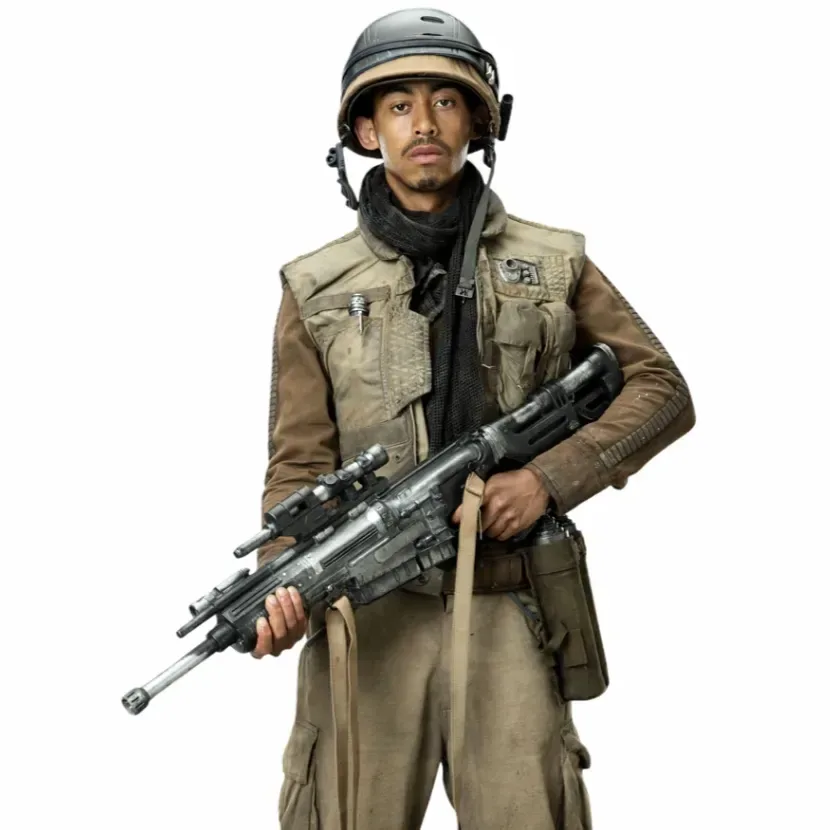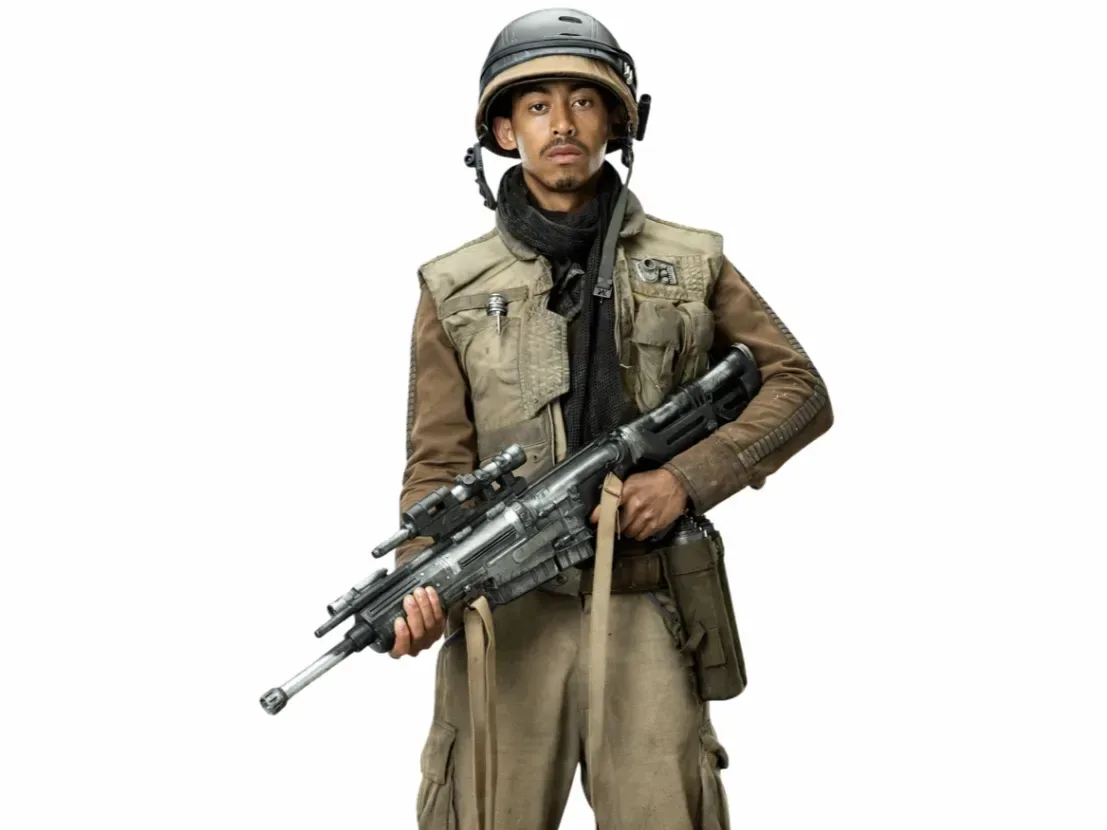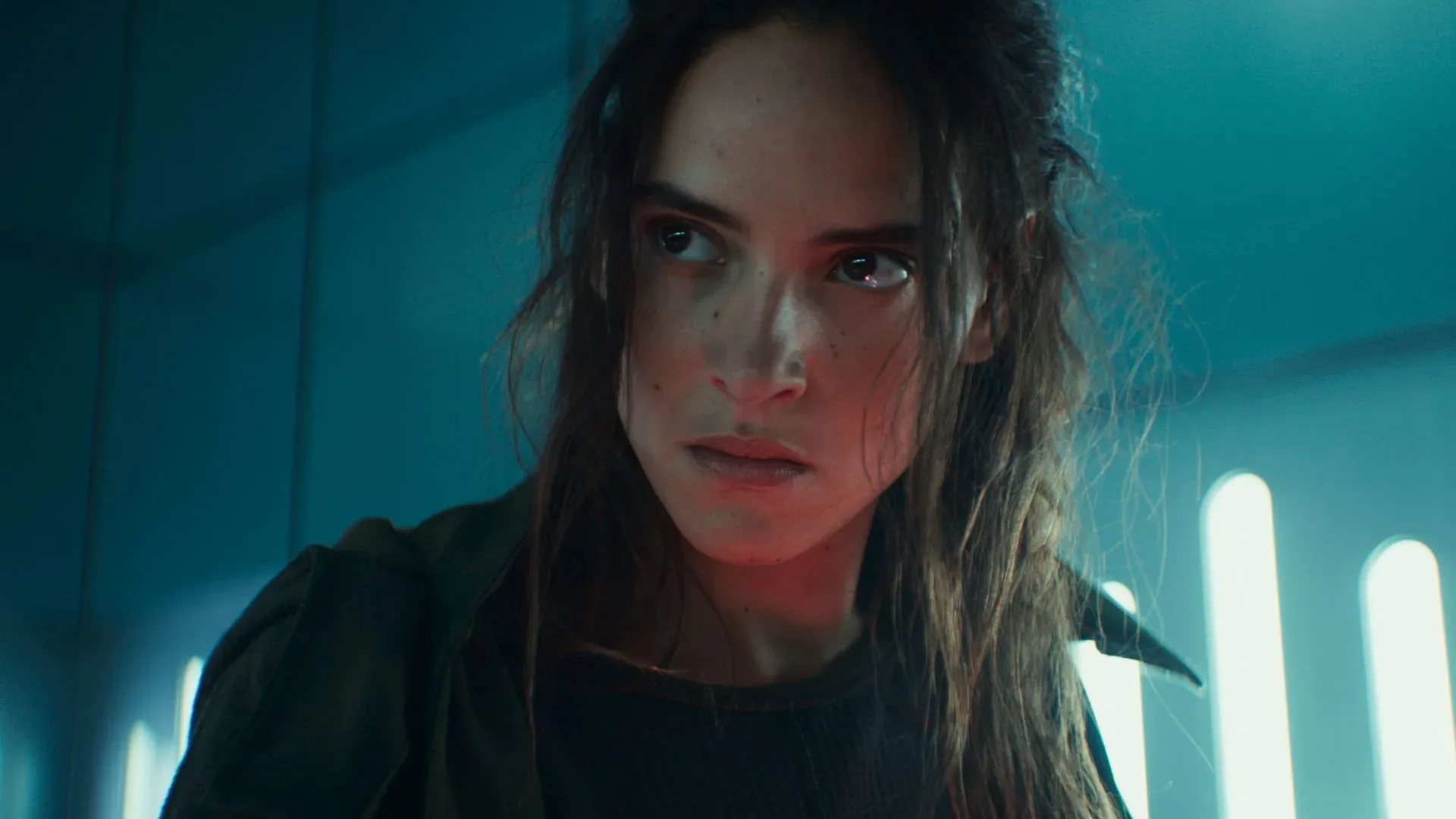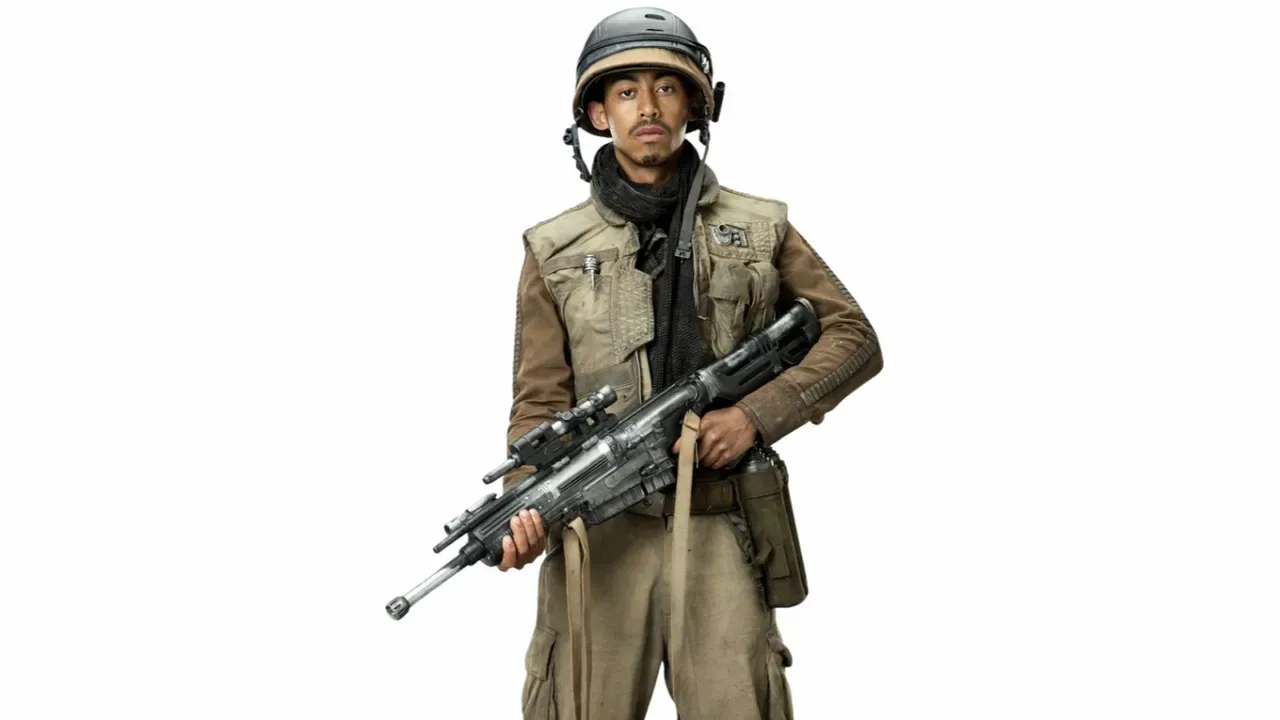
Jordan Stephens says he turned down a proposed return to the Star Wars screen because he was asked to cut off dreadlocks he had spent seven years growing. The actor and musician, who played Rebel soldier Corporal Tonc in Rogue One: A Star Wars Story, said the request was attached to an appearance in Andor—and that the explanation was that his hair would not look sufficiently “realistic” for an army-training scene.
It is the kind of production anecdote that immediately sounds strange in the context of Star Wars. This is a fictional galaxy of alien species, hyperspace travel, enormous military machines and lightsabers. Yet Stephens’ account is not really about whether every costume department rule must be discarded in a fantasy setting. It is about the assumptions behind a rule, the scale of what was being requested, and why a demand for “realism” can land very differently when it concerns an actor’s natural or long-maintained hairstyle.
Stephens, also known as one half of the UK rap duo Rizzle Kicks, says he was invited back alongside other performers from Rogue One as Andor explored more of the rebel world surrounding that film. Tonc dies in Rogue One, but Stephens said he had been approached to film for one day. He ultimately declined.
A helmet seemed like an obvious solution
Stephens’ central point is straightforward: Tonc wore a helmet throughout his appearance in Rogue One. Stephens said he suggested simply putting the helmet back on. In his telling, that would have preserved visual continuity while also avoiding an irreversible change to his hair.
The answer, he says, was that planned scenes involving military training would require “traditional army attire,” including a particular approach to hair. Stephens says he was told that dreadlocks would not look realistic in that environment.
“In Rogue One, I’m wearing a helmet the whole time,” Stephens said, explaining why he believed the issue could have been avoided.
That detail matters because hair is not comparable to a small wardrobe adjustment. Stephens said his locks had taken seven years to grow. Cutting them for a one-day appearance would not have been a temporary styling choice; it would have been a substantial personal change with no quick route back. He also said the proposed compensation was very low, further shaping his decision.
There can be routine logistical reasons for productions to set requirements around hair, makeup and uniforms. Continuity, wig fittings, stunt safety, headgear, period accuracy and an established character look are all examples of familiar screen-production concerns. None of those possibilities, however, changes the account Stephens gave: he says the justification communicated to him was realism, even though the relevant character could have been helmeted as before.
Related coverage includes Jordan Stephens Says He Turned Down Andor Return Over Dreadlocks Request.
There is no identified production representative in Stephens’ account, and no further explanation from the production is included here. The specific exchange should therefore be understood as Stephens’ description of the offer and the reason he says he was given—not as a comprehensive account of every creative or logistical discussion behind it.
What “realism” means in Star Wars
Realism in a fictional universe does not mean that anything goes. A setting needs internal logic: a sense that its costumes, institutions and characters belong to the same world. In television and film, that is often called verisimilitude—the appearance of being believable on the work’s own terms. It is not literal real-world accuracy. A viewer does not need to believe that lightsabers exist to accept that people in Star Wars use them; the audience needs the story’s rules to feel consistent.
That distinction makes Stephens’ story especially notable. A rebel force can have a recognizable military visual language without implying that one real-world hairstyle makes a character implausible. In fact, Star Wars has long treated its fictional galaxy as culturally varied in its people, species and costumes. A requirement rooted in a narrow notion of what a soldier should look like is difficult to square with that scope—particularly where the hairstyle in question could have been hidden under the same kind of helmet already used for the character.
Stephens made that contrast sharply, questioning why dreadlocks would break immersion in a franchise populated by giant slugs and people fighting with blades made of light. The point is less that Star Wars should have no design standards than that standards should be coherent. A universe capable of accommodating radically different alien physiologies can plainly accommodate a human rebel with dreadlocks.
Star Wars already has a clear counterexample
The idea that dreadlocks have no place in the franchise also runs into a simple on-screen counterexample: Jedi Master Quinlan Vos. The character appears in Star Wars: The Clone Wars with dreadlocks. That does not establish a rule for every costume or military unit, but it does make any blanket suggestion that the hairstyle itself is incompatible with the visual world of Star Wars hard to defend.
Quinlan Vos is significant here because he demonstrates that this is not an abstract argument about what Star Wars could depict. The franchise has already depicted it. The visual vocabulary exists within the canon of animated storytelling, and the concept is immediately legible to viewers.
That does not mean every creative decision between animation and live action transfers automatically. Costuming requirements vary by character and scene. But Stephens was not arguing for a radically new interpretation of the setting. By his account, he was asking to retain hair that would initially be concealed, for a character whose face and hair had not been the centerpiece of his earlier Rogue One appearance.
Why the request became a matter of principle
Stephens described walking away on principle. His reasoning was not merely that he did not want a haircut; it was that he found the rationale impossible to reconcile with the fiction’s scale and with the effect the request would have on him personally. He characterized the explanation as a form of cognitive dissonance: treating dreadlocks as too disruptive to audience belief while asking viewers to accept the many deliberately fantastical elements that define Star Wars.
That phrase—cognitive dissonance—generally refers to tension created when ideas or beliefs conflict. In Stephens’ use, the conflict was between a claim of realism and the expansive, non-realistic nature of the universe. His objection was also practical. He says the work involved one day of filming, whereas regrowing hair after cutting seven-year-old locks would take far longer.
The story highlights a broader distinction that can get lost in entertainment coverage: a performer being asked to alter their appearance is not automatically unusual, but the burden and reversibility of an alteration matter. A temporary hairstyle, a costume, makeup or a wig comes off. Cutting long hair does not. The appropriate question is not simply whether a production can request a change; it is whether that change is necessary, fairly explained and proportionate to the work being offered.
From the details Stephens shared, the helmet workaround also sharpens the issue. If the hairstyle would not be visible in the character’s regular gear, it becomes harder to see why it needed to be removed outright. The training-scene explanation may have reflected a desired uniform image, but it still leaves the broader question Stephens raised: why should dreadlocks be considered outside that image in the first place?
An absence from Andor, and an enduring criticism
Stephens’ decision meant he did not appear in Andor. The series expanded the era and political stakes leading toward Rogue One, creating space for returning faces and for a deeper look at the rebellion’s structures. In that sense, the proposed return had an understandable creative appeal. It also makes Stephens’ refusal more telling: he says the terms were not acceptable, even with the chance to take part in a major Star Wars project again.
For viewers, there is no need to turn the episode into a debate over whether fictional military organizations can have dress standards. Fictional institutions can, and productions necessarily make visual choices. The more relevant issue is what those choices signal when a specific hairstyle is singled out as unbelievable. “Military” and “dreadlocks” are not mutually exclusive concepts, in real life or in a fictional galaxy.
Stephens’ account ultimately puts an unusually clear question to a franchise that has built decades of stories around imagination: whose appearance is treated as ordinary enough to belong in its worlds? His answer was to decline the job rather than remove his locks. Whatever unseen production calculations led to the request, the result is a conspicuous mismatch between a galaxy advertised as limitless and an alleged concern that one Rebel’s dreadlocks would be a bridge too far.
For more discussion of how large entertainment companies and their creative priorities shape what audiences see, read our look at the questions raised when platform success and player-facing priorities diverge.