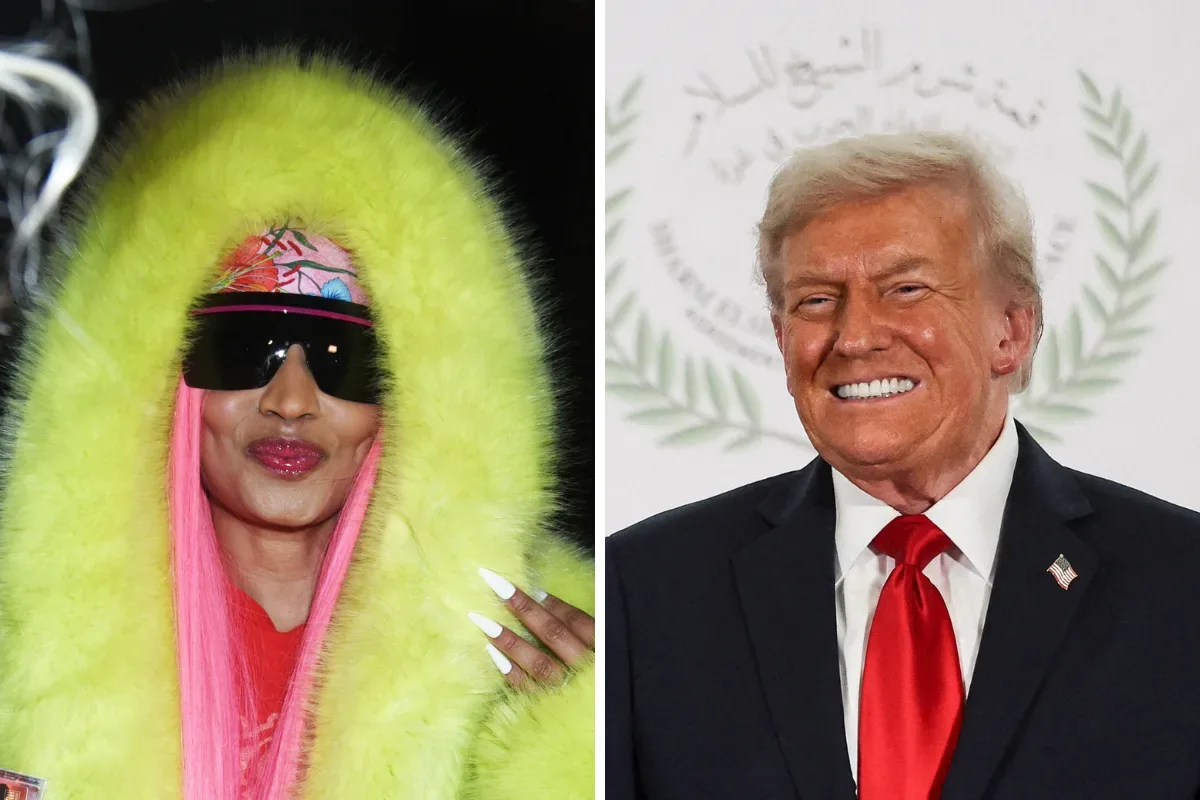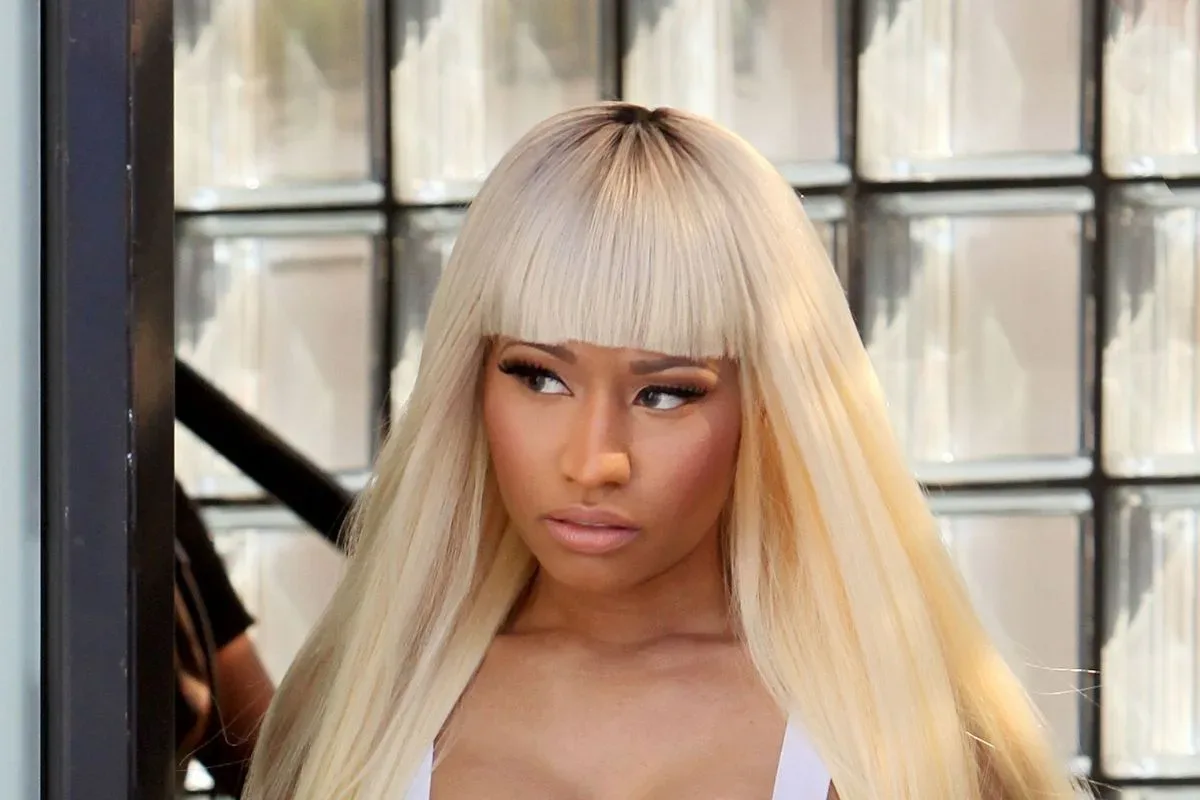
Jimmy Fallon’s latest late-night White House sketch has handed Nicki Minaj a job she has not actually been appointed to: press secretary to President Donald Trump.
The segment, which aired on The Tonight Show Starring Jimmy Fallon on October 19, frames the idea as the final beat in a mock search for a new spokesperson. It uses an edited clip of Trump saying Minaj’s name to sell the fictional appointment. The premise is deliberately implausible, but it is built around a genuine convergence of entertainment, partisan politics and a very public staffing change.
For viewers encountering a cropped clip on social media, the essential distinction matters: this was a comedy sketch, not a White House announcement. Minaj was the subject of the joke; she was not named press secretary in the material described.
How the sketch constructs its punchline
Fallon reportedly staged a mock interview with Katie Zacharia, using excerpts from her first press briefing as cutaway answers to his own questions. This is a standard edit-driven satire technique: the host asks a question in one context, then the production places a separate answer after it to manufacture an absurd exchange.
The sketch’s rhythm rests on that mismatch. When Fallon asks how long Zacharia had wanted the role, the selected clip answers, “A very long time.” When he follows with a question about how long she lasted, another clip gives the response, “Several days.” A question about where she got a law license receives the edited answer, “From Amazon.”
Those lines are not presented as a continuous real interview. Their comic purpose comes from repurposing fragments of a briefing into a different conversation. It is a useful reminder of how fast political clips can lose their original setting once they become entertainment: editing can produce a joke, but it can also make a short video misleading when reposted without its show branding or setup.
The final reveal moves away from Zacharia and toward Minaj. Fallon says Trump is naming a replacement, and the program cuts to Trump saying, “Nicki Minaj.” The result is a familiar late-night formula: take a current political personnel story, connect it to a famous person with actual relevance to the administration, then stretch that connection to an intentionally ridiculous conclusion.
Why Nicki Minaj is central to the gag
The joke works because Minaj’s relationship with Trump has been a real part of her recent public activity. In September, she appeared on The Ingraham Angle alongside Small Business Administration chief Kelly Loeffler to discuss the Million Dollar Pitch Competition.
Minaj served as a judge for that contest with Grant Cardone and Airbnb co-founder Joe Gebbia. The competition offered $1 million to small-business owners. That role placed her in an administration-linked business initiative rather than a purely speculative celebrity-politics conversation.
During that television appearance, Minaj said she was honored to have the opportunity to work with the administration and Trump. She also said Trump had made her feel heard and indicated that she would not apologize for supporting him.
Later in September, Minaj appeared on My View with Lara Trump and encouraged young people to vote for Republicans. Her comments included an appeal to participate in local contests as well as presidential elections. That is a notably direct form of political engagement for a major music figure: not simply attending an event or offering a one-off endorsement, but publicly urging participation for one party across different levels of government.
None of that establishes Minaj as a government official, or suggests she is seeking an actual communications role. It does, however, give Fallon’s fictional casting a recognizable basis. The audience does not need to believe a rapper will walk into the briefing room; it only needs to recognize that Minaj’s Trump connection is current enough for the imagined appointment to feel like a topical exaggeration.
The real staffing backdrop
The sketch arrives after Zacharia’s October 16 departure from the press secretary role after five days. Criticism surrounding her initial briefing and her work in law had become part of the public discussion around that short tenure.
A press secretary is generally the administration’s principal public spokesperson to journalists. The job involves communicating official positions, answering questions during briefings and helping explain policy or political messaging. Because the role is attached to high-visibility daily coverage, even a brief tenure can immediately become material for television comedy.
Fallon’s use of “several days” distills that backdrop into the simplest possible joke structure. A short-lived role becomes a setup about turnover; the purported replacement becomes a celebrity with a newly visible political association. The legal-license gag adds another layer by turning a professional-credential controversy into an absurd answer.
Satire often compresses complicated events into a few symbols. Here, Zacharia represents an unusually brief communications episode, while Minaj represents the celebrity figure whose genuine public relationship with Trump lets the show bridge government news and pop culture. The edit does not try to resolve the underlying questions about Zacharia’s record or Minaj’s political views. It uses their public visibility as the machinery of a fast, recognizable punchline.
Celebrity politics is no longer a side plot
Minaj’s inclusion also reflects how celebrity political participation can change the meaning of an entertainment appearance. A musician appearing on a political program may be discussing business, elections, personal beliefs or all three at once. Once those appearances are public, they can become reference points for commentary, parody and partisan debate.
That does not mean an artist’s political position automatically determines their work, fan community or public legacy. It does mean audiences increasingly meet celebrity news through overlapping frames: music culture, online reaction, business activity and electoral politics. Late-night programs are designed to exploit precisely that overlap, especially when there is an obvious visual or rhetorical hook.
In Minaj’s case, the contrast is what gives the bit its energy. A rap star who has recently appeared with administration figures is recast as the administration’s public-facing briefing official. The distance between Minaj’s actual public role and the fictional job is the joke. Yet the gap is narrow enough to be legible because of the high-profile political appearances that preceded it.
There is a broader media lesson in the segment, too. Celebrity news and political news now travel through the same feeds, often stripped down to a headline, a reaction clip or a meme. Comedy can clarify its own artifice through an obvious setup, but viewers should still be wary of isolated video snippets that appear to show a real announcement. The full context distinguishes a satirical edit from reporting about a real appointment.
What viewers can take from the bit
The immediate story is modest: Fallon made Minaj the fictional answer to a topical White House staffing joke. But it is a sharp example of the ingredients modern late-night satire needs to land quickly:
- A current event: Zacharia’s departure after five days in the role.
- Recognizable raw material: clips associated with a press briefing.
- A celebrity with real contextual relevance: Minaj’s recent Trump-related appearances and political comments.
- A clear fictional turn: the mock appointment is framed as a comic reveal rather than an official development.
That combination makes the sketch more than a random celebrity cameo. Its premise depends on the audience knowing—or at least intuiting—that Minaj’s connection to Trump is not invented for the segment, while understanding that the press-secretary job absolutely is.
The episode also belongs to a larger entertainment cycle in which musicians’ political comments can become as conversation-driving as their releases or performances. Hip-hop and television discussions often move quickly between cultural debate, public feuds and political headlines; recent discussion around Cam’ron and a resurfaced Jay-Z Super Bowl joke is another example of how old and new commentary can be recirculated through contemporary news hooks.
For Fallon, the important thing is not whether a Nicki Minaj press secretary scenario could happen. It is that, in an era where celebrities openly engage with presidential politics and the news cycle moves at meme speed, the imagined scenario is instantly understandable enough to earn a laugh.