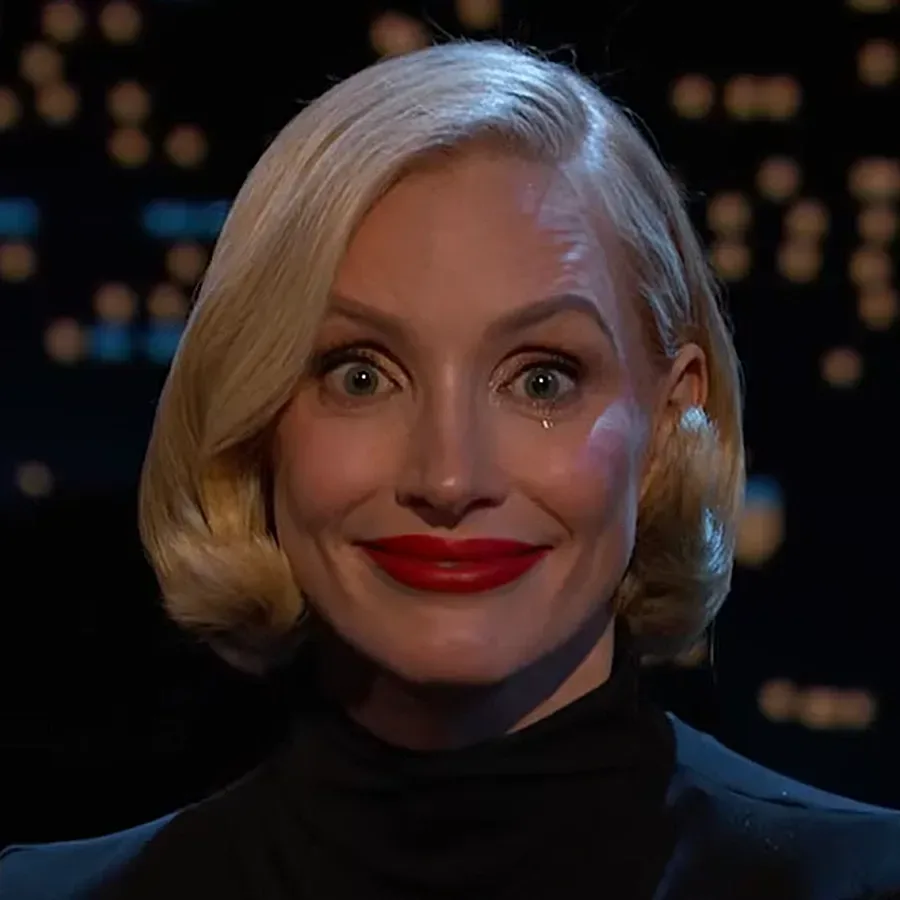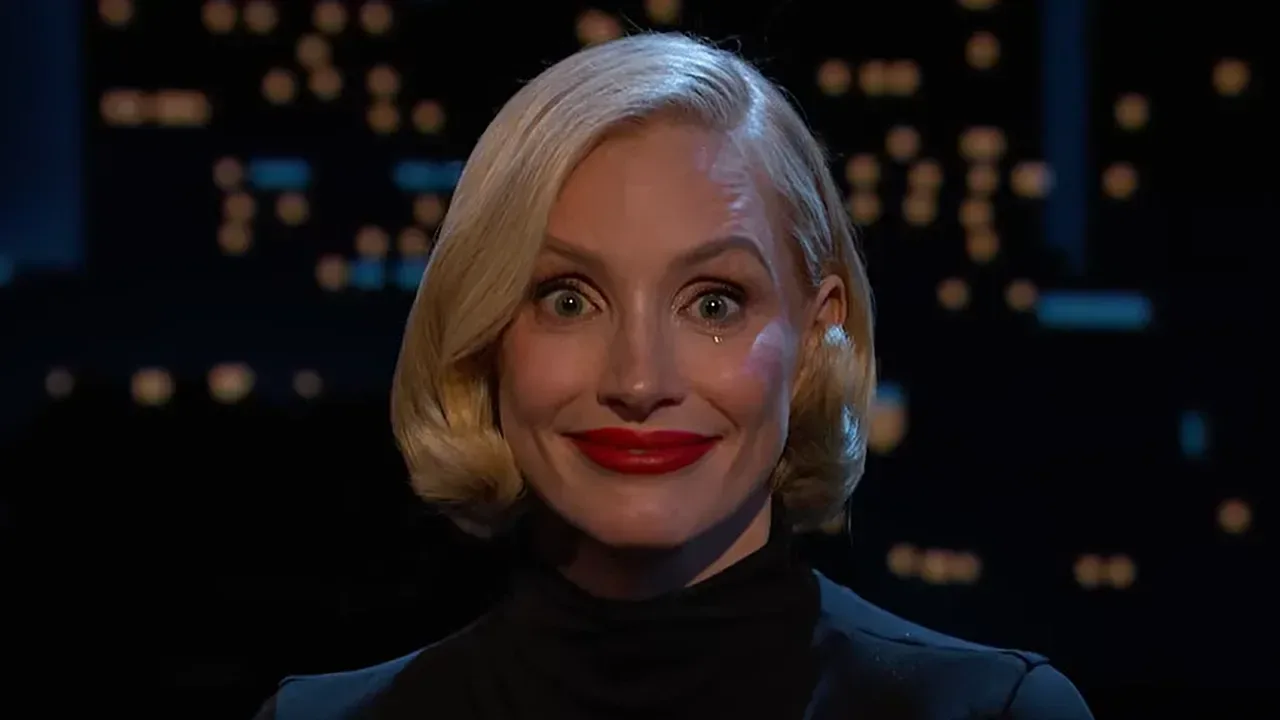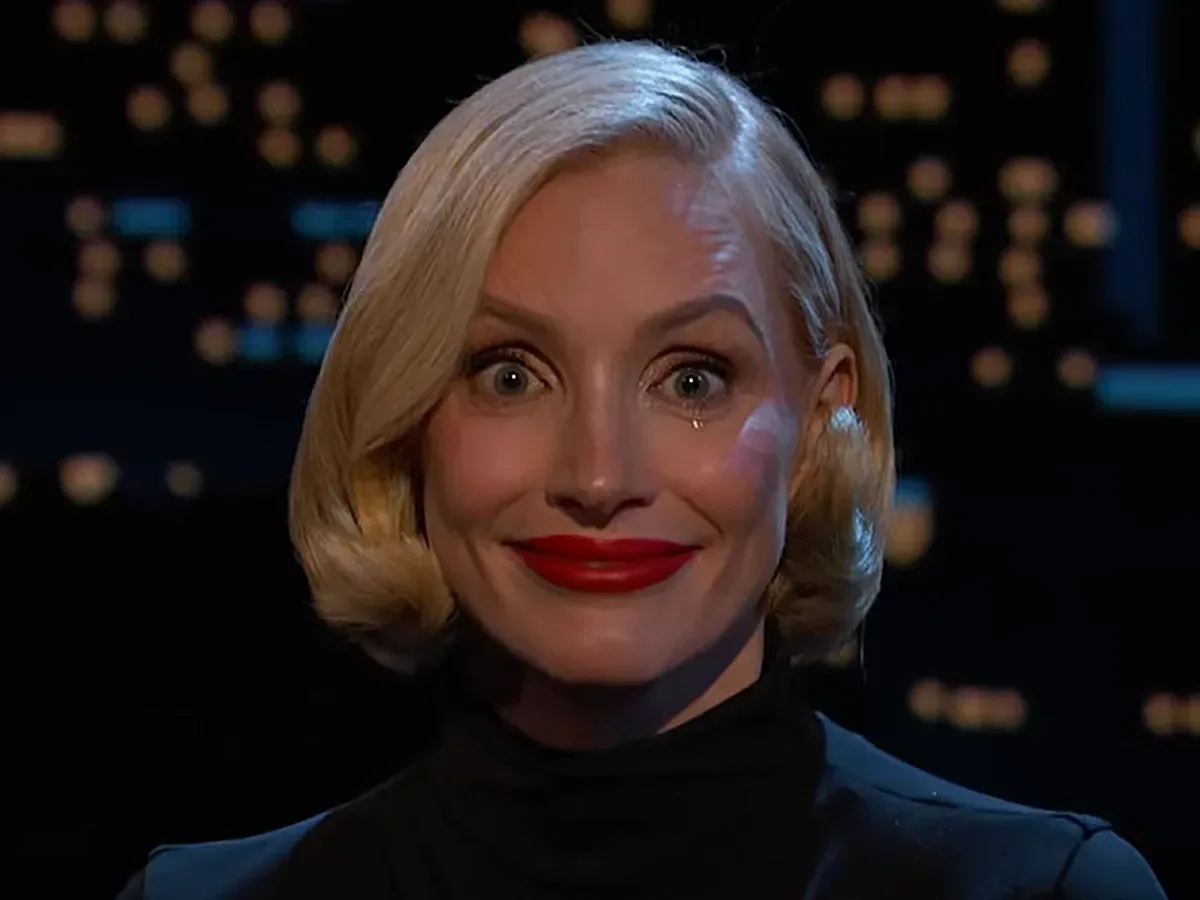
Jessica Chastain’s most unsettling contribution to Other Mommy may not be a line of dialogue, a creature effect, or a splash of blood. It is a smile that seems to be working against the face wearing it.
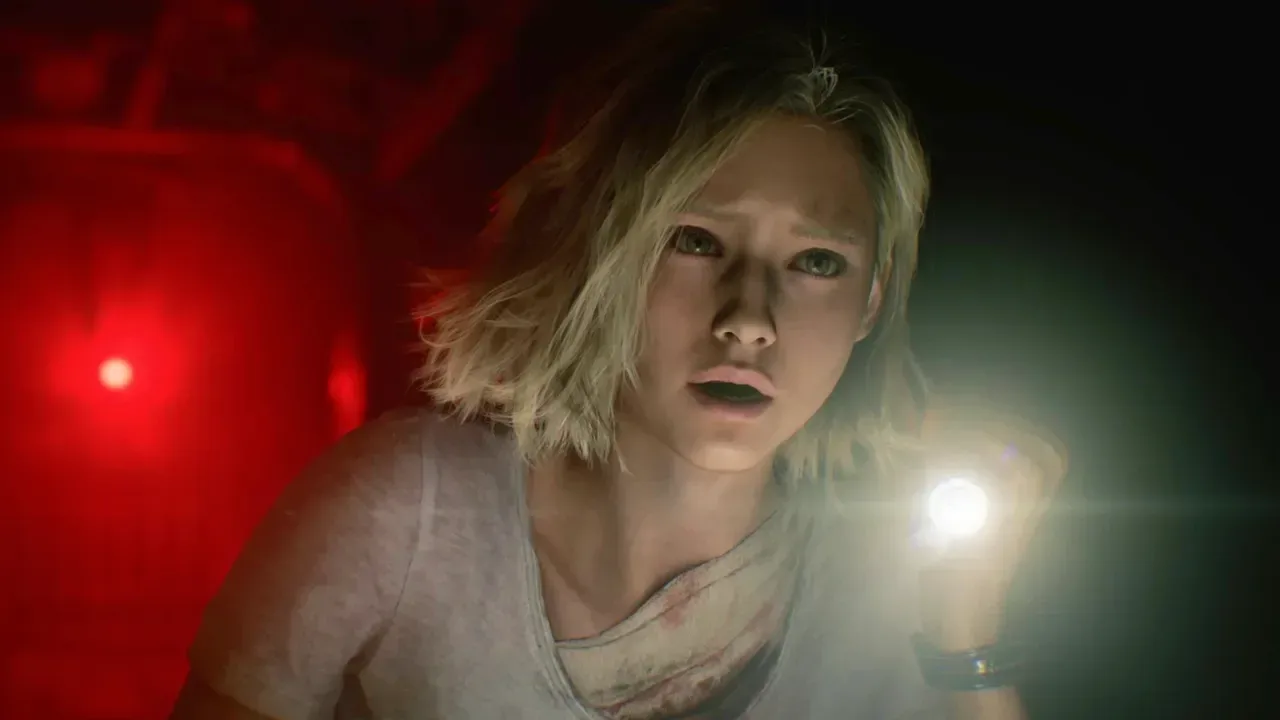
In the film, Chastain plays two sides of the same nightmare: a young girl’s mother and the entity that haunts the family while wearing the mother’s skin. Promotional footage has emphasized the divide between those roles. The maternal figure is meant to read as caring and familiar; the entity is marked by a fixed, dead-eyed look and a broad smile that is somehow more alarming than openly aggressive.
Chastain has now outlined the physical idea behind that expression. Rather than treating it as a conventional evil grin, she imagined the entity as a being under strain: something forcing itself to hold onto a human exterior while also trying to appear safe enough for a child to trust. In her description, pain and tension were not incidental details. They were the engine of the performance.
That is a particularly useful way to understand why the image lands. A smile usually signals ease, pleasure, welcome, or recognition. The entity’s smile instead suggests effort. The face is attempting to communicate warmth, but the body appears unable to support the lie cleanly.
A smile built from tension, not simple menace
Chastain said she began with the image of the entity holding onto another person’s skin. She compared its exertion to the strain of carrying a heavy box for a long time: the body has to stay braced, yet the face still has to give a child the impression that everything is all right.
That distinction matters. A villainous smile can be broad, toothy, and immediately readable as a warning. The expression Chastain describes is more contradictory. It asks the character to project kindness while every element beneath that surface is resisting. She also noted that she tried not to show teeth, an apparently small choice that changes the effect substantially. A closed-mouth smile can be polite and reassuring; held too long, too wide, or against the wrong eyes, it becomes unnervingly artificial.
The result is horror driven by a mismatch of signals. The mouth says “safe.” The eyes and physical tension say something else. For a story about an entity taking the form of a parent, that mismatch is central rather than decorative.
What “physicalizing” a performance means
Chastain’s explanation is an example of physicalizing a performance: using posture, muscular tension, breathing, facial control, and movement to express a character’s inner state. The audience may not be told exactly what a performer is doing with their body, but it can register the result before it has words for it.
In this case, the character’s exterior behavior has a clear dramatic purpose. The entity wants to be perceived as approachable by a child. At the same time, Chastain imagined that presenting a human face is physically difficult for it. The performance therefore does not depend only on looking frightening. It depends on making the act of looking harmless feel difficult and unsustainable.
Chastain demonstrated the expression during a television appearance and produced a tear as she did so, underscoring how closely she connected the look with bodily discomfort. She later joked about being a trained actress, but her explanation points to a specific acting choice: locating the character’s falseness in effort, rather than playing the creature as effortlessly sinister.
That choice can make a horror image more memorable because it gives viewers competing information to process. An obvious monster tells the audience to be afraid. A near-perfect imitation that has one detail wrong invites the audience to keep looking for the mistake.
Why the parent-and-impostor setup is so effective
Other Mommy uses a premise in which the familiar becomes threatening. Chastain plays a mother as well as the entity that impersonates her, placing the same performer at the center of both comfort and fear. The setup has been described as Coraline-like, but the immediately relevant point is the emotional mechanism: a child is faced with a version of parental safety that may be counterfeit.
That is why the entity cannot simply look monstrous from the start. Its threat is tied to resemblance. It needs enough of the mother’s appearance and behavior to be legible as someone the child should know. A smile becomes an ideal pressure point for that kind of story because it is a social signal children and adults alike are trained to read quickly. If that signal is just slightly off, familiarity turns into doubt.
Chastain’s stated rule for the character—maintain the pleasant expression, but do not show the teeth—also fits that logic. The entity is not trying to reveal itself. It is trying to maintain a disguise. The terror comes from seeing the strain in an imitation that should be easy for an actual person.
Trailers can make a single facial image do a great deal of work, and the smile has clearly been positioned as one of the film’s visual calling cards. It conveys the film’s dual-role concept immediately, without requiring an explanation of the plot. The viewer sees a motherly face, then notices that the expression has no natural softness behind it.
Chastain’s horror work and the value of restraint
Other Mommy adds to Chastain’s established run of horror projects, which includes Mama, Crimson Peak, and IT Chapter Two. Those credits do not make every role alike, but they show a recurring interest in stories where atmosphere, appearances, and emotional unease are as important as a direct scare.
The approach she has described here is notably restrained. There is no indication that the entity’s defining expression was created simply by exaggerating a grin as far as possible. Instead, the idea is controlled contradiction: hold tension, suppress the teeth, try to look sweet, and let the discomfort appear in places such as the neck. That is more specific than “be creepy,” and specificity is often what turns an image into character work.
It also offers a practical lens for viewers when the movie reaches theaters. Watch for the degree to which the entity’s body appears to be cooperating with its face. Does the smile arrive naturally or seem held in place? Do the eyes participate in the friendliness the mouth is attempting? Does the character seem comfortable occupying the mother’s role, or like it is performing an idea of motherhood without fully understanding it?
Those are interpretive questions, not confirmations of plot details. But they follow directly from the acting rationale Chastain has shared, and they may make the film’s central duality easier to spot beyond its most conspicuous scares.
Early reaction is skeptical, but the performance remains the focal point
Other Mommy is scheduled for a theatrical release on October 9. Early social-media reactions have not been kind, with some viewers characterizing the film as sillier than frightening and others using far harsher language. Such reactions are not the same thing as a settled critical verdict, and they are especially limited as a measure of what any individual audience will take from the movie.
Still, the divide highlights a useful distinction. A horror film can have a strong central image even if viewers disagree over the larger execution. Chastain’s smile has already become a concise expression of the movie’s pitch: tenderness impersonated by something that cannot quite conceal its appetite.
Whether the full film sustains that premise is a question for audiences after release. What is clear now is that the expression was designed with more intention than a simple jump-scare face. Chastain built it around the idea of a body enduring pain while a creature tries to keep its victim calm.
That is a nasty bit of horror logic. The entity is not smiling because it is happy. It is smiling because being believed is part of the hunt.
For a different example of how horror projects can change shape during development, see the report on Resident Evil Requiem’s shift away from an online-game concept and back toward horror.