Resident Evil Requiem was initially developed as an online game before the team changed course and put horror first. Producer Masachika Kawata discussed the abandoned early direction in the BIOHAZARD 30th Special Mook, a 124-page, full-color book covering the series timeline, creature genealogy and developer interviews.
In remarks translated by fans, Kawata described game development as a process of continual experimentation. Director Koshi Nakanishi’s early plans for Requiem reportedly extended as far as building it as an online title. But research carried out during development did not deliver favorable results, Kawata said, and the project was redirected toward its horror concept instead.
That decision is significant because it frames Resident Evil Requiem not merely as a game with an online mode that was cut, but as a project whose broader premise changed. An online game can mean many things, from cooperative play to a service-driven structure built around repeated sessions. The available comments do not specify what form Nakanishi’s version took, what systems were prototyped, or how long the approach remained in development. What they do make clear is that the team concluded its preferred kind of horror was better served by leaving the online direction behind.
A design choice about fear, not just features
Horror depends heavily on control, uncertainty and vulnerability. Multiplayer does not automatically prevent horror—players can certainly be frightened together—but the presence of other players can alter the mood dramatically. Cooperation can turn danger into a problem to solve collectively; communication can puncture silence; and another player’s competence can make a threatening space feel more manageable.
None of that makes online horror inherently less effective. It simply requires a design that accounts for how players share information, resources and confidence. Kawata’s comments suggest the team did not find a sufficiently convincing answer for Requiem during its research phase. Rather than retain online play because it had already been explored, the developers reportedly made the harder editorial choice: discard it and reinforce the game’s horror identity.
That distinction matters. “Online” is often treated as an uncomplicated bonus feature, but it can influence the entire structure of a game: pacing, encounter design, saves, progression, enemy behavior and the rhythm of exploration. For a survival-horror series, a switch away from online development could affect the very feeling of moving through a hostile environment. The available information does not establish which of those elements changed in Requiem, so they should not be read as confirmed features. Still, they illustrate why Kawata’s account is more revealing than a routine note about a discarded mode.
Leon’s role exposed another horror-versus-action tension
Kawata also shared a separate but closely related decision involving Leon. Leon was the first protagonist confirmed for the game, he said, yet the team decided that Leon alone would push the experience too far toward action. His combat ability, in the producer’s view, risked making the game less frightening.
The answer was Grace, a new character introduced alongside Leon. Kawata’s explanation is not that Leon was a poor fit for the series. Instead, it is a recognition that a character’s established skills affect what players expect and how they approach danger. A protagonist known for excelling in combat can encourage a more forceful response to enemies. That is a fundamentally different emotional setup from one built around uncertainty and limits.
Related coverage includes Resident Evil Requiem Began Life as an Online Game Before Capcom Refocused on Horror.
By pairing Leon with Grace, the team could pursue what Kawata characterized as both horror and action sides of the game. The precise division of play between those approaches is not detailed in the comments. There is no basis here to assume how often players control either character, how their stories connect, or whether their segments use separate mechanics. But the stated creative logic is clear: Leon provides a route into action, while adding Grace helps maintain the conditions the developers felt were necessary for horror.
It is a useful reminder that protagonists are more than faces on a box. They are design tools. Their abilities shape difficulty, their reputation sets player expectations, and their confidence can change the emotional temperature of a scene before anything even attacks. In Kawata’s telling, Requiem needed more than an accomplished combatant if it was to preserve its scares.
Why Leon’s involvement was held back
Kawata also addressed the decision to wait before revealing Leon’s role. The aim, he said, was to keep the game’s full picture under wraps until close to release, preserving interest around the fact that it would develop across horror and action dimensions.
That explanation fits the character decision described above. Revealing Leon early could have encouraged audiences to form a narrow impression of the project as a combat-led entry. Holding details back allowed the team to avoid spelling out the balance before players had the complete context. It was a marketing strategy, certainly, but it was also connected to the game’s stated creative structure.
There is an important limit to the claim: maintaining interest does not itself tell us whether the final balance will work for every player. Fans who want sustained tension may prefer the horror emphasis, while those who value Leon’s combat prowess may be drawn to the action side. Kawata’s comments explain the developers’ intent, not a universal verdict on how that mix lands. They do, however, clarify why the project’s messaging did not immediately present all of its major elements.
Resident Evil has faced the multiplayer question before
Requiem is not the first time a Resident Evil project has reportedly been asked to reckon with online multiplayer and service-game ideas. In comments made in 2022, franchise producer Jun Takeuchi said that, during the conceptual stage of Resident Evil 7, there was a strong internal marketing push around requests such as multiplayer, downloadable content, ongoing-service elements and microtransactions.
Takeuchi said the multiplayer idea for that game was eliminated relatively quickly. The team believed a horror multiplayer game could be exciting if it could be made properly, but did not feel it had a strong enough idea to proceed. The end result, as he memorably characterized it, was a conventional single-player horror game—the kind of outcome marketing might not have initially favored.
The common lesson in both accounts is not that multiplayer has no place in Resident Evil. It is that multiplayer needs to earn its place through a compelling concept, rather than being added because it is fashionable or commercially familiar.
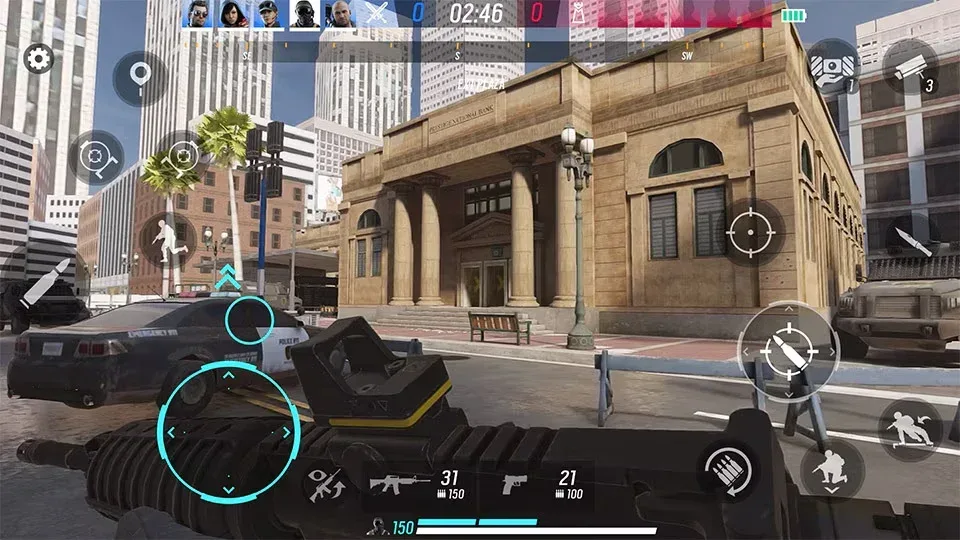
That is a particularly relevant distinction at a time when online-service ambitions remain a major part of the wider games business. The fate of an online game depends on much more than its recognizable name, from long-term support to finding an audience that stays engaged. Recent industry news, including the planned closure of Rainbow Six Mobile less than a year after its global launch, underlines the difficulty of sustaining any live online proposition. That example is not a direct comparison to Requiem; it simply reinforces why an established series may be better served by choosing the model that suits its core design.
Takeuchi’s older comments also leave room for a more nuanced takeaway. He did not dismiss horror multiplayer as impossible. He said the team had not found the right ideas at that time. Kawata’s account of Requiem reflects a similar standard: research was undertaken, the outcome was not favorable, and the online plan was dropped in favor of a more focused horror direction.
What the disclosure does—and does not—mean
It would be easy to treat this as evidence that Resident Evil has permanently closed the door on online play. The comments do not support that conclusion. Kawata discussed one abandoned version of one project; Takeuchi’s earlier remarks likewise describe a development decision for a different game. Neither statement rules out a future online Resident Evil title.
In fact, the reasoning presented by both producers implies the opposite possibility: online horror remains viable if the developers have a concept capable of supporting it. The source material mentions the prospect of another Resident Evil Outbreak-style effort as speculation, not as an announced plan. There is no confirmation of a new multiplayer Resident Evil project, its format, platform, release window or development status.
For Resident Evil Requiem, the immediate implication is more grounded. The team’s priority was to restore horror as the project’s organizing principle after its online research did not persuade them to continue. Leon’s involvement was then balanced with the addition of Grace so that combat capability would not dominate the intended tone.
Development stories often reveal a trail of ideas that never reached players. In this case, the discarded online premise and the reconsideration of a Leon-only protagonist point to the same creative question: what makes Resident Evil scary? Kawata’s answers favor restraint over accumulation. More connectivity, more action and more familiar power were not automatically treated as improvements. The developers instead chose the direction they believed best protected the game’s horror.