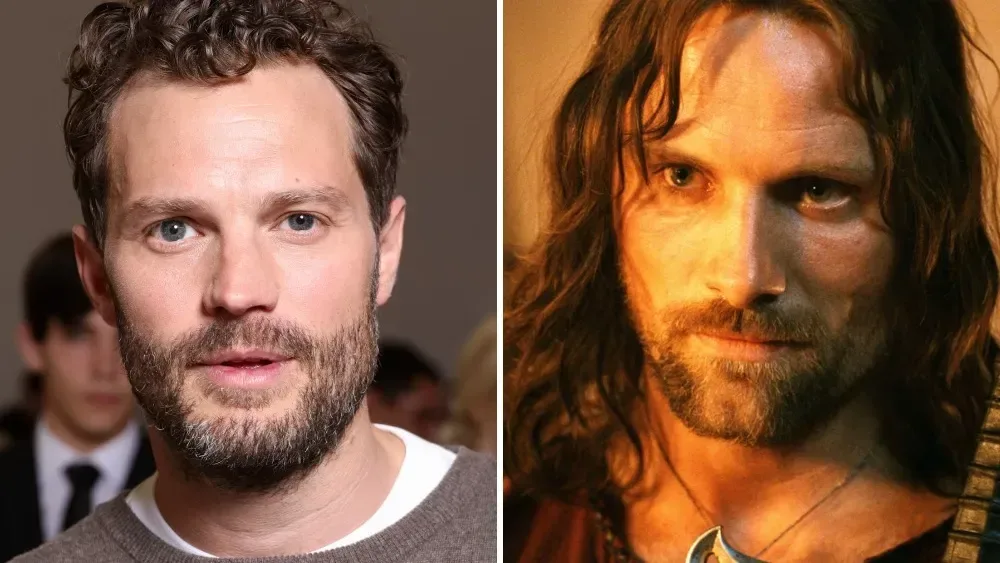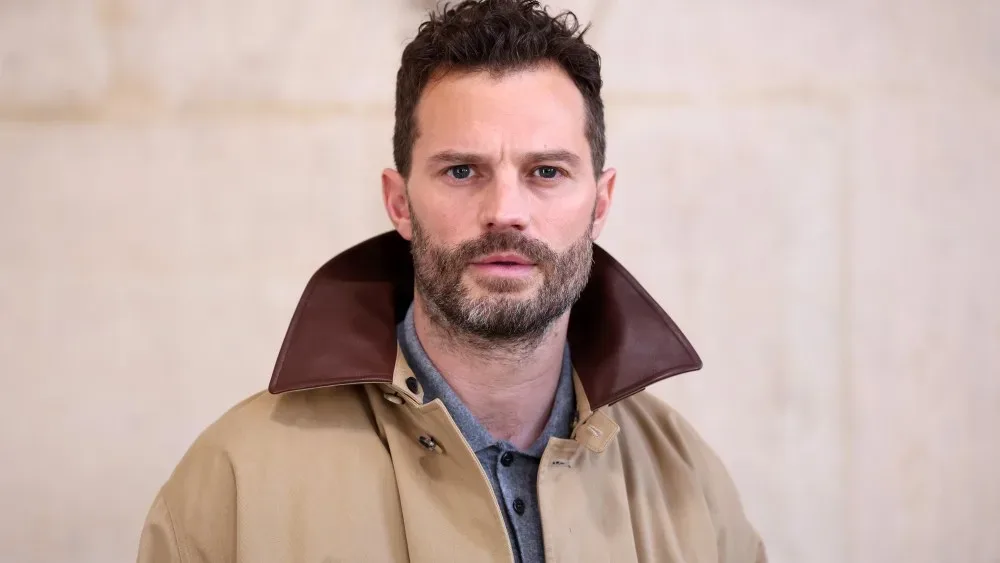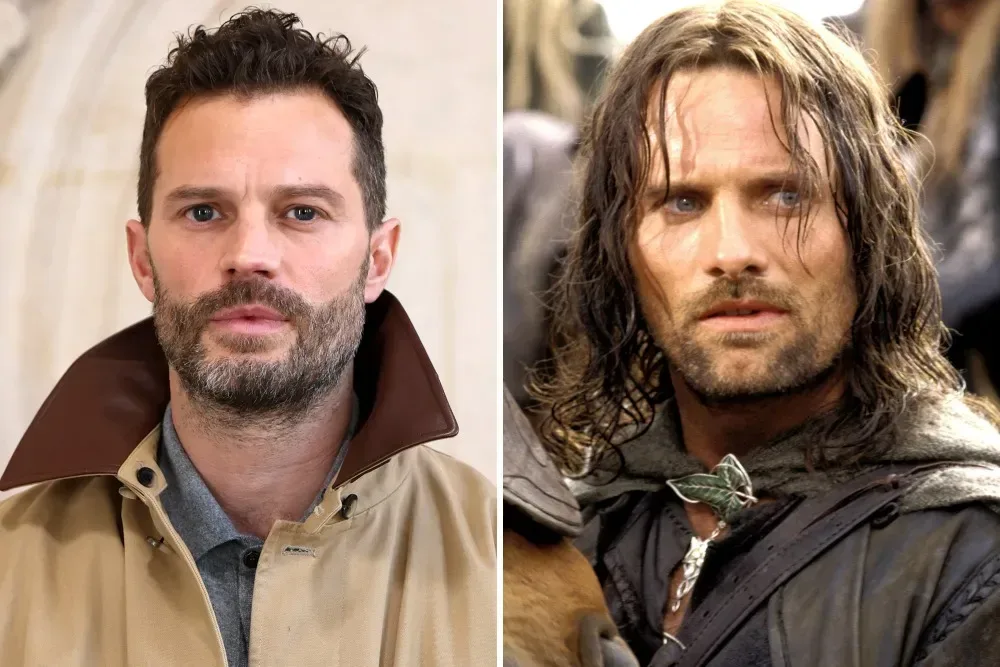
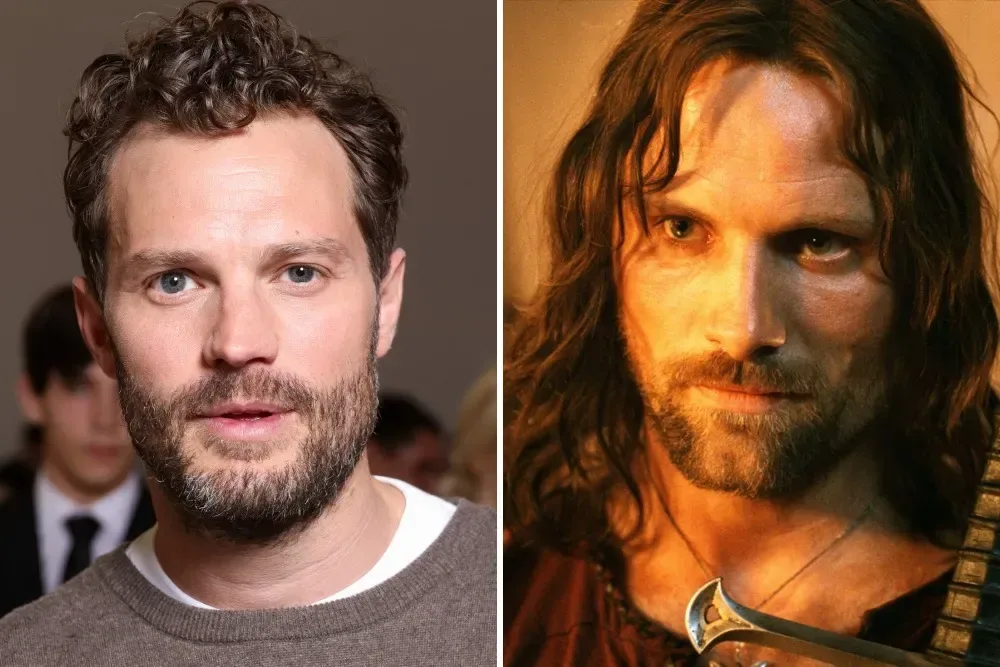
Jamie Dornan says he has not spoken directly with Viggo Mortensen about inheriting the role of Aragorn in The Lord of the Rings: The Hunt for Gollum. It is a small but revealing detail about one of the upcoming film’s most closely watched casting changes: an actor stepping into a character long associated with another performer, within a screen version of Middle-earth that audiences know exceptionally well.
During an appearance on Watch What Happens Live With Andy Cohen, Dornan was asked whether Mortensen had offered him advice. Dornan said that the two had not spoken directly. He nevertheless described Mortensen’s apparent endorsement as meaningful, saying that was the approval he cared about.
Dornan is set to play Aragorn in the forthcoming film, taking over from Mortensen, who portrayed the character across the original Lord of the Rings film trilogy released from 2001 through 2003. The new production is directed by Andy Serkis and is scheduled to reach theaters on December 17, 2027.
What Dornan’s comment does—and does not—tell fans
The headline-worthy part is straightforward: there has been no reported one-to-one conversation between the incoming Aragorn and the actor most moviegoers associate with the role. That does not signal a conflict, a creative disagreement, or a lack of support. Dornan’s remarks point in the other direction. He said Mortensen had effectively given his blessing through a statement that was released with his agreement.
That distinction matters. Public goodwill and private mentorship are different things. Dornan did not present himself as having received guidance on performance choices, character preparation, or how to navigate the expectations tied to Aragorn. Instead, he emphasized the reassurance of knowing that Mortensen was pleased by the casting.
Serkis previously addressed the subject during an April appearance on the Happy, Sad, Confused podcast. He said the team was thrilled with Dornan’s casting and added that Mortensen was as well. Taken together with Dornan’s newer comments, the available picture is clear: Mortensen’s support has been publicly conveyed, even though the performers have not discussed the handoff face to face or directly.
That is a more grounded framing than treating the casting as a symbolic passing of a sword—or, perhaps more appropriately, a sword that still needs a shipping label. Recasting a famous part does not require the predecessor to train the successor. It does, however, invite fans to examine every word around the transition, especially when the original portrayal remains central to the franchise’s cultural identity.
Why Aragorn is such a delicate role to recast
Aragorn is not merely a recognizable name in Tolkien’s world. In the original trilogy, the character’s journey is foundational: he is a ranger and leader whose arc carries major emotional and narrative weight. Mortensen’s performance established a screen interpretation that audiences have revisited for decades, so Dornan’s casting naturally raises questions about approach, continuity and expectation.
Related coverage includes Jamie Dornan Says He Has Not Spoken Directly With Viggo Mortensen About Aragorn Role.
There is an important technical distinction here between reprising and recasting. A reprise occurs when the same actor returns to a previously played role. A recast brings in a new performer for an established character. The Hunt for Gollum includes examples of both: Ian McKellen is returning as Gandalf, Elijah Wood as Frodo, and Lee Pace as King Thranduil, while Dornan is taking on Aragorn as a new actor.
That mixture makes the project especially interesting. Returning cast members can give a production a sense of connection with earlier films, while a recast role inherently asks audiences to accept a new interpretation. Neither choice automatically determines whether a performance will resemble, revise or stand apart from what came before. The provided details do not establish how closely Dornan’s Aragorn will align with Mortensen’s portrayal, so claims about voice, costume, mannerisms or the character’s story would be premature.
Still, Dornan’s own reaction to getting the role suggests he recognizes the responsibility. He previously said he cried after learning he had been cast, calling it a dream and an honor to enter the world in any capacity—particularly as a character he described as so significant and admired. He also acknowledged the affection audiences have for Mortensen’s work across the three earlier films.
Serkis links the new film to the earlier trilogy
Serkis is a key connective figure for the project. In Peter Jackson’s original trilogy, he provided both the voice and motion-capture performance for Gollum. Motion capture is a filmmaking process in which an actor’s physical performance is recorded and used to inform a digital character. It is especially relevant to Gollum because the character’s screen presence depended on Serkis’ performance as well as visual-effects work.
For The Hunt for Gollum, Serkis is directing. His involvement therefore spans two different creative jobs within this corner of Middle-earth: performer in the original trilogy and director of the new film. That provides continuity at the filmmaking level, but it should not be mistaken for confirmation of story details that have not been supplied. The title establishes Gollum as the movie’s focal point; beyond that, the evidence here only confirms the cast and release date.
The ensemble combines returning performers with new names. McKellen returns as Gandalf, Wood as Frodo and Pace as King Thranduil. New cast members include Kate Winslet as Marigol, Leo Woodall as Halvard, and Anya Taylor-Joy as an elf. The character descriptions supplied for the latter roles are limited, so there is no basis to infer their alliances, plot importance or relationships to Aragorn and Gollum.
This careful split between what is confirmed and what is imagined will be useful as anticipation builds. Franchise news often encourages fans to fill blank spaces with assumed timelines, familiar scenes or theories drawn from other versions of a story. At present, the concrete points are narrower: Dornan is Aragorn, Serkis directs, several trilogy actors are returning, and the theatrical date is set for December 17, 2027.
Approval is not a blueprint for the performance
Mortensen’s reported approval may ease some of the emotional friction that frequently surrounds recasting, but it does not create an obligation for Dornan to imitate him. An actor’s endorsement is support for the casting, not a production guide. The role remains Dornan’s to perform under the direction of Serkis and within the needs of this specific film.
That is also why the lack of a direct conversation should not be overstated. Dornan did not say he had sought Mortensen out and been unable to reach him; he simply answered that they had not spoken directly. His emphasis was on gratitude for the endorsement rather than disappointment over the absence of advice.
For viewers, that may be the healthiest lens through which to follow the casting. Mortensen’s Aragorn remains the version forged in the 2001–2003 trilogy. Dornan’s Aragorn will be a new performance in a new film, supported publicly by the earlier actor but not presented as a copy of him. In a franchise built around enduring characters, that is the balance any recast has to strike: respect the history without mistaking respect for replication.
Entertainment casting conversations can sometimes become louder than the work itself. For a broader look at how performers and public appearances continue to shape pop-culture coverage, see this report on Taylor Swift’s return to the CMA Awards stage. In Dornan’s case, the immediate takeaway is simpler: he has not yet had a direct chat with Mortensen, but he considers the veteran actor’s publicly expressed support an important vote of confidence.