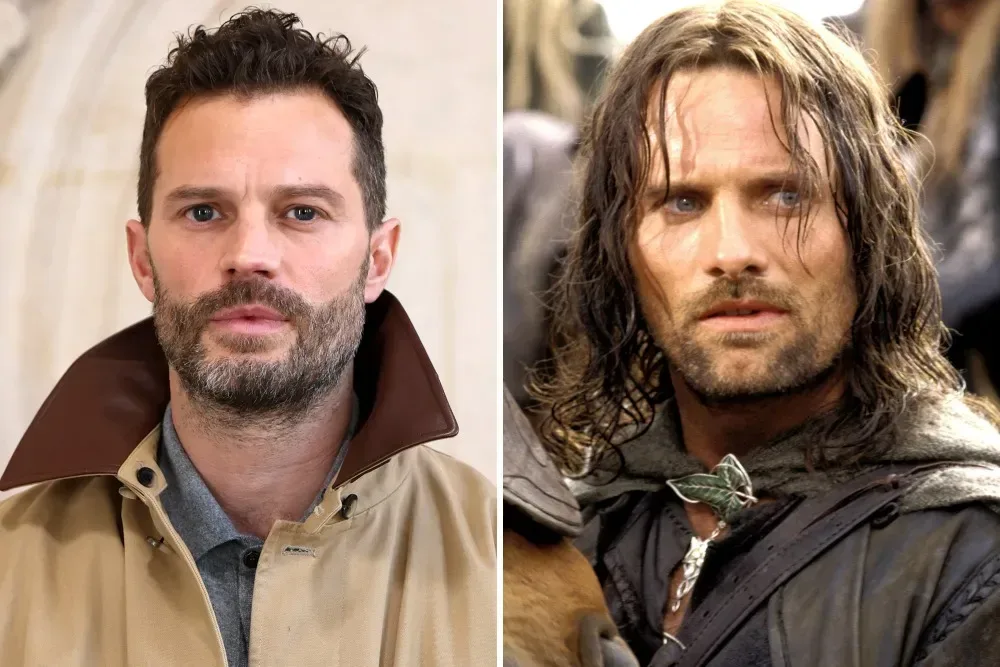
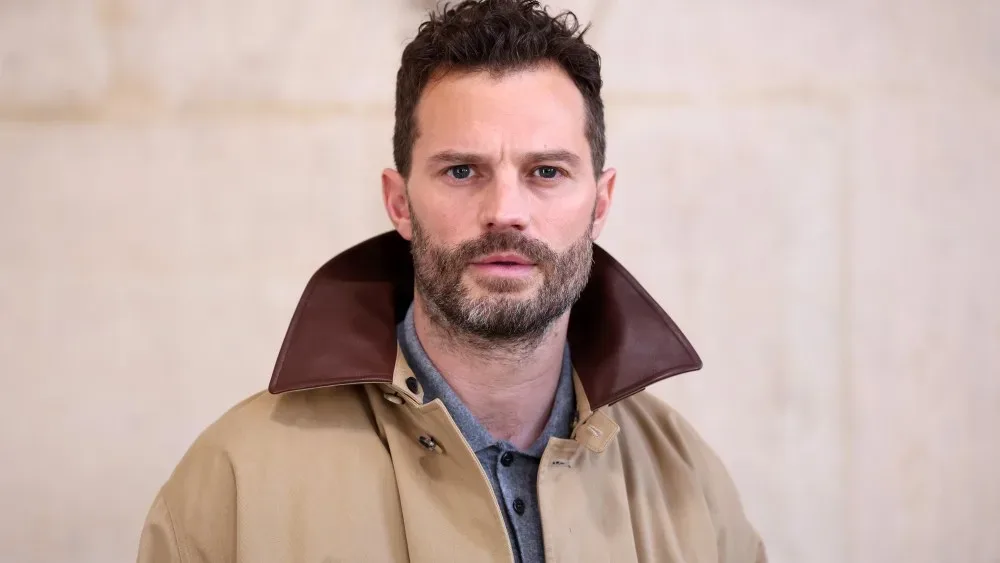
Jamie Dornan has described an openly emotional reaction to landing the role of Aragorn in Lord of the Rings: The Hunt for Gollum. The actor said he cried when he learned he had been cast as the ranger and future king, a character whose screen legacy is inseparable for many viewers from Viggo Mortensen’s performance in Peter Jackson’s original trilogy.
That reaction matters because Dornan is not treating Aragorn as an ordinary franchise part. He has called entering this world a dream and an honor, while acknowledging both the character’s significance and the affection audiences hold for Mortensen’s work across the three earlier films. Dornan’s comments suggest that the new movie is approaching a familiar Middle-earth figure with reverence rather than pretending the previous portrayal does not exist.
There is also a tangible production update alongside the casting reflection: Dornan said filming was “incredible” and that he had completed his work about three weeks before his comments. He said he had a brilliant time making the film and expressed hope that audiences will welcome this new story into a fictional world that clearly means a great deal to many people.
A legacy role without an attempt to replace it
Aragorn is a particularly complicated role to recast because audience attachment is not limited to a costume, a name or a recognisable silhouette. Mortensen’s version carried much of the emotional movement of the original film trilogy: a reluctant leader, a skilled ranger, a friend to the Fellowship and, ultimately, a figure who accepts his place in a larger struggle. Dornan’s task is not simply to play an established Tolkien character. It is to play someone audiences already know in a medium where the prior performance remains enormously visible.
Dornan has been direct about the pressure that comes with that assignment. In an earlier interview, he said he was not trying to outdo Mortensen. Instead, he framed Mortensen’s Aragorn as one of his own favorite performances and said he hoped to capture at least some of the energy brought to the role before.
That distinction is more than polite franchise diplomacy. A recasting can fail when a new performer appears to be imitating every vocal choice, gesture and expression associated with a predecessor. It can also fail when the production behaves as if the old version has no cultural weight. Dornan’s stated approach points to a middle route: respect the performance people love, understand why it connected, then find a way to inhabit the character for a different story.
“I cried. I actually cried,” Dornan said of learning that he had been cast.
For viewers, that does not answer the biggest creative questions around the film. It does, however, set a useful expectation. Dornan is publicly acknowledging the comparison rather than dismissing it, and he has emphasized gratitude over competitive language. That may be the most sensible stance for an actor taking on a role with decades of audience memory attached to it.
Related coverage includes Jamie Dornan Says Aragorn Casting Brought Him to Tears.
What The Hunt for Gollum has confirmed so far
Lord of the Rings: The Hunt for Gollum is directed by Andy Serkis, whose earlier work in Jackson’s trilogy included voice and motion-capture performance. Motion capture is a filmmaking process in which an actor’s physical movement is recorded and used to drive a digital character’s performance. Serkis’ background in that craft is an important part of his connection to these films, but his role on this project is behind the camera as director.
The movie is set to reach theaters on December 17, 2027. Beyond Dornan as Aragorn, the announced ensemble includes returning performers Ian McKellen as Gandalf, Elijah Wood as Frodo and Lee Pace as King Thranduil. New additions named for the production include Kate Winslet as Marigol, Leo Woodall as Halvard and Anya Taylor-Joy as an elf.
That mix of returning cast members and new faces gives the movie an immediate continuity conversation. Familiar performers can make a new chapter feel connected to established screen history. At the same time, their presence inevitably sharpens scrutiny of every changed role, especially Aragorn. The film will need to establish its own dramatic purpose rather than rely solely on recognition.
It is worth separating what is known from what is not. The confirmed details identify the title, director, release date and a selection of cast members. They do not, on their own, explain the full plot, the precise timeframe of the story or how much screen time each returning character will receive. That uncertainty is normal this far ahead of release, and it is a reason not to treat the cast list as a complete map of the movie.
Why Aragorn remains the focal point
Even in a project titled The Hunt for Gollum, Aragorn’s presence is likely to attract outsized attention. He is one of the most recognizable human characters from the earlier films, and his relationship to the wider world of Middle-earth carries built-in stakes. Naming Dornan as Aragorn immediately raises questions of tone, characterization and chronology that a newly invented or less familiar character would not provoke.
The actor appears conscious of that responsibility. His comments do not claim that the new film can recreate the exact feeling of the original trilogy, nor do they promise a radically opposed version of the character. Instead, he has stressed the honor of participating and the desire to do the work justice. In franchise terms, that is a grounded message: legacy can be a resource, but it is also a responsibility.
This is a challenge that reaches beyond Middle-earth. Major shared-screen worlds frequently ask audiences to accept a mix of returning actors, new interpretations and stories that expand beyond the original centerpiece. The ongoing discussion around returning characters in other large franchises, including how a familiar conflict can be recontextualized in a new series, shows why continuity is about more than casting alone. It is about whether a new installment understands what viewers value while finding a reason to exist on its own.
Pressure can be productive, but only up to a point
Dornan’s language also offers a useful way to understand the word “pressure” in this context. Pressure is not automatically a sign that a production is in trouble. In an iconic recasting, it can mean the performer recognizes the scale of audience expectations and has taken time to consider the role’s history. The danger comes when that awareness turns into a mechanical imitation or a defensive attempt to prove the old version obsolete.
Nothing in Dornan’s remarks suggests either extreme. He has spoken warmly about Mortensen’s work, said that he will do his best with the role and emphasized the positive experience of filming. Those are not guarantees of how the finished character will play onscreen, but they provide a clearer sense of his attitude than a generic promise to “make it his own.”
Fans will ultimately judge the performance in the context of the finished story, its direction and its relationship to the larger ensemble. For now, the meaningful update is simple: Dornan has finished filming, regards the casting as an extraordinary honor and understands that Aragorn arrives with a formidable cinematic inheritance. Lord of the Rings: The Hunt for Gollum has until December 17, 2027, before audiences can see how that respect translates to the screen.