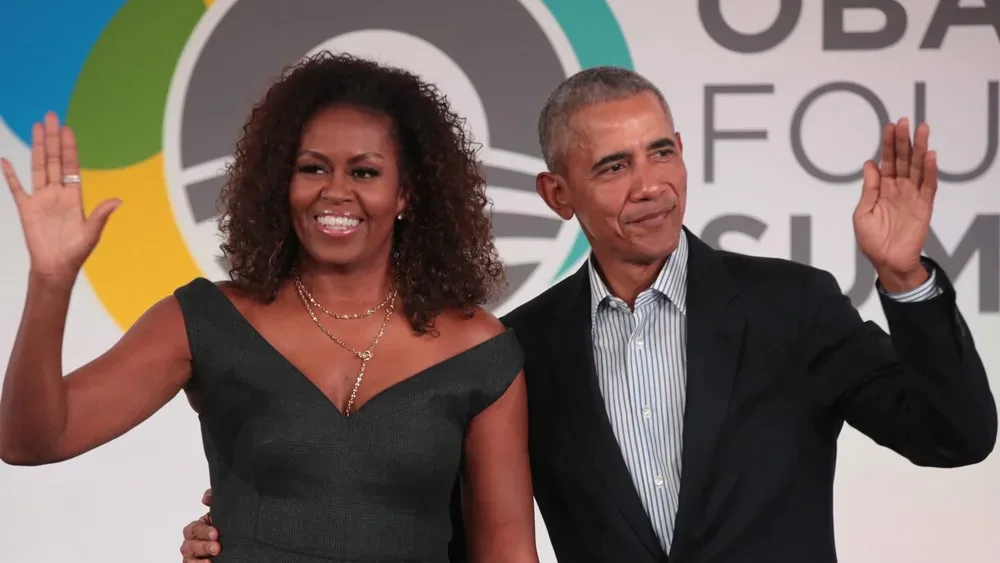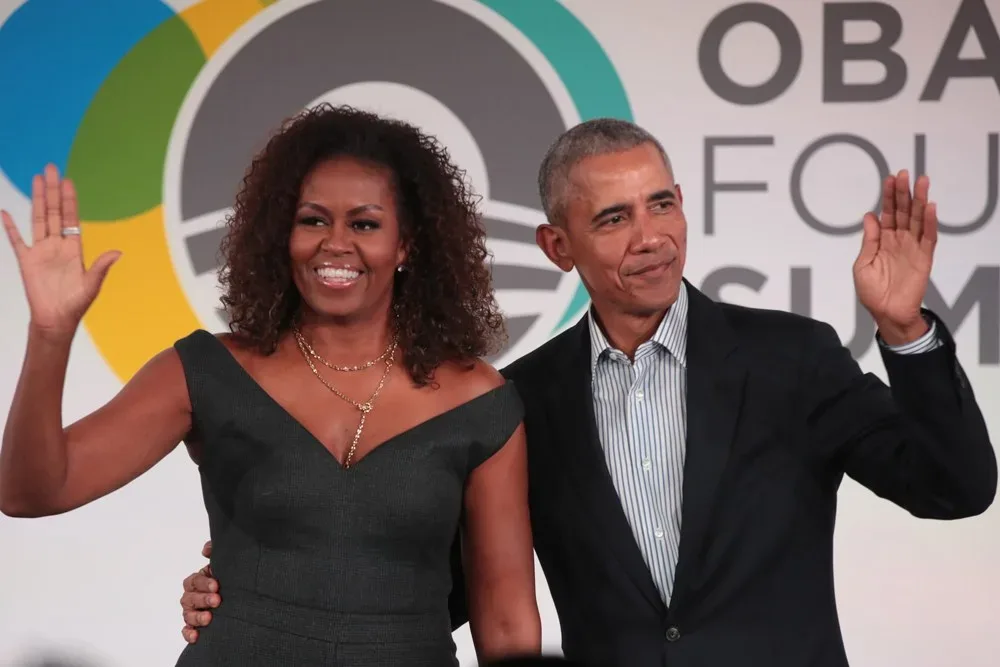
Higher Ground, the media company founded by Barack and Michelle Obama, is set to receive the second annual Greg Berlanti Social Impact Award at UCLA’s sixth annual Teens & Screens Summit. Greg Berlanti will present the honor on Oct. 22 at UCLA’s Luskin Center, while Higher Ground head of business and strategy Joe Paulsen will accept on the company’s behalf.
The recognition is designed for storytellers and creative organizations whose work confronts meaningful social issues while seeking to encourage positive change. Its criteria place particular emphasis on diverse representation, narratives that connect with teen and young-adult audiences, and the deliberate use of creative platforms to develop empathy and social awareness.
That framing makes this an award about more than a single title’s critical reception or commercial performance. It recognizes an approach to storytelling: selecting subjects, collaborators and formats with the potential to broaden whose experiences are centered in popular culture.
What the award recognizes
The phrase social impact can be broad, so the stated focus of this award is important. In this case, it refers to work that uses compelling narratives to engage important issues and inspire constructive change. The award also identifies representation and resonance with younger viewers as core considerations rather than incidental benefits.
That is distinct from treating a film, series or podcast as a public-service announcement. A narrative can be entertaining while also inviting audiences to consider a perspective, community or historical experience that has received less attention. Berlanti characterized Higher Ground’s work as an example of storytelling’s capacity to bring people closer together and widen understanding of the world.
The distinction matters because “impact” is often reduced to a vague promotional label. Here, the criteria are more concrete: diverse stories, relevance to teens and young adults, empathy, and intentional creative choices. None of those elements guarantees that every viewer will take away the same message. Instead, they describe the ambition behind work that makes room for subjects and voices often overlooked by mainstream entertainment.
Why Higher Ground fits the focus
Higher Ground’s listed credits span documentary, dramatic film and audio. The company’s documentary work includes American Factory and Crip Camp, while Rustin is also among its credited projects. Its podcast slate includes IMO with Michelle Obama & Craig Robinson, The Wonder of Stevie and Fela Kuti: Fear No Man.
That range is notable because it demonstrates a multi-format model rather than a dependence on one medium. Documentary can foreground real people, institutions and historical records. Dramatic storytelling can approach public history through performance and character. Podcasts can make room for ongoing conversations and focused explorations of artists or cultural figures. Each format asks audiences to engage differently, but all can make unfamiliar material more accessible.
Related coverage includes Higher Ground Set for Greg Berlanti Social Impact Award at UCLA.
Representation, in the context of the award, means more than simply having a varied collection of people visible on screen or audible in a program. It concerns the kinds of stories receiving attention, whose viewpoints are allowed room and which experiences are treated as worthy of depth. The award’s emphasis on overlooked voices indicates that the subject matter and point of view are central to its idea of impact.
Paulsen said Higher Ground was founded on the belief that it could entertain audiences while moving overlooked voices and stories to the foreground. He also credited the artists and collaborators involved in making that work possible. That is a useful reminder that a media company’s identity is expressed through collective creative labor: the people shaping the project, the perspectives supported and the choices made about which stories become widely available.
A summit centered on young audiences
The presentation will take place during the Teens & Screens Summit, now in its sixth year. The connection is especially appropriate given the award’s attention to teen and young-adult audiences. Younger viewers are not a single group with a single set of interests or experiences, but stories aimed at reaching them carry particular cultural weight. They can influence which histories feel present, which lives feel visible and which questions seem worth discussing.
That does not mean storytelling has to lecture its audience to matter. In practice, an empathetic story may work by giving a character, interviewee or subject enough specificity to feel human rather than symbolic. It may challenge assumptions by presenting detail instead of a slogan. It may also make room for audiences to encounter an issue through curiosity and emotion, rather than treating them as passive recipients of a predetermined lesson.
For creative organizations, the practical implication is that social purpose and audience appeal need not be opposing goals. The award’s language explicitly values stories that are compelling as narratives while also addressing consequential subjects. A project’s format, collaborators and intended audience all become part of how it pursues that balance.
Recognition for a company-wide approach
Honoring Higher Ground as a company, rather than singling out one production, puts the attention on a broader editorial and production approach. The listed work covers different subjects and media, but the award identifies a shared commitment to stories that can foster empathy and social change.
Company-level recognition also reflects a reality of contemporary entertainment: the ability to shape culture does not sit solely with a director, performer or host. Development teams, producers, commissioners, researchers, distribution partners and business leaders all affect what eventually reaches audiences. Paulsen’s role as head of business and strategy is therefore meaningful in this setting. The acceptance acknowledges that decisions about how a company is organized and what it prioritizes can support its creative mission.
For audiences, this type of award can function as a signpost rather than a verdict. It does not require viewers to respond identically to every Higher Ground title. It does indicate that the company’s body of work has been recognized for aligning entertainment with representation, empathy and social-purpose storytelling.
The broader creative-industry context
The award arrives within a wider conversation about who gets opportunities to create, present and circulate stories. Industry events and submission programs can matter because they create points of entry for new projects and new voices; for example, gamescom latam’s speaker call and free BIG Festival submissions show how creative platforms can open routes for work to be seen and discussed.
The subjects and medium are different, but the underlying idea is related: cultural visibility is shaped not only by the finished work, but by the systems that decide what is developed, exhibited and amplified. Awards such as the Greg Berlanti Social Impact Award spotlight one dimension of that process by emphasizing companies and stories that put inclusion and empathy at the center of their work.
On Oct. 22, Berlanti will present the second annual honor to Higher Ground at the UCLA event, with Paulsen accepting. The moment will recognize a catalog that includes documentaries, dramatic film and podcasts—and a company mission built around entertaining audiences while elevating stories that might otherwise receive less attention.