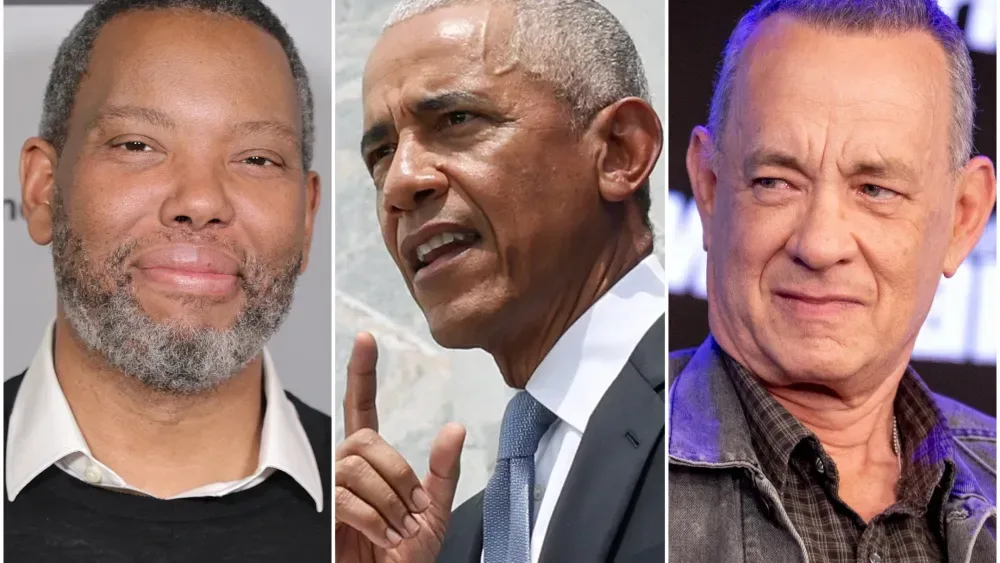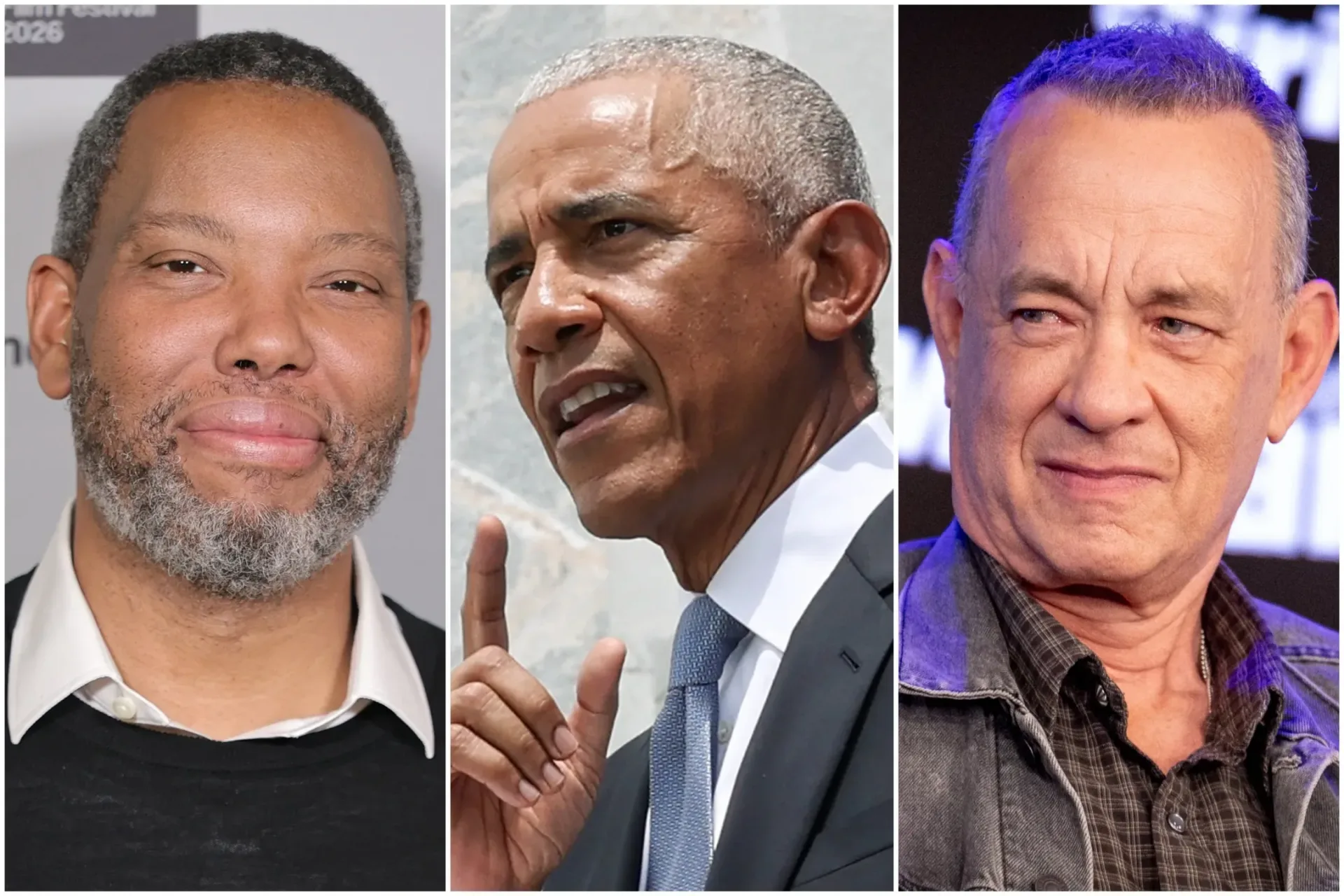
Barack Obama is putting a tightly focused literary conversation at the center of his next audio project. A Great Book With Barack Obama, a six-episode podcast series made with Audible and Higher Ground, is scheduled to debut exclusively on Audible on Sept. 24, 2026. It will arrive later in the year on YouTube and other podcast platforms.
Each episode pairs Obama with one guest and one book: a compact premise that leaves room for a more substantial question than a simple recommendation. The series is framed around how stories shape a person’s worldview and, more broadly, how they inform the way people understand identity, power, memory and culture.
That format matters. A celebrity book list can be a useful discovery tool, but it is often little more than a row of covers and a sentence of praise. This project is structured as a set of conversations instead. The guest list brings together an actor, novelists, a historian, a journalist and a former national security adviser, meaning the books will be approached through distinct professional and personal lenses rather than through one standardized form of literary commentary.
The six guests and their selected books
The announced episode lineup is as follows:
- Tom Hanks will discuss Gilead by Marilynne Robinson.
- Ta-Nehisi Coates will discuss The Fire Next Time by James Baldwin.
- Jill Lepore will discuss All the King’s Men by Robert Penn Warren.
- Ben Rhodes will discuss Tinker, Tailor, Soldier, Spy by John le Carré.
- Percival Everett will discuss Song of Solomon by Toni Morrison.
- Lauren Groff will discuss All the Pretty Horses by Cormac McCarthy.
The names alone make clear that this is not being presented as a narrow genre show. Hanks is an Academy, Emmy and Golden Globe-winning actor. Coates is a National Book Award-winning author, MacArthur Fellow and journalist. Lepore is a Pulitzer Prize-winning historian and journalist, while Rhodes previously served as national security adviser and is also an author. Everett is a Pulitzer Prize and National Book Award-winning author, and Groff is a three-time National Book Award finalist and New York Times bestselling author.
Those descriptions should not be mistaken for a preview of specific arguments in the episodes; none have been detailed yet. But they do establish the range of expertise that will meet the reading list. An episode led by a historian and an episode led by a novelist do not need to ask the same questions to be part of the same series. The unifying element is Obama’s stated interest in what beloved stories reveal about the present world and the world people want to build.
A deliberately limited season
Six episodes is a modest run, especially for a subject as expansive as influential books. That limitation may be a strength. Rather than promising an all-purpose canon or attempting to settle which titles are “essential,” the series can give each chosen work a dedicated conversation and let the guest explain why it matters to them.
It also gives listeners a clear entry point. Someone does not have to be familiar with all six books to understand the concept. They can start with the title or guest that interests them most, then move outward from there. In practical terms, the collection works as six individual discussions as well as a season-long exploration of reading, interpretation and cultural memory.
Related coverage includes Barack Obama’s ‘A Great Book’ Podcast Sets Tom Hanks, Ta-Nehisi Coates and More.
The selection covers books by Marilynne Robinson, James Baldwin, Robert Penn Warren, John le Carré, Toni Morrison and Cormac McCarthy. What connects them within this project is not a declared ranking or a shared genre label. It is the premise that literature can create a meaningful space for discussing public life and private experience at once.
What “worldview” means in this format
“Worldview” can sound broad enough to mean almost anything. Here, it has a practical use: the accumulated assumptions and values through which a person interprets society, history, relationships and power. A discussion about a significant book can therefore move beyond plot summary. It can examine why a reader returned to a work, which ideas stayed with them, and how the work affected their understanding of the world.
That is a different objective from a review. A review generally evaluates a book for a prospective audience. This series is positioned around impact: the role a book has played in a guest’s thinking and the larger conversations it can still prompt. Listeners expecting numerical scores, a buying guide or a definitive syllabus may be looking in the wrong place. The announced structure points instead toward personal reflection paired with civic and cultural discussion.
Higher Ground’s continuing audio slate
A Great Book With Barack Obama continues the relationship between Audible and Higher Ground, the production company founded by Barack and Michelle Obama. Their earlier projects together include Michelle Obama: The Light Podcast, hosted by Michelle Obama; Your Mama’s Kitchen: Conversations From the Heart of the Home, hosted by Michele Norris; and The Wonder of Stevie, hosted by Wesley Morris.
The prior slate also includes the Peabody Award-winning Fela Kuti: Fear No Man, hosted by Jad Abumrad, as well as Reconstruction: The Unfinished Promise. The latter was made with the History Channel and Pushkin Industries, hosted by Malcolm Gladwell and featured Barack Obama.
Taken together, those programs indicate an interest in host-led nonfiction conversations rooted in culture, biography, history and lived experience. The new series narrows that approach to a single recurring object: one book at a time. It does not require the production to manufacture a sprawling narrative arc. The books and their readers supply the frame.
The release plan also separates the initial Audible window from wider distribution later in 2026. For listeners, that distinction is straightforward: Audible is the first destination on Sept. 24, while YouTube and standard podcast services are planned for later in the year. No further timing for that broader availability has been provided.
Why the distribution plan is worth watching
Podcast distribution is increasingly about more than where an audio file first appears. A program can begin as an exclusive release and later find a larger public through open podcast apps and video platforms. For a conversation series about books, that wider availability could matter because the show’s value is likely to live in discussion, sharing and revisiting episodes rather than in a one-time release weekend.
The move to YouTube is especially notable as a platform choice, though no details have been announced about whether the episodes will be presented as filmed conversations, audio-led uploads or another format. What is confirmed is only that the show will reach YouTube later in the year.
That broader question of how entertainment catalogs are surfaced to audiences is also developing across the industry, including efforts to make existing libraries feel more personal and communal. Entertainment companies are increasingly examining more personalized, shared ways to connect audiences with catalogs. In this case, though, the immediate appeal is more direct: prominent guests, six recognizable books and a host whose public life has long been bound up with questions of culture and civic identity.
What listeners can expect—and what remains unknown
There is enough information to understand the series’ premise, its guests, its six selected books and its release path. There is not yet an announced episode length, a release cadence beyond the series’ Sept. 24 debut, or a detailed breakdown of individual topics. It is also not known whether the books will be discussed in a fixed order beyond the listed episode numbering.
That uncertainty is not a problem for the central pitch. The announced lineup gives prospective listeners a useful map: Hanks and Robinson; Coates and Baldwin; Lepore and Warren; Rhodes and le Carré; Everett and Morrison; Groff and McCarthy. The pairings are specific enough to suggest a purposeful selection without reducing the show to a rigid reading assignment.
Ultimately, A Great Book With Barack Obama is being built around a simple proposition: books endure not merely as artifacts people finish, but as works people revisit in conversation. Its success will depend on the specificity of those conversations—the personal memories, interpretive disagreements and connections to contemporary life that can emerge when a host and guest treat reading as an active part of understanding the world.