The CW’s origin story begins with a twist that would feel a little too tidy in a television drama: two direct competitors quietly deciding to become one. Warner Bros. and CBS revealed plans to merge the WB and UPN on January 24, 2006, catching much of the business off guard. The networks had competed for roughly a decade and pursued a similar audience, which made the surprise especially stark.
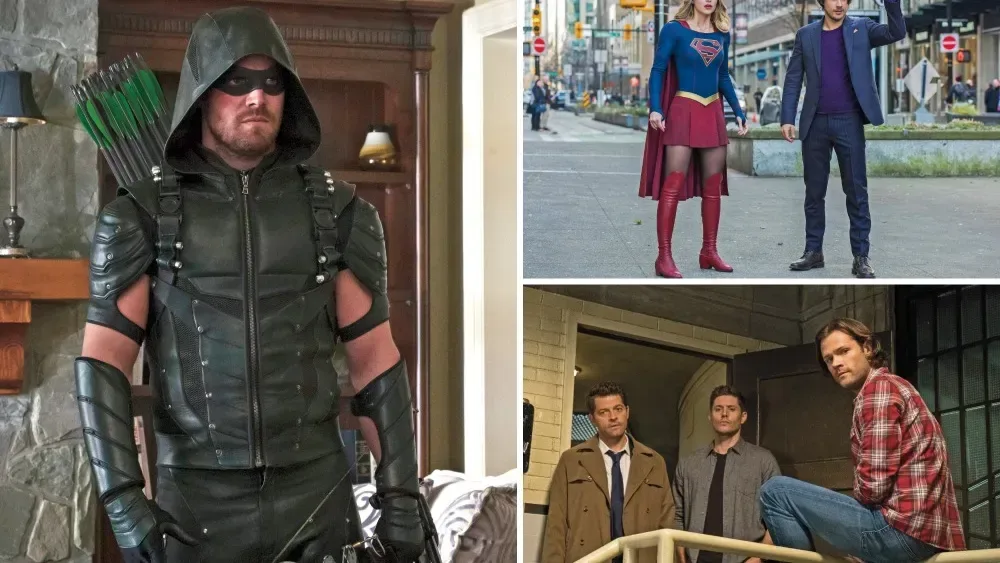
Twenty years later, the CW has outlasted both of the networks that fed into it. Its ownership and programming strategy have changed under Nexstar, but its first two decades established a distinct identity in youth-focused, fandom-ready scripted television. Supernatural, Gossip Girl, The Vampire Diaries, One Tree Hill, Riverdale, Jane the Virgin, Crazy Ex-Girlfriend, All American, Arrow and The Flash became major parts of that legacy.
That list is not simply a catalog of recognizable series. It demonstrates the unusual balancing act the network attempted: continuing established shows, breaking new teen and young-adult dramas, giving unconventional comedies room to grow and eventually becoming a major broadcast home for interconnected DC superhero stories. For viewers who treat a favorite show as a long-running social space rather than a disposable weekly program, the CW’s early identity was unusually durable.
Starting below zero
Dawn Ostroff, who had led UPN before becoming the CW’s entertainment president, faced the immediate problem created by a merger: deciding which WB and UPN programs would survive the transition. A new network may inherit shows, production relationships and viewers, but it does not automatically inherit an understandable brand.
That challenge was literal. The initials “CW” came from CBS and Warner Bros., but the meaning was not immediately clear to many viewers. Ostroff recalled that some people interpreted it as “Country/Western.” More importantly, audiences who had learned where WB or UPN programming lived could not assume that their local channel would remain the same. In certain markets, the former WB affiliate became the CW station; elsewhere, the UPN affiliate made the change.
That local-affiliate disruption matters because broadcast television does not reach people through one universal channel position. A network’s programs are carried by local stations, or affiliates. When the affiliate changes, a viewer can lose the simple habit of turning to a familiar number at a familiar time. The task was therefore bigger than launching a logo or adding a new schedule. The CW had to teach audiences where it was while also giving them a reason to seek it out.
Ostroff characterized the launch as beginning well below ground level rather than at “ground zero.” It is a useful description of the network’s position. The CW had useful assets from its predecessors, but it also had the burden of confusing a built-in audience at the exact moment it needed that audience most.
Making the brand loud enough to notice
Gossip Girl became one of the first defining CW originals, and its promotional campaign showed how the network could use provocation as an identity tool. The show was marketed with “OMFG” messaging in billboards and television spots. The phrase was designed to be noticed, debated and remembered—an approach that matched a network trying to establish a sharper personality in a crowded television landscape.
Related coverage includes The CW at 20: How a Surprise Merger Built a Defining TV Era.
The Vampire Diaries further helped turn that strategy into momentum. Its fourth-season premiere poster leaned into the show’s romantic triangle with deliberately suggestive imagery. The point was not subtlety; it was clarity. The CW wanted potential viewers to understand that its series could be heightened, emotional, serialized and unafraid of conversation-starting campaigns.
In practical terms, this was brand-building through programming and promotion at once. A broadcaster’s brand is not merely its name. It is the expectation attached to the next show: the kinds of stories viewers anticipate, the intensity they associate with the characters and the confidence that the network will keep speaking to a particular audience. The CW’s early success came from making that expectation visible.
For collectors of television culture—not necessarily physical memorabilia, but the memories, relationships and viewing rituals that turn programs into fandom—the lesson is familiar. A show can become important because it gives viewers a vocabulary, an event and a reliable place to return. The CW’s more confrontational ad campaigns were part of building that communal shorthand.
The Pedowitz era and a relationship-driven network
Ostroff left in 2011, and Mark Pedowitz succeeded her as CW president. His introduction to the job was unusually exhaustive: he watched every episode, read every script and traveled to meet producers and casts where series were filming. Those trips took him to locations including Albuquerque, Toronto, New Orleans and Atlanta, beginning with a visit to Supernatural.
That approach speaks to the advantages of operating a smaller network. A leader can be closer to individual productions and more directly connected to the people making the schedule. Pedowitz’s account emphasizes culture as a practical operating concern, not an abstract corporate slogan. Relationships with creative teams can affect communication, confidence and the willingness to commit to a show with a niche audience or an unconventional format.
It also fits the network’s output. The CW did not become defined by a single genre. Its schedule could accommodate supernatural romance, heightened teen drama, musical comedy-drama, telenovela-inspired storytelling and comic-book action. The common thread was not that every title looked alike. It was the network’s willingness to make passionate, strongly authored series a centerpiece.
That identity is why the CW era remains relevant to game and pop-culture audiences. Modern fandom is often organized around ongoing universes, character loyalty, weekly speculation and the pleasure of spotting connections between separate installments. Television did not invent those habits, but the CW made them a regular part of broadcast viewing for a substantial audience.
Arrow and the power of an interconnected universe
A year after Pedowitz took charge, the CW launched Arrow. The series became the foundation for a much larger DC franchise that included The Flash, Supergirl, DC’s Legends of Tomorrow, Black Lightning and Batwoman, with Greg Berlanti and Warner Bros. Television central to that expansion.
The term “shared universe” can sound like a marketing label, but its structural meaning is straightforward: multiple series exist in a connected fictional continuity, allowing characters, events and audiences to move between them. It gives a network more than another show. It creates an ecosystem. A viewer who begins with one hero may encounter another series through a crossover, and each new entry has the potential to deepen interest in the larger slate.
Pedowitz said the franchise broadened the CW’s demographic reach while retaining the network’s existing roots in series such as The Vampire Diaries. That is an important distinction. The superhero programs did not require the CW to discard its prior audience; they allowed it to bring additional viewers into a schedule already associated with young-adult drama.
Berlanti, who at one point had as many as nine shows airing on the network at the same time, described the era as a potentially “magical” one for the medium. Whatever label viewers choose, the programming accomplishment is clear: the CW created a recognizable destination for serialized genre TV at a scale that made cross-show fandom a routine part of its offering.
For an audience accustomed to game franchises, seasonal updates and sequels that carry an ongoing narrative forward, the appeal is easy to recognize. The value of an interconnected universe is partly logistical—it can guide viewers toward more content—but it is also emotional. Continuity rewards attention. It tells fans that the time they invested in earlier characters and stories may matter later.
Why critical favorites stayed on the schedule
The CW’s legacy is not limited to big genre franchises. Jane the Virgin and Crazy Ex-Girlfriend, both produced by CBS Studios, earned substantial critical admiration and Golden Globe wins, though neither was described as a ratings hit. Pedowitz kept them running because he liked them and was able to do so.
That explanation may sound simple, but it points to a significant programming reality. Ratings are one measure of a series, not the only measure of its cultural or business value. Critical acclaim can enhance a network’s reputation. A committed cult audience can matter even if it is smaller than the audience for a broad hit. And, as Pedowitz noted, Jane the Virgin performed very well in streaming for both the CW and Netflix.
Crazy Ex-Girlfriend likewise stood apart because of its highly particular creative voice and Rachel Bloom’s work as co-creator and star. Keeping distinctive programs alive can make a network feel less interchangeable. It also creates a library with different entry points: viewers looking for superhero action, supernatural drama, romance or musical comedy could find materially different experiences under the same banner.
This is where the CW’s model became more complicated than the old idea of a show living or dying only by overnight broadcast performance. A title could be a conventional ratings success, a critical favorite, a streaming performer, or some combination of those categories. The network’s ability to support varied kinds of success was part of what made its schedule memorable.
Streaming changed the business beneath the shows
The CW’s Netflix output agreement began in 2011 and helped make the network profitable through licensing. An output deal is an arrangement in which a distributor receives rights to a company’s eligible programming output under agreed terms. In this case, licensing gave the CW a meaningful financial foundation beyond the immediate broadcast run of its shows.
The arrangement also had audience consequences. Streaming can give serialized television a longer discovery window than a weekly schedule alone. Someone who missed the earliest episodes could catch up rather than abandon a show because they were behind. For series built around ongoing relationships, mythology or crossovers, that catch-up path can be especially valuable.
The deal ended in 2019 when CBS and Warner Bros. launched their own streaming services. By 2022, the two companies had decided to sell the CW to Nexstar, a key affiliate partner. Those events illustrate a broader shift without requiring speculation about what comes next: the business conditions that supported the CW’s first major era did not remain fixed. As streaming services became central priorities for their owners, old licensing arrangements changed along with the strategic logic around them.
That corporate evolution is also a reminder to viewers that a network’s on-screen personality depends on arrangements that are mostly invisible from the couch: ownership, affiliate distribution, studio partnerships and rights agreements. The CW’s 20-year story is therefore both a creative story and a business story. Neither is enough on its own to explain why the network endured.
A legacy defined by persistence and possibility
Pedowitz has a few lingering what-ifs. The Chilling Adventures of Sabrina ultimately went to Netflix; he regrets not ordering the pilot Haunted to series; and he believes there was more life left in The Vampire Diaries universe. Those missed chances are inseparable from the story of a network built around serialized worlds and distinctive fan communities. When a universe can continue, stopping it always leaves viewers imagining another path.
But the larger anniversary picture is not about unrealized possibilities. It is about a network that survived a confusing launch, gave its audience a legible identity, built a superhero franchise with real breadth and kept unusual critical favorites on the air even when they were not ratings leaders. All American, recently concluded, marked the final drama from that original two-decade era.
The CW now exists in a different form under Nexstar. Its past, however, remains a useful example of how broadcast TV can create lasting fandom: build shows with a point of view, nurture the people making them, give viewers reasons to stay invested and understand that a program’s value may continue well beyond its initial time slot. For more on the shifting corporate terrain around Warner Bros., see this look at reported leadership changes as a Paramount-Warner Bros. merger approaches its close.