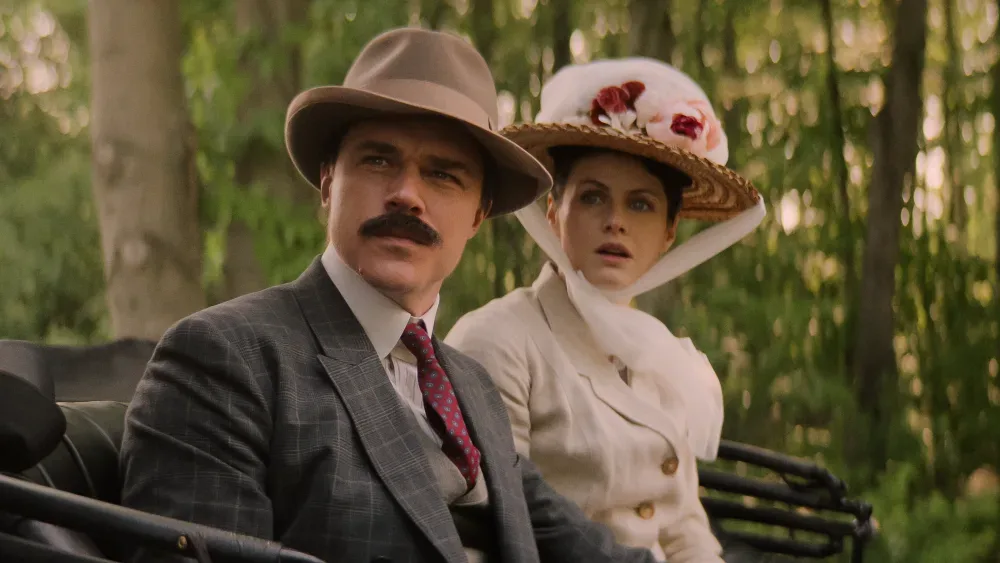
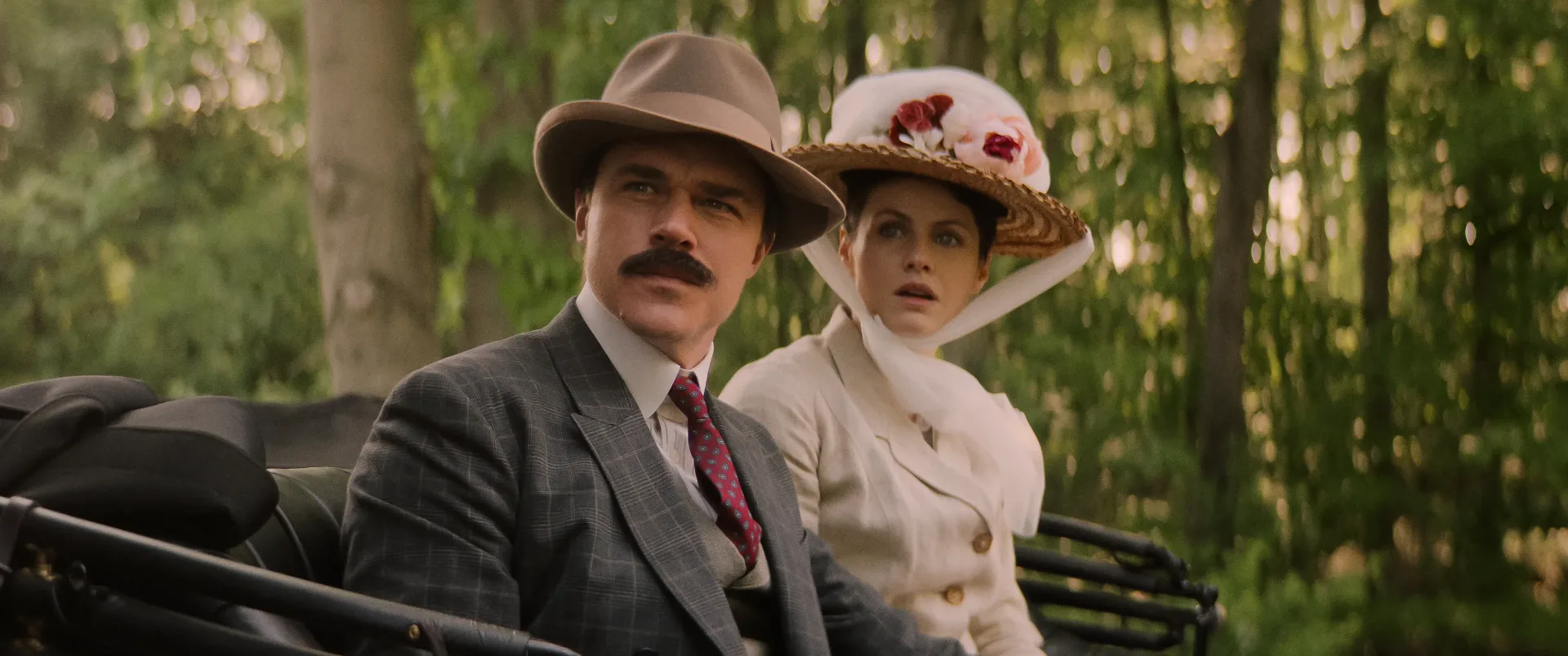
Hershey has an irresistible central premise: the story of Milton Hershey, the entrepreneur who helped make a once-exclusive chocolate product accessible to a mass audience. It also has Finn Wittrock in the lead, an actor well equipped to sell both a larger-than-life industrial dreamer and the uncomplicated good cheer the film demands. Across its 108-minute, PG-rated run, the movie delivers a handsome, easy-to-follow account of ambition, confectionery invention and philanthropy.
But the same qualities that make Hershey accessible also make it feel overly processed. Director Mark Waters and screenwriters Sharon Paul and Timothy Michael Hayes present a clean, uplifting portrait of its subject: setbacks arrive, rivals threaten, a family illness brings sadness, and triumph eventually follows. The result is a biopic with a pronounced sweet tooth and very little appetite for complication.
For readers following how historical figures are reshaped into entertainment, this lands in a broadly familiar space alongside other discussions of mythmaking in pop culture, including the storytelling weight placed on a defining act of creation in The Rings of Power. Here, though, the great act of creation is a chocolate bar meant to cost five cents.
A candy-maker origin story with immediate appeal
The film begins with the young Milton, played by James Kelly, leaving a dairy-farm life in Pennsylvania Dutch country for Lancaster with his stern Mennonite family. In one of the movie’s most vivid early sequences, the boy discovers a candy shop and encounters a welcoming confectioner played by Richard Kind. The encounter steers Milton toward an apprenticeship and establishes candy-making as more than a trade. In this telling, it becomes a calling.
That set-up neatly explains the movie’s core emotional logic. Milton is not portrayed as someone who happens upon a lucrative business; he is portrayed as someone who believes sweetness can be made, shared and scaled up. The film then moves to Philadelphia in 1882, where the adult Milton operates his own shop. He produces hard candy, taffy and caramel bonbons, with a milk-based recipe giving the caramels their distinctive smoothness.
Wittrock supplies the film’s most persuasive ingredient. His Milton is energetic, polished and sincerely delighted by the possibilities of candy. He has the kind of old-fashioned screen presence that suits a period success story, balancing confidence with a genial, approachable manner. The performance gives the character a sense of mission even when the screenplay moves quickly past the work required to make that mission viable.
Milton’s early ventures falter. A business closes, and he struggles to find customers for his goods. One major turn comes when a British aristocrat, played by Mark Ashworth, tries Milton’s caramel and places a large order of 3,000 pieces for an English party. The scene is useful as a clear dramatic breakthrough, though it also reflects the movie’s preference for clean cause-and-effect storytelling over detailed business texture.
Chocolate is the destination, but the process is rushed
The film’s most compelling idea is not simply that Milton Hershey becomes successful. It is that he sees a route to making chocolate available beyond the affluent consumers able to buy expensive European varieties. Swiss and British chocolates are presented as prestigious, secret-recipe products with prices beyond the reach of many people. Milton’s aim is to create a great chocolate bar that ordinary customers can buy for five cents.
That objective gives Hershey a useful framework. The movie treats milk as the key to his work first in caramels and later in chocolate, tying technical experimentation to a social purpose. In plain terms, the drama is about mass-market production: finding a product and method that can serve many customers rather than a small elite audience. That is more interesting than a standard rags-to-riches structure because it connects the hero’s commercial ambition to an argument about affordability.
Yet the film reportedly gives this material only broad strokes. Milton is shown deeply financially leveraged while chasing the right chocolate recipe, but the stakes are not developed with enough specificity to make the breakthrough feel fully earned. Financial leverage, in this context, means relying heavily on borrowed money or debt to pursue growth. It can make a business success more consequential, but it also makes failure more dangerous. That should be fertile territory for a character-driven historical drama. Here, it mainly operates as another obstacle on the path to an already-assured victory.
The invention of the Hershey’s Kiss illustrates the limitation especially well. The familiar drop-shaped candy apparently emerges from a faulty machine, a potentially charming example of accident meeting opportunity. But the film reportedly treats it as a quick stop on a timeline rather than a moment worthy of real attention. There is little exploration of why the new shape mattered, how it might be received, or what made it more than a production mishap. Even the candy’s silver-foil wrapping goes unmentioned.
That missed opportunity is telling. A biopic about a maker should make its audience understand the making. The movie has the raw elements: a failed machine, a new shape, a product already associated with a beloved brand. But it seems more interested in checking off milestones than lingering on the curiosity, debate or risk behind them.
Wittrock carries a saintly version of a complicated genre
Hershey belongs to the inspirational “great person” mode of biography, where the protagonist’s decency is not significantly in doubt. The movie gives Milton challenges, including an unscrupulous rival, but does not give him much inward contradiction. He is deeply committed to candy, workers and generosity from beginning to end.
There is nothing inherently wrong with an affirmative portrait. A movie can be warm without being naïve, and the source material here contains a strong emotional hook: a businessman who imagines that quality chocolate should not be reserved for the wealthy. The issue is that the film’s hero seems insulated from the tensions that could make his virtues dramatically meaningful. When a character has few apparent blind spots, doubts or difficult compromises, obstacles can start to feel less like revelations of character and more like scheduled interruptions.
Wittrock avoids turning that simplicity into stiffness. He gives Milton a robust enthusiasm that makes the character easy to root for. His performance is the reason the film’s idealism has some weight. Rather than playing the role as a statue, he presents a man who seems genuinely fired by the prospect of bringing a better candy to more people.
Waters, whose earlier work includes Mean Girls and The House of Yes, keeps the movie moving. That momentum is an asset in the opening and in the arc from apprentice to caramel maker to chocolate innovator. However, it also contributes to the sense that major developments receive only a quick gloss. The screenplay’s briskness makes the film easy to consume; it does not necessarily make it satisfying.
Kitty Hershey brings warmth, then a familiar tearjerker turn
Alexandra Daddario plays Kitty, Milton’s wife, as a spirited companion who loves him and can spar with him affectionately. The relationship is important to the film’s philanthropic thread. Kitty inspires the establishment of a school for impoverished children, while Milton is also motivated to return to his old homestead and build the factory town of Hershey in Pennsylvania Dutch country.
The town is framed as an ambitious workplace community: part workers’ paradise, part destination built around a larger dream. The film also says Milton pays workers well and offers them company shares. Together, these details position him as an employer interested in workers’ material stake in the enterprise, not merely their labor. It is a major part of the movie’s version of Hershey’s legacy, and it fits the film’s picture of him as an unusually benevolent capitalist.
Kitty later develops muscle seizures and is diagnosed with progressive paraplegia, described as a degenerative illness. The story does not frame her illness in overtly tragic terms, but it uses the diagnosis to introduce emotional and faith-centered pathos. This is another area where the movie’s desire to inspire appears to override a fuller dramatic reckoning. The sorrow is present, but it is shaped toward uplift.
A pleasing confection, not a rich meal
Hershey understands one fundamental truth: a movie about chocolate should make its audience want chocolate. Its imagery and subject matter appear to deliver that simple pleasure, and the film’s uncomplicated generosity may be precisely what some viewers want from a PG historical drama.
Still, a biopic about the person who changed how Americans encountered chocolate could have gone deeper into the labour, technology, uncertainty and commercial decisions behind that transformation. It could have made the caramel formula, the five-cent bar, the debt-fuelled search for milk chocolate and the accidental Kiss feel like discoveries rather than bullet points. It could also have asked more of its protagonist than steady niceness.
Instead, Hershey largely offers an agreeably old-fashioned success story, anchored by an engaging lead performance and a clear belief in its subject’s generosity. Wittrock gives the candy man warmth and purpose. The movie around him, however, is so determined to be sweet that it rarely allows a stronger or stranger flavour through.
Film details
- Director: Mark Waters
- Screenplay: Sharon Paul and Timothy Michael Hayes
- Cast: Finn Wittrock, Alexandra Daddario, Dina Spybey-Waters, Alan Ruck, David Costabile, Heléne York, Richard Kind, Mark Ashworth, Francesca Faridany and James Kelly
- Runtime: 108 minutes
- Rating: PG