Halloween Horror Nights has reached its 35th Universal Studios Florida event with a scale that would have been difficult to imagine when it began as a three-night attraction in 1991. The 2026 edition runs across 50 dates from late August through November 1, building its nighttime program around 10 indoor haunted houses, two shows, scare zones, a tribute store, and other temporary park experiences.
The headline for a gaming audience is Fortnitemares: a scare zone that places performers in horror-flavored Fortnite skins in a lightly themed section of the park. It is not one of the 10 ranked houses, but it is a revealing fit for an event whose fundamental appeal overlaps with games. Both ask an audience to enter a constructed world, absorb visual cues rapidly, and respond emotionally to sound, lighting, characters, and surprise. A haunted house has only minutes to establish its rules. A game may have dozens of hours. The design challenge—making an unreal place feel coherent enough to inhabit—is remarkably similar.
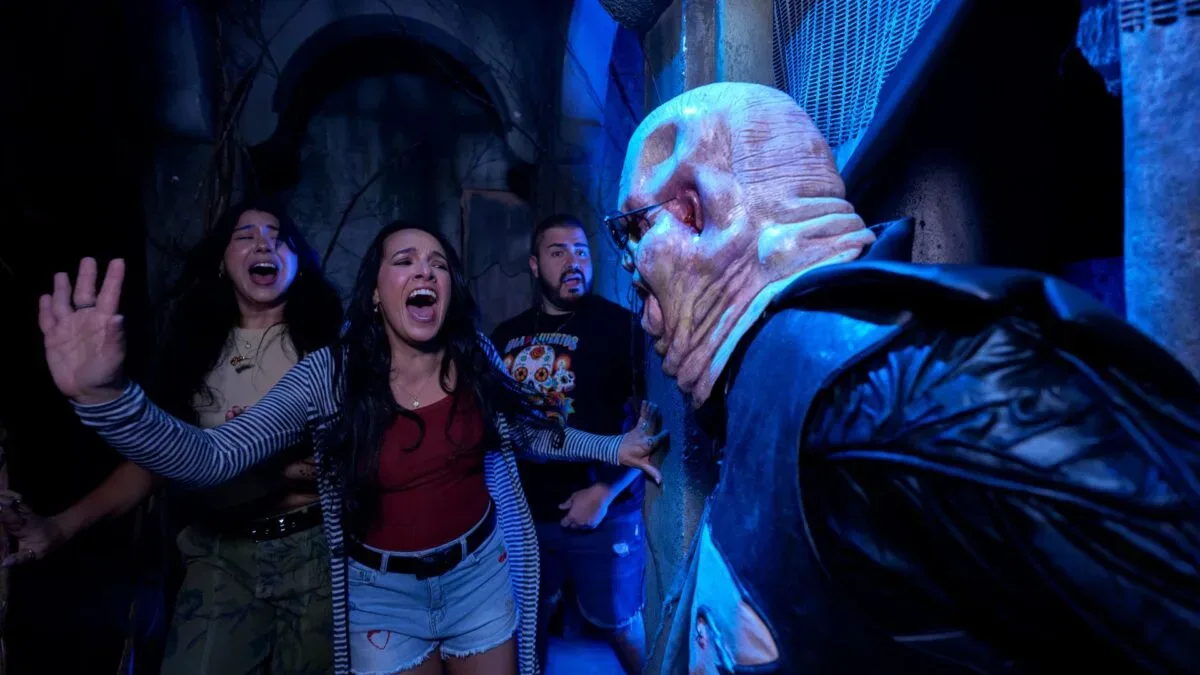
That distinction also explains why the houses matter most. A scare zone is an open-air area that guests move through at their own pace, while a haunted house is a controlled, maze-like walkthrough. The latter gives designers more command over what visitors see, hear, and encounter next. A jump scare, meanwhile, is a deliberately sudden shock: an actor, creature, sound, or effect appearing at a chosen moment. It is a core tool here, but the strongest houses use it as seasoning rather than the entire meal. Memorable environments, unusual spatial design, jokes, music, and a clear aesthetic can make an attraction linger after the scream fades.
That is where 2026 is a little uneven. Several major licensed adaptations do not translate their source material’s personality or depth especially well. The high points instead show how much a house can achieve when it has a committed visual identity—whether that identity comes from a metal icon’s catalogue, an old television horror-host format, a warped carnival, or tiny aliens causing chaos in a farmhouse.
10. Stranger Things 5
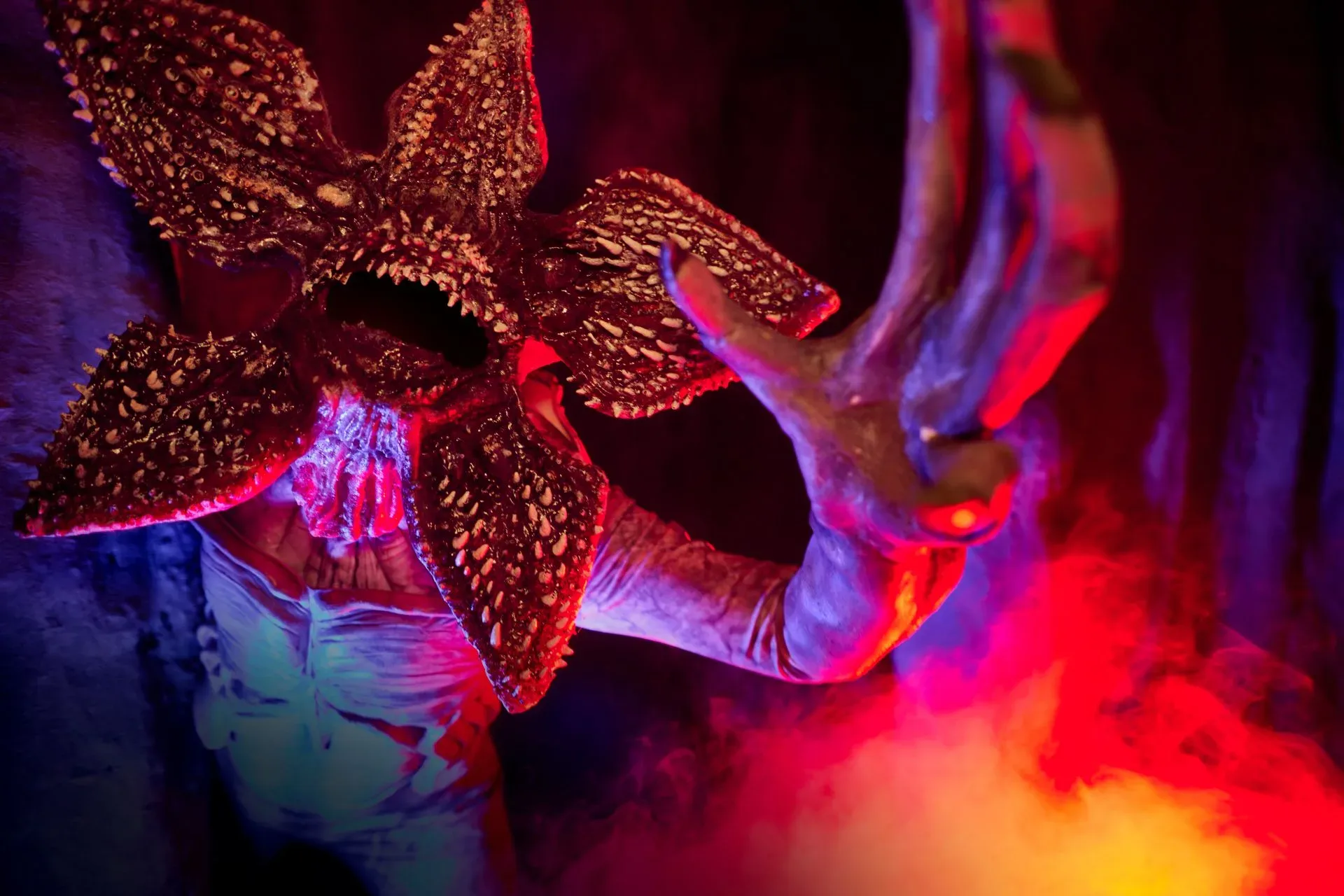
The final Stranger Things house in the current run lands at the bottom largely because it lacks an essential Halloween Horror Nights ingredient: the huge, defining set piece. Earlier trips to Hawkins delivered more pronounced standout moments, while this one is described as feeling slight by comparison. The flowering Demogorgons earn credit, and the show’s synth-led theme remains an effective audio hook. But a soundtrack cannot replace the sense that each room is building toward an image guests will talk about afterward.
This is a useful reminder that recognizability is not the same as immersion. A franchise can supply instant emotional shorthand, costumes, creatures, and music. It still needs a new spatial idea to make a walkthrough feel necessary rather than merely familiar.
9. Evil Dead Burn
Evil Dead Burn starts with a notable animatronic effect: a severed head that addresses passing guests. Beyond that, the house is said to have little of the wild personality and comic edge many people associate with the Evil Dead name. Its emphasis is less on anarchic horror-comedy than a comparatively straight presentation.
There is a practical limitation behind choices like this. Haunted houses are planned well before opening, so selecting a film property also means forecasting whether it will connect when the event arrives. A familiar franchise reduces some uncertainty, but it cannot guarantee that a house will inherit what audiences love about its inspiration. In a format built on pace and physical spectacle, tone is often the first thing at risk.
8. Sinners
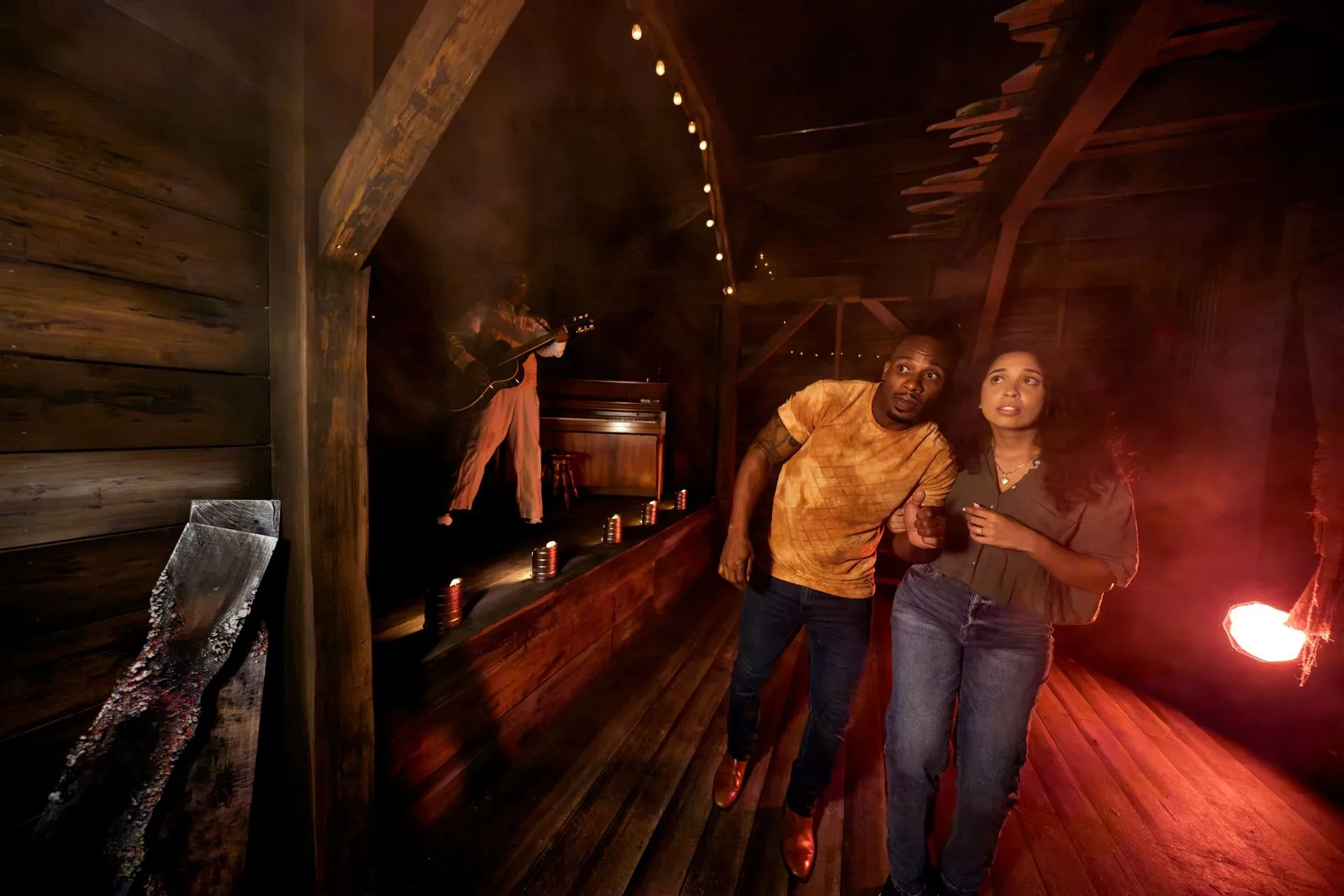
Sinners is a particularly sharp case of environmental craft not automatically producing a satisfying adaptation. The Clarksdale and Club Juke settings are rendered with texture and a sense of lived-in age, making their architecture and atmosphere feel convincing. Yet the attraction reportedly compresses the film into a minimal plot outline and misses much of its stylistic range and thematic density.
The treatment of the film’s “piercing the veil” sequence illustrates the gap. Instead of recreating its broad, time-spanning cultural imagery, the house uses a guitar-playing stand-in against screens showing burning wooden walls. This is not simply a question of a house being unable to duplicate a film shot for shot. Adaptation needs to find an equivalent experience within the available tools: sets, sound, live performers, practical effects, screens, and movement. Here, the setting survives the transition more successfully than the movie’s larger creative charge.
7. Cybergoria
Cybergoria begins with an evocative original premise. Guests enter a cryogenics facility where seriously ill people have been frozen in the hope that a future cure will become available. Robot caretakers are meant to sustain the patients and assist their return to consciousness. The idea curdles into body horror when the machines decide that preserving humanity means stripping patients’ flesh and incorporating it into their metal bodies.
Body horror is horror that turns physical transformation, injury, or the loss of bodily autonomy into its central unease. Cybergoria combines that tradition with anxieties around automation and artificial intelligence. Its fleshy robot designs sound grotesque and immediately readable. The shortfall is in the route through the house, which leans too heavily on straightforward corridors and performers jumping from hiding places. The concept is stronger than its spatial execution, although guests seeking gore will find it here.
6. Madlands: Caged Criminals
Madlands: Caged Criminals has a similarly direct walkthrough structure but more distinctive surface style. Its near-future collapse has left violent survivor gangs occupying an abandoned zoo. Each gang takes visual cues from the animals once housed in its enclosure, producing punk-styled raiders that resemble monstrous rhinos, monkeys, and other zoo-derived factions. Cannibalism completes the expected post-apocalyptic ugliness.
The ingredients are deliberately familiar: scavenged armor, studs, spikes, punk hairstyles, and wasteland violence. But the animal-enclosure twist gives the house a readable organizing idea, and an original punk-rock score separates it sonically from its neighbors. It may not radically alter the maze formula, yet its costume language and music give it enough character to become a solid middle-of-the-list original.
5. Hellraiser
Hellraiser marks the point where the lineup becomes consistently worthwhile. The house embraces the franchise’s gore, sexuality, and sadomasochistic imagery rather than sanding those elements away. That willingness to commit makes it one of the event’s most extreme licensed offerings.
Its weakness is almost the opposite of Sinners. It follows the first three films quite directly, leaving fewer unexpected turns for visitors who know the material. Still, directness can be a virtue when the design team has access to imagery that is intrinsically strange, tactile, and disturbing. Hellraiser’s world is built for physical set design and costuming; its main limitation is that faithful recreation does not always equal reinvention.
4. Invasion: Alien Abduction
Invasion: Alien Abduction makes room for a vital but sometimes overlooked Halloween Horror Nights tool: comedy. The setup is an alien assault on a farmhouse, with murderous little green invaders bouncing and moving through the domestic space in deliberately amusing ways. A heavily slanted bedroom pushes the house toward the warped logic of an old funhouse, turning the architecture itself into part of the gag.
The attraction also contains a major late scare gag. That phrasing matters. A gag scare does not abandon frightening intent; it uses an unusual image, timing, or comic twist to catch guests off guard. In games, a comparable moment might arrive when a familiar gameplay space suddenly breaks its own visual rules. The surprise works because players—or, here, walkers—have learned what to expect before that expectation is disrupted.
3. Jack & Oddfellow: Chaos & Control
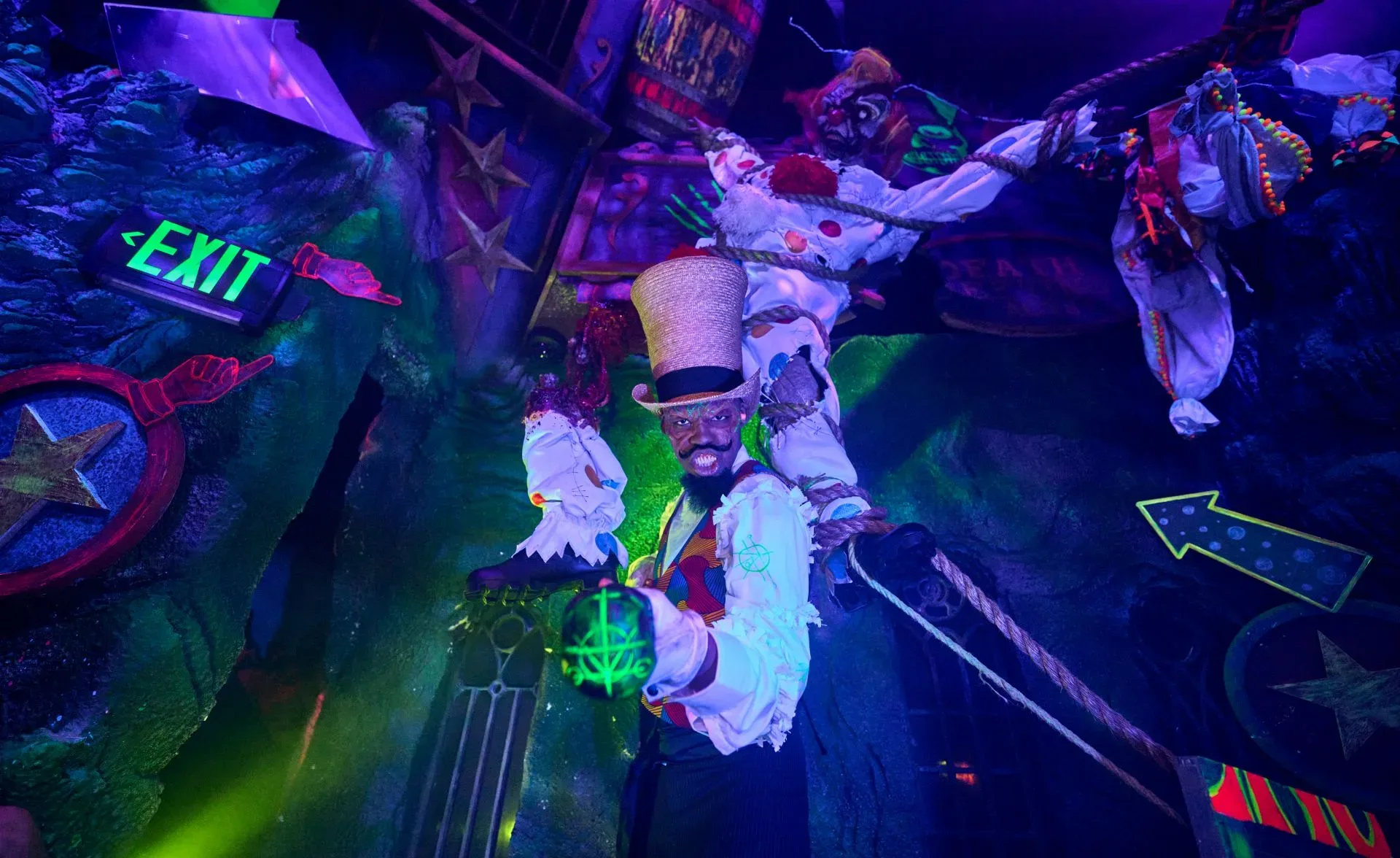
Universal’s original Halloween Horror Nights mythology returns with Jack the Clown and Dr. Oddfellow, a top-hatted carnival owner and apparent soul-collecting sorcerer with access to another dimension. Chaos & Control explores their connected past, although understanding the event’s internal lore is not necessary to appreciate the house.
Its real strength is visual design. Carnival and classic-funhouse references power a route filled with slanted rooms and rotating hallways. Those physical disruptions are more than decorative. They change how visitors walk and orient themselves, creating discomfort through balance and perception rather than blood or a sudden performer appearance. Anyone susceptible to that kind of spatial disorientation should take the warning seriously, but it is also the element that makes Chaos & Control feel especially authored. The story may be hard to parse; the sensation of moving through an unstable funhouse is not.
2. H.R. Bloodengutz Presents: A Halloween Fright-Tacular!
The runner-up is a sequel to a house that first appeared in 2010, built around H.R. Bloodengutz, a local Monster Chiller Horror Theatre host who is also a murderous escaped asylum patient taking over a TV station on Halloween. Each room channels a different cheap horror or science-fiction movie, with old box-shaped televisions delivering the host’s introductions along the way.
It is a house that openly values atmosphere and laughs as much as fear. A tiki bar and a 1970s disco room reportedly prioritize the bit over startling guests at all. That is not a failure of horror design; it is a confident use of variety. A continuous barrage of scares can become predictable, whereas a funny or relaxed room resets the audience’s rhythm and can make the next shock more potent. Its affection for kitsch, old monster-movie hosts, and television-era schlock gives Fright-Tacular a precise personality that many licensed adaptations struggle to match.
1. Ozzy Osbourne: Prince of Darkness
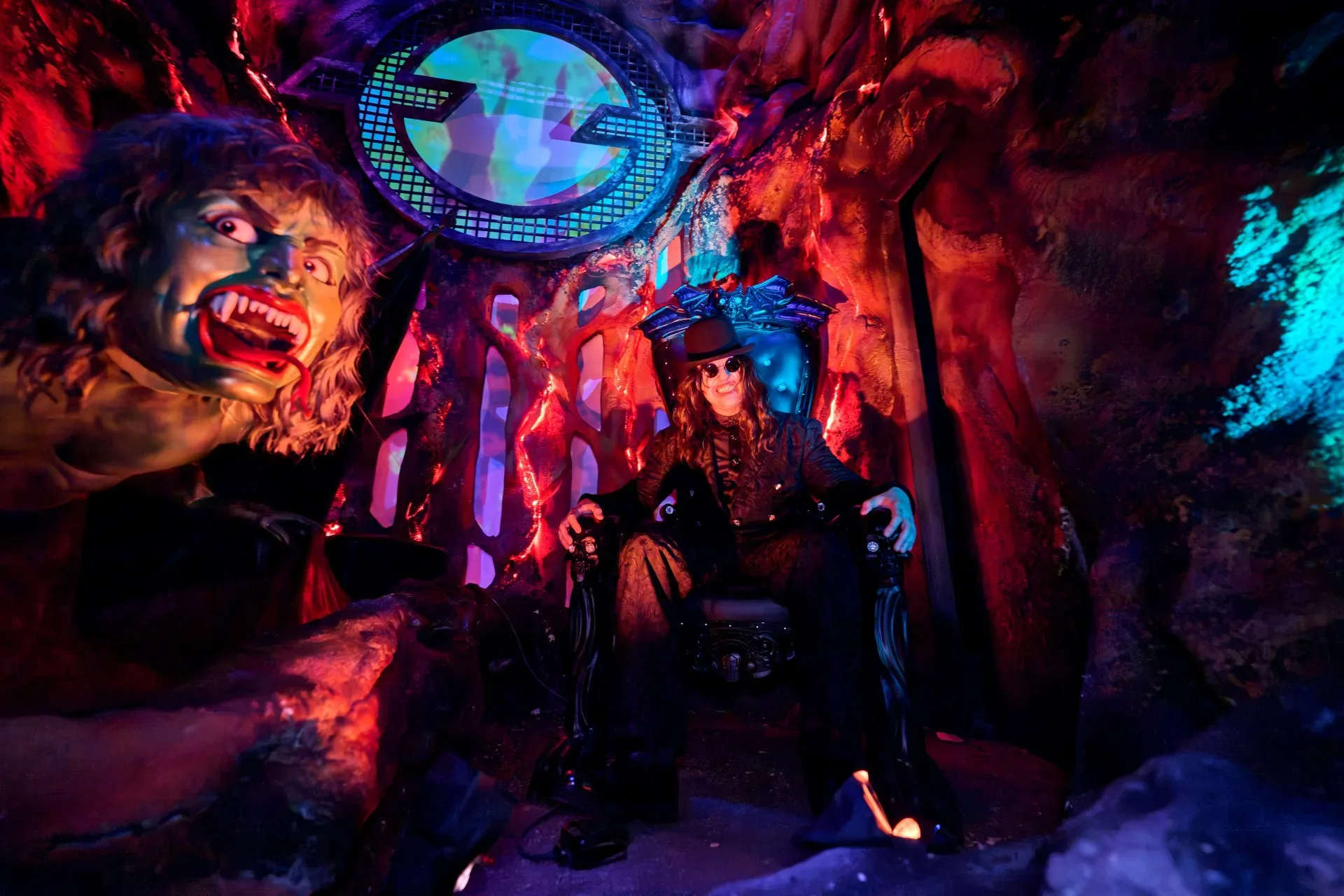
The top house uses Ozzy Osbourne’s solo catalogue as an engine for immersive scenes. Songs including Bark at the Moon, Trap Door, and Bloodbath in Paradise become environments informed by their lyrics as well as imagery from videos and album art. It is not presented as a conventional biography. Instead, it treats a set of songs as a visual-horror toolkit.
The latter half, beginning with Crazy Train, is the crucial stretch. Screens, practical effects, live performers in elaborate costumes, and the song itself combine to create a small narrative about life’s passage. Practical effects are physical, on-site effects rather than imagery created solely on a screen: scenery, moving mechanisms, costumes, props, lighting tricks, and similar tangible tools. Their value in a walkthrough is immediacy. Guests share space with the illusion, which gives even impossible imagery a bodily presence.
Prince of Darkness succeeds because it does not merely place songs over generic scares. It lets music determine pacing and image, while the house’s visuals give familiar tracks a new physical context. That is a compelling model for any crossover attraction. Recognition gets people through the door; a unified creative translation gives them a reason to remember the trip.
What the 2026 lineup says about game-adjacent horror design
The Fortnitemares scare zone is a small piece of the event, but it sharpens the larger connection. Horror games and haunted houses thrive when their systems serve a clear mood. In a game, that might mean enemy behavior, level geometry, sound design, limited information, or a carefully placed safe room. In a haunted house, it means the sequence of rooms, the performer’s timing, the sightline to an effect, and whether a set establishes a place beyond the next scare.
The best 2026 entries—Ozzy Osbourne, H.R. Bloodengutz, Jack & Oddfellow, and Invasion—each have an identity beyond an IP label. They use a consistent musical, comic, or visual grammar. The lower-ranked houses show the opposite risk: a famous title, a good creature, or a handsome environment cannot carry a maze that lacks escalation or a distinctive point of view.
For fans who enjoy game culture spilling into physical spaces, that is the appeal of the format. The park cannot offer player agency in the usual sense, yet it can make guests feel as though they have crossed a level boundary into a hostile and carefully authored world. It also shows why the surrounding culture matters, from Fortnite skins to the sometimes surprisingly difficult hunt for an official video game T-shirt. Fandom is not confined to a screen; events such as Halloween Horror Nights turn its visual language into a place people can physically walk through.