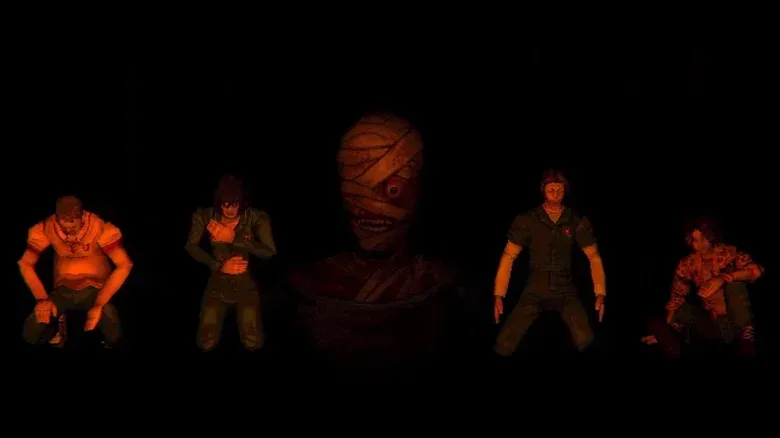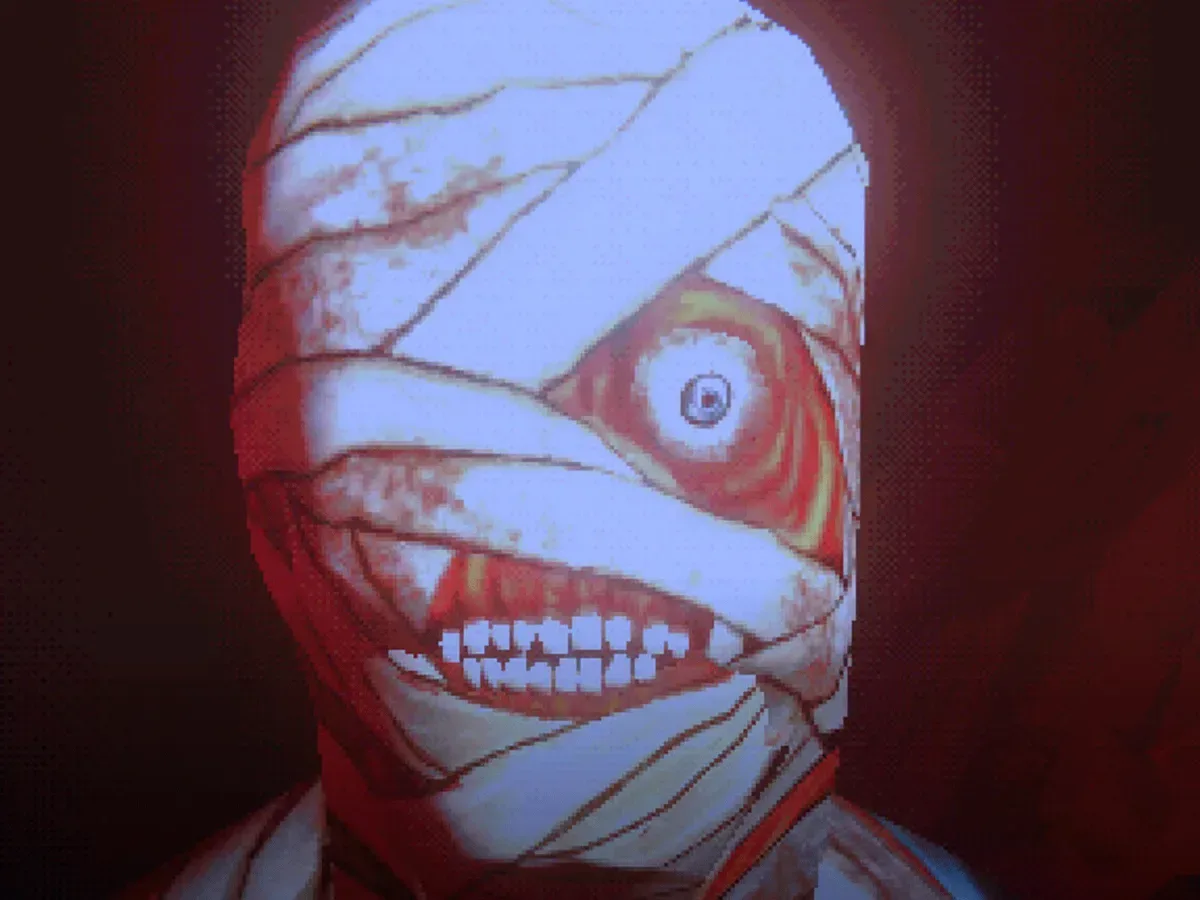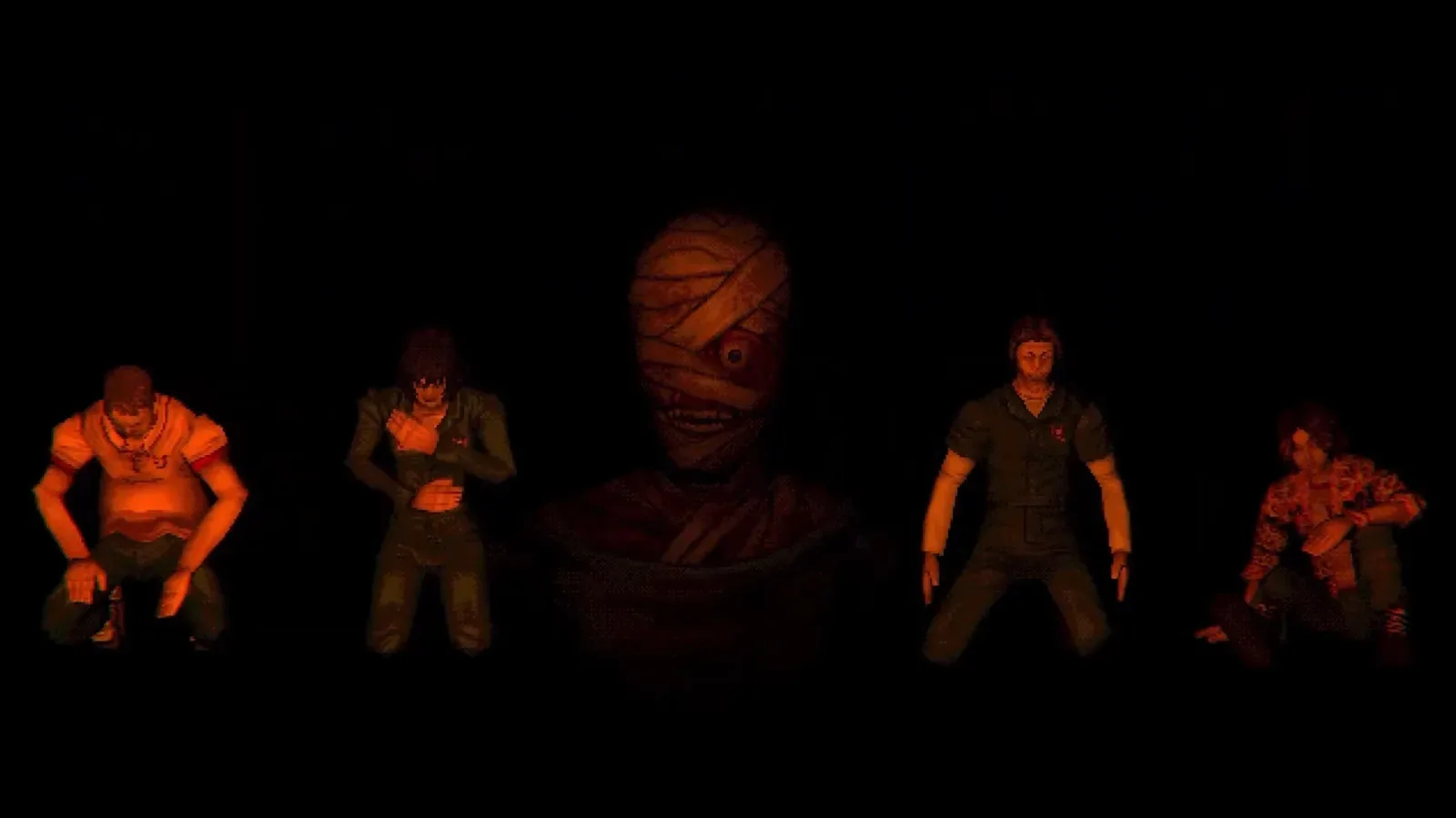
Mouthwashing is headed from a stranded spacecraft to the big screen. Sony Pictures Entertainment has acquired the film rights to Wrong Organ’s indie horror game, with Karyn Kusama attached to direct. The planned adaptation also has a screenplay team in Matt Manfredi and Phil Hay, while Scott Derrickson is producing.
The project brings together filmmakers with established horror credentials for a game whose horror is rooted less in spectacle than mounting psychological strain. Released for PC in 2024, Mouthwashing follows the crew of a stranded spaceship as their hold on reality deteriorates. Its surreal imagery and heavy subject matter make it a notably different proposition from the action-forward, creature-heavy video-game adaptations that tend to dominate the genre conversation.
No release date has been set, and no casting, production timing, format details, or story changes have been confirmed. At this stage, the most concrete news is the creative team and the acquisition itself—not what the finished film will look like.
A horror team suited to an uneasy premise
Kusama’s attachment is significant because the game’s premise calls for control of tone as much as overt fright mechanics. Kusama directed Jennifer’s Body and The Invitation, the latter of which was written by Manfredi and Hay. That existing creative connection gives the adaptation a director-and-writers combination with prior shared experience.
Derrickson, the producer, directed Sinister and The Black Phone. Together, the names attached to the project point toward filmmakers familiar with horror that relies on tension, discomfort, character pressure, and disturbing implications, rather than only quick shocks.
That is important for Mouthwashing. The game is not described as being packed with jump scares. Its core setup—a space crew stranded in isolation while their mental state worsens—suggests a film will need to make atmosphere, performance, sound, pacing, and the physical environment do substantial storytelling work.
What “grounded” horror means here
Calling a horror story grounded does not mean it is free of surreal or unreal elements. In this context, it means the fear is connected to people caught in an enclosed, comprehensible situation: a damaged or stranded crew, a limited environment, and a worsening psychological crisis. The setting may be science fiction, but the dramatic engine is interpersonal and mental.
That distinction separates Mouthwashing from a more flamboyant mode of survival horror. The game’s spaceship setting can supply visual strangeness, but its reported emphasis on reality coming apart creates a different adaptation problem: audiences need to feel the characters’ emotional and practical confinement even when the imagery becomes disorienting.
A movie does not have the same tools as a game. Players in games often create tension through navigation, interaction, limited information, and the simple act of being responsible for moving forward. A film has to replace that direct participation with cinematic choices. Editing can withhold context; production design can make familiar corridors feel unsafe; sound can make the ship feel empty, damaged, or oppressively close; actors can show the narrowing gap between fear, exhaustion, mistrust, and certainty.
Those are possibilities rather than announced details, but they explain why a contained, psychological game can still be a viable movie property. The central question is not whether a film can reproduce every player interaction. It is whether it can preserve the game’s sense of dread and instability in a medium where viewers watch events unfold rather than control them.
The adaptation has a clear advantage—and a difficult balancing act
The stranded-spacecraft premise gives the film a strong, immediate framework. It establishes isolation, limited escape routes, a defined group of characters, and an environment where practical failure can quickly become personal conflict. Those are useful building blocks for horror cinema because they keep pressure concentrated.
At the same time, an adaptation has to decide how much ambiguity to keep. Surreal horror often derives power from uncertainty: whether a character has interpreted something correctly, whether memory can be trusted, or whether apparent reality has become unstable. Explaining every image or event too neatly can weaken that effect. Leaving too much unexplained can make a feature difficult for an audience to follow.
There is no indication yet of how Kusama, Manfredi, and Hay will strike that balance. Nor is there confirmation that the movie will follow the game scene by scene. “Adaptation” can mean many things, from a close reconstruction of an original plot to a film that retains a setting and thematic foundation while substantially reshaping the narrative. Until more is revealed, it is best to treat assumptions about specific characters, sequences, or endings as speculation.
The broader gaming conversation has repeatedly returned to this medium-to-medium challenge. Design decisions that make a game memorable do not automatically become film scenes. That is true whether a work is built around its systems or its story; as one developer’s reflection on a risky vehicle-system detour in the Metroid Prime Trilogy illustrates, mechanics can be inseparable from how players experience a game even when they are difficult to translate elsewhere.
For Mouthwashing, the opportunity lies in translating the emotional consequence of that experience rather than trying to turn game interaction into a literal film equivalent. A viewer cannot inhabit the crew’s role in the same way a player can, but a film can make the audience a trapped observer inside the same deteriorating environment.
Why the game’s expanding availability matters
The film news arrives as Mouthwashing becomes available to a substantially wider group of players. After its 2024 PC launch, the game is now also available on Nintendo Switch, PlayStation 5, Xbox Series X/S, and Xbox Game Pass.
That does not establish a release window for the movie, but it gives curious viewers several ways to experience the original before an adaptation arrives. It also broadens the potential audience beyond PC players at a moment when the property is moving into film development.
Platform availability matters especially for a game whose appeal is tied to narrative experience and mood. A prospective film audience may want to encounter the original without needing a particular computer setup, while existing players will be watching for the elements they feel most define the game. The adaptation will therefore face two audiences at once: newcomers who need a coherent standalone horror film, and players who will recognize the source’s premise, themes, and imagery.
What has been confirmed, and what remains unknown
- Confirmed: Sony Pictures Entertainment has acquired film rights to Mouthwashing from Wrong Organ.
- Confirmed: Karyn Kusama is attached to direct.
- Confirmed: Matt Manfredi and Phil Hay are set to write the film.
- Confirmed: Scott Derrickson is producing.
- Confirmed: The game began on PC in 2024 and is now available on Switch, PS5, Xbox Series X/S, and Xbox Game Pass.
- Unknown: A release date, cast, production start, rating, and the degree to which the screenplay will follow the game’s exact narrative.
The project is also part of a continuing push to bring game properties to film audiences. Sony has prior experience with the space, and the recent commercial and critical success of a new Resident Evil adaptation demonstrates why rights holders and studios remain interested in established horror-game worlds. But Mouthwashing is not being positioned as a direct match for that franchise’s comparatively broader and more extravagant horror flavor.
Its appeal instead appears to be its concentrated premise: people unable to escape one another, a spacecraft that cannot simply be left behind, and a reality that becomes less reliable as the situation worsens. With Kusama, Manfredi, Hay, and Derrickson involved, the announced team has a background that fits a horror film where mood and psychological pressure may matter as much as any single scare.
For now, the sensible expectation is patience. The creative lineup offers a clear early identity for the adaptation, but the vital filmmaking particulars remain under wraps. Players can access the original across current PC, console, and subscription options; film audiences will have to wait to learn how this particular nightmare is reconfigured for the screen.