GuadaLAjara Film Festival has unveiled a Los Angeles program built around family, identity, political history and the complicated distances—geographic, cultural and emotional—that shape a life. The annual festival runs Nov. 5-7 at venues around the city, with Diego Luna’s Ashes opening the event, Ava DuVernay’s 14th selected for the Centerpiece Gala, and Eddie Sánchez’s Mexicanamerican closing the run with a 35mm presentation.
The schedule frames the festival as more than a sequence of premieres. Its announced films move between intimate family experiences and public struggles, while the short-film lineup makes room for filmmakers working in a condensed form. Alongside screenings, the program includes red-carpet premieres, panels, master classes, industry events, community events and special screenings. Further events and participating guests have not yet been detailed.
‘Ashes’ opens with a family reunion shaped by absence
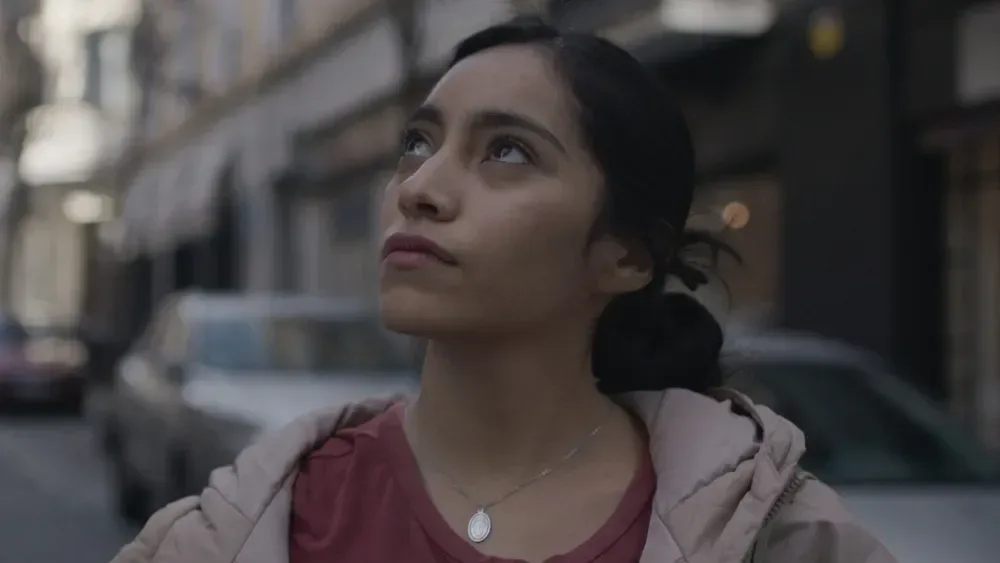
Ashes, directed by Diego Luna and presented by Watermelon Pictures, will open the festival at the United Theater. The story follows Lucila, who travels to Spain with her brother to reunite with the mother who left eight years earlier.
That premise gives the film several pressures to work through at once. Lucila is confronting an old family separation, but her attempt to move forward is also complicated by discrimination and family obligations. The central conflict is described as a struggle for independence while the past remains present. Rather than treating a reunion as an automatic resolution, the setup suggests that returning to a parent can reopen questions about responsibility, belonging and the life a child has had to build in the years between.
For festival audiences, an opening film often establishes a thematic lens for the program that follows. Here, the selection places displacement and family memory at the forefront. It also provides a useful entry point to a broader lineup concerned with what happens when personal identity is negotiated across institutions, generations and borders.
Ava DuVernay’s ‘14th’ anchors the Centerpiece Gala
The Centerpiece Gala will present Netflix’s 14th, directed by Ava DuVernay, at Vidiots. The film examines constitutional crises in the present day and traces a historical pattern behind them, positioning its subject as an unfinished conflict over how America is defined.
The title is a direct signal that the film is engaging with constitutional questions rather than simply offering a contemporary-affairs snapshot. A constitutional crisis generally refers to a moment when the meaning, authority or application of foundational legal rules is under severe dispute. The announced description emphasizes the connection between current headlines and longer-running historical structures, with the film arguing that those structures have taken on more drastic dimensions now.
That makes 14th a fitting centerpiece in a program where private lives and public systems continually overlap. A festival gala slot does not change a film’s subject matter, but it can create a focal point for attendees: a shared screening positioned amid the surrounding conversations, events and premieres. In this case, DuVernay’s film brings the lineup’s interest in culture and community into a clearly civic frame.
Related coverage includes GuadaLAjara Film Festival Sets ‘Ashes,’ ‘Mexicanamerican’ and Ava DuVernay’s ‘14th’.
‘Mexicanamerican’ closes on 35mm
The festival will conclude at the Linwood Dunn Theater with Sánchez’s Mexicanamerican, the story of Lalo and Beby, a Mexican couple who realize the American Dream but gradually lose the culture, language and traditions they once shared with their children.
Its closing-night status puts generational change at the program’s final point of emphasis. The story’s tension is not simply whether Lalo and Beby have succeeded materially; it is what that success has cost within the family. Language and traditions are presented as shared practices, so their erosion becomes a relationship issue as well as a cultural one.
The screening is specifically announced in 35mm, meaning the movie will be shown using 35mm film rather than a standard digital presentation. The format designation matters because it identifies the screening method, not merely the title in the lineup. For an audience, it is a practical detail worth noting when planning a closing-night visit, and it underscores that the festival is programming a particular theatrical presentation for Sánchez’s film.
Feature selections range from coming-of-age drama to a forensic thriller
The remaining feature slate covers a wide tonal range while retaining a focus on people responding to consequential change. The festival says its selections include U.S., West Coast and international premieres, though the announced material does not assign a premiere category to each individual title.
- Adam’s Apple, directed by Amy Jenkins, is an intimate portrait of a transgender teen and his mother. Drawn from two decades of footage, the film follows the teen’s path to manhood and his parents’ reckoning with the transition and the change it brings to their family.
- Chicas Tristes (Sad Girlz), from Fernanda Tovar, follows two best friends in a coming-of-age drama. Their relationship is tested after a traumatic experience at a party leads them to react in sharply different ways.
- City of the Dead (Ciudad de Muertos), directed by J.M. Cravioto, begins when a body is discovered inside a suitcase. Forensic photographer Enrique becomes involved in a secret agent’s pursuit of a serial killer.
- Dear Fátima (Querida Fátima) is directed by Lorena Gutiérrez, Jesús “Don Chucho” Quintana, Rodrigo Reyes, Dawn Valadez and Su Kim. A decade after the feminicide of her 12-year-old daughter Fátima, Lorena Gutiérrez camps outside Mexico’s National Palace while seeking an audience with Mexico’s first female president.
- Shooting Stars, directed by Daniel Poler, follows Adrián Solano, a 22-year-old Venezuelan who enters the 2017 Nordic World Ski Championships despite never having seen snow. The film is executive produced by John Leguizamo and produced by ESPN, ESPN Deportes and TriBeCa Studios.
Several of these projects make their stakes clear through a narrow human viewpoint. Adam’s Apple uses a family’s accumulated footage to observe a transition over time. Chicas Tristes centers friendship after trauma. Dear Fátima follows a mother’s persistent demand for a meeting with political power. Meanwhile, City of the Dead supplies the program’s crime-driven premise, and Shooting Stars draws on an unlikely competitive-skiing journey.
Taken together, these descriptions indicate a program interested in character perspective rather than a single genre. The selections include documentary-oriented work, a coming-of-age story, a thriller and a sports-related narrative. That variety can be useful for attendees building a multi-screening plan: the festival’s major programming throughline is thematic rather than limited to one style of filmmaking.
Short films create another route into the lineup
The short-film selection includes 12 titles, giving the festival a separate showcase for emerging talent. Short films can work differently from features: their reduced running time often requires a more concentrated approach to character, concept or atmosphere. The announced lineup does not provide synopses for these entries, so their individual subjects and formats have not been specified.
- Para Los Contrincantes — Federico Luis
- He’s Out There — Kurt Andrew Schneider and Sam Davis
- Busy Bodies — Kate Renshaw-Lewis
- The Long Con — Aitch Alberto, starring Nava Mau
- La Mar — Jean Chapiro Uziel
- Lucretia y Las Brujas — Eduardo Lecuona
- Marga en el DF — Gabriela Ortega
- Miriam — Karla Condado
- Stalin Boys — Ora DeKornfeld and Bianca Giaever
- Still Standing — Victor Tadashi Suarez and Livia Albeck-Ripka
- The Motive — Jorge Molina
- Vyann/Carne — Adolfo Margulis
The presence of this group is significant in practical programming terms. A festival’s feature titles may attract the most immediate attention because they come with established directors, gala placement or longer descriptions, but shorts create an additional discovery space. Here, that section includes works by Federico Luis, Aitch Alberto, Gabriela Ortega, Ora DeKornfeld and Bianca Giaever, among others, with Nava Mau named as a performer in The Long Con.
What the program’s structure says about the festival
GuadaLAjara Film Festival executive director Ximena Urrutia describes the selection as a collection of films that tell shared stories, honor cultures and represent work from Mexico, Latin America, the United States and elsewhere. The listed titles support the international and cross-cultural scope of that statement without flattening the films into one broad category.
Ashes is rooted in a reunion in Spain after years of separation. Mexicanamerican examines the loss of language and traditions within a family that has pursued the American Dream. Dear Fátima follows a mother’s action outside Mexico’s National Palace. Shooting Stars follows a Venezuelan entering a Nordic ski championship. These are distinct stories, but each involves a person or family navigating a setting where identity is not static.
For attendees, the announced program offers three obvious anchors: the opening-night presentation of Ashes at the United Theater, the Centerpiece Gala screening of 14th at Vidiots, and the 35mm closing-night screening of Mexicanamerican at the Linwood Dunn Theater. The remaining films, shorts and event programming expand that structure into a citywide three-day gathering.
Readers looking for more entertainment coverage can also find a recent pop-culture story on Jennifer Hudson and Common.