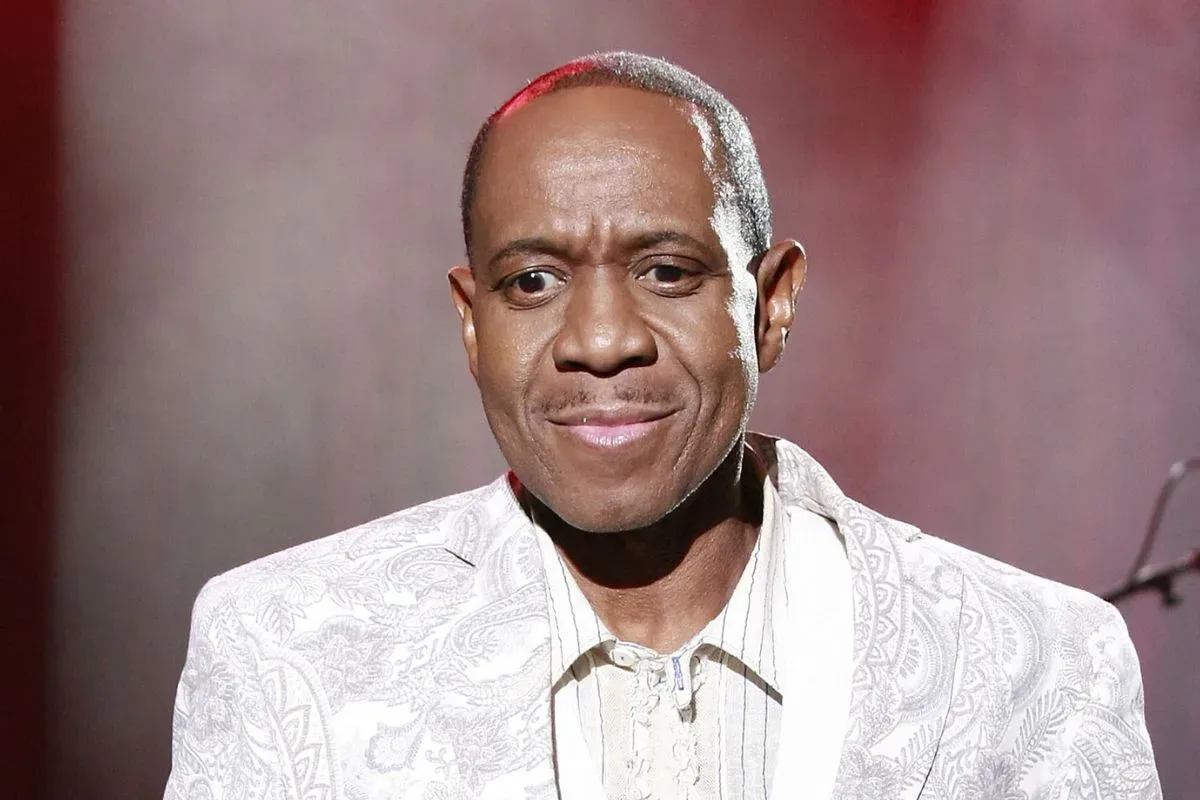
Freddie Jackson, the R&B singer whose romantic ballads and polished mid-1980s hits became fixtures for listeners’ slow dances, celebrations and private memories, has died. His family confirmed that Jackson died on October 5, 2026.
In a statement, his family remembered him as a generous person who cared deeply for his fans, friends, relatives and music. They described the songs he made over decades as part of the soundtrack to listeners’ love stories and milestones, and thanked the people who sang, danced and connected with his performances. Arrangements and additional ways to honor his legacy are expected to be shared later.
No cause of death or location of death was disclosed in the family’s statement.
Jackson’s importance to R&B is clear in both the scale and concentration of his commercial run. He scored 19 top-10 R&B singles between 1985 and 1992, with 10 reaching No. 1. That is a tally that speaks to more than one breakthrough song: it reflects a singer who remained a major presence on the format through a changing stretch of the decade.
For more context, explore Sonos Beam Gen 2 Is Listed at $359, Bringing Dolby Atmos Soundbar Features Closer to Mid-Range Pricing.
For a broader account of the news and the musical legacy surrounding it, readers can also see this look at Jackson’s defining R&B love-song catalog.
From Harlem gospel to a solo breakthrough
Jackson’s musical foundation began in gospel at White Rock Baptist Church in Harlem during his youth. It was there that he met Paul Laurence, a writer and producer who would become a significant creative collaborator in Jackson’s ascent as a solo artist.
Before his chart breakthrough, Jackson built experience singing with Mystic Merlin and performing backing vocals for Melba Moore. Those early roles matter because they show a route into a solo career that was grounded in ensemble work and live musical settings, rather than arriving fully formed at radio. His connection with Moore also continued in collaboration: the pair recorded “A Little Bit More.”
In 1985, Jackson released Rock Me Tonight on Capitol. The album went platinum, a certification indicating that it reached a major sales threshold. It also produced two No. 1 R&B singles. Its title track spent six weeks at the top of the R&B chart, while “You Are My Lady” crossed into the pop chart’s upper reaches, reaching No. 13.
That split between R&B-chart leadership and pop-chart visibility helps explain the shape of Jackson’s success. R&B radio and audiences were the center of his achievement, while songs such as “You Are My Lady” also found a wider crossover audience. A crossover hit is a recording that moves beyond its core format or audience into a broader chart field; it does not lessen its R&B identity. In Jackson’s case, it showed how far an emotionally direct love song could travel.
A sustained hit streak, not a one-album moment
Jackson followed his debut with 1986’s Just Like the First Time, which also went platinum. The record extended, rather than merely repeated, the momentum of Rock Me Tonight. “Tasty Love,” “Have You Ever Loved Somebody,” and “Jam Tonight” became chart leaders, keeping Jackson near the front of contemporary R&B.
The run is especially notable for its consistency. Chart success can sometimes attach to a single signature recording, but Jackson’s record across 1985 to 1992 contains multiple songs that reached listeners in a competitive and fast-moving period. The 19 top-10 R&B singles credited to him during those years make the case that his audience returned again and again for his records.
His work was not limited to the peak period, either. Jackson continued recording into later decades, including the albums For You in 2010 and Love Signals in 2018. He also appeared on “Back Together Again” with Meli’sa Morgan, included on her 2005 album I Remember.
That continuation is an important part of the story behind a catalog often associated most strongly with the 1980s. The best-known hits may provide the entry point for many listeners, but Jackson kept making music long after the initial commercial surge. His career therefore offers both a concentrated chart era and a longer creative record for listeners revisiting his work.
Why the songs endure
The family’s remembrance centered on the places Jackson’s music held in people’s lives: love stories, celebrations and treasured memories. That language fits the lasting role of a romantic R&B catalog. Songs attached to relationships or formative occasions can carry associations beyond their original release period. A listener may return to a track not only for its melody or vocal performance, but because it recalls a person, a room, a dance or a specific stage of life.
Jackson’s body of work contains titles that plainly frame romance and intimacy as their emotional terrain: “You Are My Lady,” “Have You Ever Loved Somebody,” “Tasty Love,” and “Rock Me Tonight.” The titles themselves are not a full musical analysis, but they point to the direct, personal address that made his songs readily usable as dedications and slow-jam staples.
Analysis: The durability of Jackson’s legacy is tied to that clarity. A love song does not need a complicated premise to become meaningful; it needs a singer who can make its emotion feel specific enough to matter to an individual listener. Jackson’s success on R&B charts, his pop-chart reach with “You Are My Lady,” and the family’s emphasis on fans’ memories together suggest music that functioned in both public and personal spaces.
It is also worth distinguishing chart data from the full idea of cultural memory. A No. 1 single measures performance within a chart system at a particular time. It cannot, on its own, measure what a song means years later. But Jackson’s 10 R&B No. 1s and 19 top-10 R&B singles provide concrete evidence of the scale of the audience that first encountered his work. The continued association of his songs with romance explains why the records can remain emotionally present after the original chart moment has passed.
Health advocacy in his later years
In September 2024, Jackson shared that he had been diagnosed with kidney disease. He also announced plans to work with the National Kidney Foundation, saying he wanted to use his experience to raise awareness and support other people facing the illness.
That advocacy should be understood carefully alongside news of his death. His family did not state a cause of death, so it would be inappropriate to connect the 2024 diagnosis to his passing. What is established is that Jackson spoke publicly about kidney disease and intended to turn a personal health challenge into awareness work for others.
For fans, the distinction matters. Public figures can draw attention to conditions that affect many people, but awareness is not the same as a complete medical account, and a disclosed diagnosis does not establish the circumstances of a person’s death. The confirmed facts here are limited to the diagnosis Jackson shared in 2024, his planned work with the National Kidney Foundation, and his family’s confirmation of his death on October 5, 2026.
How to revisit Freddie Jackson’s catalog
Listeners looking to understand the arc of Jackson’s music have a clear starting route in the records and songs tied to his strongest chart period:
- Rock Me Tonight (1985): The platinum breakthrough that yielded the six-week R&B No. 1 title track and “You Are My Lady,” which reached No. 13 on the pop chart.
- Just Like the First Time (1986): Another platinum album, with chart leaders including “Tasty Love,” “Have You Ever Loved Somebody,” and “Jam Tonight.”
- Collaborations: “A Little Bit More” with Melba Moore and “Back Together Again” with Meli’sa Morgan offer useful points of connection to fellow R&B singers.
- Later albums: For You and Love Signals show that his recording career continued well beyond the era most closely tied to his chart peak.
This approach does not reduce Jackson to a playlist of hits. It simply begins with the releases that mark the clearest milestones in the available record of his career, then follows the work forward. For longtime fans, the same path may be an invitation to return to albums and collaborations that sit outside the most familiar singles.
Jackson leaves behind a catalog built around a distinctive space in R&B: songs designed for expression, intimacy and connection, delivered by a singer who established a sustained hit run rather than a passing presence. From his early gospel setting in Harlem and work with Mystic Merlin and Melba Moore to the platinum success of Rock Me Tonight and Just Like the First Time, his career contains a substantial body of work for listeners to keep returning to.